Is Chicago Tap Water Safe — and Do You Need a Filter?
Choosing the right Chicago water filter system is one of the most important decisions a homeowner can make — especially if your home was built before 1986 and sits on aging pipes in neighborhoods like Norwood Park, Edison Park, or Jefferson Park.
Here’s a quick answer based on your situation:
| Your Situation | Recommended System |
|---|---|
| Older Chicago home with possible lead service line | Under-sink RO system (e.g., PEL75 9-Stage) + whole house filter |
| Northwest suburb with hard water (Park Ridge, Niles, Glenview) | Whole house filtration with water conditioning |
| Concerned about chlorine, PFAS, or microplastics | Multi-stage carbon block or RO system |
| Rental or apartment, no plumbing changes possible | Countertop or under-sink filter with NSF 53 certification |
| Well water in the Chicago metro area | Well water conditioning system |
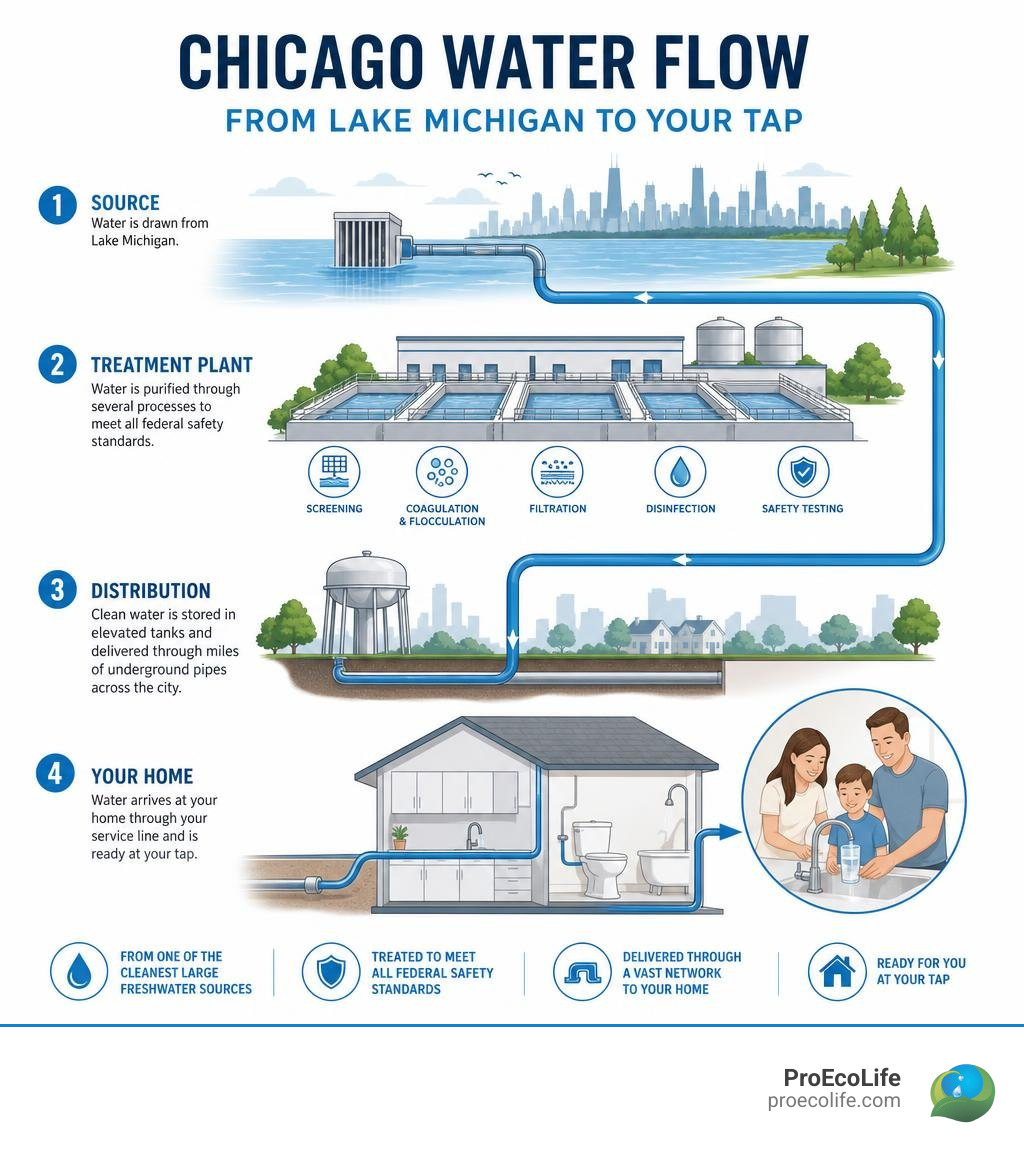
Chicago draws its drinking water from Lake Michigan — one of the cleanest large freshwater sources in the world. The city’s Department of Water Management runs over 600,000 tests per year and delivers nearly one billion gallons daily. By the time water leaves the treatment plant, it meets all federal safety standards.
But here’s the problem most homeowners don’t know about.
The water leaving the plant is clean. What happens between the plant and your faucet is a different story. Decades-old lead service lines, aging interior plumbing, and Chicago’s naturally hard Lake Michigan water can all affect what actually comes out of your tap — especially in older bungalows and two-flats across Chicago’s Northwest Side and inner-ring suburbs.
That’s why a professionally installed, properly certified water filter system isn’t just a luxury in Chicago. For many families, it’s a real layer of protection.
Chicago’s Water Infrastructure and Lake Michigan Contaminants
To understand why a home Chicago water filter system is so critical, we have to look at the journey our water takes. It starts in Lake Michigan, where massive intake cribs miles offshore draw raw water into the city’s purification plants. Chicago boasts two of the largest water purification facilities in the world: the Jardine Water Purification Plant and the Sawyer Water Purification Plant.
At these plants, the city does an exceptional job of cleaning the water. They use physical filtration, chemical coagulation, and heavy doses of chlorine to kill off bacteria and pathogens. When the treated water leaves these municipal plants, there is absolutely no detectable lead in it.
However, once that water leaves the plant, it travels through thousands of miles of water mains — many of which are over a century old. To prevent lead from leaching into your drinking water from older pipes, the city adds orthophosphate, a chemical that creates a protective coating inside the pipes. While this corrosion control process helps, it is not a foolproof solution.

The primary culprit for residential water contamination in Chicago is the lead service line. A service line is the pipe that connects the main water line under the street directly to your home’s internal plumbing. Until Congress banned them in 1986, Chicago building codes actually mandated the use of lead pipes for these service lines. Because of this historical quirk, Chicago has more lead service lines than any other city in the United States — estimated at over 400,000 active lines.
When water sits stagnant in these lead pipes overnight or during the workday, lead can leach into the water. Even minor construction, street vibrations, or water main replacements can disrupt the protective orthophosphate coating, causing flakes of lead to break off and flow straight to your kitchen faucet. This is why organizations like Water – Lead-Safe Chicago emphasize that the only way to guarantee safe water at your tap is by taking matters into your own hands.
This issue is particularly pronounced on Chicago’s Northwest Side. Neighborhoods featuring classic brick bungalows, such as Norwood Park, Edison Park, and Jefferson Park, almost universally rely on these vintage lead service lines. If your home was built before the mid-1980s, there is a very high probability that your water is making contact with lead just feet before you drink it.
Need Clean, Safe Water at Home?
Get a free water test at your home or business. We install and service whole-house filtration and PEL75 reverse osmosis systems across Chicagoland. We also take select projects in Wisconsin and Indiana.
Book a Free Water TestCall (312) 889-8888Common Water Quality Concerns in Chicago and Surrounding Suburbs
While lead is the most dangerous contaminant due to its neurotoxic effects — especially on developing children and pregnant mothers — it is far from the only concern for Chicago area residents. Depending on whether you live in the heart of the city or in the surrounding suburbs, your water quality challenges will vary.
Lead Contamination
Because lead is odorless, tasteless, and invisible, you cannot rely on your senses to detect it. Many homeowners are surprised to find elevated lead levels in their water even when it looks and tastes perfectly fine. Fortunately, resources exist to help you assess your risk. You can learn How to Use the WBEZ Lead Pipe Map to Check Your Chicago Home to see if your property is served by a lead line. Understanding the scope of Chicago’s Risky Water Problem is the first step toward securing peace of mind. For our Polish-speaking neighbors, we have also compiled resources on this issue, detailing the Problem z Niebezpieczną Wodą w Chicago.
Chlorine and Disinfection Byproducts
Because Chicago’s water system is so vast, the city must use significant amounts of chlorine to keep the water sanitary as it travels to the furthest edges of the distribution network. By the time it reaches your home, that chlorine can leave your water smelling and tasting like a swimming pool. Furthermore, when chlorine reacts with organic matter naturally present in Lake Michigan water, it creates disinfection byproducts (DBPs) like trihalomethanes (THMs), which are classified as potential carcinogens over long-term exposure.
Hard Water in the Suburbs
If you live in the Northwest suburbs — such as Park Ridge, Niles, Des Plaines, Skokie, Glenview, Arlington Heights, or Morton Grove — you may deal with a different headache: hard water. While Lake Michigan water is moderately hard, municipal water systems in some suburbs blend lake water with deep well water, or rely entirely on groundwater. This water is rich in calcium and magnesium. While not a health hazard, hard water leaves stubborn white scale buildup on your fixtures, spots on your dishes, clogs your water heater, and dries out your skin and hair.
Emerging Contaminants: PFAS and Microplastics
In July 2026, we are increasingly aware of “forever chemicals” (PFAS, PFOS, and PFOA) and microplastics. These synthetic materials do not break down in the environment and have been detected even in the Great Lakes. Standard municipal water treatment is not designed to remove these microscopic particles, meaning they can easily pass through the city’s system and end up in your drinking glass.

Need Clean, Safe Water at Home?
Get a free water test at your home or business. We install and service whole-house filtration and PEL75 reverse osmosis systems across Chicagoland. We also take select projects in Wisconsin and Indiana.
Book a Free Water TestCall (312) 889-8888Selecting the Right Chicago Water Filter System for Your Home
With so many filtration options on the market, choosing the right Chicago water filter system can feel overwhelming. The key is matching the filtration technology to the specific contaminants you need to eliminate.
Different filtration technologies excel at removing different impurities. Let’s look at how they stack up for Chicago’s unique water profile:
| Filtration Technology | Best For | What It Misses | Chicago Suitability |
|---|---|---|---|
| Activated Carbon Block | Chlorine, taste, odor, sediment, organic chemicals | Dissolved heavy metals (unless specially treated), fluoride, hard water minerals | Good for basic taste improvement; must be specially rated (NSF 53) to capture lead. |
| Catalytic Carbon | Chloramines, hydrogen sulfide, advanced VOCs | Hardness, dissolved solids, fluoride | Excellent for whole-house chemical and chlorine removal. |
| Reverse Osmosis (RO) | Lead, PFAS, microplastics, fluoride, dissolved solids, heavy metals | Requires a dedicated faucet; wastewater is generated during filtration | The gold standard for pure, safe drinking water at the kitchen tap. |
| Ion Exchange / Water Softening | Calcium, magnesium (hard water minerals) | Chlorine, lead, organic chemicals, PFAS | Essential for suburban homes experiencing heavy scale buildup. |
For comprehensive protection, many homeowners choose to combine these technologies. For instance, installing The Best Whole House Water Filtration Systems in Chicago for Crystal Clear Water ensures that chlorine and sediment are stripped out before the water enters your home’s pipes, while a dedicated reverse osmosis system at the kitchen sink provides purified drinking and cooking water.
Why a Multi-Stage Chicago Water Filter System is Essential
When dealing with a complex mix of contaminants like lead, chlorine, and emerging microplastics, a single-stage carbon filter is rarely enough. A multi-stage system uses a sequence of specialized filters to systematically clean your water without clogging too quickly.
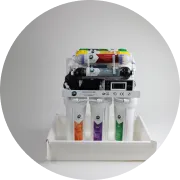
Our proprietary PEL75 9-Stage RO System is designed specifically with Chicago’s water challenges in mind. By routing water through nine distinct stages — including sediment pre-filters, premium carbon blocks, a high-rejection reverse osmosis membrane, and a post-filtration alkalizing stage — it ensures that even the smallest traces of lead, PFAS, and heavy metals are captured.
Multi-stage filtration also protects the delicate reverse osmosis membrane from being damaged by large sediment or chlorine, extending the life of your system and ensuring consistent water pressure. If you are looking to secure the absolute cleanest drinking water for your family, exploring the Top Reverse Osmosis System Options in Chicago for Pure Water is a great place to start.
Comparing Point-of-Use and Whole-House Chicago Water Filter System Options
As you evaluate your options, you will need to choose between Point-of-Use (POU) systems and Whole-House (Point-of-Entry) systems.
- Point-of-Use Systems (Under-Sink & Countertop): These systems filter water at a single location, typically your kitchen sink. They are highly efficient because you only filter the water you actually consume or cook with. Under-sink systems are incredibly popular in Chicago apartments and bungalows because they sit out of sight and deliver high-flow purified water on demand. To see what might work best under your counter, read our Best Under Sink Water Filter Chicago Reviews and Buying Guide.
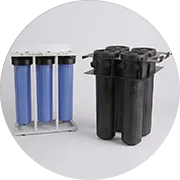
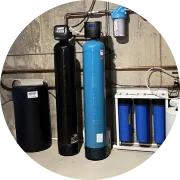
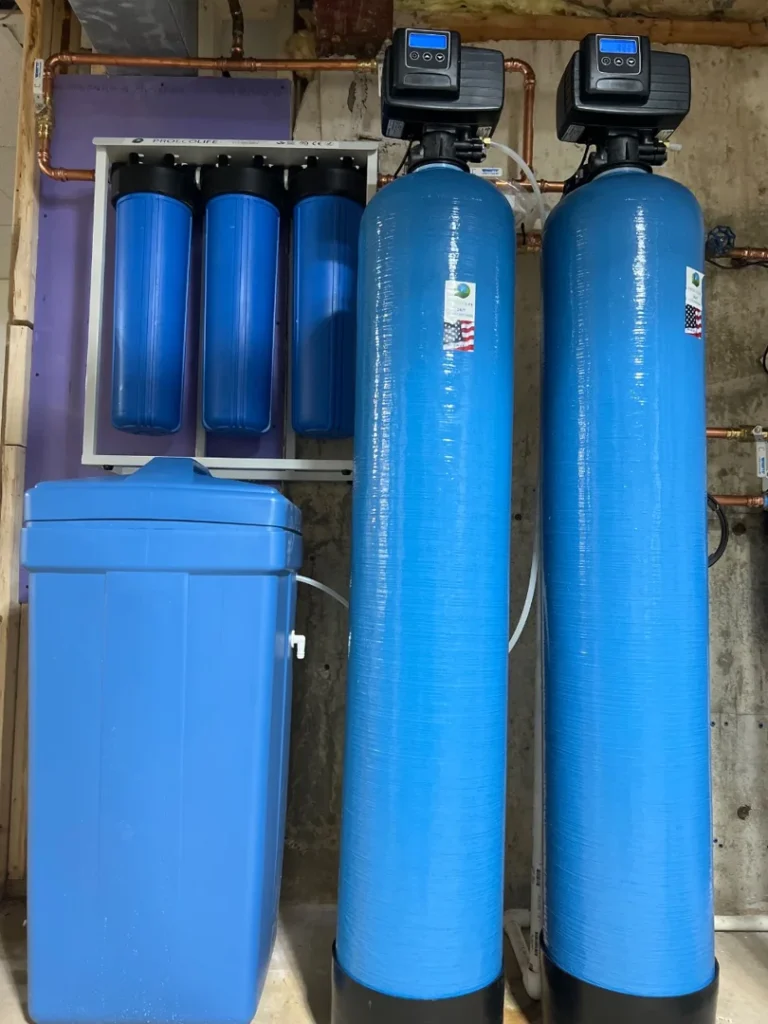
- Whole-House Filtration Systems: These systems are installed where your water line enters your home, filtering every drop of water before it reaches your showers, washing machine, water heater, and faucets. A whole-house system is perfect for removing chlorine smells, protecting your plumbing from sediment, and preventing skin irritation in the shower.
For the ultimate home setup, we often recommend a hybrid approach: a Whole House Filtration system to clean up the water for your entire home, paired with a PEL75 9-Stage RO System in the kitchen for pristine drinking water.
Water Testing, Certifications, and Professional Installation
How do you know if a water filter actually does what the manufacturer claims? You look for independent certifications. When shopping for a Chicago water filter system, always check for the following NSF/ANSI standards:
- NSF/ANSI 42: Certifies the system’s ability to reduce aesthetic contaminants like chlorine, taste, and odor.
- NSF/ANSI 53: This is the critical certification for health-related contaminants. It verifies that the system can successfully reduce lead, VOCs, and PFAS.
- NSF/ANSI 58: Specifically applies to reverse osmosis systems, certifying their effectiveness at removing heavy metals, fluoride, and total dissolved solids (TDS).
- NSF/ANSI 372: Certifies that the system itself is constructed entirely of lead-free materials.
Before investing in a system, we highly recommend testing your water. Because plumbing can vary from house to house — and even unit to unit in multi-family buildings — a personalized water test is the only way to know exactly what is coming out of your tap.
While some handymen or DIY enthusiasts attempt to install these systems themselves, water filtration involves tapping into your home’s main water lines, managing drainage, and ensuring proper water pressure. A minor leak can cause thousands of dollars in water damage to your basement or kitchen cabinets.
Working with a professional plumbing service ensures that your system is installed up to local Chicago building codes. Our team has been providing Expert Water Filter Installation Services in Chicago since 2014, ensuring that your equipment is calibrated perfectly for Lake Michigan’s unique water chemistry. To explore your options further, check out the Top Home Water Treatment Options in Chicago for Clean and Safe Drinking Water.
Frequently Asked Questions About Chicago Water Quality
How do I know if my Chicago home has lead service lines?
If your home was built before 1986, there is a very high probability that you have a lead service line. You can visually inspect the pipe entering your basement or utility closet. Lead pipes are dull gray, very soft (you can easily scratch them with a key or coin), and a magnet will not stick to them. You can also consult our detailed How to Choose the Best Lead Water Filter in Chicago: A 2026 Guide for step-by-step identification instructions.
Does Lake Michigan water require a water softener?
Lake Michigan water is classified as moderately hard (about 7 to 8 grains per gallon). While many city residents find they do not need a water softener, homeowners in the Northwest suburbs — like Skokie, Glenview, Arlington Heights, and Morton Grove — often experience much harder groundwater or blended water. If you notice white mineral buildup on your faucets, dry skin after showering, or stiff laundry, a water softener or conditioner may help protect your home.
What is the difference between reverse osmosis and standard carbon filters?
Standard carbon filters work like a microscopic sponge, trapping chlorine, sediment, and organic chemicals. However, they struggle to capture dissolved solids, heavy metals, and fluoride. Reverse osmosis systems use a semi-permeable membrane to push water through at high pressure, stripping away up to 99% of all dissolved inorganic solids, heavy metals, and contaminants. For a deeper dive into these technologies, read our guide on Top Home Water Treatment Options in Chicago for Clean and Safe Drinking Water.
Conclusion
At ProEcoLife, founded by Karol Dolega in 2014, we are proud of our deep Chicago roots. We understand the unique challenges of Lake Michigan water, the historic plumbing of our Northwest Side neighborhoods, and the hard water issues facing our surrounding suburbs.
Whether you are looking for our advanced PEL75 9-Stage RO System for pristine drinking water, a Whole House Filtration system to eliminate chlorine odors, a protective Shower Filter System, specialized Well Water Conditioning, or high-capacity Commercial Water Filtration Systems, we have the local expertise to design and install the perfect solution for your property.
Don’t guess when it comes to your family’s drinking water. Invest in a reliable, certified Chicago Water Filter System tailored specifically to our local water conditions.
If you want to read more tips on clean water, you can check out our local resources like Chicago Pure Water Tip 2, Chicago Pure Water Tip 4, and Chicago Pure Water Tip 7. We also have Polish versions available for our community, such as Czysta Woda w Chicago Porada 2, Czysta Woda w Chicago Porada 3, Czysta Woda w Chicago Porada 4, and Czysta Woda w Chicago Porada 7. You can even read about the fascinating history of water in our piece on How Clean Water Made Thanksgiving or Co Łączy Czystą Wodę ze Świętem Dziękczynienia.
To learn more about how we can help protect your home, explore our Top Water Purification Company in Chicago Ensuring Clean Water for Your Home page or our commercial solutions at Top Commercial Water Filtration Services in Chicago. For our Polish-speaking customers, we have further details on our System Filtracji Wody w Chicago page.
Ready to take the next step toward crystal-clear water? Contact ProEcoLife to schedule a water test at (312) 889-8888 or visit proecolife.com.