

Chicago Has a Lead Pipe Crisis — Here’s How to Find Out If Your Home Is at Risk
The WBEZ lead pipe map is an interactive tool that lets any Chicago resident look up their home address and see whether their water service line is confirmed or suspected to contain lead.
How to use it quickly:
- Go to the WBEZ lead pipe map at wbez.org
- Type your Chicago address into the search box
- View the status of your service line — categorized as Lead, Suspected Lead, Galvanized Requiring Replacement, or Non-Lead
- If your address doesn’t appear, check nearby lines (some addresses are missing because one line serves multiple households)
- If your result shows lead or suspected lead, request a city water testing kit through 311
Chicago has more lead service lines than any other city in the country. Out of roughly 491,000 total water service lines, an estimated 412,000 are known or suspected to contain lead. That’s about 84% of all lines citywide.
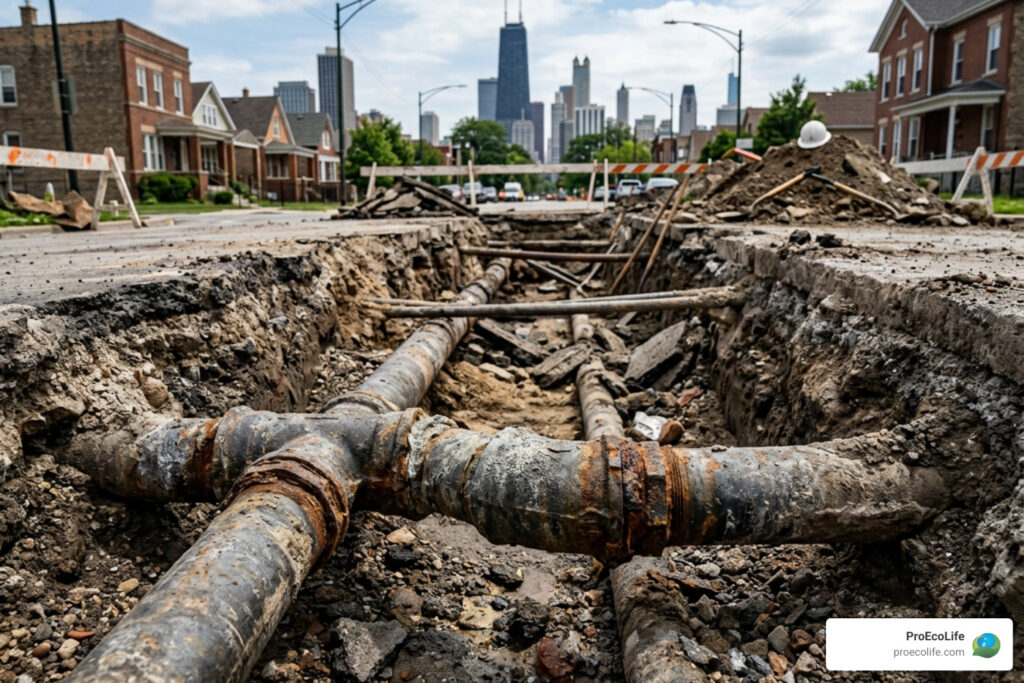
For families in older Chicago bungalows — the kind you see all over the Northwest Side, the South Side, and throughout the inner-ring suburbs — this isn’t an abstract problem. Lead pipes were actually required by Chicago’s building code right up until the national ban in 1986. That means millions of residents have been drawing their drinking water through lead pipes for decades, often without knowing it.
One Southeast Side mother described giving her young son bottled water every morning because she didn’t trust what was coming out of the tap. Her neighborhood? 94% of service lines are confirmed or suspected to contain lead.
At ProEcoLife, our team has been helping Chicago families understand and address water quality concerns since 2014. Founder Karol Dolega built the company specifically to serve Chicago homeowners dealing with exactly this kind of aging infrastructure challenge — from the brick bungalows of Norwood Park and Jefferson Park to homes throughout Park Ridge, Niles, and Des Plaines.
The WBEZ map is a powerful first step. But knowing what’s in your pipes is only the beginning.
How the WBEZ Lead Pipe Map Exposes Chicago’s Water Crisis
The launch of the interactive wbez lead pipe map marked a historic turning point in how we visualize public health risks in our city. While the City of Chicago has long maintained internal records of its water infrastructure, these files were not always easy for the average homeowner to interpret. By compiling and geocoding municipal data submitted to the Illinois EPA on April 14, 2025, journalists from WBEZ, Grist, and Inside Climate News created a tool that lays bare the jaw-dropping scale of our infrastructure deficit.
According to the map’s underlying data, Chicago is sitting on the largest concentration of toxic plumbing in the United States. Out of approximately 491,000 total water service lines connecting homes to the city mains, roughly 412,000 require full replacement because they are either confirmed lead or highly suspected to contain lead.
This means that an overwhelming majority of residential properties — particularly single-family homes and classic two-flats built before 1986 — are actively pulling Lake Michigan source water through a toxic corridor before it ever reaches the kitchen faucet. If you want to check your own property, you can search your address directly using the official lookup page: Does my home have lead pipes? Check your Chicago address – WBEZ Chicago.
For many years, the general public assumed that municipal water treatment facilities completely neutralized these risks. While the city adds corrosion control chemicals to the water supply to create a protective coating inside the pipes, this barrier is far from foolproof. Fluctuations in water chemistry, physical vibrations from street construction, and temperature changes can cause this coating to break down, allowing lead to flake off or dissolve directly into your drinking water. To understand how this impacts your daily safety, you can read our deep dive into the issue: Chicago’s Risky Water Problem.
Step-by-Step: How to Use the WBEZ Lead Pipe Map to Check Your Address
Using the wbez lead pipe map is relatively straightforward, but understanding what the results actually mean for your household requires a bit of technical context. Follow these steps to evaluate your property:
- Step 1: Access the interactive tool on the WBEZ website or via Grist’s portal.
- Step 2: Locate the search bar and type in your full street address, including your ZIP code.
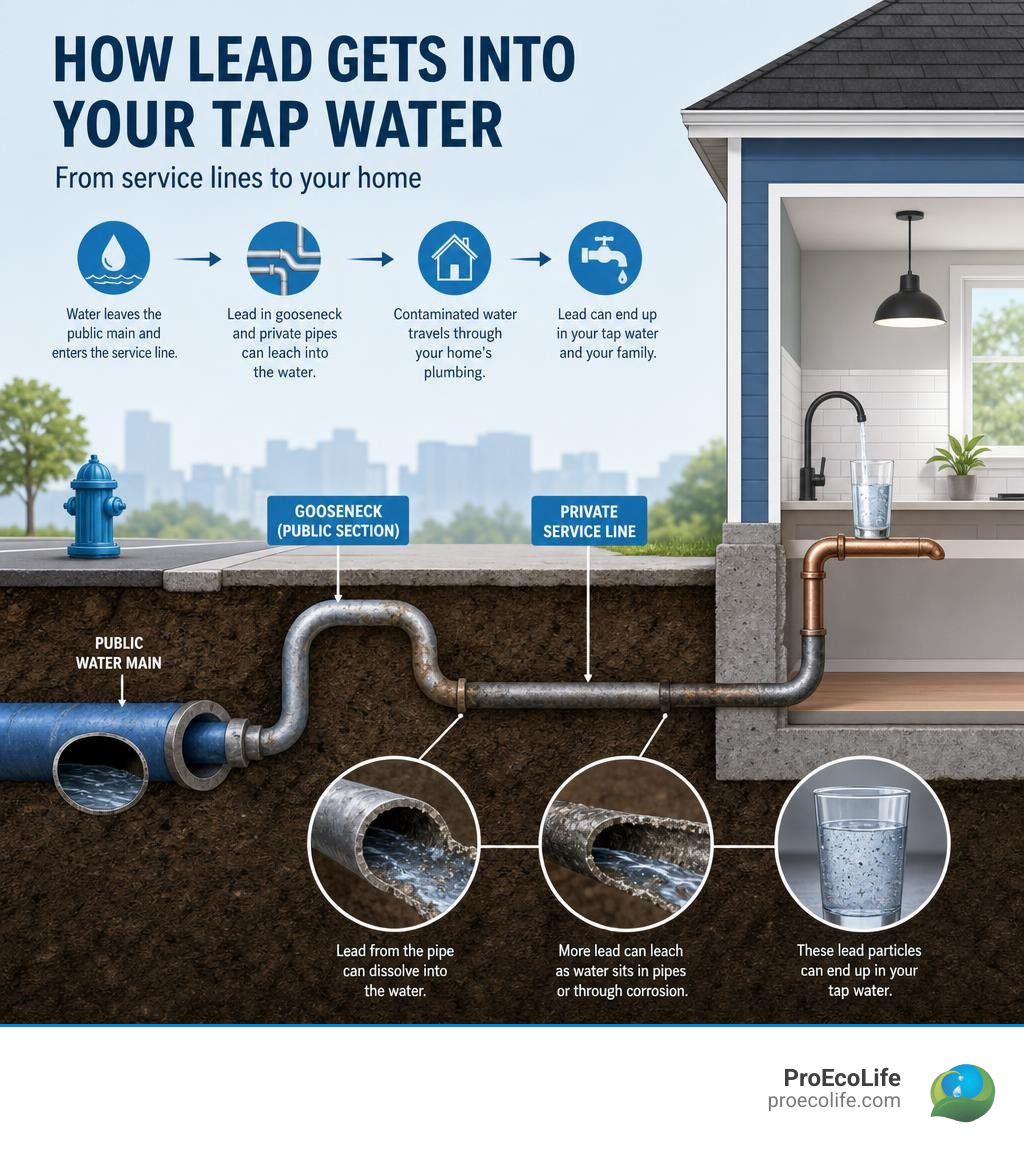
- Step 3: Examine the three distinct components of your service line displayed on the map: the water main connection (often including a curved piece of pipe called a “gooseneck”), the public-side service line (running from the main to the property line), and the private-side service line (running from the property line into your home).
- Step 4: Note the color-coded category assigned to your property.
The map groups service lines into four primary categories:
- Lead: A confirmed lead line is present on either the public or private side of the property.
- Suspected Lead: The city lacks definitive inspection records, but historical data and the age of the building strongly indicate that the pipes are made of lead.
- Galvanized Requiring Replacement: These are galvanized steel or iron pipes. While they do not contain lead themselves, they are highly susceptible to absorbing lead particles from upstream lead goosenecks and pipes, effectively acting as secondary sources of contamination.
- Non-Lead: The line is confirmed to be constructed of modern materials like copper or plastic.
If you find that your home is flagged, or if your specific address does not appear because a single service line serves multiple units or was logged by the nearest intersection, you can read more about the data collection methodology here: How we mapped Chicago’s lead service lines and what we learned – WBEZ Chicago. If you are uncertain about your home’s water quality, we have put together a practical guide to help you recognize the warning signs: How to Tell If You Need a Water Filter.
What the WBEZ Lead Pipe Map Reveals About Neighborhood Disparities
One of the most groundbreaking features of this mapping project is its ability to overlay infrastructure data with demographic information, specifically focusing on race and poverty. The findings reveal a stark environmental justice crisis.
While lead service lines are an issue across the entire city, they are disproportionately concentrated in majority-Black and majority-Latino census tracts. In majority-Latino tracts, a staggering 92% of service lines require replacement. In majority-Black tracts, that figure sits at 89%. By comparison, majority-white tracts have a 74% replacement rate, while majority-Asian tracts sit at 65%.
Geographically, nine of the ten community areas with the highest percentages of contaminated pipes are located on the South Side. The tenth is Belmont Cragin, a majority-Latino neighborhood on the Northwest Side. To explore these disparities in detail, read the full investigation: Lead pipe problems in Chicago are worst majority Black and Latino neighborhoods – WBEZ Chicago.
However, wealth alone does not shield a community from this legacy. In Forest Glen, which has the second-highest median household income in Chicago, 91% of service lines still require replacement because the neighborhood features older, beautifully preserved housing stock. Whether you are living in an underserved neighborhood on the South Side or an affluent pocket of the Northwest Side, the reality of toxic infrastructure remains a shared burden. You can read more about how this citywide issue unfolds in our dedicated analysis: Problem with Unsafe Water in Chicago.
Need Clean, Safe Water at Home?
Get a free water test at your home or business. We install and service whole-house filtration and PEL75 reverse osmosis systems across Chicagoland. We also take select projects in Wisconsin and Indiana.
Book a Free Water TestCall (312) 889-8888The Health Risks of Lead in Chicago’s Drinking Water
To understand why the wbez lead pipe map has caused such a stir, we have to look at the severe medical realities of lead exposure. Lead is a potent neurotoxin. Unlike many other environmental contaminants, there is absolutely no safe level of lead exposure in human beings. Once ingested, lead mimics calcium in the body, allowing it to cross the blood-brain barrier and deposit itself directly into bone and soft tissue.
Over time, cumulative exposure to even minute amounts of lead can cause irreversible damage. In adults, chronic lead exposure is linked to cardiovascular issues, elevated blood pressure, kidney damage, and reproductive complications. Because lead builds up in the body over years, many adults may experience these symptoms without ever realizing their daily glass of tap water is the source. If you suspect your municipal supply might be compromised, you can read our comprehensive overview: Is Your Water Contaminated?.
For a deeper understanding of how to achieve true peace of mind at home, we recommend checking out our resource on building a contamination barrier: No Lead, No Worries: Your Guide to Lead-Free Drinking Water.
Vulnerable Populations and Long-Term Exposure
While lead is dangerous for everyone, it is catastrophic for infants, toddlers, and pregnant women. Developing fetal brains and young children absorb up to five times more lead than adults from the same exposure levels.
The neurological damage caused by lead in early childhood is permanent. It can lead to:
- Significant drops in IQ and cognitive development.
- Shortened attention spans and increased behavioral issues like ADHD.
- Delayed motor skills and learning disabilities.
- Hearing and speech struggles.
A shocking 2024 study conducted by researchers at Johns Hopkins and Stanford universities revealed that nearly 70% of Chicago children under the age of 6 live in homes where the tap water contains detectable levels of lead. Furthermore, the Chicago Department of Public Health reported that in 2024, approximately 4% of children aged 1 to 3 who were tested had blood lead levels exceeding the state’s threshold for an elevated result.
This is an ongoing crisis that directly impacts the next generation of Chicagoans. To read more about the scientific and sociological findings surrounding this issue, consult the detailed reporting by Inside Climate News: Chicago Has a Huge Lead Pipe Problem—and We Mapped It – Inside Climate News.
Need Clean, Safe Water at Home?
Get a free water test at your home or business. We install and service whole-house filtration and PEL75 reverse osmosis systems across Chicagoland. We also take select projects in Wisconsin and Indiana.
Book a Free Water TestCall (312) 889-8888How to Protect Your Chicago Home from Lead Contamination
If the wbez lead pipe map reveals that your home has a confirmed or suspected lead service line, you should take active steps to reduce your household’s exposure. Many public health advisories recommend “flushing” your water pipes by running the cold water tap for five minutes after periods of non-use (such as first thing in the morning). While flushing may temporarily reduce the concentration of lead that has sat stagnant in your pipes, it is not a reliable long-term solution.
Flushing does not address lead that can flake off dynamically during use, nor does it account for the high volume of water used for cooking, washing vegetables, and drinking throughout the day. For many Chicago homes, especially older bungalows and two-flats connected to aging infrastructure, a professionally selected filtration system may provide a more consistent layer of protection.
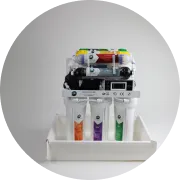
Standard retail carbon pitchers and basic faucet attachments often lack the filtration capacity to handle heavy lead loads, and their performance can drop off rapidly as the filter ages. At ProEcoLife, we address this challenge with proprietary, multi-stage systems chosen for local water conditions, including Chicago’s Lake Michigan source water and the pipe conditions we see in older homes on the Northwest Side and in nearby suburbs. Our flagship PEL75 9-Stage RO System uses advanced reverse osmosis technology to help reduce lead, heavy metals, and microscopic contaminants at the drinking water tap. Results vary based on water chemistry, plumbing, and usage.
For broader home protection, our Whole House Filtration systems may help address sediment, chlorine taste and odor, and other water quality concerns before water moves through household plumbing. You can learn more about how these technologies work in our detailed guides:
- Heavy Metal Meltdown: The Best Way to Remove Lead from Drinking Water
- How to Choose the Best Lead Water Filter in Chicago: A 2026 Guide
City Replacement Programs vs. Immediate Filtration Solutions
The City of Chicago has established a Lead Service Line Replacement Program, but the timeline for completion is incredibly long. The city’s current plan aims to replace all lead service lines by 2076 — a full 50 years into the future, and three decades past the federal EPA-mandated deadline. At the planned rate of replacing roughly 8,300 lines per year starting in 2027, many generations of Chicagoans will continue to be exposed to lead in the meantime.
While the city does prioritize certain high-risk lines (such as those serving parks, schools, and low-income households with young children), the vast majority of homeowners are left waiting. Even if you qualify for a subsidized municipal replacement program, the process can take years to coordinate, and the construction itself can temporarily spike lead levels in your water by disturbing the pipes.
Waiting decades for an infrastructure overhaul is not realistic when it comes to your family’s drinking water. While the city slowly works through its backlog, a professionally installed system like our PEL75 9-Stage RO System may provide a practical additional layer of protection for homes in Norwood Park, Edison Park, Jefferson Park, Park Ridge, Niles, Des Plaines, Skokie, Glenview, Arlington Heights, Morton Grove, and surrounding areas. To read more about why immediate filtration is a practical step to consider today, see our guide: No Lead, No Worries: Your Guide to Lead-Free Drinking Water.
Frequently Asked Questions About Chicago’s Lead Pipes
How do I know if my home has a lead service line if it’s not on the map?
If your address does not show up on the wbez lead pipe map, it doesn’t mean you are in the clear. Some properties are missing from the inventory because a single service line serves multiple households, or because historical records logged the property by its nearest intersection rather than its street address.
To better understand your risk, check the age of your property. If your home or two-flat was built before 1986, there is a very high probability that it has a lead service line because of Chicago’s old building code and the city’s aging water infrastructure. For a clearer picture of your home’s water quality, you can request a water testing kit from the city by calling 311, or contact a professional water filtration expert to perform a comprehensive water quality analysis.
Does boiling water remove lead from my drinking water?
No. Boiling water does not remove lead. In fact, boiling water can make the problem worse if lead is present. Because lead is a heavy metal and does not evaporate, boiling your water causes some of the water to turn into steam, which can increase the concentration of lead left behind in the pot. Effective options for reducing lead in drinking water include advanced physical filtration, such as reverse osmosis or specialized heavy-metal carbon block systems. ProEcoLife’s PEL75 9-Stage RO System is designed for Chicago-area drinking water concerns, including Lake Michigan source water moving through older lead service lines.
What neighborhoods are most affected by lead pipes in Chicago?
While older neighborhoods on the South Side and West Side carry the heaviest burden of lead pipes due to decades of systemic disinvestment, the problem is truly citywide. On the Northwest Side, neighborhoods like Belmont Cragin, Norwood Park, Edison Park, and Jefferson Park have massive concentrations of lead service lines due to the density of classic pre-1986 brick bungalows. Even high-income areas like Forest Glen show replacement rates above 90%. Nearby suburbs such as Park Ridge, Niles, Des Plaines, Skokie, Glenview, Arlington Heights, and Morton Grove can also face water quality issues tied to older plumbing, hard water, or aging local infrastructure.
To explore the neighborhood-by-neighborhood data and see how your community compares, you can look at the raw data sets compiled by Grist: Grist-Data-Desk/chi-pb.
Conclusion
The wbez lead pipe map has pulled back the curtain on a massive infrastructure crisis that affects nearly every corner of Chicago. While we wait for municipal programs to slowly update our city’s water mains over the coming decades, the responsibility of understanding household water quality falls on individual homeowners and families.
Since 2014, ProEcoLife has been dedicated to helping Chicago-area families address local water concerns with professionally selected filtration technology. Founder Karol Dolega established the company to address the unique challenges of our region’s water — from Lake Michigan source water traveling through aging lead pipes in Northwest Side neighborhoods like Norwood Park, Edison Park, and Jefferson Park, to hard water and plumbing concerns in Park Ridge, Niles, Des Plaines, Skokie, Glenview, Arlington Heights, and Morton Grove.
We offer a complete suite of proprietary water treatment products tailored to your home’s specific needs, including:
- The PEL75 9-Stage RO System for drinking water filtration.
- High-capacity Whole House Filtration systems to support water quality throughout the home.
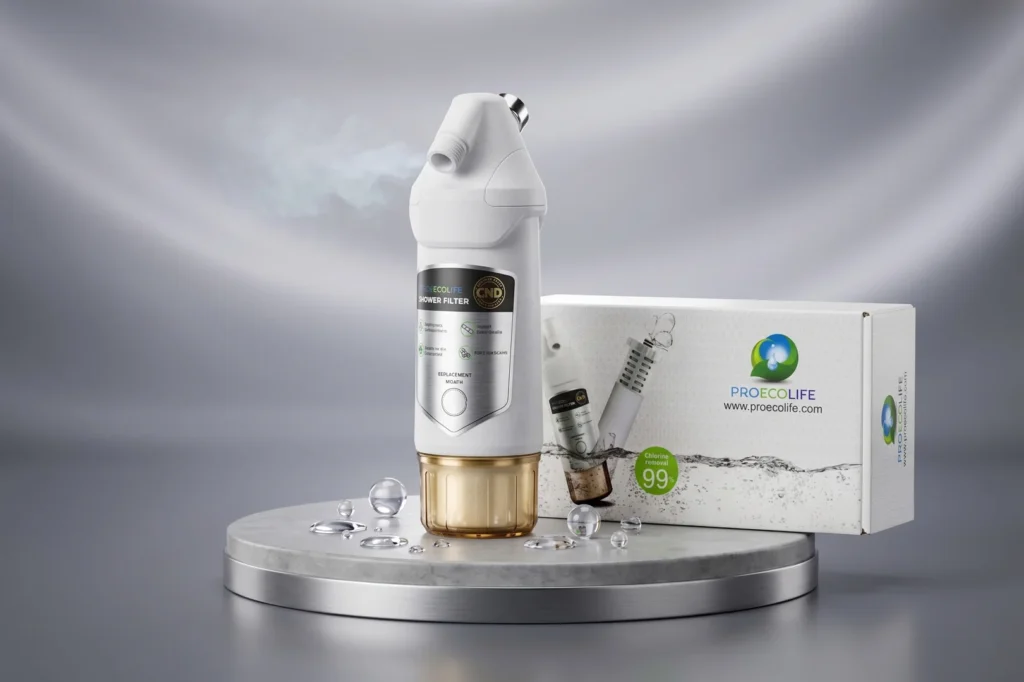
- Our specialized Shower Filter System for shower water concerns many customers notice in the Chicago area.
- Targeted Well Water Conditioning for suburban properties.
- Robust Commercial Water Filtration Systems for local businesses.
To learn more about how we can help you evaluate the right option for your home, explore our specialized whole-house systems: ProEcoLife Whole House Water Filtration Systems in Chicago.
To better understand your home’s water quality and possible lead exposure, contact the local experts at ProEcoLife to schedule a water test at (312) 889-8888 or proecolife.com.