
Why Chicago Lead Filtration Experts Matter for Your Family’s Safety
If you’re looking for Chicago lead filtration experts, here’s what you need to know right away:
Top ways certified Chicago lead filtration experts help protect your home:
- Test your water for lead and other contaminants specific to Chicago’s aging infrastructure
- Identify lead service lines using professional inspection methods
- Recommend certified systems — look for NSF/ANSI Standard 53 and 42 certifications
- Install point-of-use or whole-house filtration professionally (never DIY with lead risk this serious)
- Maintain your system with manufacturer-approved cartridges to keep certifications valid
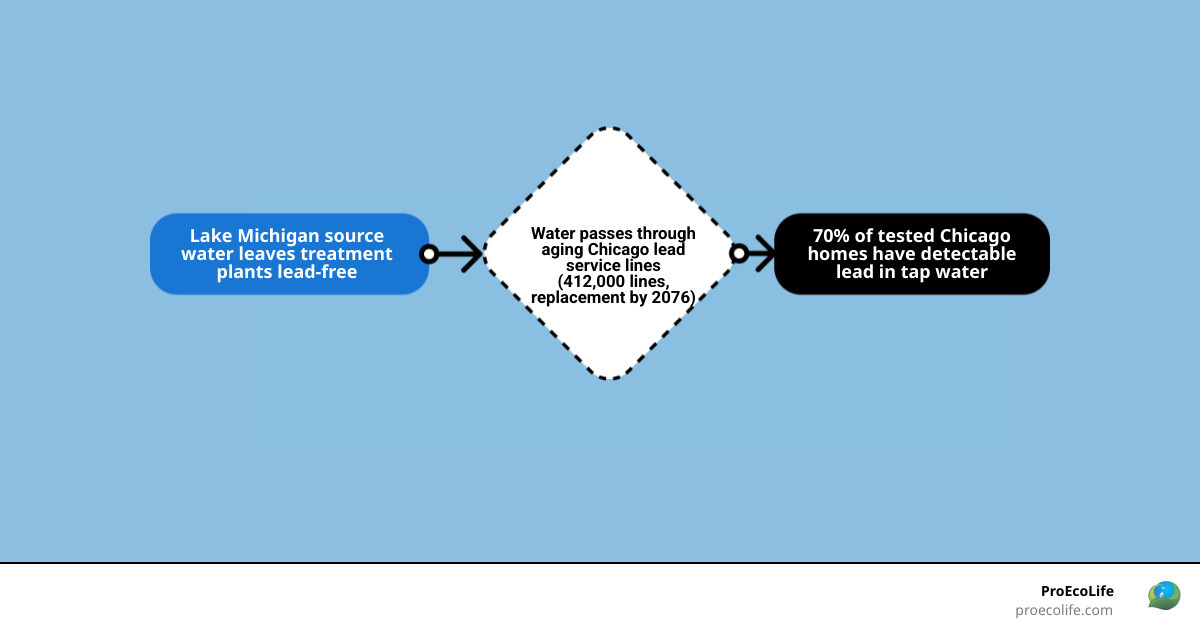
Chicago’s water starts clean. Lake Michigan source water leaves the treatment plants with no detectable lead. The problem happens underground — inside the aging lead service lines running beneath Chicago streets and into older homes across neighborhoods like Norwood Park, Jefferson Park, and across the Northwest Side.
Chicago has approximately 412,000 lead service lines — more than any other city in the United States. The city’s own replacement timeline stretches all the way to 2076. That’s not a typo. It means most Chicago homeowners are on their own for the next 50 years.
A Tribune analysis of city data found that 70% of tested Chicago homes have some detectable lead in their water. About a third had levels higher than what the FDA even allows in bottled water.
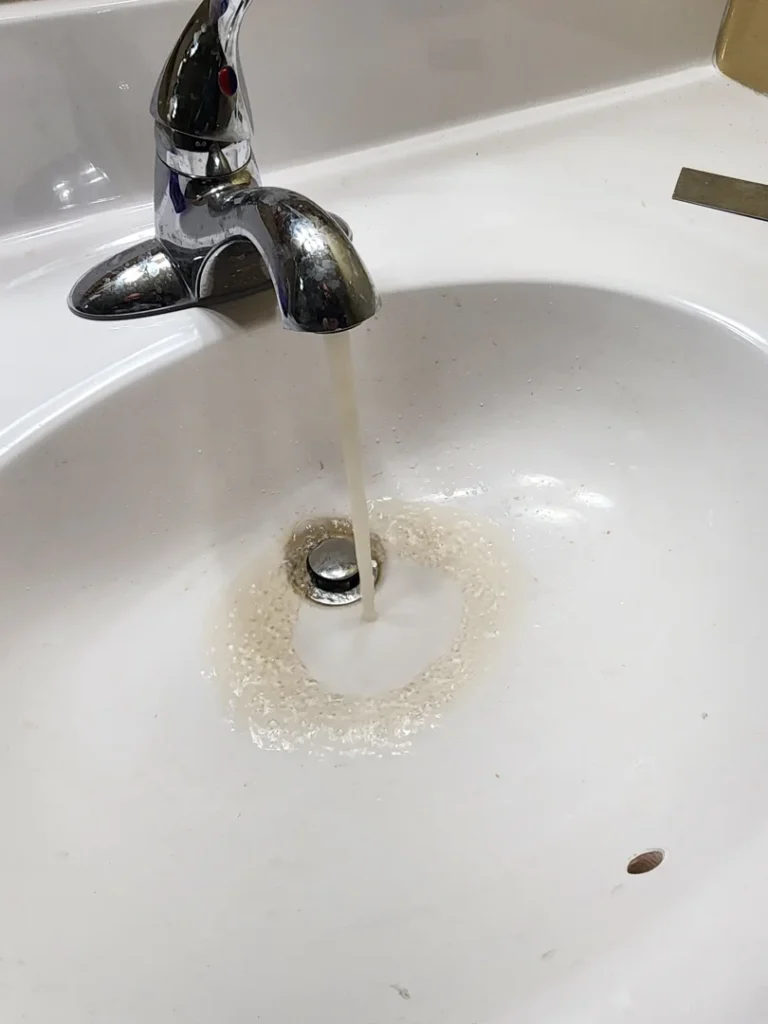
This is not a distant risk. It’s a daily one — at the kitchen tap, in the bath, in the glass of water your child drinks before school.
There is no safe level of lead exposure. — U.S. Environmental Protection Agency
That’s why working with qualified local filtration experts — not just buying a filter off a shelf — matters so much.
Chicago lead filtration experts vocabulary:
The Reality of Chicago’s Lead Water Crisis
The scale of Chicago’s lead water infrastructure is staggering. The city estimates that out of roughly 491,000 total water service lines, about 412,000 require replacement because they are known or suspected to contain toxic lead. This is a direct legacy of local building codes: Chicago actually mandated the installation of lead pipes by law until the federal government finally banned them in 1986.
Because of this historical mandate, neighborhoods across Chicago and its older inner-ring suburbs are deeply affected. If your home was built before 1986, there is an incredibly high probability that the pipe connecting your home to the water main under the street is made of solid lead.
With the city’s current replacement timeline extending to 2076, generations of Chicagoans will continue to face potential exposure. The financial burden of solving this privately is immense, with a full lead service line replacement estimated to cost between $16,000 and $35,000. Many homeowners find themselves wondering Is Your Water Contaminated? and looking for immediate, realistic ways to protect their households from Chicago’s Risky Water Problem.
Health Risks of Lead Exposure in Chicago Homes
The biological consequences of lead exposure are well-documented and severe. Lead is a potent neurotoxin that accumulates in the body over time. For young children under the age of six and pregnant women, the risks are particularly devastating. Even low levels of lead exposure in children can cause lifelong neurological damage, developmental delays, learning disabilities, and behavioral problems.
In adults, long-term exposure to lead in drinking water is linked to increased cardiovascular risks, high blood pressure, and kidney complications. Because lead mimics calcium in the body, it deposits itself in bones and organs, making continuous daily exposure a serious, slow-acting health hazard. It is a major reason why local experts point out that Illinois One of Worst Contaminated Water States when it comes to tap water safety.
How to Identify Lead Pipes and Test Your Water
If you want to know what kind of pipes are feeding your home, you can perform a quick visual check where the water service line enters your basement or utility area before the water meter:
- The Scratch Test: Use a key or a coin to gently scratch the pipe. If the scraped area reveals a shiny, silver-gray color, the pipe is likely lead.
- The Magnet Test: Hold a magnet against the pipe. If the magnet does not stick, it is another strong indicator that the pipe is made of lead (as magnets do not stick to lead or copper).
However, identifying the pipe is only the first step. To understand exactly what is coming out of your kitchen tap, professional water testing is highly recommended. While you can learn about the municipal testing options through a DWM Water Test Kit: How to Test Your Chicago Tap Water, it is important to remember that a single water test only provides a snapshot in time.
Lead levels can fluctuate wildly based on water temperature, how long the water has been sitting in the pipes, and physical vibrations in the street. To truly navigate the complex local landscape, homeowners should familiarize themselves with the details in Get the Lead Out: A Guide to Chicago Water Testing Requirements.
Need Clean, Safe Water at Home?
Get a free water test at your home or business. We install and service whole-house filtration and PEL75 reverse osmosis systems across Chicagoland. We also take select projects in Wisconsin and Indiana.
Book a Free Water TestCall (312) 889-8888Municipal Water Treatment vs. Home Filtration
Many residents wonder why the city’s water treatment plants cannot simply filter the lead out before it reaches local neighborhoods. The truth is, they do. When water leaves the massive purification plants along Lake Michigan, it is virtually lead-free. The contamination occurs entirely during the journey from the water main through your private service line and into your home’s internal plumbing.
To fight this, the city uses an orthophosphate treatment program. Orthophosphate is a chemical added to the water supply designed to react with the metal pipes, creating a thin, protective scale or coating along the interior walls. This coating is meant to act as a barrier to prevent lead from leaching into the water.
While orthophosphate helps, it is not a perfect shield. For comparison, Flint, Michigan now treats its water supply with nearly six times as much orthophosphate as Chicago does to prevent lead from leaching.
The Role of Chicago Water Department Engineers
Maintaining municipal water quality is an incredibly complex engineering task. The Chicago Water Department relies on highly trained, experienced engineers to manage operations at the world’s largest water filtration plants.
Key municipal experts oversee these massive operations. For example, Diane Cardella, who has served as a Chief Filtration Engineer for the City of Chicago since August 1982, brings over four decades of chemical engineering and management expertise to the city’s water purification efforts.
Working alongside her is Harold Keaton, a veteran engineer with over 31 years of total engineering experience, who has served as a plant manager and chemical engineer for the department since the early 2000s, monitoring chemical residual controls and mechanical operations.
Additionally, Joash Jacob, serving as a Filtration Engineer III, utilizes advanced chemical engineering principles and contamination analysis techniques to ensure the municipal supply meets federal standards before it enters the distribution grid.
Why Municipal Treatment Isn’t Enough for Lead
Despite the diligent efforts of municipal engineers, water chemistry cannot completely prevent physical lead particles from entering your glass. Whenever there is nearby water main construction, street repaving, or even minor plumbing work in your home, the physical vibrations can rattle the fragile orthophosphate coating inside lead service lines.
When this scale breaks loose, tiny flecks of solid lead flake off directly into the water stream. These physical particles will bypass chemical corrosion controls entirely.
Furthermore, the city’s regulatory compliance testing is highly limited—testing just 50 homes every three years to represent the entire city. An EPA study noted that this minimal testing does not accurately capture the real-world lead levels across Chicago’s vast residential footprint. To understand how these fluctuations impact your home, take a look at A Practical Guide to Chicago Lead Water Levels.
Need Clean, Safe Water at Home?
Get a free water test at your home or business. We install and service whole-house filtration and PEL75 reverse osmosis systems across Chicagoland. We also take select projects in Wisconsin and Indiana.
Book a Free Water TestCall (312) 889-8888Choosing the Right Filter with Chicago Lead Filtration Experts
Because municipal treatment cannot guarantee lead-free tap water, installing a high-quality home filtration system is the most reliable way to protect your family. However, finding the right system requires some careful research. You cannot simply grab any water filter off the shelf and assume it will remove heavy metals.
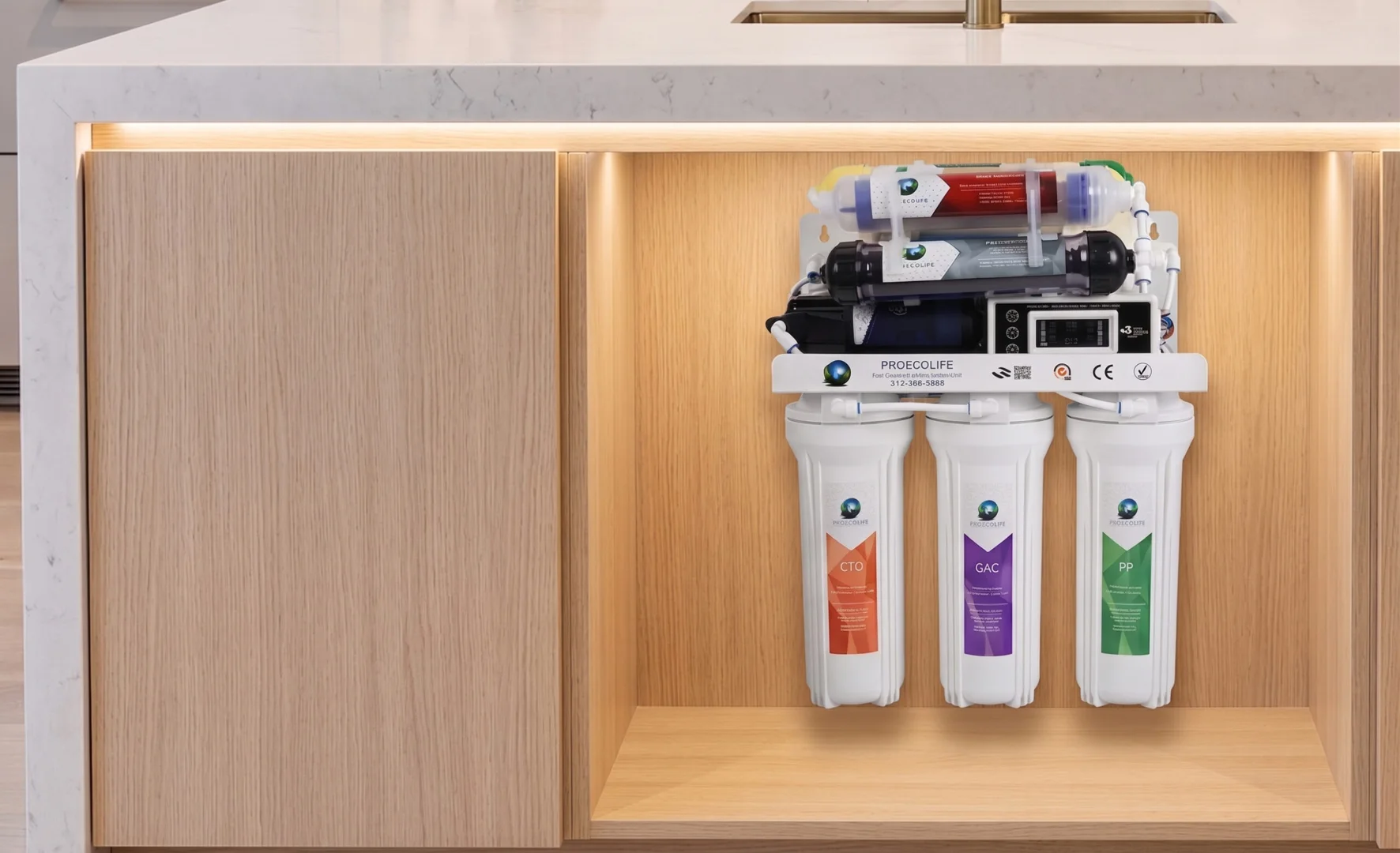
When evaluating systems, you must look for specific independent certifications. A filter must be certified to NSF/ANSI Standard 53 specifically for lead reduction. While Standard 42 covers aesthetic effects like chlorine taste and odor, Standard 53 is the rigorous health standard that guarantees the system has been independently tested to reduce lead to safe levels. To learn more about selecting the right unit, check out How to Choose the Best Lead Water Filter in Chicago: A 2026 Guide.
Why You Need Certified Chicago Lead Filtration Experts
Using uncertified or generic filtration systems carries major risks. The online marketplace is flooded with cheap, counterfeit filters that claim to remove contaminants but lack the engineering or testing to back up those claims.
Additionally, using off-brand or generic replacement cartridges in a certified system will void the system’s official NSF certification. The system was only certified to perform with the manufacturer’s specific, highly engineered cartridges. Working with trusted experts ensures you get authentic, certified components that actually protect your health. For a deeper dive into making the right selection, read How to Choose a Water Filter.
Effective Filtration Technologies for Chicago Homes
When it comes to removing lead, not all filtration technologies are created equal. While standard carbon block filters can reduce lead if certified to Standard 53, they do not offer the comprehensive protection of advanced systems.
For the highest level of safety, reverse osmosis (RO) is widely considered the gold standard. A multi-stage RO system uses pressure to force water through a semi-permeable membrane, stripping away up to 98% of lead, heavy metals, chlorine, PFAS, and bacteria.
| Feature | Basic Carbon Filter | PEL75 9-Stage RO System |
|---|---|---|
| Lead Removal Rate | Varies (often 90-95% if certified) | Up to 98% |
| PFAS & Heavy Metals | Limited reduction | Comprehensive removal |
| Bacteria & Viruses | Generally none | High-efficiency barrier |
| Mineral Restoration | None | Restores essential minerals naturally |
| Typical Lifespan | 2–6 months | Long-lasting multi-stage cartridges |
To understand how this advanced technology keeps your drinking water safe, read Get the Lead Out: How Reverse Osmosis Filters Save Your Tap and compare your options in Top Reverse Osmosis System Options in Chicago for Pure Water.
Advanced Filtration Solutions for Chicago and Suburbs
At ProEcoLife, we have been engineering and installing advanced water purification systems specifically designed for the unique water chemistry of the Chicago area since 2014. Founded by Karol Dolega, a former Polish World Champion, our company brings over 15 years of water filtration expertise directly to your home.
We serve families across Chicago’s Northwest Side—including Norwood Park, Edison Park, Jefferson Park, Oriole Park, Forest Glen, Dunning, Portage Park, and O’Hare—as well as nearby suburbs like Park Ridge, Niles, Des Plaines, Skokie, Lincolnwood, Evanston, Arlington Heights, Morton Grove, and Glenview.
Whether you are dealing with Lake Michigan water in the city or hard well water challenges in the surrounding suburbs, our local team understands how to properly configure your system.

Our professional installation services ensure that your system is integrated seamlessly into your plumbing, avoiding the leaks and pressure drops common with amateur setups. Learn more about our process by visiting Expert Water Filter Installation Services in Chicago.
Point-of-Use vs. Whole-House Systems
Depending on your household’s needs, you may want to protect just your drinking water or your entire home:
- Point-of-Use Systems: Our proprietary PEL75 9-Stage RO System is installed directly under your kitchen sink, delivering pure, mineral-rich drinking water through a dedicated faucet. It is highly effective at removing lead while naturally restoring essential minerals that basic RO systems strip away.
- Whole House Filtration: If you have young children who might accidentally swallow water during bath time, a whole-house system protects every tap in the home.
- Specialized Systems: We also offer the Shower Filter System, Well Water Conditioning for suburban homes with hard well water, and robust Commercial Water Filtration Systems for local businesses.
To explore whole-house options, take a look at The Best Whole House Water Filtration Systems in Chicago for Crystal Clear Water.
Professional Installation by Chicago Lead Filtration Experts
Water filtration is not a weekend DIY project, especially when dealing with a toxic material like lead. Improper installation can lead to water bypass, system damage, or costly leaks behind your cabinetry.
By relying on our experienced, local technicians, you ensure that every connection is secure, the system is properly sanitized, and the water pressure is calibrated perfectly. Discover how professional setup makes a difference by reading Top Home Water Treatment Options in Chicago for Clean and Safe Drinking Water.
Frequently Asked Questions about Chicago Lead Filtration
Does boiling water remove lead?
No. Boiling water does not remove lead. In fact, boiling water causes some of the water to evaporate, which actually concentrates the lead levels in the remaining liquid. Always use cold tap water for drinking, cooking, and filtering, as hot water dissolves lead from plumbing much more quickly.
Why should I avoid generic replacement cartridges?
Generic, off-brand cartridges often lack the specialized materials required to chemically bind and trap lead. Additionally, using a generic cartridge voids your filtration system’s NSF/ANSI certification, meaning you no longer have any independent guarantee that the filter is actually protecting your family from heavy metals.
How often should I replace my lead-reducing filter cartridges?
Most manufacturers recommend replacing cartridges every 6 to 12 months, but this depends heavily on your local water quality and usage. In Chicago neighborhoods with active water main construction, filters may clog faster due to increased sediment and physical lead particles in the water line. Regular maintenance is essential to prevent the filter from becoming saturated and losing its effectiveness.
Conclusion
Protecting your household from lead exposure requires a proactive approach. With Chicago’s lead service line replacement project projected to take another 50 years, waiting for a municipal fix is simply not an option.
Since 2014, Karol Dolega and our dedicated team at ProEcoLife have been helping Chicagoans secure clean, safe, and mineral-rich drinking water. If you want to take control of your home’s water quality, explore our Chicago Water Filter System options.
Contact ProEcoLife today to schedule a professional water test and discuss the best filtration solutions for your home. Call us at (312) 889-8888 or visit proecolife.com to get started.