


Lead in Chicago Water Is a Real Problem — Here’s What Actually Works
If you’re searching for the best whole house water filter for lead, here’s a quick answer before we dive deep:
For most Chicago homeowners, a whole house system certified to NSF/ANSI Standard 53 for lead reduction — installed at the main water line — is the most reliable way to protect every tap in your home. A high-performance system, such as ProEcoLife’s Whole House Filtration, is engineered to address these specific heavy metal concerns while maintaining optimal flow rates for busy households.
Lead in Chicago drinking water isn’t a fringe concern. The EPA estimates 10 million homes across the U.S. still have lead service lines, and Chicago is one of the hardest-hit cities. Older homes in neighborhoods like Norwood Park, Edison Park, and Jefferson Park — along with suburbs like Park Ridge, Des Plaines, and Skokie — were often built when lead pipes and lead solder were standard practice.
The troubling part? Lead is invisible, tasteless, and odorless. You can’t detect it without testing. And it doesn’t just affect your drinking water — it can affect every tap, shower, and appliance in your home.
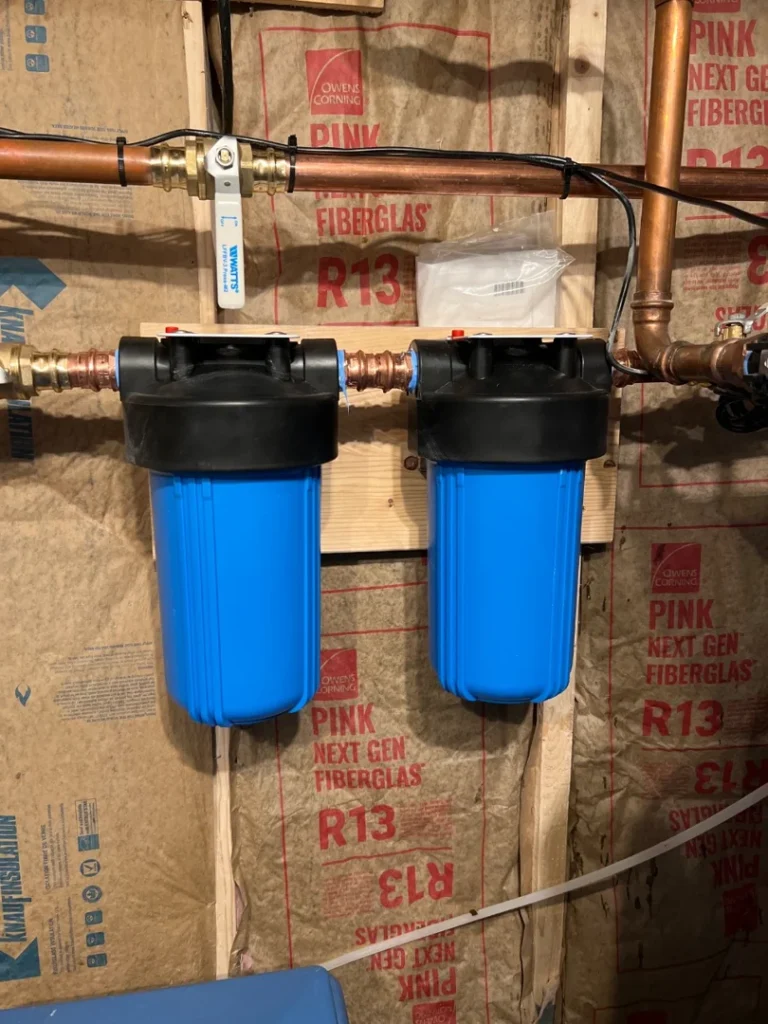
That’s why more Chicago-area homeowners are asking about whole house filtration, not just a pitcher or faucet filter. A point-of-entry system treats water before it ever reaches your pipes inside the home — meaning protection at every outlet, not just the kitchen sink.
According to the EPA, approximately 22 million Americans are affected by lead in drinking water each year, with children under six being the most vulnerable. There is no safe level of lead exposure, according to the CDC.
ProEcoLife has been helping Chicago families address exactly this problem since 2014. Founder Karol Dolega built the company specifically around the water challenges unique to this region — hard Lake Michigan water, aging infrastructure, and the very real risk of lead leaching from older service lines and indoor plumbing.
This guide walks you through the best whole house water filters certified for lead reduction, what to look for, and how to make the right choice for your home.
Quick look at best whole house water filter for lead:
- best faucet water filter for lead removal
- best way to remove lead from drinking water
- lead free drinking water
The Reality of Lead in Chicago’s Water Infrastructure
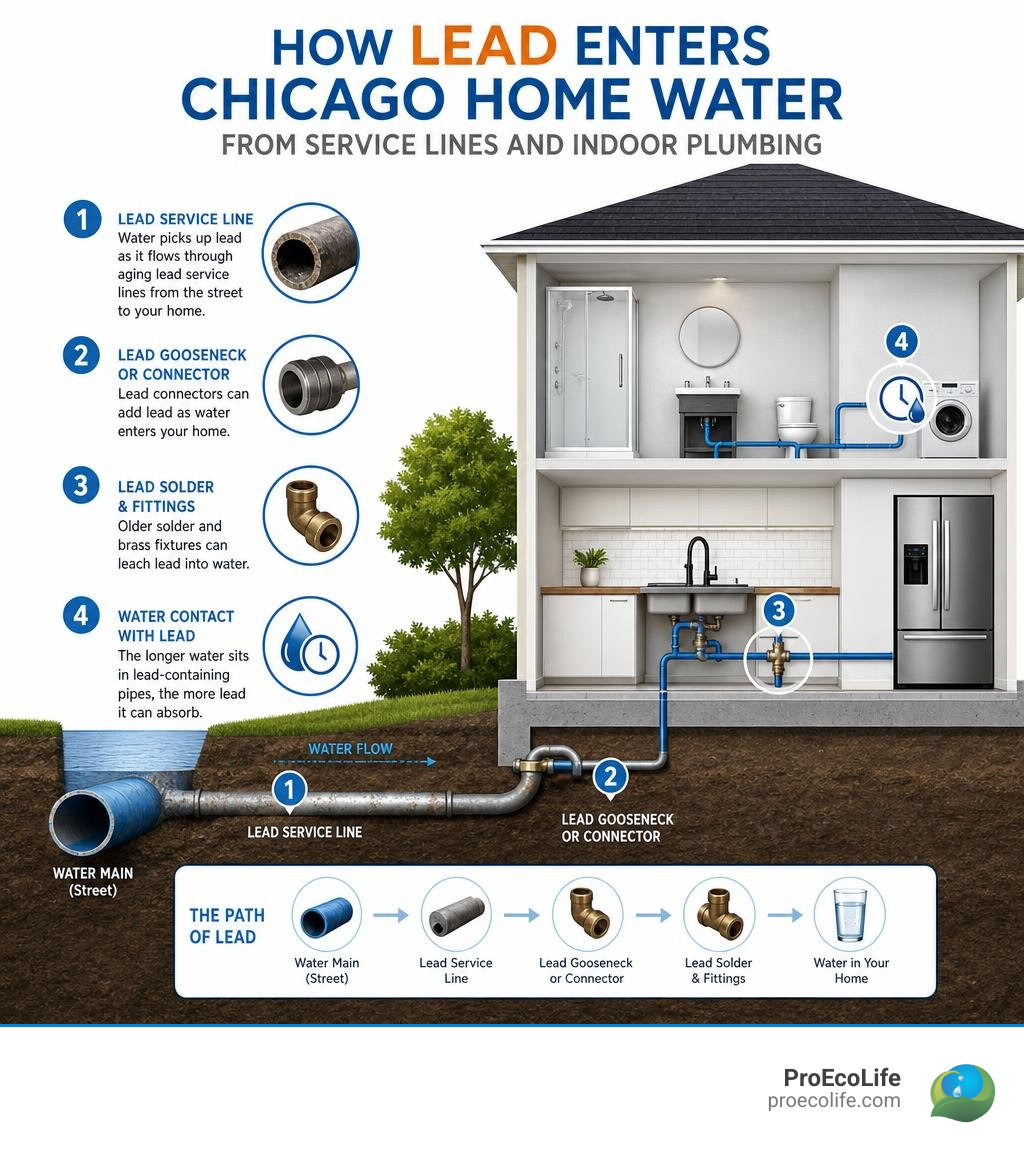
To understand why finding the best whole house water filter for lead is so vital, we have to look beneath our streets. Chicago’s water infrastructure is a complex, aging network. While Lake Michigan provides a fantastic source of fresh water, the journey that water takes from the treatment plant to your glass is where the trouble begins.
For decades, municipal plumbing codes in Chicago actually mandated the use of lead service lines for residential connections. This practice continued all the way up to 1986. As a result, our region has one of the highest concentrations of lead service lines in the nation. This isn’t just a downtown issue; it directly impacts older residential properties throughout the Northwest Side, including neighborhoods like Norwood Park, Edison Park, and Jefferson Park.

When water sits in these lead service lines or flows through vintage brass fixtures and lead-soldered copper pipes, the metal can leach into the water. This leaching is highly unpredictable. Changes in water temperature, municipal flow rates, and even minor construction on your street can cause spikes in lead levels. You can learn more about how local water departments manage these risks at Water – Lead-Safe Chicago.
The risk isn’t confined strictly to the city limits either. Surrounding communities share similar historic building trends. For instance, recent reports of Lead Found in Bartlett Drinking Water highlight that heavy metal contamination is a broad, regional challenge requiring robust home filtration solutions.
Understanding NSF/ANSI Certifications for Lead Reduction
When you begin shopping for a whole-house system, you will find many manufacturers claiming their systems remove lead. However, as water treatment experts serving Chicago homes since 2014, we always advise looking past marketing claims and focusing on official certifications.
Here is how the key NSF/ANSI standards relate to lead reduction in home filtration:
- NSF/ANSI Standard 53: This is the key standard to look for when lead reduction is the concern. A system certified under Standard 53 has been rigorously tested for lead reduction under defined lab conditions. Real-world performance still depends on Chicago water chemistry, plumbing condition, installation quality, and proper cartridge maintenance.
- NSF/ANSI Standard 372: This certification is often confused with lead filtration, but it actually only certifies that the system’s components are lead-free, meaning the wetted surfaces meet the applicable low-lead material requirement. A filter can be certified to NSF 372 and still have no certified ability to remove lead from your water.
- NSF/ANSI Standard 42: This standard covers aesthetic effects, such as the reduction of chlorine taste and odor. While useful for improving the taste of Lake Michigan source water after municipal disinfection, it does not guarantee the removal of heavy metals like lead.
For a deeper dive into decoding these standards for our local water supply, take a look at our comprehensive How to Choose the Best Lead Water Filter in Chicago: A 2026 Guide.
Need Clean, Safe Water at Home?
Get a free water test at your home or business. We install and service whole-house filtration and PEL75 reverse osmosis systems across Chicagoland. We also take select projects in Wisconsin and Indiana.
Book a Free Water TestCall (312) 889-8888Choosing the Best Whole House Water Filter for Lead in Chicago
Selecting the best whole house water filter for lead means finding a system that can handle the specific chemical makeup of our municipal water while maintaining adequate flow rates for a busy household. Chicago municipal water starts as Lake Michigan source water and is treated with chlorine or chloramines to prevent bacterial growth. While this keeps the water bacteriologically safe, it also means your lead filter has to work harder because it must reduce disinfectant byproducts and heavy-metal concerns without creating pressure problems in older homes.

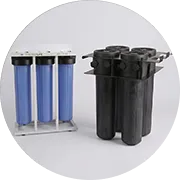
A high-quality system uses a multi-stage process. Typically, this starts with a sediment pre-filter to catch rust and silt, followed by specialized sub-micron carbon blocks or hybrid media designed to target both soluble and particulate lead. For residents seeking professional installation, working with local experts who understand regional plumbing codes is highly recommended. You can explore specialized local options through Water Filtration System Installation Services in Skokie, IL to ensure your system is integrated properly.
To understand what makes these systems perform well in our local environment, check out our guide on The Best Whole House Water Filtration Systems in Chicago for Crystal Clear Water.
Why a Point-of-Entry System is the Best Whole House Water Filter for Lead
Many homeowners ask if they can get by with just a simple filter at the kitchen sink. While point-of-use filters are excellent for drinking water, a point-of-entry (POE) whole house system provides a more comprehensive approach for homes with older Chicago plumbing, including properties in Norwood Park, Edison Park, Jefferson Park, Park Ridge, Niles, Des Plaines, Skokie, Glenview, Arlington Heights, and Morton Grove.
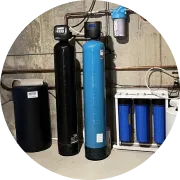
Lead concerns are not always limited to one faucet. Older service lines, brass fixtures, and aging interior plumbing can all contribute to variable lead levels, and results can change after street work or plumbing repairs. By installing ProEcoLife’s Whole House Filtration system at the main water line, water is treated before it travels through the rest of the home. That may help reduce exposure opportunities across household taps, showers, and appliances, though results vary based on water quality, plumbing, and maintenance.
For a thorough breakdown of how whole-house systems support your entire plumbing footprint, read our article From Shower to Sink: Finding the Best All House Water Filtration System.
Key Features of the Best Whole House Water Filter for Lead
When evaluating different whole-house models, keep these critical technical specifications in mind:
- Sub-Micron Filtration: Lead particles can be incredibly small. Stronger systems often utilize filters with a 0.5-micron nominal rating to mechanically reduce particulate lead, cysts, and other microscopic contaminants.
- Ionic Bonding Media: Dissolved lead cannot be addressed by physical filtration alone. Advanced systems may use specialized binders or ion-exchange resins that bond with soluble lead and hold it in the filter media.
- Flow Rate and Capacity: A whole-house system must deliver filtered water without causing a noticeable drop in water pressure. Look for systems that offer a robust flow rate for your household demand and a rated capacity appropriate for your actual water usage.
- Bypass Valves: A built-in bypass kit is important for service and maintenance. It allows a professional to isolate the filtration system when needed and helps protect the lead-reduction cartridges from unnecessary use when appropriate.
Discover more about how these engineering features work together in our article on the Whole House Filtration System.
Need Clean, Safe Water at Home?
Get a free water test at your home or business. We install and service whole-house filtration and PEL75 reverse osmosis systems across Chicagoland. We also take select projects in Wisconsin and Indiana.
Book a Free Water TestCall (312) 889-8888Whole House Filtration vs. Point-of-Use Systems
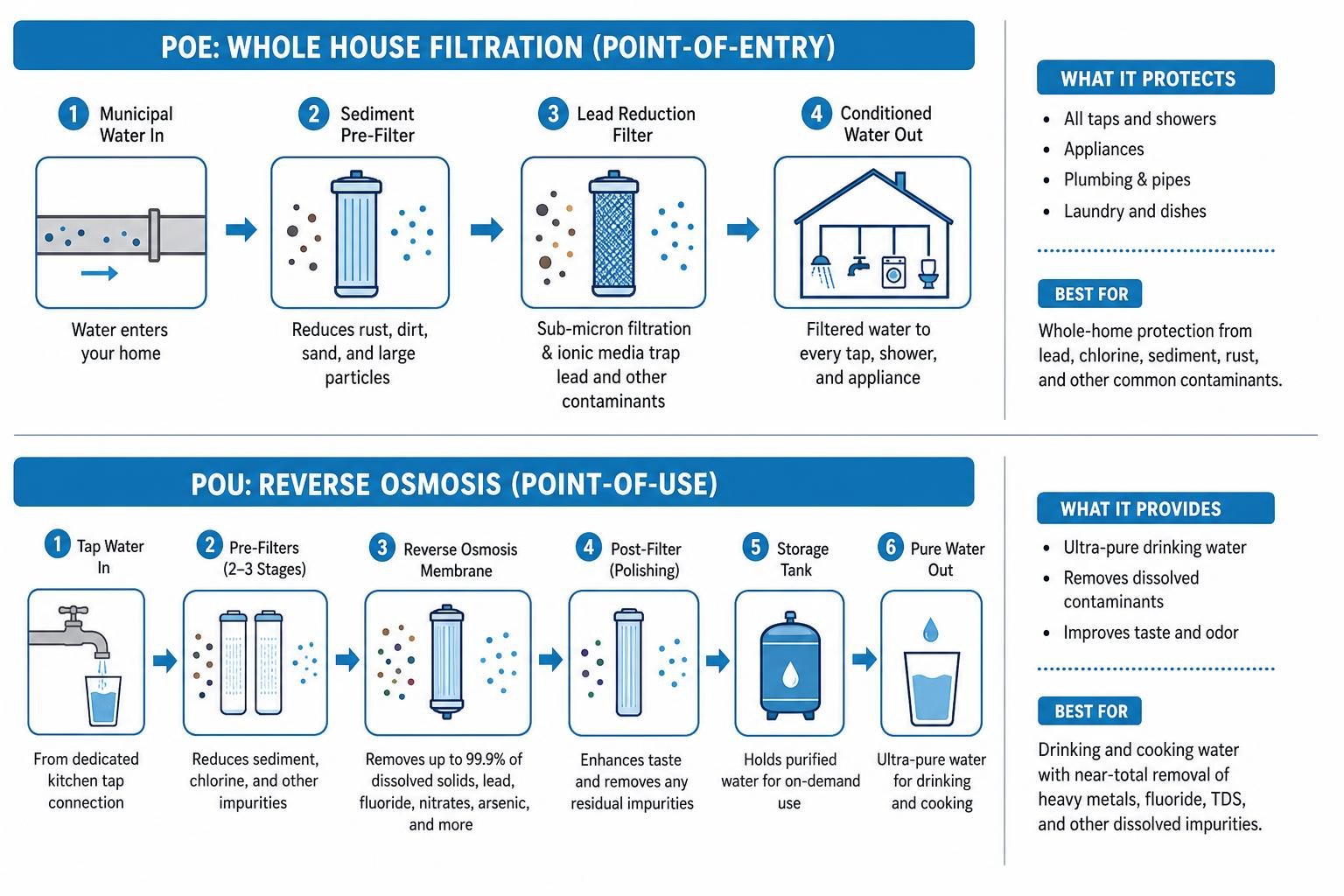
While a whole-house system is the main line of defense for your home’s plumbing network, it does have limitations when compared to point-of-use (POU) reverse osmosis (RO) systems. For drinking and cooking water, many Chicago families choose to pair ProEcoLife’s Whole House Filtration with a dedicated under-sink RO system.
| Feature | Whole House Filtration (POE) | Reverse Osmosis Systems (POU) |
|---|---|---|
| Primary Goal | Treats water for taps, showers, and appliances | Provides advanced filtration for drinking and cooking water |
| Lead Reduction | Can be highly effective with properly certified media and maintenance | Strong reduction potential for dissolved metals when properly installed and maintained |
| Other Contaminants | Chlorine, sediment, large particulates, rust | Fluoride, nitrates, arsenic, TDS, microplastics |
| Flow Rate | High enough for household use when properly sized | Lower flow, typically supported by a storage tank |
| Installation | Main water line with professional plumbing | Under the kitchen sink or countertop |
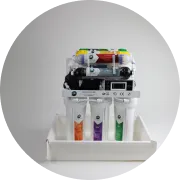
Our proprietary PEL75 9-Stage RO System is a strong example of a point-of-use system for Chicago homeowners who want an additional layer of treatment at the kitchen sink. By combining multiple stages of carbon filtration, a high-efficiency reverse osmosis membrane, and remineralization, it may help reduce lead, fluoride, and other microscopic impurities in drinking water. Actual results depend on incoming water quality, filter condition, and proper maintenance.
To learn more about how reverse osmosis provides an additional line of defense against heavy metals, read Get the Lead Out: How Reverse Osmosis Filters Save Your Tap and explore our detailed review, Heavy Metal Meltdown: The Best Way to Remove Lead from Drinking Water.
Hard Water Challenges in Chicago Suburbs
If you live in the Northwest suburbs—such as Park Ridge, Niles, Des Plaines, Skokie, Glenview, Arlington Heights, or Morton Grove—you are likely dealing with another major water issue: hard water.
Hard water contains high concentrations of dissolved calcium and magnesium. While these minerals aren’t toxic, they create scale buildup inside your pipes, water heater, and appliances. Scale can also interfere with filtration performance over time, especially in homes with higher water usage or older plumbing.
To address this, ProEcoLife may recommend Well Water Conditioning or a salt-free scale conditioner ahead of your lead filter, depending on your water test and plumbing layout. This dual-approach is designed to support both scale control and lead-reduction cartridge performance.
Frequently Asked Questions About Lead Water Filters
Do whole house water filters remove lead from every tap, including showers?
A properly sized and professionally installed point-of-entry whole house water filter treats water as it enters your home, so filtered water is delivered throughout the plumbing system, including showers, bathroom sinks, and laundry connections. In older Chicago homes with lead service lines or vintage fixtures, this whole-home approach may help reduce exposure opportunities beyond the kitchen sink. Results vary based on the specific system, water chemistry, pipe condition, and ongoing maintenance.
For more details on how whole-house systems support your entire home, check out No Lead No Worries: Your Guide to Lead-Free Drinking Water.
What is the typical lifespan and maintenance cost of a whole house lead filter?
The typical lifespan of a whole-house lead filter cartridge ranges from 100,000 to 150,000 gallons, which generally translates to about 6 to 12 months of use for an average household. Actual service life depends on Chicago water conditions, household size, sediment levels, and water usage. Systems equipped with smart meters or LED indicators can notify you when it’s time for a change based on actual water usage rather than just time. Maintenance costs will vary depending on the complexity of your multi-stage setup.
You can read more about what to expect regarding long-term ownership in our guide, All About Whole House Filters.
Do I need a professional to install a whole house water filter for lead?
Yes. A whole-house system is tied directly into your home’s main water line, and improper installation can lead to severe pressure drops, water leaks, or violations of local Chicago plumbing codes. Professional installation ensures that the system is positioned correctly, includes the necessary bypass valves, and functions safely.
Learn more about our professional standards by reading about Expert Water Filter Installation Services in Chicago.
Conclusion
Finding the best whole house water filter for lead is one of the most important steps you can take to better understand and manage your home’s water quality. In the Chicago area, where Lake Michigan source water travels through aging infrastructure and many older homes still face lead service line concerns, a properly selected point-of-entry filtration system can provide meaningful peace of mind.
At ProEcoLife, our Chicago roots since 2014 guide the way we design and recommend water treatment. Under the leadership of founder Karol Dolega, we focus on proprietary ProEcoLife technology built for local conditions—hard water in the Northwest suburbs, chlorine-treated municipal water, older plumbing on the Northwest Side, and the needs of both homes and businesses. Depending on your water test and property, that may include Whole House Filtration, the PEL75 9-Stage RO System, a Shower Filter System, Well Water Conditioning, or Commercial Water Filtration Systems.
For more insights on selecting the right system for your specific property, revisit our How to Choose the Best Lead Water Filter in Chicago: A 2026 Guide.
To evaluate your home’s water and discuss the right filtration approach, contact ProEcoLife to schedule a water test.