
Lead in Chicago’s Water Is a Real Risk — Here’s What Actually Works
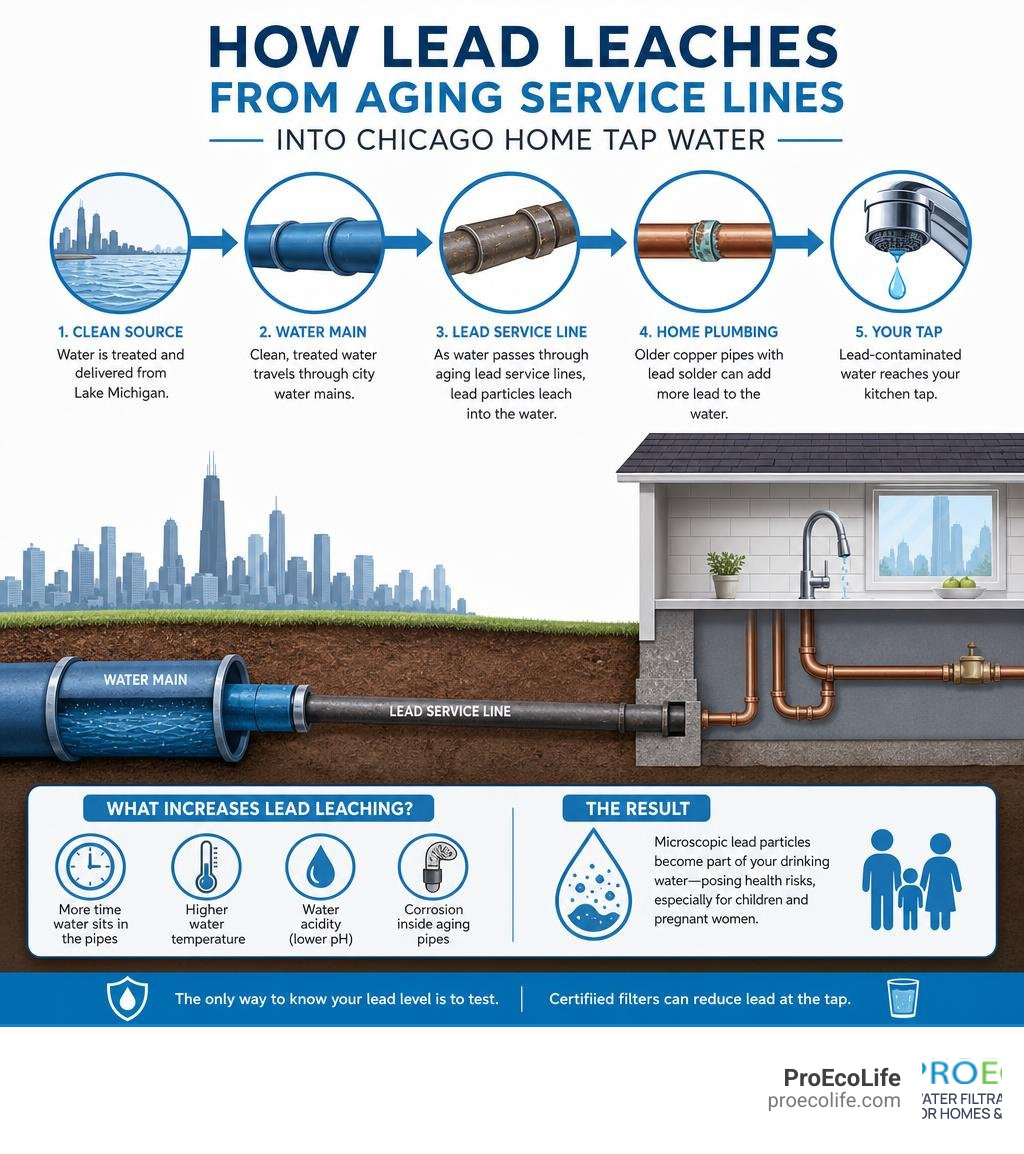
Finding the best faucet water filter for lead removal matters more in Chicago than almost anywhere else in the country. Tens of thousands of homes across the city — from Norwood Park bungalows to Edison Park two-flats to older Jefferson Park properties — still connect to the water main through lead service lines. Even where those lines have been replaced, pre-1986 copper plumbing inside the home often contains lead solder that leaches directly into your drinking water.
Lake Michigan is a clean source. The problem isn’t where Chicago’s water starts — it’s the aging infrastructure it travels through before reaching your tap.
The EPA’s action level for lead is 15 ppb, but the actual safe level is zero. The CDC and American Academy of Pediatrics agree: no amount of lead exposure is safe, especially for children and pregnant women.
Quick Answer: Faucet Filters for Lead Removal (2026)
While some retail faucet-mounted filters carry NSF/ANSI Standard 53 certification for lead reduction, they are temporary point-of-use options. Many standard retail models only carry NSF/ANSI Standard 42 (for chlorine taste and odor) and are not certified to remove lead. Always verify the exact certification before relying on a retail tap attachment.
Important: Only filters certified to NSF/ANSI Standard 53 are verified for lead reduction. “Tested to NSF standards” is not the same as certified. Always verify before buying.
Founder Karol Dolega started ProEcoLife in Chicago in 2014 specifically because of concerns like these — helping Northwest Side families and suburban homeowners in Park Ridge, Niles, Des Plaines, and beyond get real answers about what’s in their water.
This guide covers faucet-mounted options on the market, how they compare to more advanced systems, and what Chicago homeowners specifically need to know before making a decision.
Evaluating the Best Faucet Water Filter for Lead Removal
When looking for the best faucet water filter for lead removal, it helps to understand how these compact, point-of-use systems actually work. Typically, a faucet-mounted filter relies on a blend of activated carbon and ion exchange resin packed inside a small cartridge that clips directly onto your kitchen tap.

As water passes through the filter, the activated carbon acts as a physical barrier to catch larger sediment and absorb organic compounds, while the ion exchange media chemically binds to dissolved heavy metals like lead. This dual-action process is highly effective for basic filtration, transforming bad-tasting municipal water by reducing aesthetic chlorine, odors, and certain particulates. For a deeper dive into the mechanics of these tap attachments, you can read our guide on Jak działa filtr do wody do kranu i czy naprawdę warto.
However, independent evaluations, including the Best Faucet-Mounted Water Filters of 2026 – Consumer Reports , highlight a few critical trade-offs with faucet-mounted units:
- Flow Rate Restrictions: Because the water pressure from your tap must force its way through a highly dense carbon block to trap microscopic lead particles, the flow rate drops significantly. Certified lead-removal faucet filters typically restrict your flow to around 0.4 to 0.7 gallons per minute (GPM). While some retail models boast a much faster flow rate, they are often only certified for chlorine reduction (NSF 42) and do not carry the certification required to safely remove lead.
- Frequent Replacements: Faucet filters have a very limited lifespan—usually around 100 gallons, which translates to roughly 2 to 3 months of typical household use. If you forget to change the cartridge, the accumulated contaminants can actually begin to leach back into your drinking water.
- Limited Contaminant Coverage: While a quality faucet filter can handle lead and chlorine, it cannot remove complex dissolved solids, nitrates, fluoride, arsenic, or microbial hazards like viruses and bacteria.
For many Chicago families, a faucet filter serves as an affordable, temporary stopgap. But relying on a small plastic attachment to protect your family from a potent neurotoxin in a high-risk area can feel like putting a band-aid on a structural foundation issue.
Need Clean, Safe Water at Home?
Get a free water test at your home or business. We install and service whole-house filtration and PEL75 reverse osmosis systems across Chicagoland. We also take select projects in Wisconsin and Indiana.
Book a Free Water TestCall (312) 889-8888How Faucet-Mounted Filters Compare to Advanced Systems
To truly understand where faucet filters fit in your home water strategy, we need to compare them to more robust, professional-grade systems. Point-of-use faucet attachments and gravity pitchers are convenient, but they process water under low pressure and with minimal surface area.
If you are trying to decide between a simple tap attachment and an under-sink system, it is highly useful to look at Czym się różni filtr do wody do kranu od klasycznego dzbanka filtrującego to understand how different point-of-use styles compare. However, if your ultimate goal is the complete removal of heavy metals, you should explore our detailed breakdown on Jak usunąć metale ciężkie z wody.
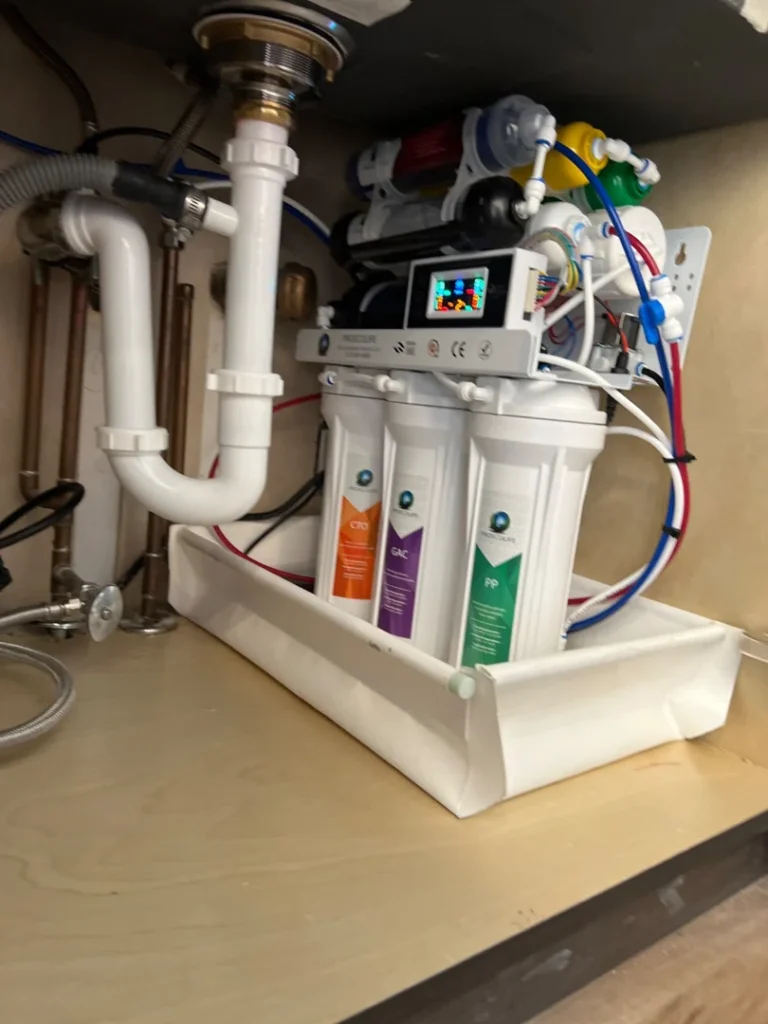
Here is how faucet filters stack up against professional-grade reverse osmosis (RO) systems, such as our PEL75 9-Stage RO System:
| Performance Metric | Certified Faucet-Mounted Filter | Professional PEL75 9-Stage RO System |
|---|---|---|
| Lead Removal Efficiency | Up to 99% (when brand new) | Up to 99.99% (consistent over lifespan) |
| Filter Lifespan | 100 gallons (approx. 2–3 months) | Up to 1,000+ gallons for pre-filters; years for membrane |
| Flow Rate | Highly restricted (0.44–0.7 GPM) | High-pressure, on-demand filtered water |
| Contaminants Removed | Lead, chlorine, basic sediment | Lead, arsenic, chromium, fluoride, nitrates, VOCs, microplastics, PFAS, bacteria |
| Hard Water Performance | Poor (clogs quickly in hard water) | Excellent (utilizes multi-stage membrane protection) |
| Annual Maintenance Cost | $40 – $80 per year (frequent replacements) | Low per-gallon cost, highly efficient long-term |
In the Northwest suburbs of Chicago — including Niles, Park Ridge, and Des Plaines — municipal water often carries a high mineral content. This hard water can cause rapid scale buildup inside the tiny, dense carbon blocks of faucet filters, clogging them long before they reach their advertised 100-gallon capacity.
Furthermore, point-of-entry whole-house systems protect your home’s plumbing and appliances, but for absolute drinking water safety, a high-pressure, multi-stage point-of-use system is the gold standard. While the Best Water Filters for Lead (2026) | ZipCheckup highlights various retail options, nothing matches the thoroughness of a professional 9-stage RO system that physically strips away dissolved heavy metals down to the molecular level, ensuring that lead never makes it to your glass.
Need Clean, Safe Water at Home?
Get a free water test at your home or business. We install and service whole-house filtration and PEL75 reverse osmosis systems across Chicagoland. We also take select projects in Wisconsin and Indiana.
Book a Free Water TestCall (312) 889-8888Key Certifications to Verify Before Buying
If you decide to purchase a retail water filter, you must look past the creative marketing language on the box. Phrases like “tested to NSF standards” or “green leaf certified” are often self-declared manufacturer claims that carry no legal weight.
To ensure a filter actually removes lead, you must verify third-party certifications from recognized, accredited organizations such as the National Sanitation Foundation (NSF), the Water Quality Association (WQA), or the International Association of Plumbing and Mechanical Officials (IAPMO).
When reviewing a product, look for these specific standards:
- NSF/ANSI Standard 53 (Health Effects): This is the crucial certification for lead reduction. It verifies that the filter has been independently tested to reduce lead concentrations from a high baseline down to below the EPA’s safety thresholds.
- NSF/ANSI Standard 58 (Reverse Osmosis): This standard applies specifically to reverse osmosis systems, certifying their ability to reduce heavy metals, total dissolved solids (TDS), and other health-related contaminants under pressure.
- NSF/ANSI Standard 372 (Lead-Free Materials): This standard does not mean the filter removes lead from your water. Instead, it certifies that the system’s internal components and plumbing connections are lead-free. Do not mistake an NSF 372 seal for an NSF 53 lead-reduction certification!
For a deeper look at what to look for when investing in your home’s health, read our guide on Filtr do uzdatniania wody – na co zwrócić uwagę przed zakupem.
Local advocacy groups have also done incredible work helping Chicagoans navigate these confusing labels. We highly recommend reading the How to Choose a Water Filter to Protect Against Lead – City Bureau for a community-focused perspective on managing lead risks in local neighborhoods.
Frequently Asked Questions About Lead Filtration
What is the best faucet water filter for lead removal in older homes?
For older homes built before 1986 — which are highly likely to have lead solder, lead service lines, or older brass fixtures containing up to 8% lead — any faucet-mounted filter you choose must be strictly certified to NSF/ANSI Standard 53 for lead reduction.
However, you must treat faucet filters in these environments as temporary, short-term mitigation. If your home has a high level of lead leaching, a small carbon block will saturate incredibly fast, leaving you with a false sense of security.
As a temporary safety measure, we always recommend practicing the first-flush protocol: before using tap water for drinking or cooking, run your cold water tap for 30 seconds to 2 minutes. This flushes out the water that has been sitting stagnant in contact with lead-containing pipes. For a detailed breakdown of how faucet attachments compare to other basic systems, check out the Quick Guide to Faucet Filters – Tap Score water test .
For older Chicago homes, a professional under-sink reverse osmosis system or whole-house filtration system is the only way to guarantee long-term, fail-safe protection.
How does the best faucet water filter for lead removal perform against other contaminants?
While a certified faucet filter can remove up to 99% of lead and reduce chlorine taste and odor, its performance against other common drinking water contaminants is quite limited. Faucet filters are generally ineffective at removing:
- Fluoride
- Arsenic
- Nitrates and Nitrites
- Microplastics (unless specifically certified)
- Volatile Organic Compounds (VOCs)
- Bacteria, viruses, and cysts
If you want to understand what different filtration technologies can handle, read our educational article on How to Choose a Water Filter. For comprehensive protection, our PEL75 9-Stage RO System outperforms basic faucet filters by utilizing a multi-stage process that includes sediment pre-filters, carbon blocks, a semi-permeable reverse osmosis membrane, and polishing stages to remove virtually all dissolved solids and impurities.
Does boiling water remove lead?
No. Boiling water does not remove lead. This is one of the most dangerous water safety myths.
Lead is a heavy metal, not a biological pathogen. When you boil water, the water evaporates into steam, but the lead remains behind. Because the volume of water decreases while the amount of lead stays the same, boiling actually concentrates the lead, making the water more toxic. Never boil water to try and make it safe from lead. Only certified physical filtration can remove heavy metals from your drinking water.
Conclusion
When it comes to protecting your family from lead, there is no room for guesswork. While a certified faucet-mounted filter can offer a quick, low-cost way to reduce lead and improve taste, it is a temporary solution that requires constant vigilance, frequent filter changes, and offers no protection against a wide range of other dissolved contaminants.
At ProEcoLife, we believe Chicago families deserve permanent peace of mind. Since 2014, founder Karol Dolega and our dedicated team have been helping homeowners across Chicago’s Northwest Side — including Norwood Park, Edison Park, and Jefferson Park — as well as nearby suburbs like Skokie, Glenview, Arlington Heights, and Morton Grove, secure clean, healthy water.
Whether you need a PEL75 9-Stage RO System for pristine drinking water, a Whole House Filtration system to protect your entire home, a Shower Filter System for healthier skin, or advanced Well Water Conditioning and Commercial Water Filtration Systems, we have the local expertise to design the perfect solution for your home’s unique water profile.
If you want to explore how to choose the absolute best setup for your home, take a look at our comprehensive resource: How to Choose the Best Lead Water Filter in Chicago: A 2026 Guide.
Ready to find out what is actually in your tap water? Contact ProEcoLife today to schedule a professional water test at (312) 889-8888 or visit proecolife.com.