

Which Water Filter Systems Remove Lead?
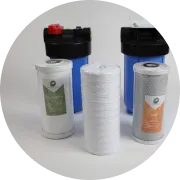
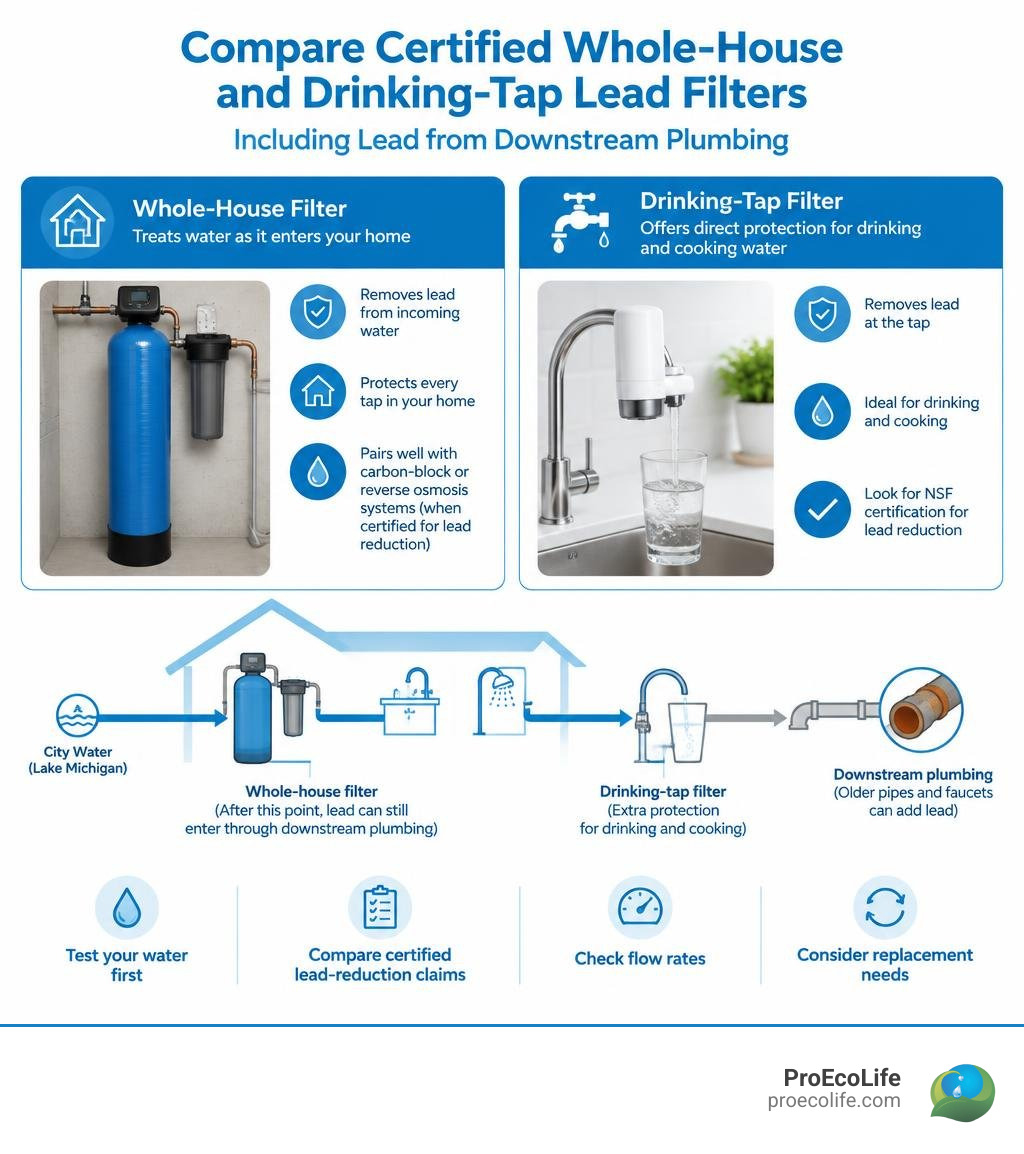
Water filter systems that remove lead include carbon-block filters and reverse osmosis systems when the specific model is certified for lead reduction. A whole-house filter treats water as it enters your home, but older pipes or faucets can add lead after that point. For drinking and cooking, a certified filter at the tap may offer more direct protection.
Chicago’s water comes from Lake Michigan, yet lead can enter it through aging service lines and plumbing in older homes. Hard water in the Northwest suburbs can add another concern when choosing and maintaining a system. Test your water first, then compare certified lead-reduction claims, flow rates, and replacement needs before buying.
Water filter systems that remove lead basics:
- NSF certified water filters list
- Reverse osmosis system lead
- Whole house water filtration system to remove lead
How Point-of-Entry Treatment Addresses Lead Throughout the Home
Understanding how heavy metals enter residential taps requires a close look at local infrastructure. While Lake Michigan provides a clean starting point, water travels through miles of underground infrastructure before reaching kitchen sinks. In older bungalows and two-flats across Chicago’s Northwest Side—including neighborhoods like Norwood Park, Edison Park, and Jefferson Park—as well as near suburbs like Park Ridge, Niles, and Skokie, millions of aging lead service lines remain underground.
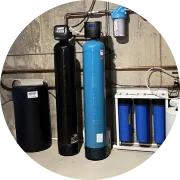
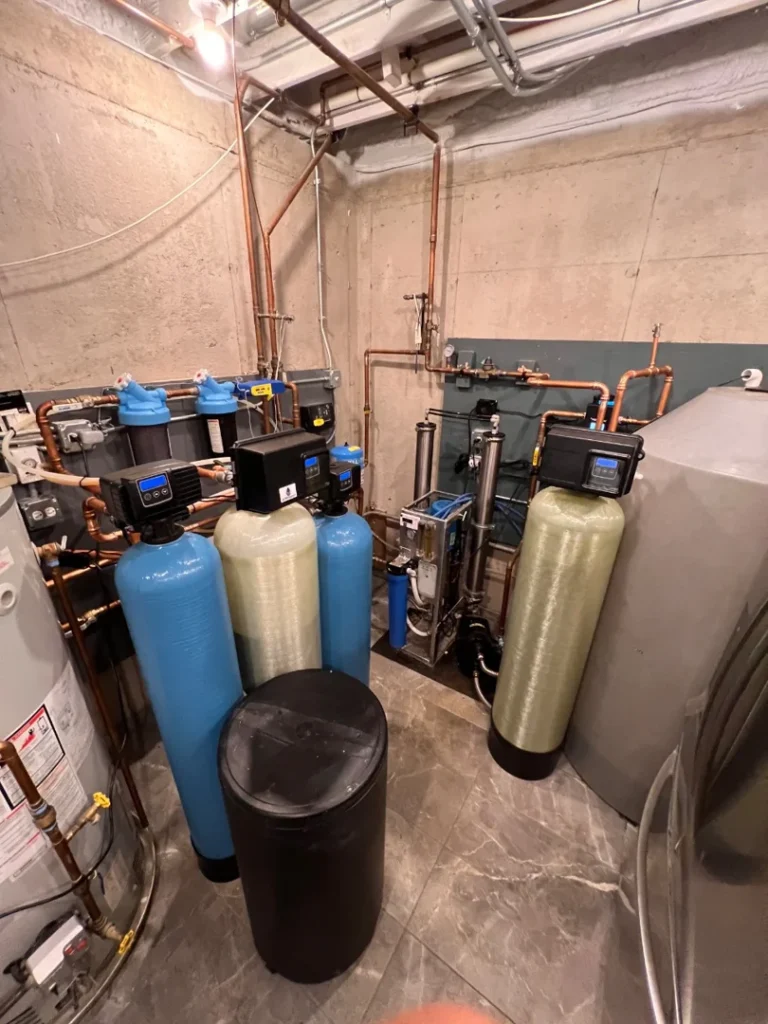
When water sits in these utility pipes, lead leaches into the flow. Installing point-of-entry treatment ensures that water is purified right as it enters your basement before it circulates through your home’s water heater, dishwashers, and showerheads. These systems ensure compliance with regional health targets and align with municipal guidelines for safe water.
| Filtration Technology | Lead Reduction Mechanism | Typical Flow Rate | Water Waste Ratio | Routine Maintenance |
|---|---|---|---|---|
| Point-of-Entry Carbon Block | Physical adsorption and chemical binding | High (8–15 GPM) | Zero wastewater | Cartridge replacement every 6–12 months |
| Point-of-Use Reverse Osmosis | Semi-permeable cross-flow membrane | Moderate (0.5–1 GPM) | 1 to 6 gallons drained per gallon produced | Multi-stage filter and membrane service every 6–24 months |
| Ion Exchange Media | Resin-based cation substitution | High (10–12 GPM) | Low backwash volume | Salt regeneration and annual media checks |
| Granular Activated Carbon (GAC) | Basic surface adsorption | Moderate (5–10 GPM) | Zero wastewater | Frequent replacement; less effective for soluble lead |
How Whole-House Filtration Protects Plumbing Fixtures
Point-of-entry setups protect your interior infrastructure from abrasive particulate matter and heavy metals. When heavy metals and sediment flow unchecked into a residence, they degrade rubber seals, corrode valves, and build up in hot water tanks. By reviewing the best whole house water filters reviewed, homeowners discover how entry-point filtration preserves downstream appliances.
However, an entry-point setup cannot remove contaminants that originate after the basement filter. If interior copper plumbing is joined by vintage lead solder, or if older brass bathroom fixtures contain small amounts of lead, these alloys may leach metals directly into standing water at the faucet. Pairing central entry-point protection with specialized filtration at kitchen sinks provides comprehensive coverage.
Why Specialized Carbon and RO Are Critical for Lead Reduction
Lead in drinking water exists in two distinct forms: particulate (solid microscopic flakes) and soluble (dissolved ions). Standard particulate filters or sediment screens catch loose debris, but dissolved soluble lead passes right through basic meshes.
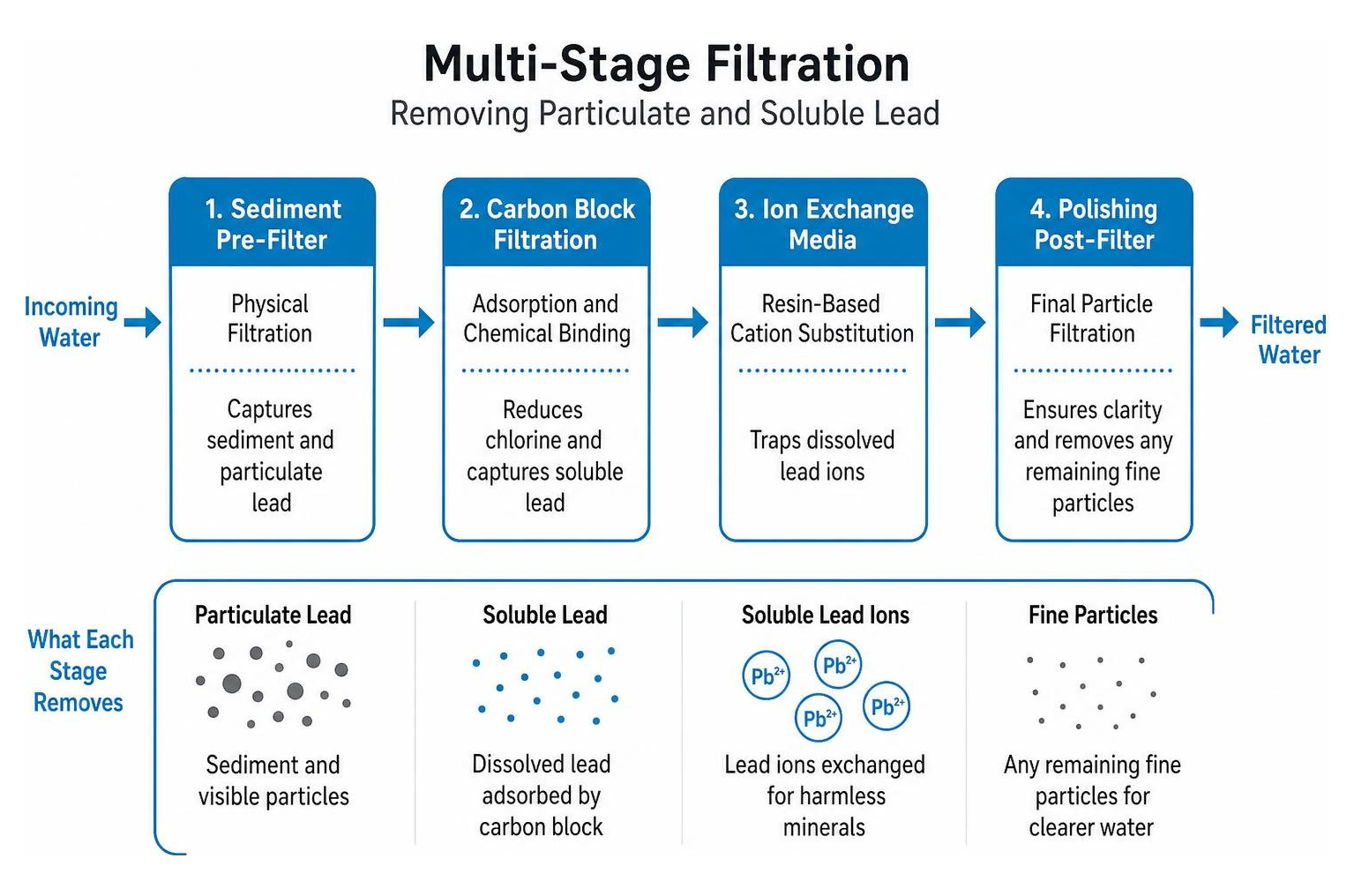
Capturing soluble heavy metals requires specialized dense carbon block formulations or semipermeable membranes. Exploring the best home water filters for total lead removal highlights the importance of choosing media engineered with chemical binding agents. Additionally, while whole-house systems strip away chlorine and chloramines to prevent dry skin, removing protective disinfectants from interior plumbing creates a minor risk of bacterial accumulation if water sits stagnant. This makes dedicated final-barrier purification at high-use taps vital for cooking and drinking.
Need Clean, Safe Water at Home?
Get a free water test at your home or business. We install and service whole-house filtration and PEL75 reverse osmosis systems across Chicagoland. We also take select projects in Wisconsin and Indiana.
Book a Free Water TestCall (312) 889-8888Types of Water Filtration Technologies for Heavy Metal Removal
Selecting the ideal filtration mechanism depends on raw water chemistry, house size, and local pipe conditions. Suburbs such as Glenview, Arlington Heights, Morton Grove, Des Plaines, and Lincolnwood encounter varying water hardness and pipe ages, which influences filter life and media performance. Reviewing city regulations on lead water service lines reveals that thousands of properties still rely on legacy underground connections.

Evaluating Carbon Block Water Filter Systems That Remove Lead
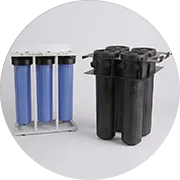
Activated carbon is a staple of modern water purification. Solid carbon blocks are compressed into uniform cylinders with microscopic pores, offering two to three times greater surface area than loose granular activated carbon (GAC).
- Adsorption Capacity: High-density carbon blocks chemically trap dissolved lead ions alongside chlorine, volatile organic compounds (VOCs), and pesticides.
- Flow Rate Support: Whole-house carbon blocks accommodate the high gallon-per-minute requirements of large households running showers and laundry simultaneously.
- Sediment Pre-Filters: Pairing carbon with dedicated pre-filtration catches rust, silt, and pipe scale, preventing premature clogging and extending the lifespan of the core carbon media.
- Target Gaps: Standard activated carbon without specialized chemical bonding does not capture all dissolved inorganic minerals, such as nitrates or perchlorate, meaning lead-specific certification remains necessary.
Reverse Osmosis Water Filter Systems That Remove Lead
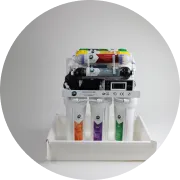
For unmatched purity at the tap, reverse osmosis (RO) forces pressurized water against a semipermeable membrane with microscopic pores sized around 0.0001 microns. This tight barrier rejects dissolved heavy metals, microplastics, and total dissolved solids (TDS).
Because RO cross-flow filtration washes the membrane surface during operation, conventional systems direct between 1 and 6 gallons of rinse water down the drain for every single gallon of purified water produced. Our PEL75 9-Stage RO System addresses these filtration challenges by incorporating multi-stage pre-filtration, advanced high-rejection membranes, and dedicated re-mineralization stages. This restores essential minerals like calcium and magnesium that improve water taste and balance pH levels.
Homeowners can review top-rated reverse osmosis systems to remove lead from your home to see how combining multi-stage RO units under the sink with whole-house filtration creates a dual-defense barrier.
Need Clean, Safe Water at Home?
Get a free water test at your home or business. We install and service whole-house filtration and PEL75 reverse osmosis systems across Chicagoland. We also take select projects in Wisconsin and Indiana.
Book a Free Water TestCall (312) 889-8888Key Certification Standards and Water Quality Thresholds
Relying on unverified product claims can leave households exposed to hazardous heavy metals. Independent verification ensures that a system performs reliably under pressure. The EPA sets an action level of 15 parts per billion (ppb) for municipal water systems, while the FDA enforces a strict threshold below 5 ppb for commercial bottled water. Checking local utility drinking water quality guidance helps determine baseline water quality before choosing equipment.
NSF/ANSI Standards 53 and 58 Explained
Third-party testing labs, such as NSF International and the Water Quality Association (WQA), verify mechanical strength and contaminant reduction.
- NSF/ANSI Standard 53: Validates point-of-use and point-of-entry systems (primarily specialized carbon block filters) for reducing contaminants with known health effects, specifically soluble and particulate lead.
- NSF/ANSI Standard 58: Certifies reverse osmosis systems for structural durability, component material safety, recovery ratings, and the high-efficiency reduction of heavy metals, including lead and copper.
- NSF/ANSI Standard 42: Covers aesthetic effects, validating the reduction of chlorine, bad odors, and visible turbidity.
What to Do When Tap Water Lead Levels Exceed 150 ppb
Standard residential filtration certifications are validated against challenge concentrations up to 150 ppb. If independent testing indicates that household tap water contains lead exceeding 150 ppb, standard consumer filters may experience rapid media exhaustion, allowing contaminants to break through.
In extreme contamination scenarios, point-of-use filtration must be combined with immediate utility isolation. Installing a comprehensive whole house water filtration system to remove lead alongside high-capacity point-of-use treatment helps mitigate risks, while aging exterior intake connections should be slated for physical utility replacement.
Total Cost of Ownership, Water Waste, and Maintenance Schedules
Investing in household water treatment involves balancing initial equipment investments with long-term consumable costs. While purchasing bottled water can accumulate significant expenses for busy households, running dedicated home purification systems may lower operating costs over time. Many customers notice that treated water from a properly maintained system costs a fraction of what they previously spent on bottled water.
Upfront Costs vs. Ongoing Maintenance Costs
Point-of-use systems and comprehensive central equipment involve distinct operational expenses:
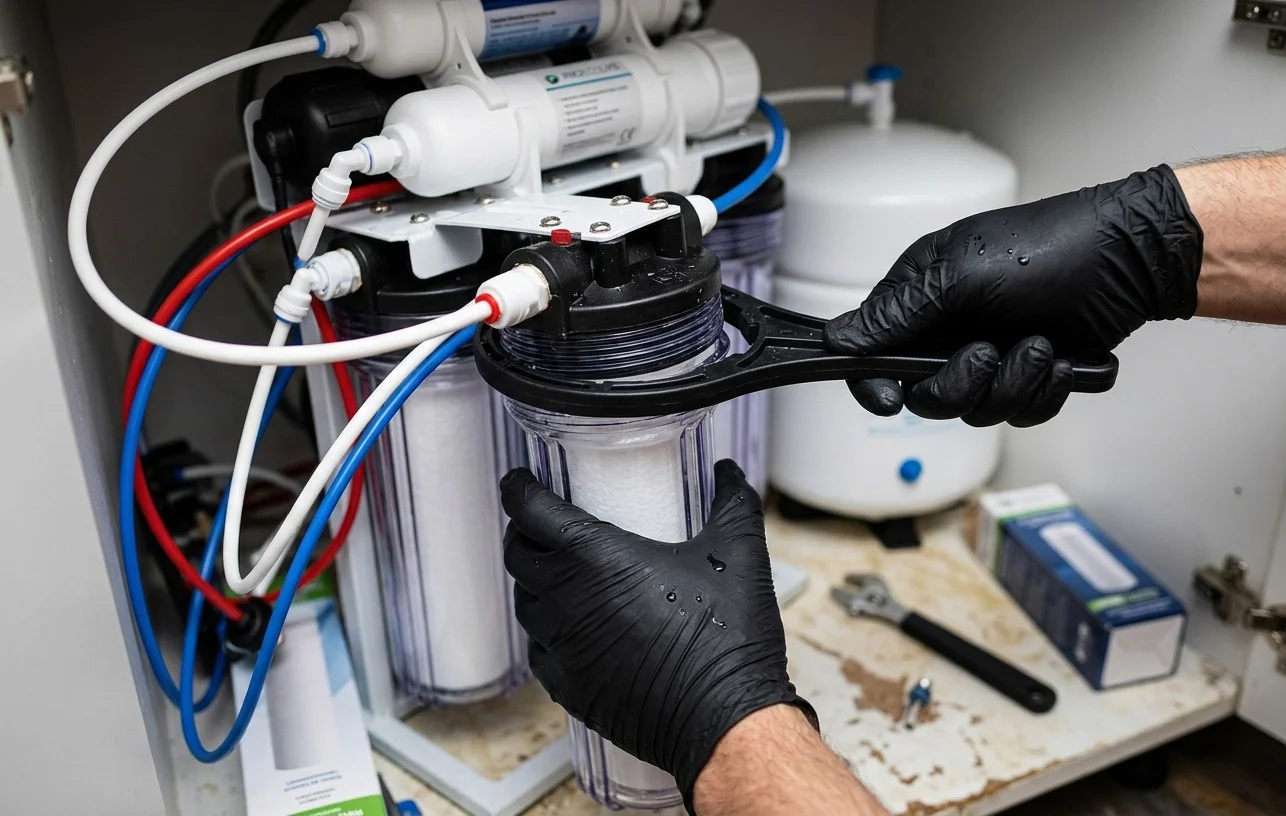
- Under-Sink Carbon Filters: Involve an initial equipment investment and modest annual cartridge replacements, with ongoing costs that vary by household water usage and local water quality.
- Under-Sink RO Units: Feature a multi-cartridge array and annual filter swaps, balancing operating expenses with minimal drain discharge.
- Whole-House Filtration: Protects indoor plumbing, hot water heaters, and washing machines from scaling and corrosion, potentially reducing hidden appliance repair bills over time.
- Water Waste Management: While point-of-entry carbon systems operate with zero discharge, high-efficiency RO systems direct concentrated wastewater away from drinking taps, making right-sized system planning essential.
Best Practices for Filter Replacement and Sanitization
Filter media eventually reaches a saturation threshold. When carbon pores or membrane surfaces become crowded with captured particles, performance may decline, potentially causing contaminant breakthrough.
- Monitor Pressure Drops: A noticeable reduction in tap flow rate may indicate that sediment pre-filters are loaded with particulate matter.
- Follow Calendar Schedules: Replace high-capacity carbon blocks every 6 to 12 months, and service RO membranes every 2 to 3 years.
- Perform Routine Housing Sanitization: Sanitize filter canisters with food-grade sanitizing solutions during cartridge swaps to help prevent bacterial growth.
- Flush New Media: Run clean water through replacement cartridges for several minutes upon installation to wash away manufacturing carbon fines.
Frequently Asked Questions About Lead Water Filtration
How Can You Confirm a Whole-House System Is Reducing Lead?
Visual inspections cannot confirm heavy metal reduction, as lead remains completely odorless and invisible in solution. The only reliable verification method is professional laboratory water testing. Collect a baseline water sample before filtration, along with a secondary sample from an interior tap after installation, to verify that lead levels remain well below health thresholds.
Do whole-house water filters remove lead from all plumbing fixtures?
A whole-house system purifies all incoming water at the basement entry point. However, if your home features interior lead-soldered copper pipes or vintage brass faucets, small amounts of heavy metals may still leach into standing water downstream of the main filter. For total protection, we recommend combining central treatment with our point-of-use PEL75 9-Stage RO System at the kitchen tap.
Will a lead water filter also eliminate PFAS and other emerging contaminants?
Dense carbon block filters and reverse osmosis membranes certified for health effects offer robust broad-spectrum chemical reduction. These systems help trap per- and polyfluoroalkyl substances (PFAS), industrial solvents, microplastics, and chlorine disinfection byproducts, delivering clean water for your entire home.
Conclusion
Guarding your home against municipal infrastructure risks requires verified, multi-stage water filtration. Since 2014, ProEcoLife founder Karol Dolega and our dedicated team have engineered custom purification solutions tailored to Lake Michigan source water and the legacy piping of Chicagoland homes. From high-capacity Whole House Filtration, Well Water Conditioning, and Shower Filter Systems to our advanced Commercial Water Filtration Systems and PEL75 9-Stage RO System, we provide targeted protection for every property.
To explore options for your home, review our 2026 guide to choosing the best lead water filter. Contact ProEcoLife today to schedule a water test for your home by calling (312) 889-8888 or visiting proecolife.com.