
Lead in Chicago’s Water Is a Real Risk — Here’s What Actually Works
If you’re researching a reverse osmosis system for lead removal, here’s the short answer: yes, RO systems are one of the most effective tools available, with residential-grade filters removing up to 99% of lead from drinking water.
Quick answer for Chicago homeowners:
- RO systems force water through a semi-permeable membrane with pores as small as 0.0001 microns
- That’s small enough to block lead particles, heavy metals, PFAS, and dozens of other contaminants
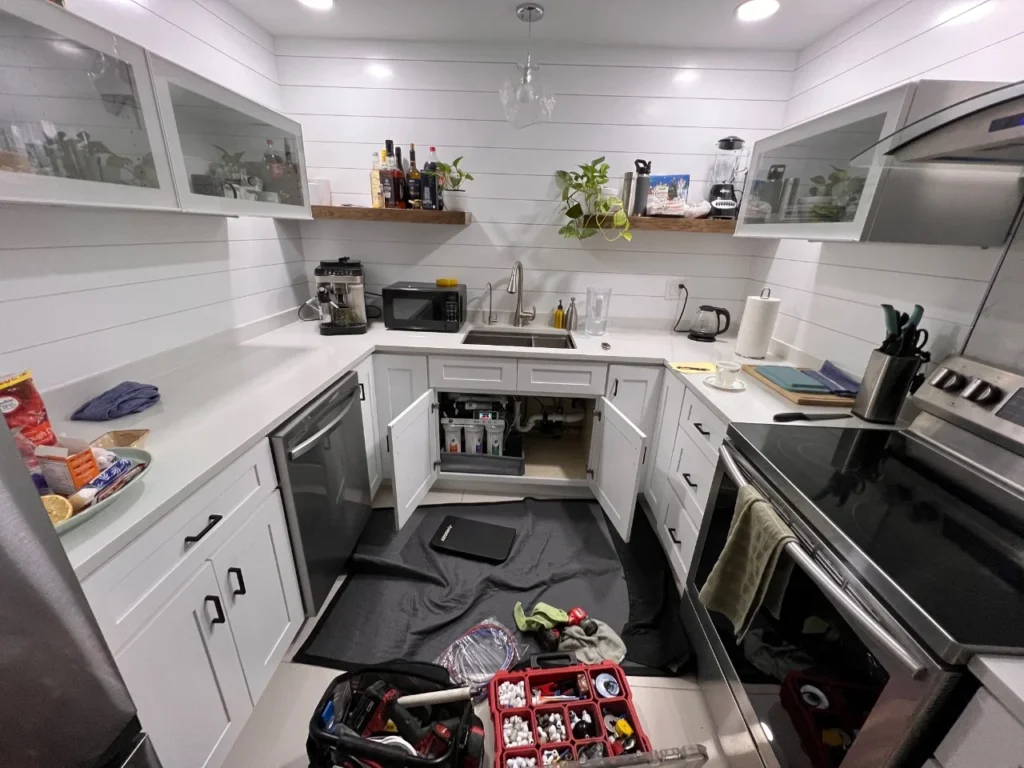
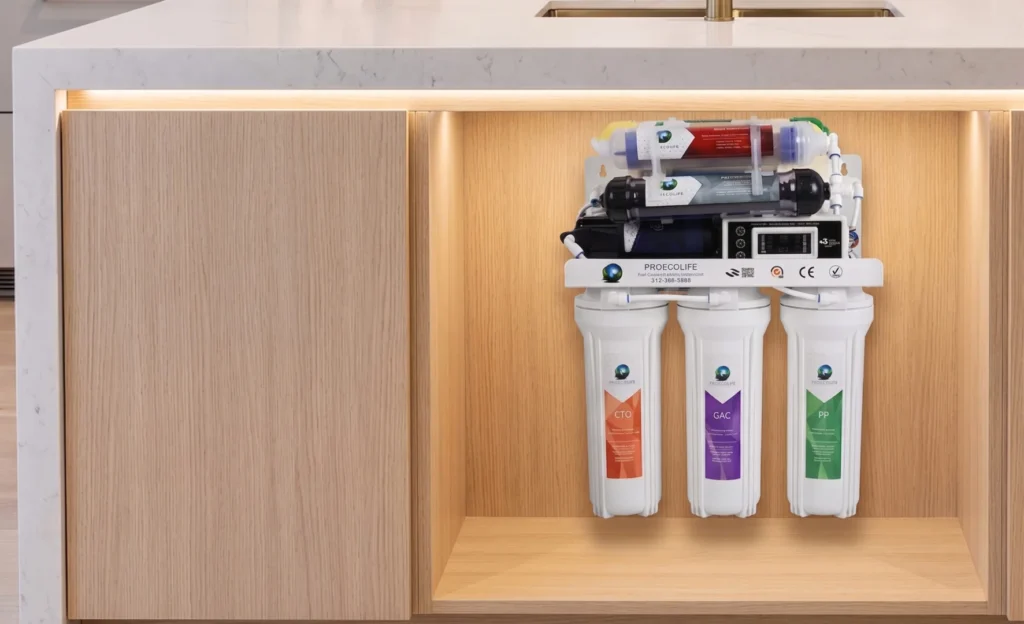
- Point-of-use RO systems like the ProEcoLife PEL75 9-Stage RO System are installed under your kitchen sink and treat water right at the tap
- They’re one of the fastest ways to protect your family while Chicago-area municipalities work through years-long lead service line replacement programs
But understanding why this matters so much in Chicago specifically — and which system is right for your home — takes a little more context.
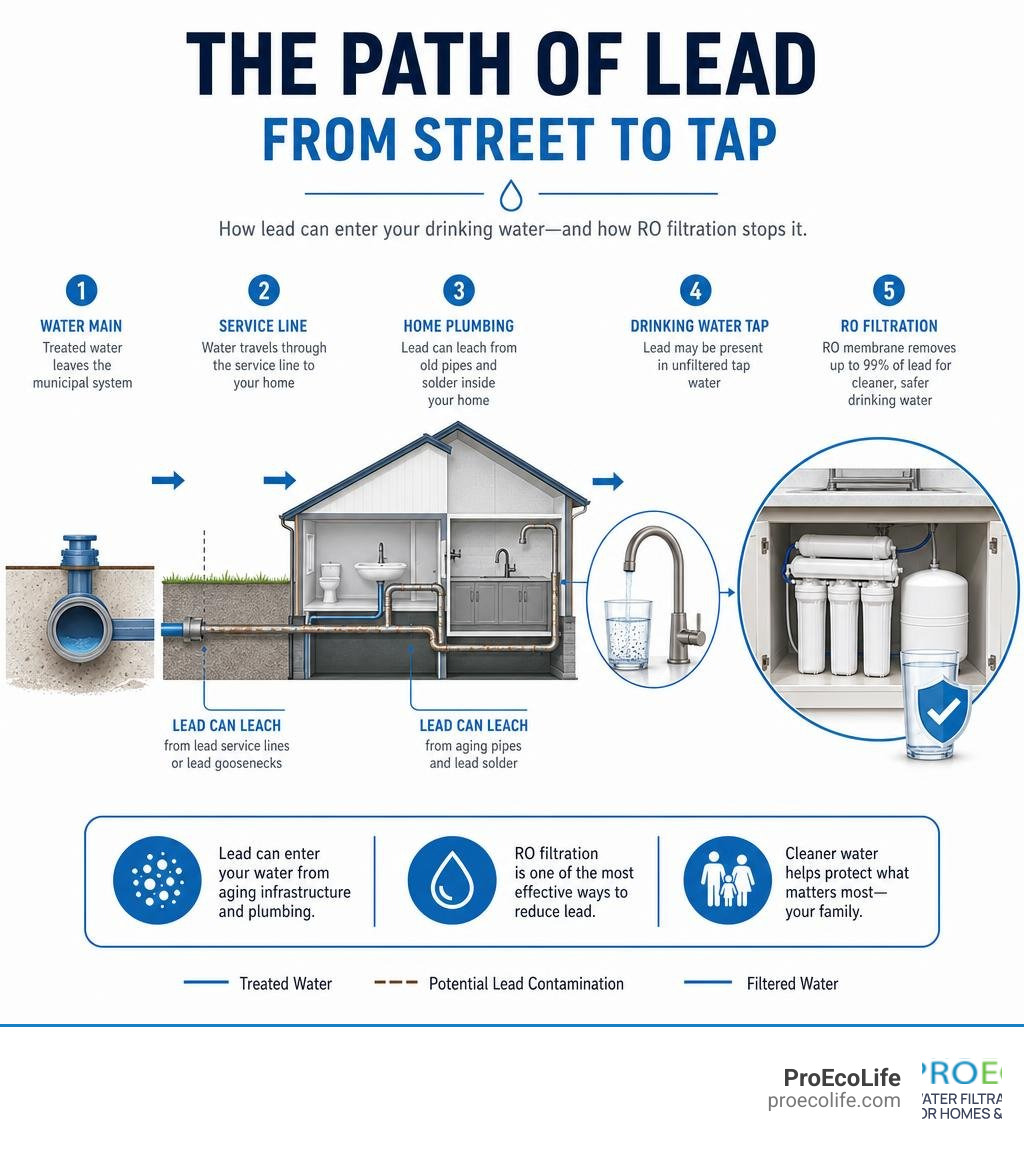
Chicago’s water comes from Lake Michigan and meets federal treatment standards. But here’s the problem: it travels through aging infrastructure before it reaches your tap. Many homes in neighborhoods like Norwood Park, Edison Park, and Jefferson Park — and suburbs like Park Ridge, Des Plaines, and Niles — were built in the early-to-mid 20th century. Those homes often still have lead service lines or lead-soldered plumbing. The moment treated water contacts those old pipes, lead can leach directly into your glass.
More than 56% of Americans face lead exposure above recommended limits. And according to the EPA, there is no safe level of lead exposure for children.
An RO system won’t fix aging pipes — but it can stop lead from reaching your family’s drinking water today, while longer infrastructure solutions play out over years.
The Threat of Lead in Chicago and Suburban Drinking Water
Lead is a potent neurotoxin that has no place in our drinking water. Historically, lead was favored for plumbing because of its durability and flexibility. However, we now know that lead exposure can cause irreversible damage to the brain and nervous system. In children, even low levels of exposure can result in learning disabilities, behavioral issues, lower IQ, and delayed growth. The societal impact is staggering: annual losses from lead poisoning in children are estimated to cost society $43.4 billion, while lead mitigation is estimated to create $50,000 in benefits per child per year.
For adults, chronic exposure to lead can lead to cardiovascular issues, high blood pressure, kidney damage, and reproductive complications.
The primary source of lead in Chicago-area tap water is not Lake Michigan itself, but rather the lead service lines connecting municipal water mains to individual homes. Because Chicago mandated the use of lead pipes for service lines until 1986, our region has one of the highest concentrations of lead service lines in the nation.
While municipal water departments treat water with corrosion inhibitors like orthophosphate to coat the inside of pipes, this chemical barrier is not foolproof. Construction, water main breaks, changes in water temperature, or changes in water chemistry can cause this protective coating to flake off, releasing lead directly into your home’s water supply.
Municipalities across Cook County are working diligently to replace these aging lines, but these projects are massive, expensive, and take years to complete. For instance:
- Homeowners can track progress via the Lead Service Line Replacement in Park Ridge program.
- Updates on municipal efforts in Niles are detailed on the Lead Line Replacement in Niles portal.
- Suburbs like Skokie provide localized guidance through Lead Water Service Lines in Skokie.
- Neighboring communities can review timelines on the Lead Service Line Replacement in Lincolnwood page.
- Further north, residents can check the progress of the Evanston Lead Service Line Replacement initiative.
Because complete infrastructure replacement in Des Plaines, Glenview, and Morton Grove may take decades, local families need immediate, highly effective protection at the point of use. This is where a high-quality reverse osmosis system lead filtration solution becomes an essential safeguard for your household.
Need Clean, Safe Water at Home?
Get a free water test at your home or business. We install and service whole-house filtration and PEL75 reverse osmosis systems across Chicagoland. We also take select projects in Wisconsin and Indiana.
Book a Free Water TestCall (312) 889-8888Choosing a Reverse Osmosis System Lead Removal Solution for Chicago Homes
When looking to protect your household from lead, you must choose between point-of-use (POU) systems and point-of-entry (POE) systems.
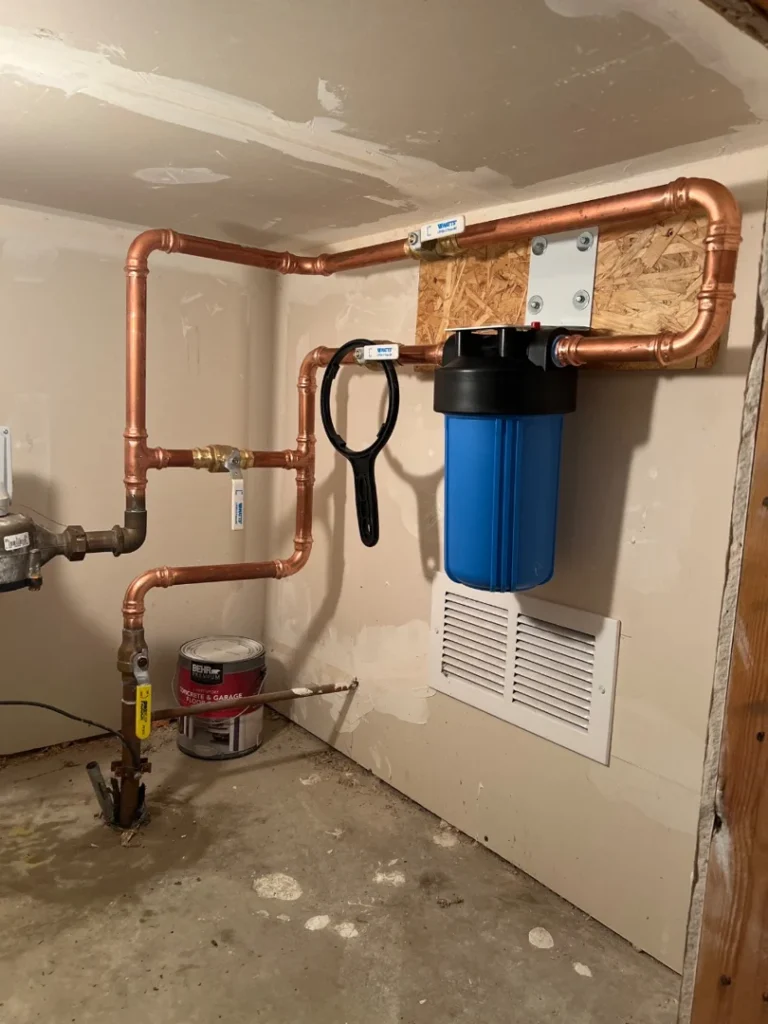
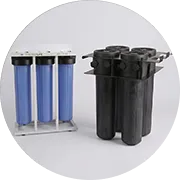
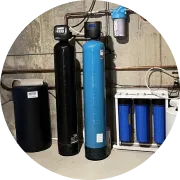
Point-of-use systems, such as our proprietary PEL75 9-Stage RO System, are installed directly under the kitchen sink. They are designed to purify water specifically for drinking and cooking where you need it most. Alternatively, point-of-entry solutions, like the ProEcoLife Whole House Filtration system, treat all the water entering your home.
For targeted, medical-grade lead and contaminant removal, a point-of-use reverse osmosis system lead filter is often the most practical and highly effective option. To determine if this technology fits your household’s needs, you can read our deep dive on Is Reverse Osmosis For You and explore What Are The Benefits Of Drinking Reverse Osmosis Water to see how it elevates daily hydration.
Since 2014, our founder, Karol Dolega, has focused on designing water treatment solutions tailored specifically to the unique water chemistry of the Chicago area. Our systems are engineered to handle the municipal water pressures and mineral profiles of northeastern Illinois, ensuring consistent flow rates and exceptional filtration.
How a Reverse Osmosis System Lead Filter Works
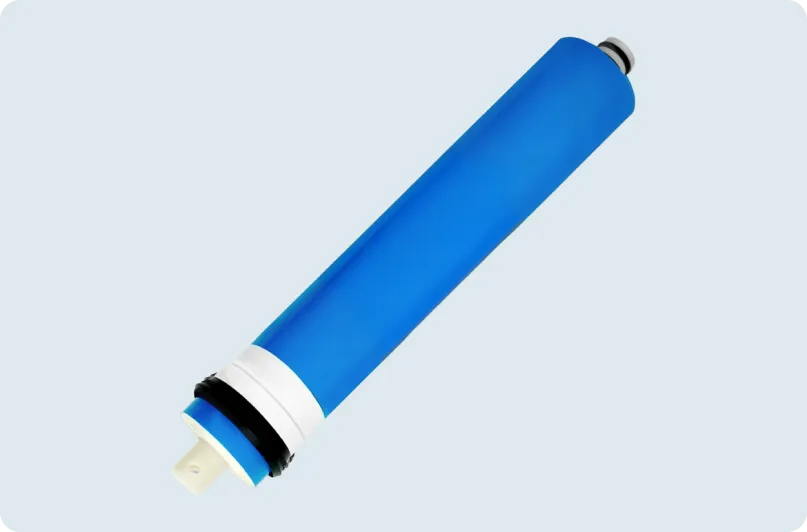
Reverse osmosis is a pressure-driven filtration process that forces water through a semi-permeable membrane. To understand the scale of this filtration, consider that a typical human hair is about 75 microns in diameter. The pore size of our RO membrane is an incredibly small 0.0001 micron.
As water is pushed against this membrane under pressure, water molecules pass through, while larger contaminants—including heavy metal ions like lead—are left behind and flushed away. To learn more about this physical separation process, check out our comprehensive guide on How Does Reverse Osmosis Work.
Because reverse osmosis relies on water pressure to force molecules through the membrane, our systems are optimized to work efficiently with the standard municipal water pressures found in Chicago’s Northwest Side neighborhoods and surrounding suburbs.
Contaminants Removed Beyond Lead
While lead removal is a top priority for many local families, a premium reverse osmosis system lead filter provides comprehensive protection against a wide array of other modern water contaminants.
Our advanced multi-stage filtration systems are designed to remove:
- PFAS (“Forever Chemicals”): These synthetic chemicals, widely used in non-stick cookware and firefighting foams, do not break down in the environment. RO systems are highly effective at capturing both long-chain and short-chain PFAS.
- Arsenic and Fluoride: Our membrane technology is highly effective at reducing dissolved inorganic compounds, including pentavalent arsenic and fluoride.
- Microplastics: Tiny plastic fibers and particles that have found their way into global water sources are easily blocked by the sub-micron filtration stages.
- Chlorine and Chloramines: Municipalities use these disinfectants to treat water, but they can leave an unpleasant taste and odor. Our carbon stages neutralize them completely.
- Volatile Organic Compounds (VOCs) and Pesticides: Advanced carbon block pre-filters capture agricultural runoff and industrial chemicals.
Additionally, many Northwest suburbs, such as Arlington Heights, experience high levels of water hardness due to dissolved calcium and magnesium. While RO systems excel at purifying drinking water, severe hard water can prematurely wear down an RO membrane. In these cases, combining your under-sink system with our Well Water Conditioning or a Whole House Filtration system can protect your plumbing and extend the lifespan of your drinking water system. For a closer look at the overall health impacts of purified water, read our article Is Reverse Osmosis Water Really Better For You.
For our vibrant local Polish-speaking community in Jefferson Park, Niles, and beyond, we have also prepared native-language resources such as Jak Usunac Metale Ciezkie Z Wody and Jak Dziala System Odwroconej Osmozy to help explain these technical concepts clearly.
Need Clean, Safe Water at Home?
Get a free water test at your home or business. We install and service whole-house filtration and PEL75 reverse osmosis systems across Chicagoland. We also take select projects in Wisconsin and Indiana.
Book a Free Water TestCall (312) 889-8888Comparing Reverse Osmosis to Other Home Water Filtration Methods
Many homeowners wonder if a simple carbon pitcher filter or a basic faucet-mount filter is enough to protect their family from lead. While some high-quality carbon filters can reduce lead when brand new, they lack the multi-stage redundancy and physical barrier of a complete reverse osmosis system.
To illustrate the difference, let’s compare a basic single-stage carbon filter to our advanced multi-stage RO system:
| Feature | Basic Single-Stage Carbon Filter | ProEcoLife PEL75 9-Stage RO System |
|---|---|---|
| Pore Size | Typically 0.5 to 5.0 microns | 0.0001 microns (RO Membrane) |
| Lead Removal Rate | Decreases over filter life | Consistently up to 99% |
| PFAS & VOC Removal | Limited capacity | Extremely high |
| Fluoride & Arsenic Reduction | Negligible | Highly effective |
| Redundancy & Pre-filtration | None (Single filter cartridge) | Multiple sediment, carbon, and membrane stages |
| Remineralization Stage | Rare | Yes (Restores beneficial minerals) |
| Lifespan of Core Membrane | N/A | Up to 2-3 years with proper pre-filter maintenance |
Why a Reverse Osmosis System Lead Solution Outperforms Other Filtration Methods
Basic carbon-based filters rely solely on adsorption to trap lead. Over time, as the carbon becomes saturated with chlorine and other organic materials, its ability to bind lead drops significantly. If you forget to change a pitcher filter on time, it may stop removing lead entirely without any warning.
A reverse osmosis system lead solution provides a physical barrier. Because the lead ion is physically too large to pass through the 0.0001-micron pores of the RO membrane, the system does not rely purely on chemical adsorption. Furthermore, the PEL75 9-Stage RO System utilizes multiple pre-filters to capture sediment, chlorine, and larger particulates before the water ever reaches the delicate RO membrane. This multi-stage design ensures consistent, long-term performance.
While results can vary based on your local water pressure and incoming water quality, a professionally maintained RO system provides the highest level of reliable, immediate protection available for residential tap water.
Water Efficiency and Eco-Friendly Design in ProEcoLife RO Systems
Historically, one of the primary drawbacks of residential reverse osmosis systems was water waste. Traditional, older RO systems could generate five gallons or more of reject water (wastewater used to flush contaminants off the membrane) for every single gallon of purified water produced. In some highly inefficient or poorly maintained systems, that ratio could reach up to 10 gallons of reject water per gallon of treated water.
Fortunately, modern water treatment engineering has made incredible strides. High-efficiency, WaterSense-labeled RO systems must demonstrate that they send 2.3 gallons or less of water down the drain for every gallon of treated water they produce.
By utilizing advanced membrane technology and optimized flow restrictors, our systems dramatically reduce water waste compared to older municipal models. Selecting an efficient, modern RO system can save a typical suburban household more than 3,100 gallons of water per year. Over the lifetime of the system, this translates to a savings of approximately 47,000 gallons of water.
If every household in the United States using a point-of-use RO system upgraded to a highly efficient model, our country could save more than 3.1 billion gallons of water annually—an amount equivalent to the yearly household water needs of nearly 41,000 American homes. Our advanced systems ensure you can protect your family from lead while remaining conscious of your environmental footprint and water bill.
For more information on the practical benefits of these systems, you can read our articles on Dlaczego Odwrocona Osmoza and Czy Odwrocona Osmoza Jest Dla Ciebie.
Frequently Asked Questions About RO Systems and Lead
To help you make an informed decision for your home, we have compiled answers to the most common questions we receive from homeowners in Skokie, Glenview, and across the Chicago area.
Does reverse osmosis remove beneficial minerals from drinking water?
Yes, the physical filtration of a reverse osmosis membrane is so precise that it removes almost all dissolved solids, including beneficial minerals like calcium, magnesium, and potassium. This can leave the water tasting somewhat flat and slightly acidic.
To solve this problem, our proprietary PEL75 9-Stage RO System features an integrated alkaline remineralization stage. After the water passes through the RO membrane, it flows through a specialized media filter that reintroduces balanced amounts of natural calcium and magnesium. This raises the pH to a healthy, alkaline level and restores the crisp, refreshing taste of natural spring water. To learn more about this process, read our guides on Jakie Sa Zalety Picia Wody Z Odwroconej Osmozy and Odwrocona Osmoza W Praktyce.
What are the maintenance requirements for a residential RO system?
To ensure your reverse osmosis system lead filter continues to operate at peak performance, regular professional maintenance is required.
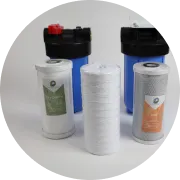
- Pre-filters (Sediment and Carbon): These protect the RO membrane from chlorine and large particulates and should typically be replaced every 6 to 12 months.
- RO Membrane: The core semi-permeable membrane generally lasts between 2 to 3 years, depending on your household’s water usage and incoming water hardness.
- Post-filters and Remineralizers: These should be replaced annually to maintain optimal water taste, pH balance, and mineral content.
We do not recommend attempting to change these filters yourself, as improper installation can lead to leaks, system contamination, or reduced filtration efficiency. Our team of local water experts provides professional maintenance, sanitization, and filter replacement services to ensure your system remains in perfect working order.
How can Chicago homeowners determine if their water contains lead?
Because lead is tasteless, odorless, and invisible, the only way to know for sure if it is present in your water is to have it tested.
- Professional Water Testing: You can have your water analyzed by a state-certified laboratory. This provides a highly accurate, detailed breakdown of your water’s mineral and contaminant levels.
- Physical Pipe Inspection: Locate your water meter (usually in the basement or utility closet). Find the pipe that enters the meter from the wall. Gently scratch the pipe with a key or coin. If it scratches easily, shines like a new dime, and magnets do not stick to it, you likely have a lead service line.
- Municipal Records: Many local water departments maintain online databases of historical plumbing records, though these are not always 100% complete or accurate for older residential properties.
Protecting Your Chicago Home with ProEcoLife
At ProEcoLife, we are proud of our deep Chicago roots. Since 2014, our founder, Karol Dolega, and our dedicated team of local water experts have been helping families across the Northwest Side and surrounding suburbs secure clean, safe drinking water. We understand the unique challenges posed by Cook County’s aging infrastructure and hard water mineral profiles.
Whether you need a point-of-use PEL75 9-Stage RO System for your kitchen, a Whole House Filtration system to protect your entire property, a Shower Filter System for healthier skin and hair, or specialized Commercial Water Filtration Systems for your business, we have the expertise to design the perfect solution for your property. For a deeper look at choosing the right filter for our region, check out our guide on How to Choose the Best Lead Water Filter in Chicago.
Don’t leave your family’s health to chance. Contact the local water experts at ProEcoLife today to schedule a professional water test for your home. Call us at (312) 889-8888 or visit proecolife.com to learn more about our advanced water filtration solutions.