
Choose a Home RO Filter for Targeted Drinking-Water Purity
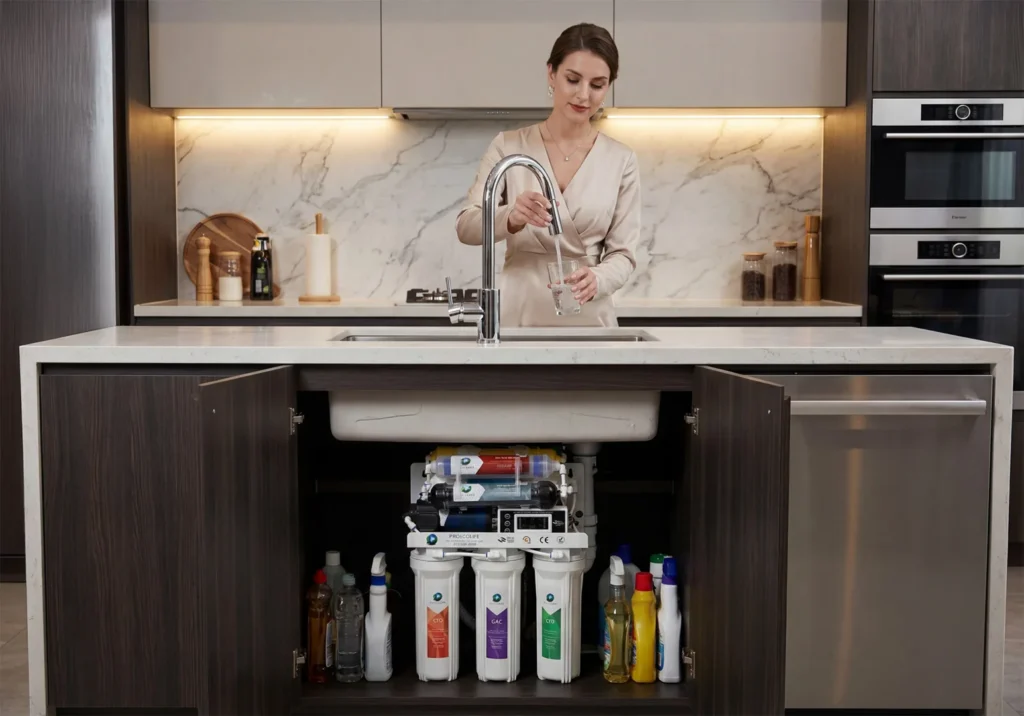
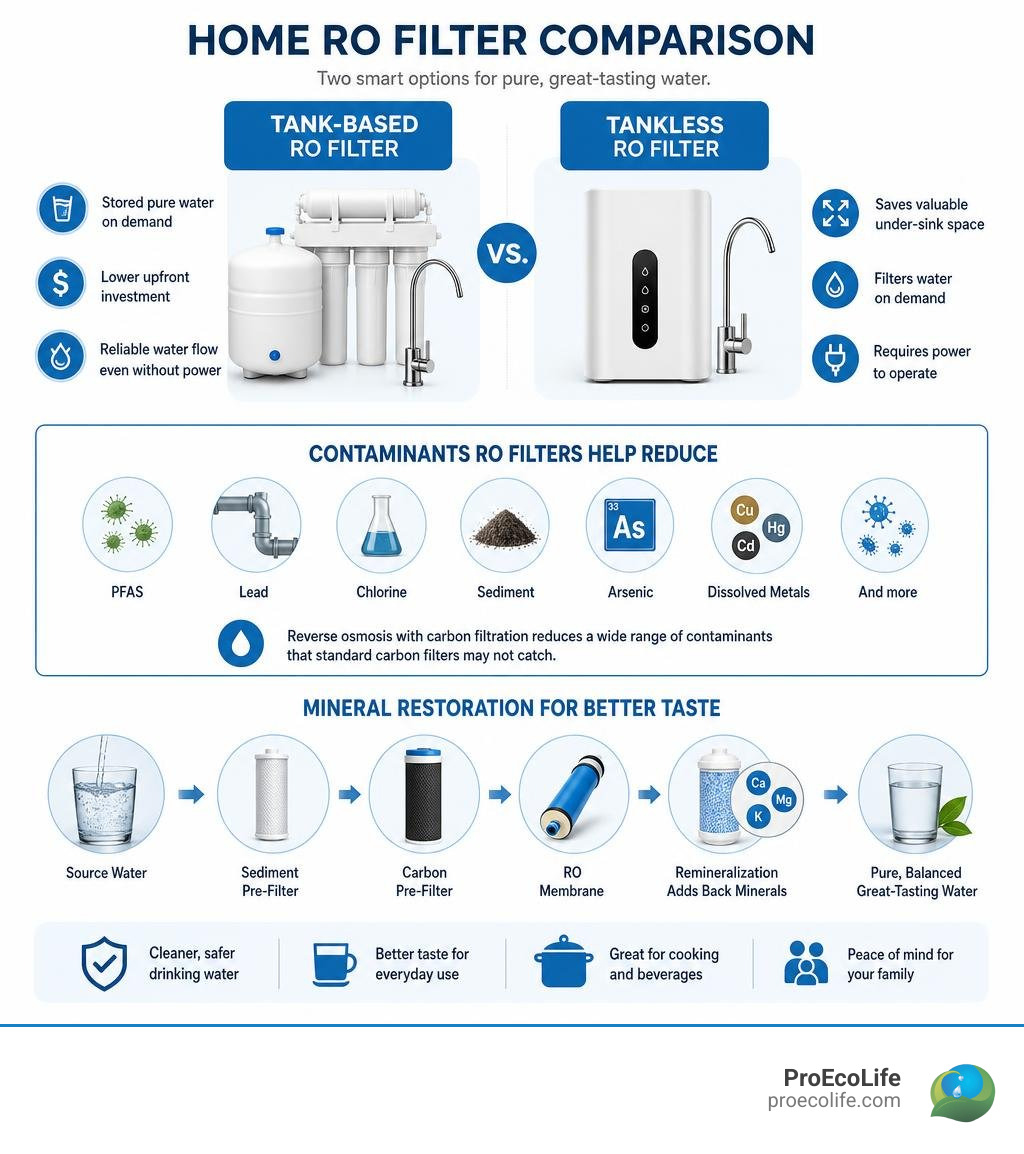
A home RO filter is usually the best fit when you want a dedicated source of highly filtered drinking and cooking water, especially if you are concerned about lead from older plumbing, PFAS, or dissolved metals. For most Chicago homes, start by choosing between:
- Tank-based under-sink RO: Stores filtered water for reliable dispensing and often costs less upfront.
- Tankless under-sink RO: Saves cabinet space and filters on demand, but usually needs power and may cost more.
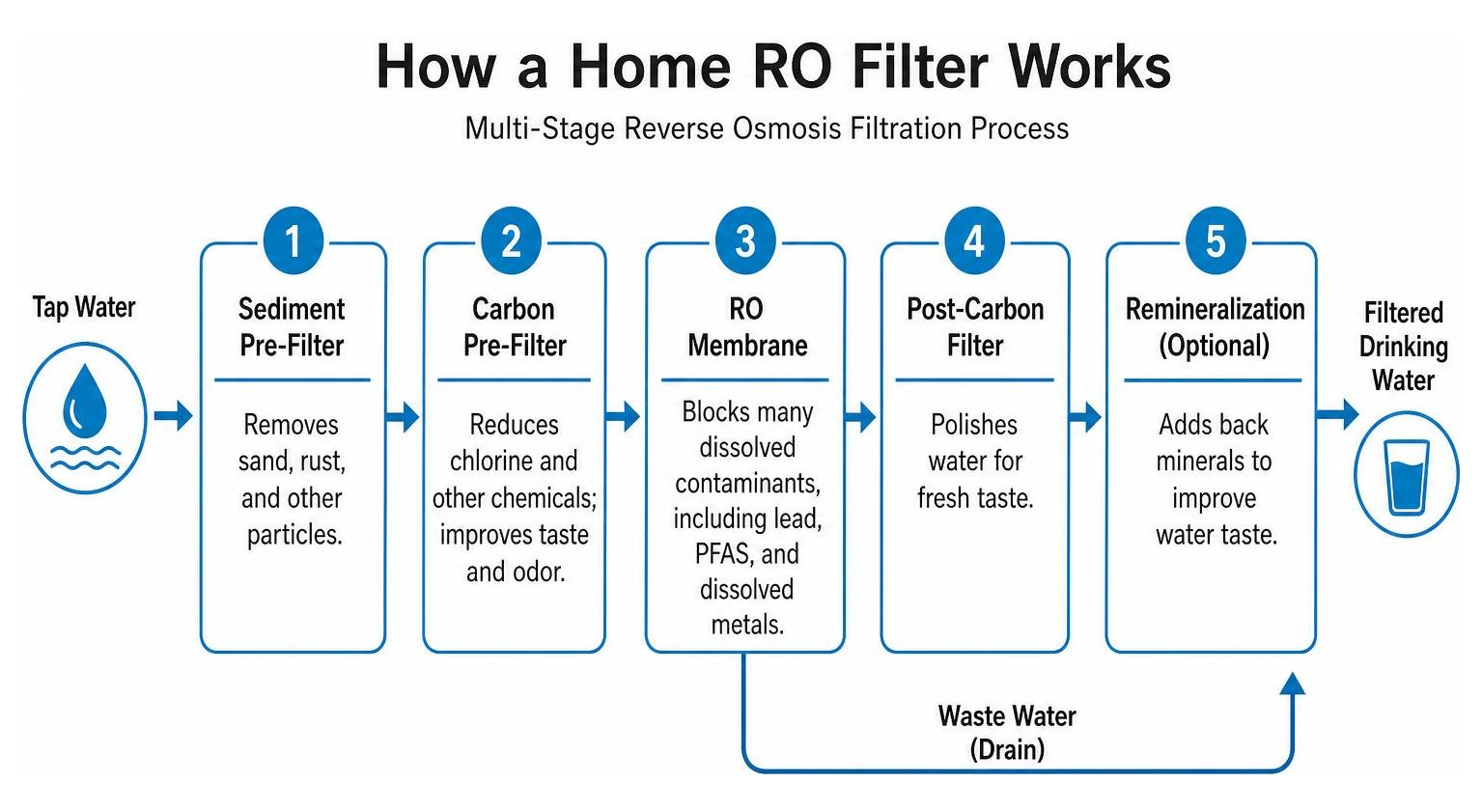
Reverse osmosis combines carbon filtration with a very fine membrane. The carbon stage helps reduce chlorine and some chemicals, while the membrane blocks many dissolved contaminants that standard carbon filters may not catch. Because RO also removes naturally occurring minerals, many systems include a remineralization stage to improve the water’s taste.
The right choice depends on your under-sink space, household demand, water pressure, maintenance budget, and local water concerns. A water test can help confirm whether RO is the right solution for your home’s drinking water.
Easy home ro filter word list:
Understanding How a Home RO Filter Works vs Traditional Filtration
To understand why reverse osmosis stands out, it helps to examine the underlying mechanics of modern water treatment. Standard carbon pitchers and single-stage faucet attachments rely on simple absorption and mechanical straining. While activated carbon excels at neutralizing chemical disinfectants, it cannot stop microscopic dissolved particles.
Knowing how does reverse osmosis work? reveals why this approach remains the gold standard for pure drinking water. Reverse osmosis forces pressurized water against a specialized, semi-permeable membrane containing microscopic pores roughly 0.0001 microns wide. Water molecules pass through, while dissolved solids, inorganic compounds, and chemical pollutants separate and wash down the drain.
In older housing stock across Chicago—including historic bungalows in Jefferson Park, Edison Park, and Norwood Park—aging infrastructure presents unique challenges. Many homes still connect to municipal mains via vintage lead service lines. As water travels through these older pipes, heavy metals can leach into the flow. Advanced membrane separation allows homeowners to get the lead out: how reverse osmosis filters save your tap and enjoy consistent drinking water purity right at the kitchen sink.
Key Contaminants Removed by an Advanced Home RO Filter
Lake Michigan provides fresh source water for the region, but distribution through aging city pipes, chlorination treatments, and seasonal runoff can alter tap water quality. Understanding how water treatment works: the 5 essential stages explained helps clarify how multi-barrier systems capture contaminants that standard filters leave behind.
An advanced residential unit targets several problematic substances:
- Heavy Metals: Effectively reduces lead, copper, arsenic, and chromium.
- Forever Chemicals (PFAS/PFOS): Synthetic industrial compounds that do not break down naturally may be substantially reduced by dense composite membranes.
- Microplastics and Turbidity: Traps microscopic plastic fibers and sediment dislodged from municipal distribution pipes.
- Nitrates and Dissolved Salts: Removes agricultural runoff elements and total dissolved solids (TDS) that contribute to unpleasant tastes.
- Disinfection Byproducts: Pre-carbon and post-carbon blocks neutralize chlorine, chloramines, and trihalomethanes before water reaches your glass.
The Role of Remineralization in Taste and Quality
Because a reverse osmosis membrane separates almost everything down to pure H2O molecules, the treated water emerges virtually free of natural minerals. While pure, demineralized water can taste flat, slightly acidic, or chalky to some palates.
This is where remineralization stages make a significant difference. By passing purified water through a final cartridge infused with food-grade calcium and magnesium, the system balances pH levels and restores an alkaline profile. Exploring what are the benefits of drinking reverse osmosis water? highlights how remineralization delivers crisp, refreshing water that enhances the flavor of coffee, teas, and home cooking.
Comparing Tank vs Tankless Configurations for Your Home
When choosing among modern under sink water filters, selecting the right architectural design is a major decision. The two primary categories in 2026 are traditional tank-based setups and compact tankless units.

| Feature | Traditional Tank-Based System | Modern Tankless System |
|---|---|---|
| Footprint | Requires space for filter manifold and 3–4 gallon storage tank | Sleek, compact all-in-one housing |
| Delivery Flow | Fast initial flow driven by pressurized bladder | Continuous flow powered by an internal electric booster pump |
| Pure-to-Drain Efficiency | Typically 1:2 to 1:3 ratio | High efficiency, often 1:1 or 2:1 ratio |
| Power Requirement | Operates on mechanical line pressure alone | Requires an under-sink 110V electrical outlet |
| Filtration Technology | Multi-stage standard universal cartridges | Proprietary quick-twist composite filters |
Pros and Cons of Traditional Tank-Based Systems
Tank-equipped systems have served residential kitchens for decades. These units use incoming line pressure to push water through the membrane slowly, storing 2 to 4 gallons of purified water in a sealed, pressurized bladder tank.
Pros:
- Delivers a strong, instantaneous flow from the dedicated faucet regardless of municipal line fluctuations.
- Operates purely mechanically without needing an under-sink electrical outlet.
- Often features modular housings that accommodate versatile filtration cartridges.
Cons:
- Consumes significant cabinet space beneath the sink, which can crowd garbage disposals and pull-out organizers.
- The pressurized internal bladder can lose elasticity over many years, requiring periodic pressure checks.
Why Consider a Tankless Home RO Filter in 2026
Tankless reverse osmosis systems have become popular for modern kitchens, especially in urban condos and renovated spaces where storage is at a premium. These systems purify water directly on demand using high-output membranes and integrated electric booster pumps.
By filtering water as the faucet opens, tankless models eliminate the storage reservoir entirely, preventing standing water and minimizing the equipment footprint. Modern internal pumps optimize pressure across the membrane surface, significantly reducing drain discharge and improving overall water efficiency. For homeowners in communities like Lincolnwood, Skokie, and Morton Grove seeking an uncluttered under-sink profile, tankless setups provide a practical option.
Installation Steps and Maintenance Requirements for Lasting Performance
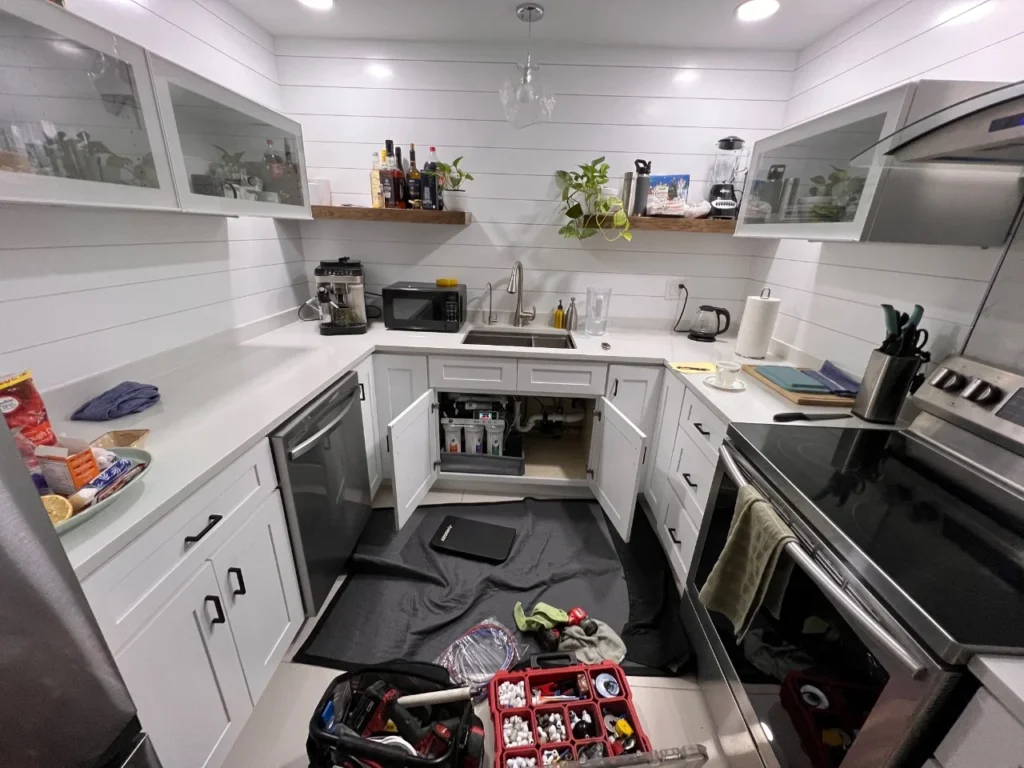
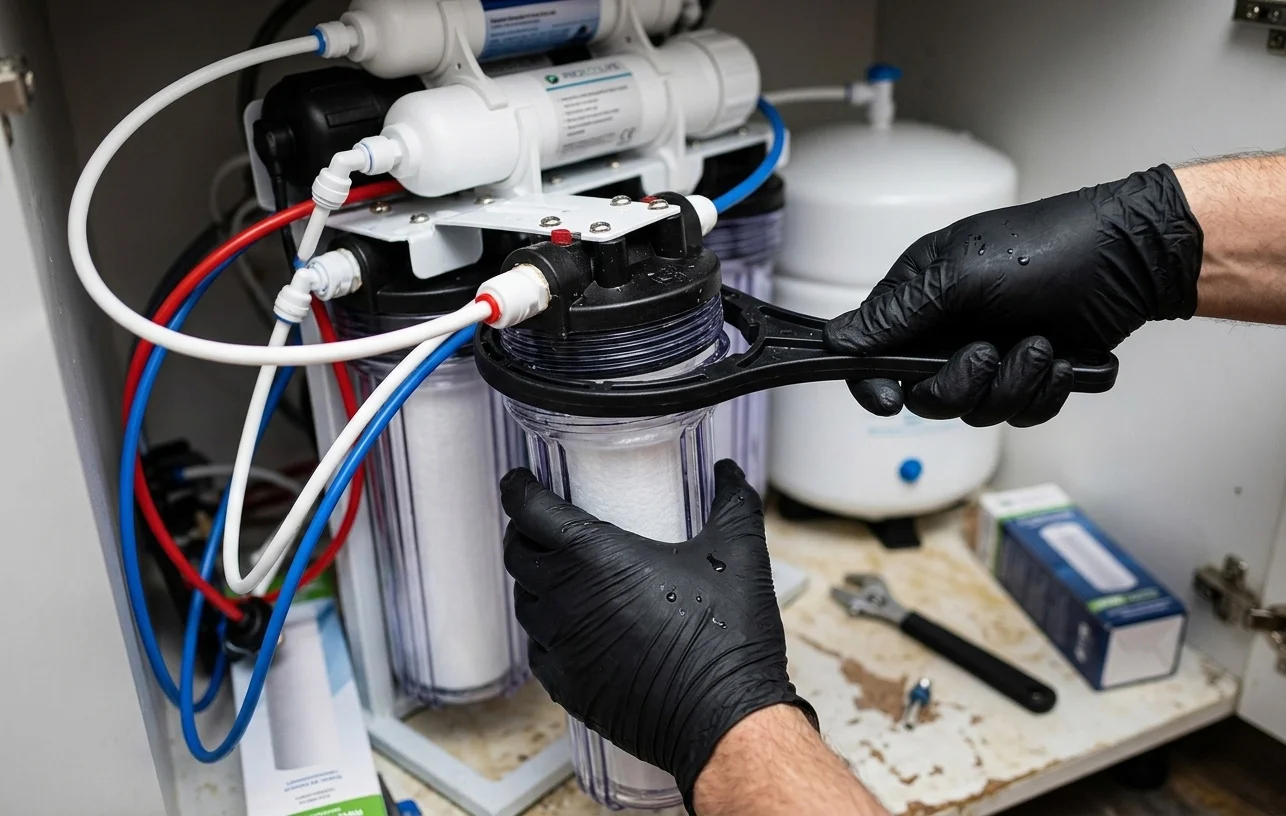
Achieving dependable performance from a drinking water filtration system requires professional plumbing integration. Connecting to existing cold-water lines, securing dedicated faucets, and managing drainage lines require attention to local plumbing codes.
Municipalities maintain rigorous local utility standards. Reviewing public guidance, such as the municipal water management principles found in the FAQs | Lincolnwood Village, IL resources, underscores the importance of maintaining backflow prevention and sanitary cross-connection control during installation. Knowing how to choose a water filter involves evaluating both the hardware capabilities and the long-term service support needed to keep it running smoothly.
A standard professional configuration includes:
- Cold Water Supply Connection: Installing a dedicated feed-water angle adapter to channel source water safely without restricting household flow.
- Dedicated Dispensing Tap: Mounting a secondary faucet through an existing sink hole or custom countertop cut to keep pure drinking water separate from main utility supplies.
- Drain Line Integration: Installing an air-gap drain saddle on the sink tailpiece above the P-trap to prevent wastewater backflow.
- Leak Detection & Pressure Calibration: Integrating automatic shut-off leak trays and verifying feed pressure to safeguard cabinetry against moisture damage.
Replacing Cartridges and Typical Component Lifespans
Regular maintenance preserves membrane integrity and prevents premature fouling. Following an in-depth guide to reverse osmosis systems helps clarify typical replacement schedules for multi-stage systems:
- Sediment & Pre-Carbon Stages (Every 6 to 12 Months): Protects delicate membrane layers by trapping particulate rust, silt, and dissolved chlorine.
- Reverse Osmosis Membrane (Every 24 to 36 Months): The primary purification barrier; service intervals vary depending on feed water hardness and daily volume.
- Post-Carbon & Remineralization Filters (Every 12 Months): Polishes the final taste and balances mineral content before water reaches your glass.
- System Sanitization (Annually): A comprehensive flush of internal housings and connecting lines during regular filter changes helps maintain hygienic performance.
In the northern and northwest suburbs, including Park Ridge, Niles, Des Plaines, Glenview, and Arlington Heights, well-fed or suburban blended water can carry elevated hardness levels. Proactive pre-filter maintenance shields the system against mineral scale build-up.
Frequently Asked Questions About Home Reverse Osmosis
Is reverse osmosis water safe for daily drinking?
Reverse osmosis water is clean and safe for daily hydration and cooking. Many health-conscious homeowners evaluate whether is reverse osmosis for you? when seeking to reduce exposure to microplastics, lead, and chemical residues. Systems equipped with balanced remineralization stages restore trace essential electrolytes, ensuring the water tastes smooth, natural, and crisp.
How much wastewater do modern RO systems produce?
Early reverse osmosis designs often discharged 4 or 5 gallons of concentrate water for every single gallon of purified drinking water produced. In 2026, advances in low-pressure membrane design and integrated flow restrictors have significantly improved efficiency. Many modern residential systems operate at a 1:1 or 1:2 recovery ratio, minimizing environmental impact while delivering high purity.
Can an RO system be combined with whole-house filtration?
Combining whole-house pre-treatment with point-of-use reverse osmosis provides comprehensive household protection. Exploring the different types of water filters at home shows that a whole-house filter protects your plumbing, water heater, and shower fixtures from coarse sediment and chlorine, while an under-sink reverse osmosis system delivers dedicated purification for drinking and cooking.
Conclusion
Choosing the best filtration setup for your home means balancing water chemistry, space constraints, and family needs. Since 2014, founder Karol Dolega and our dedicated team at ProEcoLife have helped residents across Chicago—from Oriole Park, Forest Glen, Dunning, and Portage Park to suburban communities like Rosemont, Norridge, Harwood Heights, and Elmwood Park—achieve dependable, great-tasting water at the tap.
Whether you are looking to install a proprietary PEL75 9-Stage RO System in your kitchen, explore Well Water Conditioning, add a Shower Filter System, or implement a comprehensive Whole house filtration system for total property protection, professional guidance ensures lasting results. Every home’s plumbing profile is unique, and results vary based on pipe age, local pressure, and regional source quality.
Take the first step toward clear, pure drinking water. Contact ProEcoLife to schedule a water test at proecolife.com today.