
Why the 5 Stages of Water Treatment Matter for Chicago Homeowners
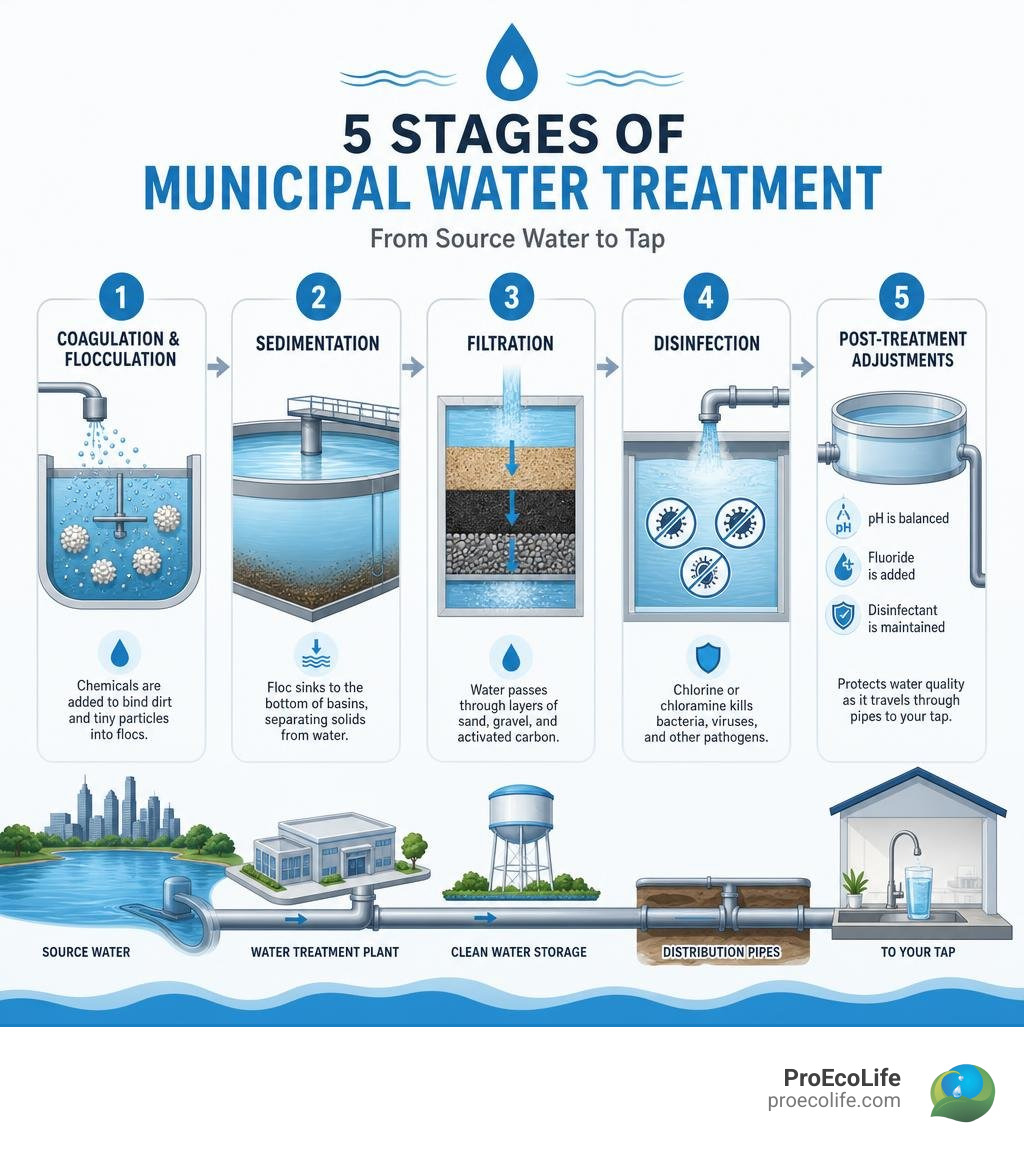
The 5 stages of water treatment are: Coagulation and Flocculation, Sedimentation, Filtration, Disinfection, and Post-Treatment Adjustments.
Here is a quick overview of what happens in each stage:
- Coagulation and Flocculation – Chemicals are added to bind dirt and tiny particles into clumps called floc.
- Sedimentation – Floc sinks to the bottom of large settling basins, separating solids from water.
- Filtration – Water passes through layers of sand, gravel, and activated carbon to remove remaining particles.
- Disinfection – Chlorine or chloramine kills bacteria, viruses, and other pathogens.
- Post-Treatment Adjustments – pH is balanced, fluoride is added, and a residual disinfectant is maintained to protect water as it travels through pipes to your tap.
Chicago’s drinking water starts as Lake Michigan source water — one of the largest freshwater supplies in the world. The city’s water utilities put that water through a rigorous treatment process before it reaches your home.
But here is what many Chicago homeowners don’t realize: municipal treatment stops at the water main.
Once treated water enters the aging pipes and lead service lines common in older Chicago neighborhoods — from Norwood Park to Jefferson Park to Edison Park — it can pick up new contaminants before it ever reaches your tap. That’s why understanding how municipal water treatment works is only part of the picture for protecting your family.
This guide walks you through each of the five treatment stages, explains how they work, and covers what happens to water quality after it leaves the treatment plant and enters your home.
Quick 5 stages of water treatment definitions:
Understanding the 5 Stages of Water Treatment for Municipal Supply
To understand how water becomes safe enough to drink, we have to look closely at what municipal plants do every single day. For those of us living on the Northwest Side of Chicago or in the surrounding suburbs, our water is pulled directly from Lake Michigan. While Lake Michigan is a beautiful and relatively clean source of freshwater, it is still surface water. This means it is exposed to wildlife, runoff, wind-blown debris, and industrial activity.
Surface water naturally contains suspended solids, organic matter, and microbes that cause turbidity (cloudiness). According to the CDC Guide on How Water Treatment Works, drinking water utilities must clean raw water to meet strict federal and state safety standards. If we relied on groundwater from deep wells, some of these steps might be skipped because the earth acts as a natural filter. But for Lake Michigan water, skipping steps is not an option.
When raw water enters a municipal plant, it contains everything from large leaves and twigs to microscopic bacteria. The goal of the 5 stages of water treatment is to progressively isolate and remove these impurities, transforming raw lake water into clear, pathogen-free drinking water. Let’s look at how this process unfolds step-by-step.
Coagulation and Flocculation: How the 5 stages of water treatment Begin
The very first chemical step in the water purification process is coagulation, which is immediately followed by flocculation.
In their natural state, many of the tiny dirt particles and organic materials suspended in Lake Michigan water carry a negative electrical charge. Because like charges repel, these microscopic particles bounce off one another and remain suspended in the water indefinitely, creating a cloudy appearance. They are simply too light to sink to the bottom on their own.
To fix this, water treatment operators introduce positively charged chemicals into the water. The most common coagulants used are:
- Aluminum sulfate (commonly known as alum)
- Ferric sulfate or ferric chloride
These chemicals are added at a point of high turbulence in the treatment plant. The rapid mixing ensures the coagulants are distributed evenly throughout the incoming water. The positive charge of the alum or ferric sulfate neutralizes the negative charge of the suspended dirt particles.
Once neutralized, the particles no longer repel each other. Instead, they begin to stick together. This is where flocculation begins. The water is moved into basins with large, slowly rotating paddles. This gentle mixing encourages the newly neutralized particles to collide and bind into larger, heavier clumps called “floc.” If the mixing were too fast, the delicate clumps would break apart; if it were too slow, the particles wouldn’t meet. The carefully controlled movement creates visible, snowflake-like particles that are ready for the next phase.
Sedimentation and Filtration: The Core of the 5 stages of water treatment
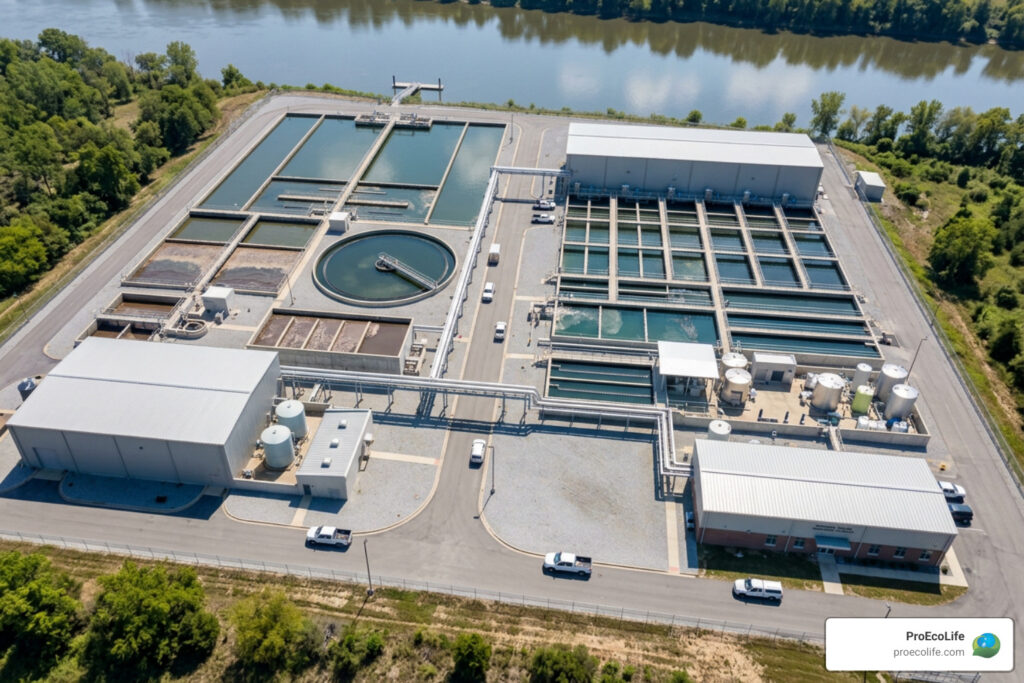
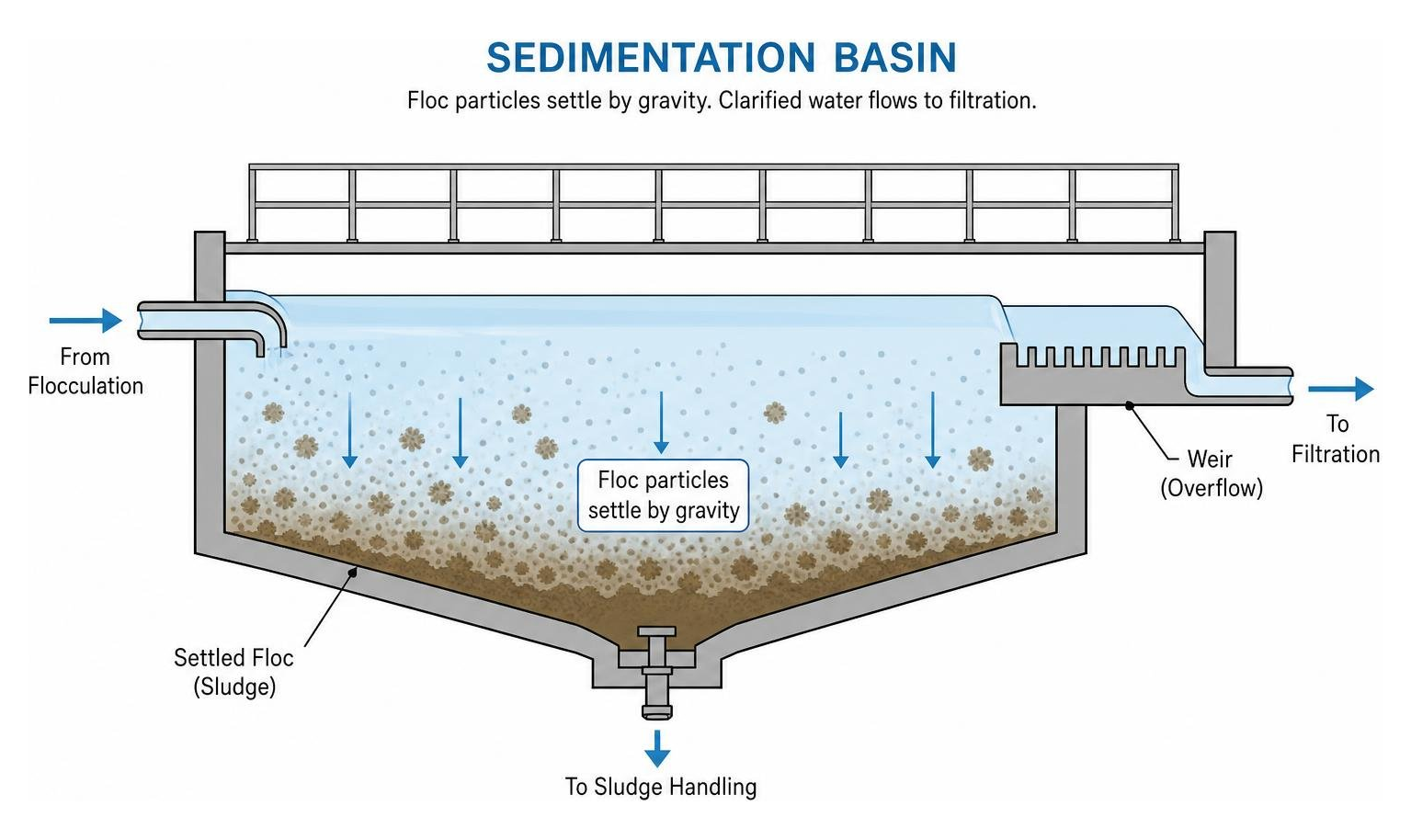
Once heavy flocs are formed, the water flows into large, quiet settling basins. This begins the sedimentation stage.
The principle here is simple: gravity. Because the flocs are much heavier than water, they gradually settle to the bottom of the basin over several hours. This physical separation is highly effective. In a typical municipal plant, primary sedimentation removes around 50% to 60% of suspended solids. The settled material at the bottom of the basin forms a layer of wet sludge that is continuously scraped away for treatment and disposal, while the clearer water at the surface flows over the top edges of the basin toward the filtration stage.
While sedimentation removes the bulk of the heavy solids, many smaller, lighter particles still remain suspended in the water. To catch these lingering impurities, the water must undergo deep filtration.
In a standard municipal facility, like the one highlighted in the guide on How Water Treatment Works in Evanston, gravity-fed rapid sand filters are commonly used. The water passes through carefully designed layers of media, which typically include:
- A top layer of anthracite coal (to capture larger particles)
- A middle layer of fine silica sand (usually around 2.5 feet deep)
- A bottom layer of gravel (typically 1 foot deep, acting as a support bed)
As the water trickles down through these layers, the physical gaps between the grains of sand and coal trap the remaining suspended solids, algae, and even some larger microbes. In many modern facilities, activated carbon is also integrated into the filtration stage. Activated carbon works through adsorption, chemically attracting and binding dissolved organic compounds, pesticides, and industrial chemicals. This step is incredibly important because it removes the compounds that cause unpleasant tastes and musty odors in tap water.
Disinfection and Post-Treatment Adjustments
Even after filtration, the water is still not safe to drink. Microscopic pathogens—such as bacteria, viruses, and parasites like Giardia and Cryptosporidium—are small enough to slip through standard sand filters. This is why disinfection is the most critical public health step in the entire process.
To kill these harmful microorganisms, water utilities add a chemical disinfectant. The most common choices are:
- Chlorine gas or liquid sodium hypochlorite: Highly effective at destroying pathogens.
- Chloramines: A combination of chlorine and ammonia that lasts longer in the water distribution system.
- Ozone or Ultraviolet (UV) light: Advanced physical disinfectants that destroy pathogen DNA.
While UV light and ozone are excellent at killing germs at the plant, they do not provide “residual protection.” Once the water leaves the plant, it has to travel through miles of underground water mains to reach your home. To prevent bacteria from regrowing inside those pipes, utilities maintain a low, safe level of residual chlorine or chloramine in the water.
Before the water leaves the facility, operators make final chemical adjustments to protect both the public and the plumbing infrastructure. They adjust the pH of the water, making it slightly alkaline. This reduces the water’s corrosiveness, preventing it from leaching toxic metals like lead and copper from older household plumbing and municipal service lines. Additionally, fluoride is typically added to help prevent tooth decay in the community. To learn more about how different filtration stages target specific contaminants, read our comprehensive Guide to Filtration Stages.
Need Clean, Safe Water at Home?
Get a free water test at your home or business. We install and service whole-house filtration and PEL75 reverse osmosis systems across Chicagoland. We also take select projects in Wisconsin and Indiana.
Book a Free Water TestCall (312) 889-8888Drinking Water vs. Wastewater: How the Five Stages Differ
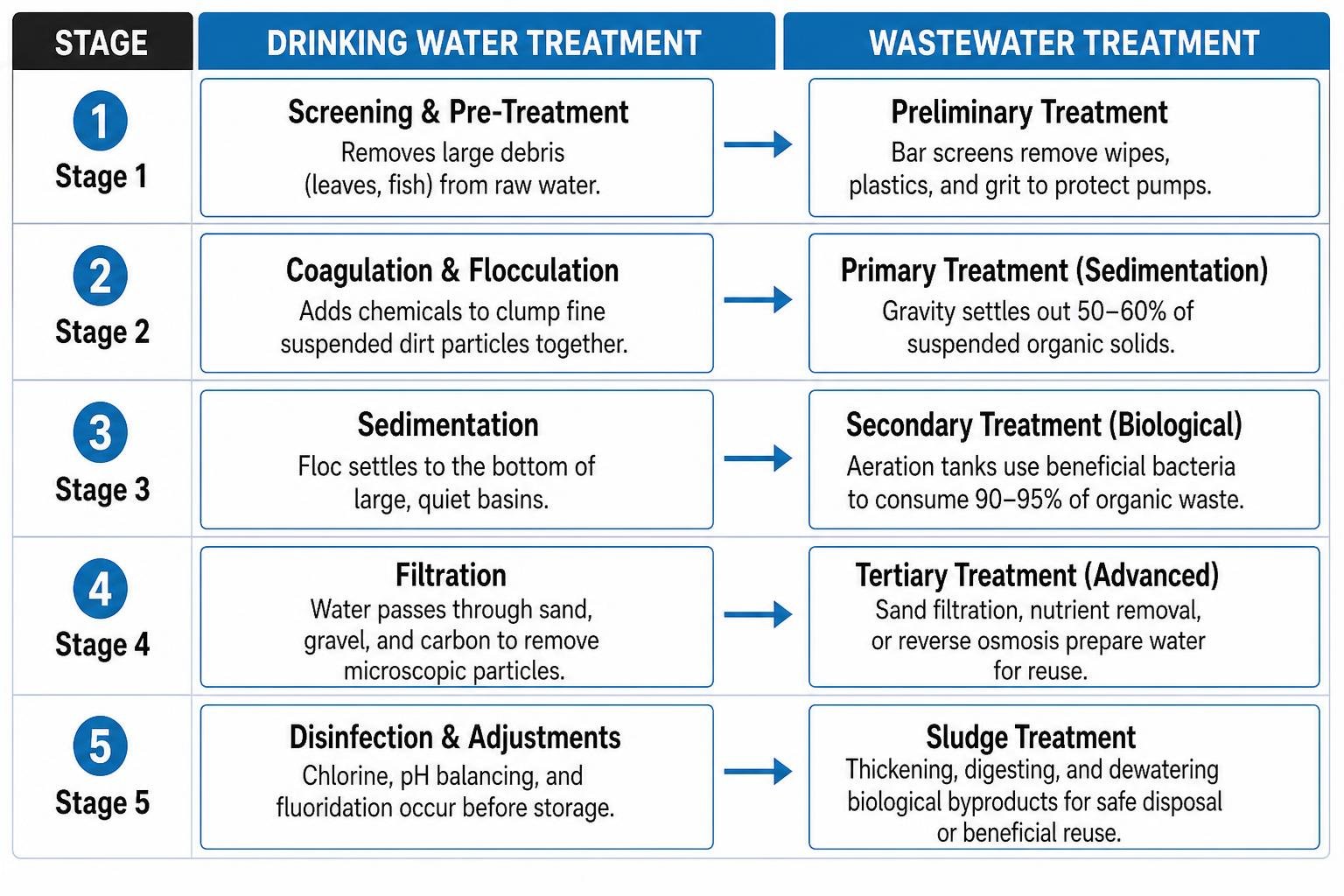
While both drinking water and wastewater treatment rely on a five-stage framework, their goals, source materials, and technologies are completely different. Drinking water treatment starts with relatively clean lake or river water and refines it to meet strict potability standards. Wastewater treatment, on the other hand, starts with highly contaminated sewage and industrial runoff, aiming to clean it enough to safely return it to the environment or prepare it for industrial reuse.
The table below outlines how these two processes compare across their respective five stages:
| Stage | Drinking Water Treatment | Wastewater Treatment |
|---|---|---|
| Stage 1 | Screening & Pre-Treatment: Removes large debris (leaves, fish) from raw lake water. | Preliminary Treatment: Heavy bar screens remove wipes, plastics, and grit to protect pumps. |
| Stage 2 | Coagulation & Flocculation: Adds chemicals to clump fine suspended dirt particles together. | Primary Treatment (Sedimentation): Gravity settles out 50–60% of suspended organic solids into primary sludge. |
| Stage 3 | Sedimentation: Floc settles to the bottom of large, quiet basins. | Secondary Treatment (Biological): Aeration tanks use beneficial bacteria to consume 90–95% of organic waste. |
| Stage 4 | Filtration: Water passes through sand, gravel, and carbon to remove microscopic particles. | Tertiary Treatment (Advanced): Sand filtration, nutrient removal, or reverse osmosis prepare water for reuse. |
| Stage 5 | Disinfection & Adjustments: Chlorine, pH balancing, and fluoridation occur before storage. | Sludge Treatment: Thickening, digesting, and dewatering biological byproducts for safe disposal. |
Wastewater treatment relies heavily on biological processes. In Stage 3 (Secondary Treatment), the water enters large aeration tanks where oxygen is pumped in to keep beneficial bacteria alive. These microorganisms naturally consume and digest up to 90% to 95% of the biodegradable organic contaminants in the water, forming what is known as “activated sludge.”
Stage 5 of wastewater treatment is dedicated entirely to managing the massive volume of sludge generated during the process. This sludge is thickened, digested anaerobically (which can produce biogas for energy recovery), and dewatered before being disposed of or recycled as agricultural fertilizer. To see a detailed breakdown of how municipal sewage is managed, you can read the Guide to Wastewater Treatment Stages.
Need Clean, Safe Water at Home?
Get a free water test at your home or business. We install and service whole-house filtration and PEL75 reverse osmosis systems across Chicagoland. We also take select projects in Wisconsin and Indiana.
Book a Free Water TestCall (312) 889-8888Beyond Municipal Treatment: Advanced Filtration for Chicago Homes
Municipal water treatment plants do an incredible job of cleaning water to meet EPA standards. However, once that water leaves the treatment plant, it has to travel through a vast, aging distribution network to reach your tap. This is where local water conditions become a major concern for Chicago-area families.
Many older homes in Chicago neighborhoods—such as Norwood Park, Edison Park, and Jefferson Park—still connect to the city’s water mains via lead service lines. Even though the city treats the water to minimize pipe corrosion, lead can still leach into your drinking water if it sits in these pipes. Furthermore, municipal disinfection relies on chloramines, which leave a distinct chemical taste and smell that many families find unpleasant.
If you live in the Northwest suburbs—including Park Ridge, Niles, Des Plaines, Skokie, Glenview, Arlington Heights, or Morton Grove—you face a different issue: hard water. Lake Michigan water contains dissolved calcium and magnesium minerals. Over time, these hard minerals build up inside your water heater, ruin your appliances, leave unsightly white spots on your dishes, and dry out your skin and hair.
At ProEcoLife, we believe your family deserves better than “compliant” water. We design advanced home filtration systems tailored specifically to Chicago’s unique water challenges:
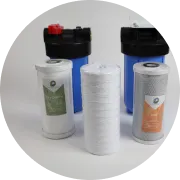
- PEL75 9-Stage RO System: Our flagship under-sink reverse osmosis system. It uses a multi-stage process, including high-density sediment pre-filters, carbon blocks, a semi-permeable membrane, and natural remineralizers to reduce lead, chlorine, heavy metals, and dissolved solids down to microscopic levels. Many customers notice a dramatic improvement in the taste and purity of their drinking water. To understand how this works, read our detailed guide on How Reverse Osmosis Works.
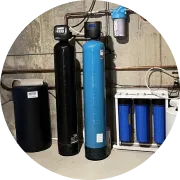
- Whole House Filtration: A comprehensive system installed where water enters your home, removing chlorine, sediment, and chemical impurities from every single faucet, shower, and appliance.
- Shower Filter System: Protects your skin and hair from the drying effects of chlorine and hard water minerals.
- Well Water Conditioning: Customized systems designed for homes utilizing private wells, targeting iron, sulfur, and hard minerals.
- Commercial Water Filtration Systems: High-capacity purification systems designed to protect commercial equipment and provide clean water for local businesses.

Frequently Asked Questions About Water Treatment
How long does the municipal water treatment process take?
It typically takes anywhere from a few hours to a full day for water to complete all the municipal drinking water treatment stages. The exact timeline depends on the design of the plant, the current water demand of the community, and the size of the facility’s storage reservoirs. Once treated, the water is held in large underground storage tanks called clearwells before being pumped out into the city’s distribution grid.
Why is water filtered before it is disinfected?
Water must be filtered before the disinfection stage because suspended dirt particles, organic matter, and algae can physically shield bacteria, viruses, and parasites from the disinfectant. If chlorine or UV light cannot make direct contact with the pathogens, those harmful microorganisms can survive and enter the drinking water supply. Filtering the water first ensures the disinfectant can work with maximum efficiency.
How is sludge and other waste managed during water treatment?
The physical and chemical solids removed during the sedimentation and filtration stages are collected as wet sludge. In modern treatment facilities, this sludge is pumped to thickeners and dewatering systems (like belt presses or centrifuges) to remove excess water. The dried sludge is then safely transported to landfills, or in some municipal wastewater systems, treated anaerobically and recycled as agricultural fertilizer.
Conclusion
Understanding the 5 stages of water treatment shows just how much effort goes into making our water clear and safe at the municipal level. From the initial chemical reactions of coagulation to the final steps of disinfection, municipal plants perform a vital public health service.
However, municipal treatment cannot protect your water from the aging pipes, lead service lines, and hard water minerals it encounters on its way to your home. That is where we come in.
ProEcoLife is a local, family-owned Chicago company founded by Karol Dolega. We have deep roots on Chicago’s Northwest Side, and we have been helping our neighbors secure clean, delicious water since 2014. We understand local water chemistry, from Lake Michigan’s mineral profile to the lead risks in our historic brick bungalows. We offer professional water testing and expert installation services to help you choose the perfect system for your household.
Whether you want to protect your children from lead with our PEL75 9-Stage RO System, or eliminate hard water scale throughout your entire home with a Whole House Filtration system, our team is here to help. Learn more about how reverse osmosis works or contact us today at (312) 889-8888 or visit proecolife.com to schedule your home water test.