
Why Every Chicago Homeowner Should Know About Reverse Osmosis Systems
A reverse osmosis system is one of the most effective tools available for removing harmful contaminants from your home’s drinking water — and in Chicago, that matters more than most people realize.
Quick Answer: What is a reverse osmosis system?
- A water filtration device that forces water through a semi-permeable membrane under pressure
- Removes up to 99% of contaminants including lead, PFAS, arsenic, chlorine, and bacteria
- Available as under-sink (point-of-use) or whole-house systems
- Produces clean, filtered water directly from your tap — no bottled water needed
- Requires periodic filter and membrane replacement to maintain performance
Chicago’s drinking water comes from Lake Michigan — one of the largest freshwater sources in the world. But by the time that water reaches your glass, it may have traveled through decades-old lead service lines and aging iron pipes, especially in older Northwest Side neighborhoods like Norwood Park, Edison Park, and Jefferson Park.
The result? Even water that meets federal safety standards can still carry lead, chlorine byproducts, and trace contaminants that concern families with young children.
American consumers spend $15 billion every year on bottled water — largely out of distrust for what comes out of the tap. A properly installed reverse osmosis system can deliver that same peace of mind at a fraction of the cost, right from your kitchen faucet.
ProEcoLife has been helping Chicago-area homeowners solve exactly this problem since 2014, with founder Karol Dolega building the company around one core belief: your family deserves clean water without compromise.
How a Reverse Osmosis System Purifies Chicago Water
To understand why a reverse osmosis system is so crucial for Chicago households, we have to look at what happens behind the scenes in our plumbing. While the water leaving our local treatment plants is thoroughly processed, our city’s aging infrastructure is a different story. Chicago has more lead service lines than any other city in the United States. If you live in classic bungalows or historic homes across Norwood Park, Edison Park, or Jefferson Park, there is a very high probability that your water travels through lead pipes before it reaches your kitchen sink.
This is where reverse osmosis (RO) steps in as the ultimate home defender. At the heart of every RO system is a semi-permeable membrane. This membrane features microscopic pores measuring approximately 0.0001 microns. To put that in perspective, a single strand of human hair is about 70 microns wide.
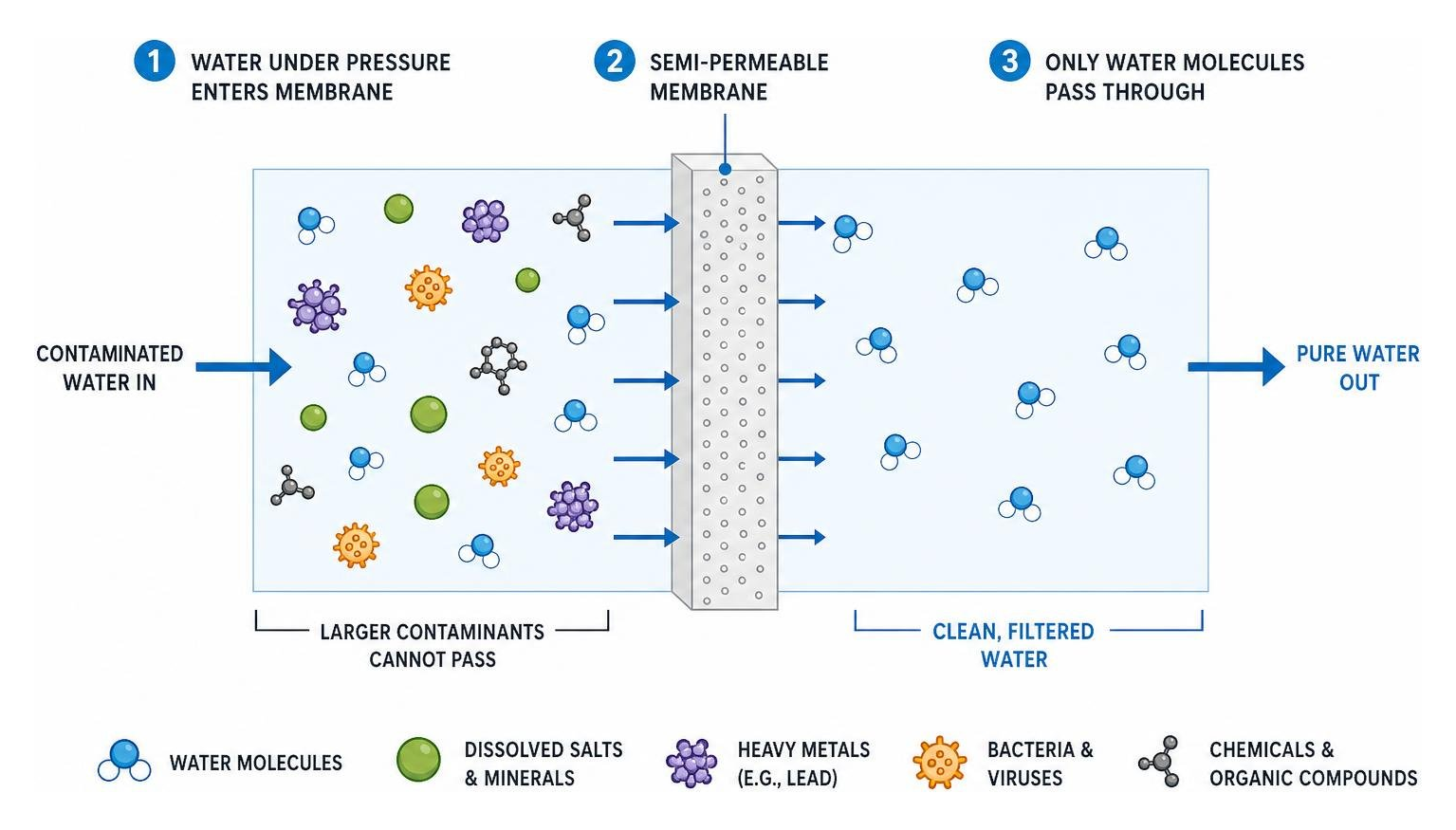
When water is forced against this membrane, only pure water molecules can squeeze through. The membrane rejects larger molecules, heavy metals, and chemical compounds, flushing them safely down the drain. If you want to dive deeper into the physics of this process, you can read our comprehensive breakdown on How reverse osmosis works.
For our vibrant local Polish-American community, we also have a detailed guide explaining Dlaczego Odwrocona Osmoza is the preferred choice for protecting Chicago homes from these infrastructure issues.
How Does a Reverse Osmosis System Work?
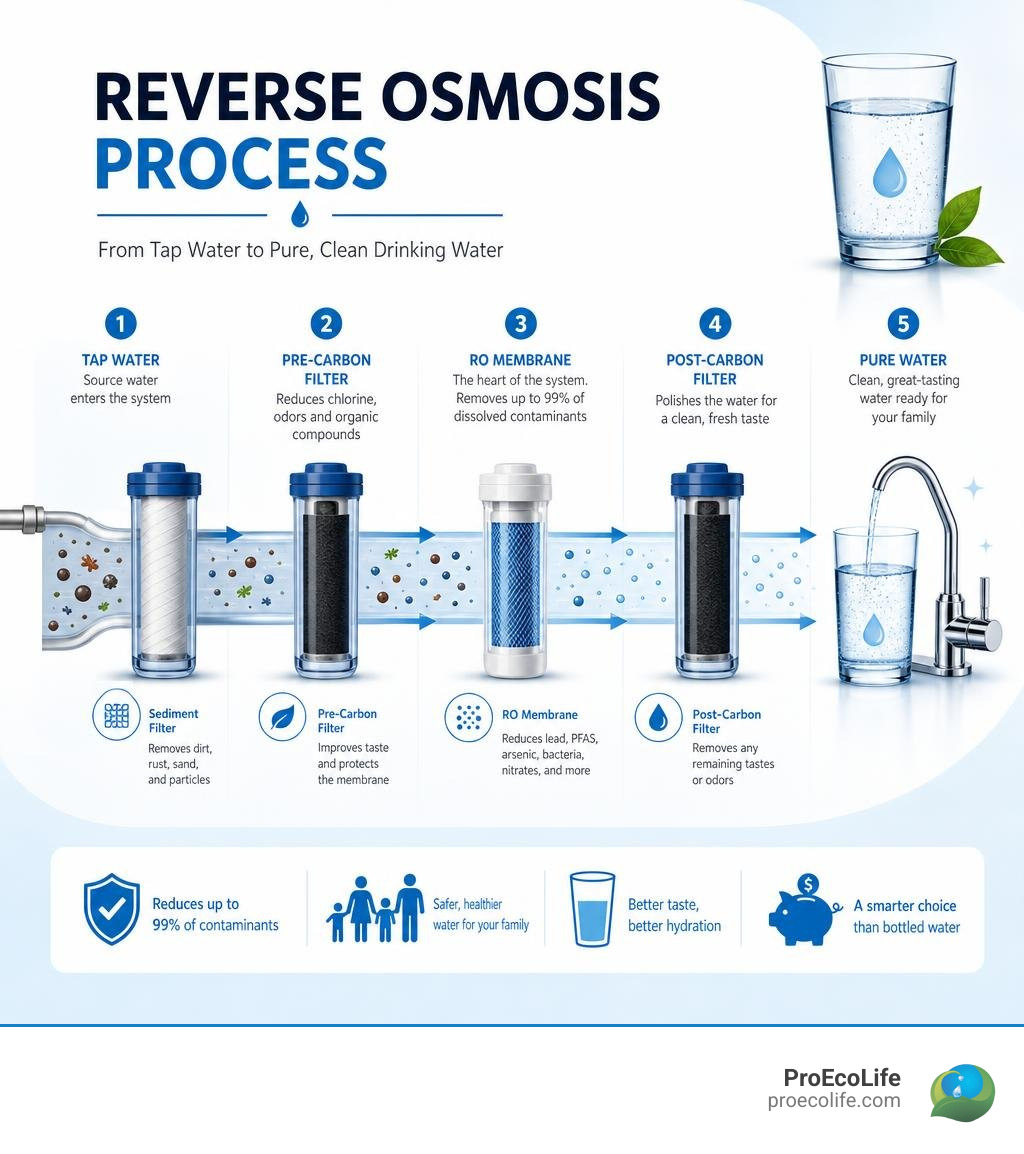
The filtration process is a beautifully engineered sequence of steps designed to protect the delicate RO membrane and ensure your drinking water is pristine.
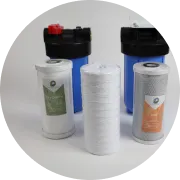
- Pre-Filtration: Before water even touches the RO membrane, it passes through sediment and carbon pre-filters. These filters catch larger particles like rust, sand, and silt while absorbing chlorine, which can chemically degrade and damage the membrane.
- The Reverse Osmosis Membrane: Using the home’s natural water pressure (which needs to be at least 45 psi), water is pushed through the semi-permeable membrane. This is where the magic happens. Through cross-flow filtration, the system separates clean water (permeate) from the concentrated contaminants (reject water).
- Post-Filtration: After leaving the membrane, the water is stored in a pressurized tank or sent directly to a dedicated faucet. Before it fills your glass, it passes through a final post-carbon filter to remove any lingering tastes or odors.
This continuous cycle ensures that impurities are never allowed to collect on the membrane itself, as the cross-flow design washes them away. For a closer look at how this wastewater separation works, check out our article on How reverse osmosis turns wastewater back into pure H2O. You can also read about Jak Dziala System Odwroconej Osmozy to share this vital information with Polish-speaking family and friends.
What Contaminants Does It Remove from Chicago Tap Water?
Whether you are drinking water in the city or in nearby suburbs, tap water contains more than just simple H₂O. A high-quality reverse osmosis system removes up to 99% of impurities, including:
- Lead: Sourced from old service lines, lead is a neurotoxin that is especially harmful to children. You can learn how to protect your family in our guide: Get the lead out how reverse osmosis filters save your tap. According to the EPA’s guidelines on lead in drinking water, there is no safe level of lead exposure, making effective home filtration essential.
- PFAS (“Forever Chemicals”): These synthetic chemicals do not break down in the environment or the human body, but RO membranes are exceptionally effective at filtering them out.
- Arsenic & Heavy Metals: Often found in trace amounts, these are blocked completely by the membrane’s microscopic pore size.
- Chlorine & Chloramines: Used by municipal plants to disinfect water, these chemicals leave a harsh chemical smell and taste that carbon pre-filters easily eliminate.
- Total Dissolved Solids (TDS): This measures the collective concentration of inorganic and organic substances dissolved in your water.
Water reports from local suburbs highlight these challenges. Even though municipal water is treated to meet minimum safety standards, trace impurities, hardness, and disinfection byproducts remain a common concern for families in Lincolnwood and Park Ridge.
Need Clean, Safe Water at Home?
Get a free water test at your home or business. We install and service whole-house filtration and PEL75 reverse osmosis systems across Chicagoland. We also take select projects in Wisconsin and Indiana.
Book a Free Water TestCall (312) 889-8888Comparing Point-of-Use and Whole-House Filtration
When deciding on a water treatment plan, homeowners must choose between point-of-use (POU) systems and whole-house filtration.
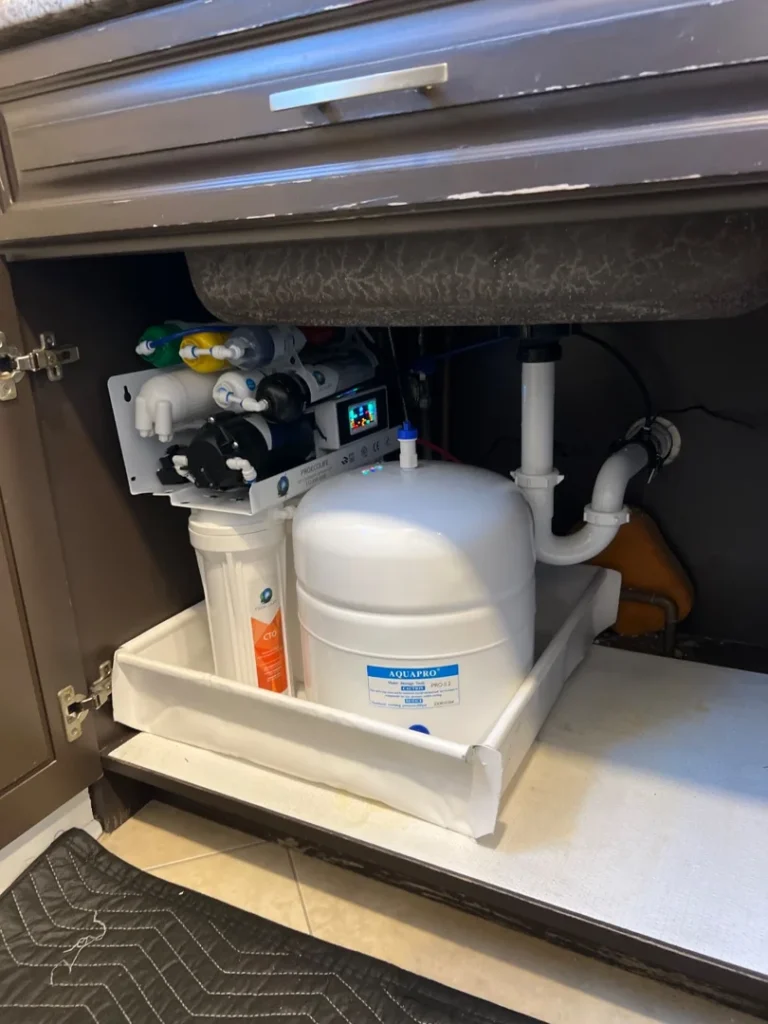
Point-of-use systems are typically installed under the kitchen sink. They are highly focused, dedicated systems designed to provide ultra-pure drinking and cooking water through a separate faucet.
On the other hand, whole-house systems treat water at the point of entry, meaning every faucet, shower, and appliance in your home receives filtered water. For residents in the Northwest suburbs like Park Ridge, Niles, and Des Plaines, water hardness is a major issue. Lake Michigan water is moderately hard, but homes relying on municipal wells in the outer suburbs often experience severe limescale buildup that ruins water heaters, leaves spots on dishes, and dries out skin.
Deciding which option fits your lifestyle depends on your specific goals. If your primary concern is eliminating lead and PFAS from your drinking and cooking water, an under-sink reverse osmosis system is the gold standard. If you want to protect your plumbing from limescale and enjoy softer showers, a whole-house system is the way to go. We break down these differences further in our article, Is reverse osmosis for you (available in Polish as Czy Odwrocona Osmoza Jest Dla Ciebie).
If you are located in the northern suburbs like Wheeling, professional installation ensures your system is set up correctly to handle local water conditions.
Choosing the Right Reverse Osmosis System for Your Home
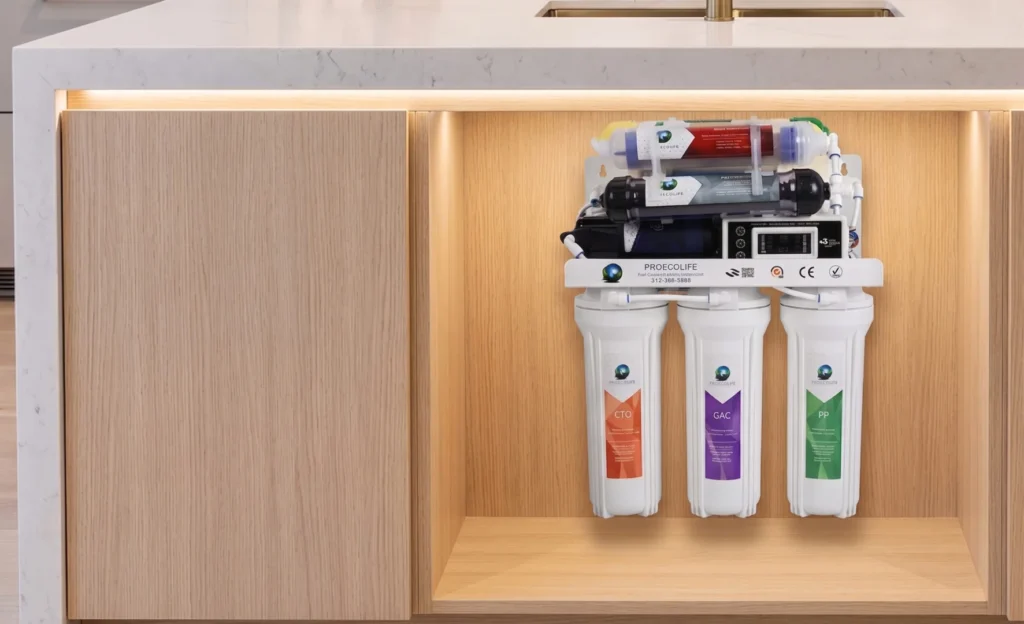
At ProEcoLife, we believe in providing tailored water solutions. Our flagship product, the PEL75 9-Stage RO System, is designed specifically to handle the unique water chemistry of the Chicago area.
Standard RO systems on the market typically offer 3 to 5 stages of filtration. Our PEL75 system takes filtration to the next level with a 9-stage process. It doesn’t just strip out lead, chlorine, and microplastics; it also includes specialized remineralization stages to restore healthy minerals like calcium and magnesium, raising the pH to a perfectly balanced, alkaline state. This delivers water that tastes incredibly crisp, clean, and refreshing.
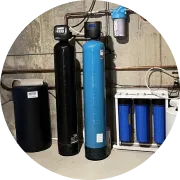
For homes experiencing severe scale issues or those operating on private wells in outlying areas, we offer comprehensive Whole House Filtration and Well Water Conditioning systems. These setups ensure that iron, sulfur, and hard minerals are neutralized before they can damage your home’s appliances or clog your RO membranes. Discover the best local setups by reading about the Top reverse osmosis system options in chicago for pure water.
For more perspectives on why this filtration method beats out alternative options, take a look at our articles on Bottled Water Vs Reverse Osmosis and Osmosis Water Or Bottled Water.
Commercial Water Filtration Systems for Local Businesses
Clean water isn’t just a residential requirement. Local businesses across Skokie and Niles — including craft breweries, specialty coffee shops, busy restaurants, and dental clinics — rely on ultra-pure water to protect their commercial equipment and deliver high-quality products to their customers.
A high-volume commercial system can process anywhere from 500 to over 8,000 gallons of water per day. Breweries, for example, need a blank canvas of pure water so they can precisely control their mineral profiles for different styles of beer. Coffee shops rely on scale-free water to prevent expensive espresso machines from clogging up with calcium deposits.
Because commercial systems run under intense demand, professional maintenance and timely repairs are critical to prevent costly operational downtime. Local businesses in Skokie can rely on professional services to keep their systems running smoothly.
Need Clean, Safe Water at Home?
Get a free water test at your home or business. We install and service whole-house filtration and PEL75 reverse osmosis systems across Chicagoland. We also take select projects in Wisconsin and Indiana.
Book a Free Water TestCall (312) 889-8888Tank vs. Tankless Water Filtration Designs
If you are shopping for an under-sink reverse osmosis system, you will quickly run into two primary configurations: traditional tank-based systems and modern tankless systems.

A traditional RO system uses a pressurized storage tank (typically holding 3 to 5 gallons of water). Because the RO membrane filters water slowly, drop by drop, the tank is necessary to ensure you have an immediate supply of water when you turn on the faucet.
Tankless RO systems, by contrast, use an internal booster pump to force water through a high-capacity membrane in real-time. This eliminates the need for a storage tank entirely.
Here are the primary trade-offs to keep in mind:
- Space: Tankless designs are incredibly compact, saving valuable cabinet space under your kitchen sink.
- Freshness: Water from a tankless system is filtered on demand, meaning it never sits in a rubber bladder inside a metal tank for days.
- Flow Rate: Tankless systems deliver a fast, continuous stream of water, whereas tank-based systems can experience a drop in pressure as the tank empties.
- Power Requirements: Tankless systems require an electrical outlet under the sink to power the internal booster pump, while traditional tank systems run purely on your home’s water pressure.
To learn more about why so many local families are upgrading to these modern configurations, read our guide on Why the reverse osmosis is a smart investment for your household.
Water Efficiency and Waste Reduction
One of the most common questions homeowners ask is about “waste water.” Because reverse osmosis uses cross-flow filtration to sweep away rejected contaminants, a portion of the water must be sent down the drain.
Historically, older point-of-use systems were highly inefficient, sometimes wasting up to 5 to 10 gallons of water for every single gallon of pure water produced. Fortunately, modern technology has dramatically improved these ratios.
When choosing a system, look for models that meet EPA WaterSense standards. WaterSense labeled systems are certified to send 2.3 gallons or less of reject water down the drain per gallon of treated water. Choosing an efficient model can save the average household over 3,100 gallons of water per year.
| System Feature | Traditional Tank System | Modern Tankless System (PEL75) |
|---|---|---|
| Average Drain Ratio | 4:1 to 5:1 (wastes 4-5 gallons) | 1:1 to 1.5:1 (wastes 1-1.5 gallons) |
| Space Required | High (requires bulky storage tank) | Low (compact, sleek design) |
| Electrical Power | Not required | Required (for booster pump) |
| Water Freshness | Stored in tank | Filtered instantly on demand |
Frequently Asked Questions About Reverse Osmosis
How much water does an RO system waste?
A typical, older point-of-use RO system can generate up to five gallons or more of reject water for every gallon of treated water. However, our advanced PEL75 9-Stage RO System utilizes high-efficiency membranes and smart engineering to minimize water waste, bringing the ratio down significantly.
By utilizing systems designed to meet rigorous efficiency standards, you can dramatically reduce your household water footprint while enjoying ultra-pure water. To learn more about the positive impacts of clean water, see our article on What are the benefits of drinking reverse osmosis water and Jakie Sa Zalety Picia Wody Z Odwroconej Osmozy.
What maintenance is required for home water systems?
To keep your reverse osmosis system running perfectly, regular filter replacements are essential.
- Sediment and Carbon Pre-Filters: Replace every 6 to 12 months to protect the RO membrane from chlorine and large particles.
- Reverse Osmosis Membrane: Replace every 2 to 3 years, depending on your local water quality and daily usage.
- Post-Carbon / Remineralization Filters: Replace every 12 months to ensure your water remains fresh and perfectly balanced.
For homeowners in Evanston or Glenview, keeping up with this maintenance is simple. While some basic filter swaps can be managed with care, professional system service ensures your system is properly sanitized and checked for leaks. If you ever need professional support, local experts can help keep your system in peak condition.
For our Polish-speaking neighbors, we have compiled a practical guide on maintaining your system: Odwrocona Osmoza W Praktyce.
Is reverse osmosis water safe to drink daily?
Yes, reverse osmosis water is exceptionally safe and healthy for daily consumption. Because it removes up to 99% of harmful impurities, it provides unmatched peace of mind.
Some people worry that because RO filtration removes minerals, the water might be too acidic or lack essential nutrients. While it is true that pure RO water can sometimes have a slightly lower pH, high-quality systems like our PEL75 9-Stage RO System solve this completely by passing the water through a final remineralization stage. This adds back trace amounts of calcium, magnesium, and potassium, raising the pH to a healthy, alkaline level and giving the water a smooth, refreshing taste.
Get all the facts on the health benefits of purified water in our detailed analysis: Is reverse osmosis water really better for you.
Conclusion
Investing in a reverse osmosis system is one of the most effective steps you can take to protect your home, your family, and your peace of mind. From neutralizing lead risks in Norwood Park and Jefferson Park to addressing the hard municipal water issues in Park Ridge and Skokie, a professional-grade RO system ensures that the water coming out of your faucet is as pure as nature intended.
Since 2014, ProEcoLife and founder Karol Dolega have been dedicated to serving the Chicago area with premium water filtration solutions. We don’t believe in one-size-fits-all fixes. We focus on providing high-quality, professional installations of our proprietary PEL75 9-Stage RO System, Whole House Filtration, and Well Water Conditioning systems to target the specific water issues in your neighborhood.
If you are ready to stop relying on expensive, plastic-heavy bottled water and want to experience the difference that pure, clean tap water can make for your cooking, coffee, and family health, we are here to help. Visit proecolife.com to schedule a water test.