
Choosing the Best Whole House Water Treatment for Chicago Homes
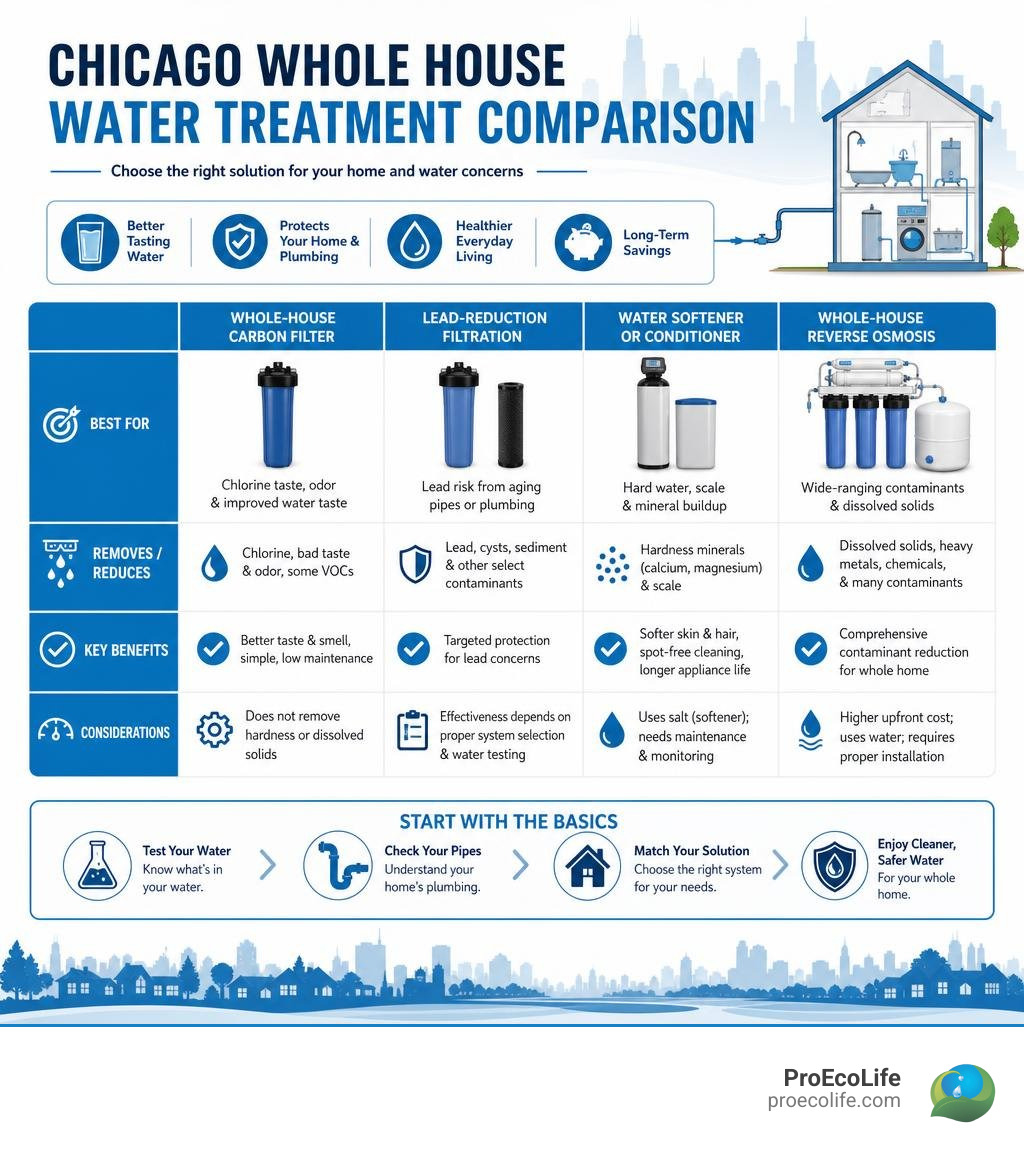
The best whole house water treatment depends on what is in your water, the condition of your home’s plumbing, and whether you need chlorine reduction, lead protection, hard-water control, or broader contaminant removal.
For many Chicago homeowners, a practical starting point is:
| Main concern | Treatment type often considered |
|---|---|
| Chlorine taste and odor | Whole-house carbon filtration |
| Lead risk from aging service lines or plumbing | Certified lead-reduction filtration, selected after water testing |
| Scale, spots, and hard-water buildup | Water softener or salt-free conditioner |
| Dissolved solids and wide-ranging contaminants | Whole-house reverse osmosis, typically with storage and post-treatment |
Chicago’s water is treated before it reaches the city system, but water can still pick up concerns on the way into an older home. That is why a water test and a clear look at your pipes matter more than choosing the biggest or most expensive system.
This guide compares the leading whole-house treatment approaches, including carbon filters, softeners, and reverse osmosis. You will learn what each system is designed to address, where its limits are, and what to check before investing.
Relevant articles related to best whole house water treatment:
Comparing Whole House Water Treatment Options: RO, Carbon, and Softeners
When evaluating options for the best whole house water treatment, it is essential to recognize that no single filtration method solves every water issue. Our founder, Karol Dolega, established ProEcoLife in Chicago back in 2014 after seeing how local infrastructure affects tap water quality across different neighborhoods. Understanding how various systems function helps homeowners make informed decisions.
Every treatment technology targets specific types of contaminants:
- Whole House Carbon Filtration: Activated carbon media excels at removing municipal disinfectants like chlorine and chloramines, alongside synthetic chemicals and organic compounds. Carbon filters clean all incoming tap water, which may help improve taste, reduce odors, and protect shower air quality. Learn more about these systems in our overview of whole house filtration system options and our guide on How Water Treatment Works: The 5 Essential Stages Explained.
- Water Softeners & Conditioners: Hardness minerals—primarily calcium and magnesium—cause stubborn limescale deposits on fixtures and shorten appliance life. Ion-exchange water softeners swap hardness ions for sodium or potassium, protecting water heaters and plumbing lines from mineral crusting.
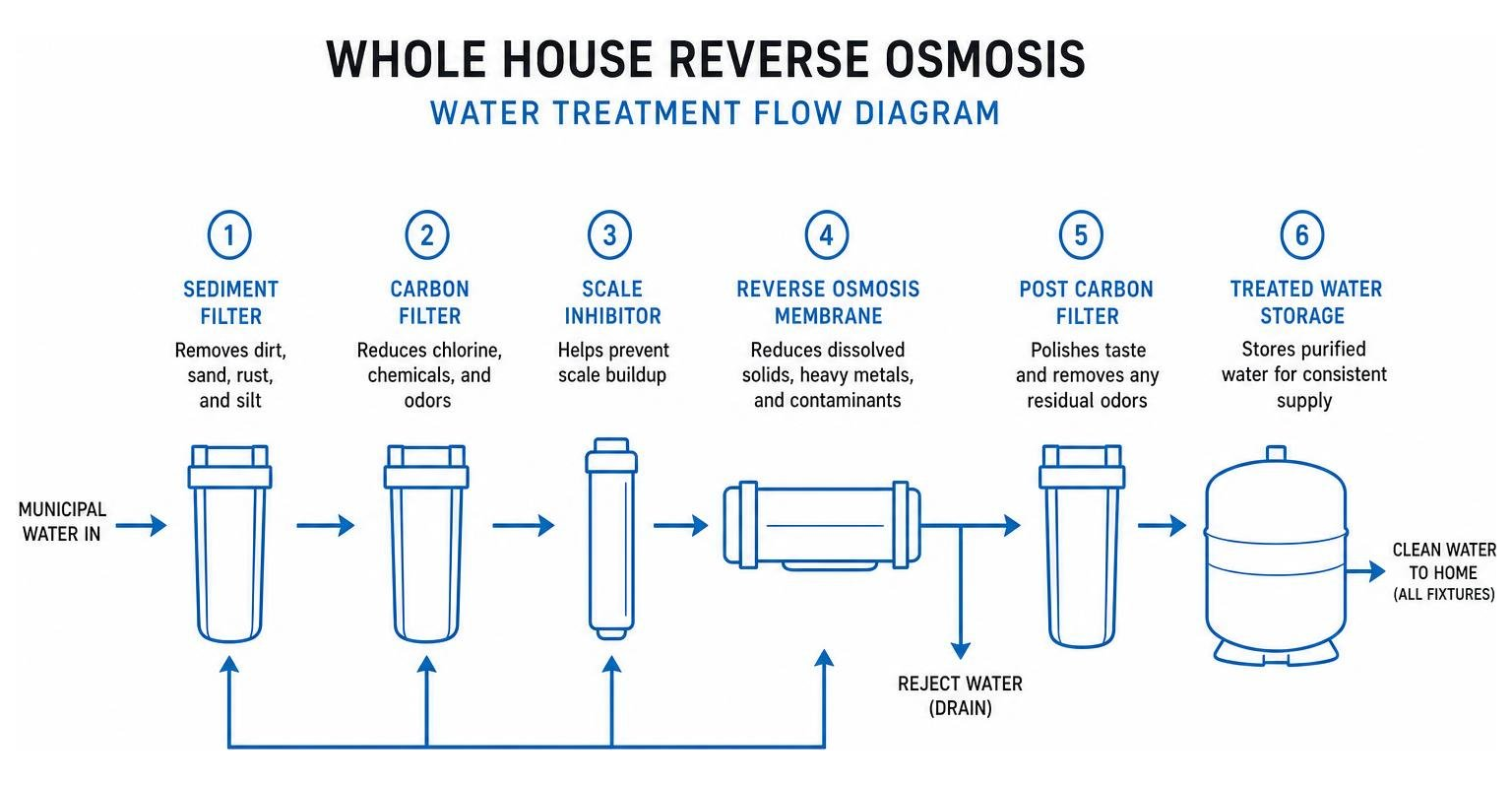
- Whole House Reverse Osmosis (RO): RO forces water under high pressure through a semi-permeable membrane. This process separates pure water molecules from dissolved solids, heavy metals, and microscopic impurities, offering comprehensive total dissolved solids (TDS) reduction.
| System Type | Primary Focus | TDS Reduction | Chlorine & Odor Removal | Scale Prevention |
|---|---|---|---|---|
| Whole-House Carbon Filter | Chemical & disinfectant removal | Low | Very High | None |
| Water Softener | Hardness mineral removal | None (Exchanges ions) | Low | Exceptional |
| Whole-House Reverse Osmosis | Comprehensive purification | Exceptional (96–98.5%) | High (with carbon pre-filter) | Exceptional |
Differences in Contaminant Removal and Functionality
Municipal water sourced from Lake Michigan is treated thoroughly at city plants. However, as it travels through aging infrastructure into older Chicago homes—especially in long-established neighborhoods like Norwood Park, Jefferson Park, and Edison Park—it can pick up heavy metals like lead from old service lines.
Standard carbon filters provide targeted chemical reduction, but they do not eliminate dissolved minerals or heavy metals unless specially engineered with lead-rated media. Conversely, salt-based water softeners prevent scale buildup in high-mineral areas like Park Ridge, Niles, and Des Plaines, but they do not remove chlorine or heavy metal contaminants.
Whole house reverse osmosis provides heavy-duty filtration by physically blocking dissolved heavy metals, nitrates, sulfates, and high concentrations of total dissolved solids. Combining these approaches through comprehensive whole house filtration gives homeowners total protection across every tap, shower, and appliance.
Evaluating Specifications for the Best Whole House Water Treatment
Selecting a commercial-grade home treatment system requires reviewing exact technical specifications. Water chemistry varies across Chicagoland, so analyzing your home’s water quality before choosing system components is essential.
Key Features of the Best Whole House Water Treatment Systems
To ensure long-term performance and reliability, consider these key operating parameters:
- TDS Rejection Rate: High-efficiency RO membranes achieve a sodium chloride (NaCl) rejection rate between 96% and 98.5%. This level of purification removes dissolved salts and trace heavy metals.
- Feed Water TDS Capacity: Standard home RO configurations handle incoming raw water with total dissolved solids ranging from 1,000 to 2,000 ppm (parts per million).
- pH Operating Range: Robust membranes operate safely within a pH window of 3 to 11, protecting the system against unexpected pH fluctuations in incoming water.
- Temperature and Pressure Baseline: System ratings rely on standard testing conditions, typically assuming incoming water temperatures around 77°F and stable operating pressure. Cold water during Midwestern winters can slow production rates, making booster pumps and thermal considerations important.
To understand membrane mechanics further, explore our In-Depth Guide to Reverse Osmosis Systems.
Advanced Upgrades and Performance Options
For properties requiring heavy-duty water output, upgrading system hardware can improve daily performance:
- Stainless-Steel Pumps: Standard composite or brass pumps can wear down faster under heavy continuous loads. A heavy-duty stainless-steel rotary vane pump resists corrosion and manages continuous duty cycles reliably.
- Digital TDS Controllers: Digital monitors display real-time incoming and outgoing water purity, alerting you when performance shifts or filters need service.
- Blending Valves: A precision blending valve allows a controlled amount of filtered water to mix back into pure RO water, letting you tune output mineral levels and water hardness.
System Sizing, Storage Tanks, and Key Treatment Stages
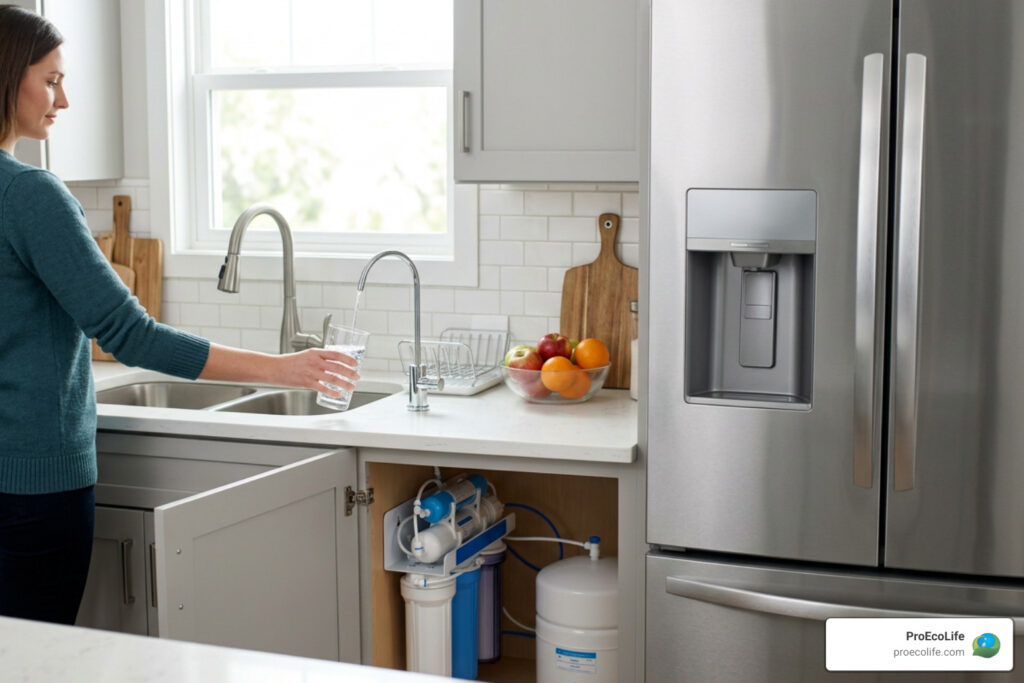
Unlike point-of-use under-sink filters that deliver pure water on demand through a dedicated faucet, point-of-entry reverse osmosis produces water gradually. Because the filtration process occurs through microscopic membrane pores, whole-house systems rely on specialized storage and delivery setups.
Choosing the Best Whole House Water Treatment Capacity for Your Home
Determining the ideal flow capacity—measured in gallons per day (GPD)—depends on your household size, peak water usage, and total bathroom count:
- 300 to 500 GPD: Suitable for smaller homes or condominiums with 1 to 1.5 bathrooms.
- 1,000 to 2,500 GPD: Ideal for average single-family residences in Skokie, Glenview, or Morton Grove with 2 to 4 bathrooms.
- 4,000 to 7,000 GPD: Designed for high-demand luxury estates, multi-family units, or small commercial applications with 5 or more bathrooms.
Because RO production rates cannot match instant fixture demand (like running two showers and a washing machine at once), water flows directly into atmospheric storage tanks ranging from 165 to 500 gallons. A float switch inside the tank signals the RO system to start production when water levels drop and stop when full. A high-pressure delivery pump then repressurizes the stored water, distributing it seamlessly to every tap in the home.
For standard multi-stage filter options, review The Homeowner’s Guide to 34-Inch Whole House Water Filters.
Essential Pre-Filters and Post-Treatment Add-Ons
A complete whole-house water purification system requires several stages to protect membrane hardware and maintain clean home supply lines:
- Sediment Pre-Filtration: Heavy sediment, rust particles, and grit from aging municipal mains can quickly clog delicate RO membranes. High-capacity sediment filters remove suspended solids upstream.
- Carbon Pre-Filtration: Chlorine deteriorates thin-film composite RO membranes. Catalytic carbon pre-filters eliminate disinfectants before water enters the membrane stage.
- Alkalizing Remineralizers: Water purified by reverse osmosis becomes slightly acidic because beneficial minerals are removed. Passing pure water through an alkalizing remineralizer post-filter adds essential minerals like calcium and magnesium back into the water stream, balancing pH levels.
- UV Sterilization: Storing purified water in unpressurized atmospheric tanks creates a potential risk for ambient bacterial growth. An inline ultraviolet (UV) sterilizer neutralizes bacteria and viruses as water leaves the storage tank.
Learn more about post-filter mineral technology in our guides on Alkaline and Mineral Water Filters and What is an Alkaline Filter.
Installation Requirements, Maintenance, and System Lifespan
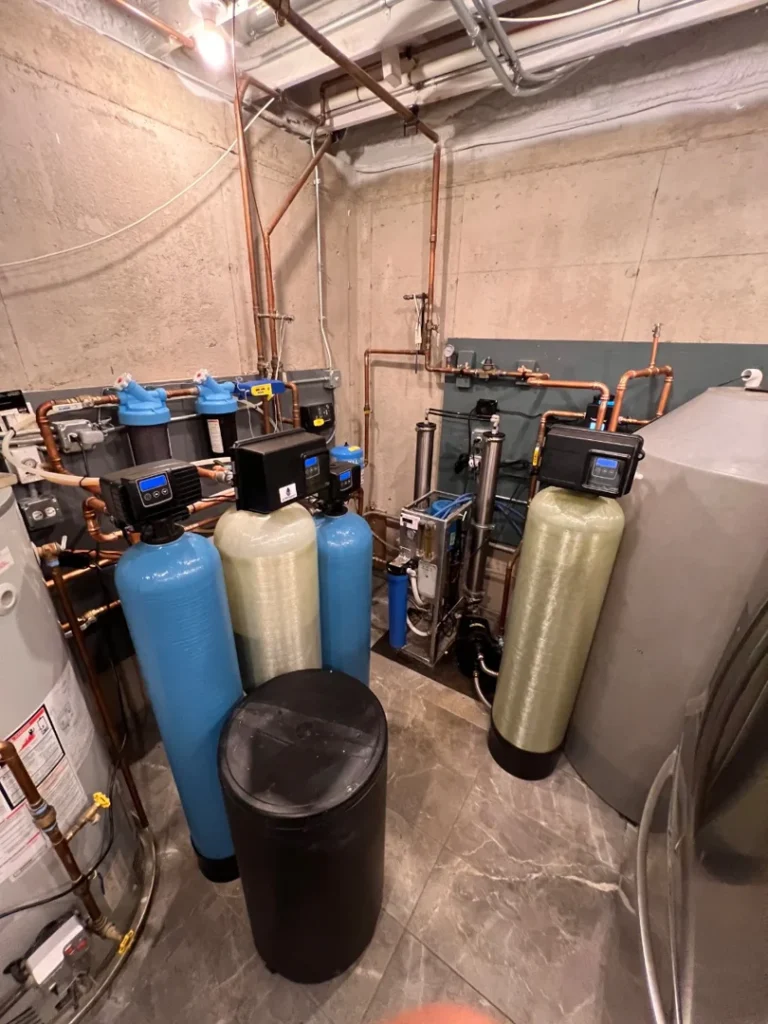
Installing a commercial-grade whole-house system requires careful mechanical planning. Before selecting equipment, verify physical layout logistics:
- Floor Space & Clearances: Large atmospheric tanks (165 to 500 gallons) require sufficient floor space and ceiling height. Measure interior door frames and narrow basement entryways to confirm the tank can pass through during delivery.
- Plumbing Connections: Professional integration into your main water line ensures proper feed lines, drain outlets for concentrate water, and adequate electrical supply for booster and delivery pumps.
- Expected Lifespan: With routine maintenance and timely filter replacements, high-end whole-house treatment hardware can last 15 to 20 years.
Read more about protecting your home’s water supply in our detailed review, No Lead Left Behind: Best Whole House Water Filters Reviewed.
Frequently Asked Questions About Whole House Reverse Osmosis
Does a whole house RO system cause water waste or pressure drops?
Reverse osmosis systems generate concentrate water (brine) that flushes rejected contaminants down the drain. Modern high-efficiency systems use optimized recovery ratios to reduce wastewater generation significantly compared to older models. Regarding household water pressure, because water is pumped from a dedicated atmospheric storage tank via an independent delivery pump, water pressure across showerheads and faucets remains strong and consistent.
Why is an alkalizing remineralizer necessary for whole house RO water?
Demineralized reverse osmosis water typically drops to an acidic pH below 6.4. Water with a pH below 6.4 is not recommended for consumption and can leach metals from copper plumbing and metal fixtures over time. An alkalizing remineralizer elevates pH levels above neutral, protecting residential plumbing systems and improving water taste.
What routine maintenance ensures a 15 to 20 year system lifespan?
To keep your system running smoothly over its lifespan:
- Replace sediment and carbon pre-filters on schedule (typically every 6 to 12 months).
- Clean and sanitize storage tanks annually.
- Replace main RO membranes every 2 to 5 years, depending on feed water quality and total usage volume.
Conclusion
Choosing the best whole house water treatment system involves matching your home’s unique plumbing and regional water profile with the right filtration technology. Whether you need whole-house chemical filtration, well water conditioning, dedicated hardness removal, drinking water refinement like our point-of-use PEL75 9-Stage RO System, specialized shower filter systems, or commercial water filtration systems, addressing local water conditions protects your family and home investment.
ProEcoLife has served the Chicago area since 2014, providing reliable water filtration solutions tailored to local conditions. Contact ProEcoLife to schedule a water test or visit proecolife.com.