

Understanding Lead Levels Chicago Residents Face Today
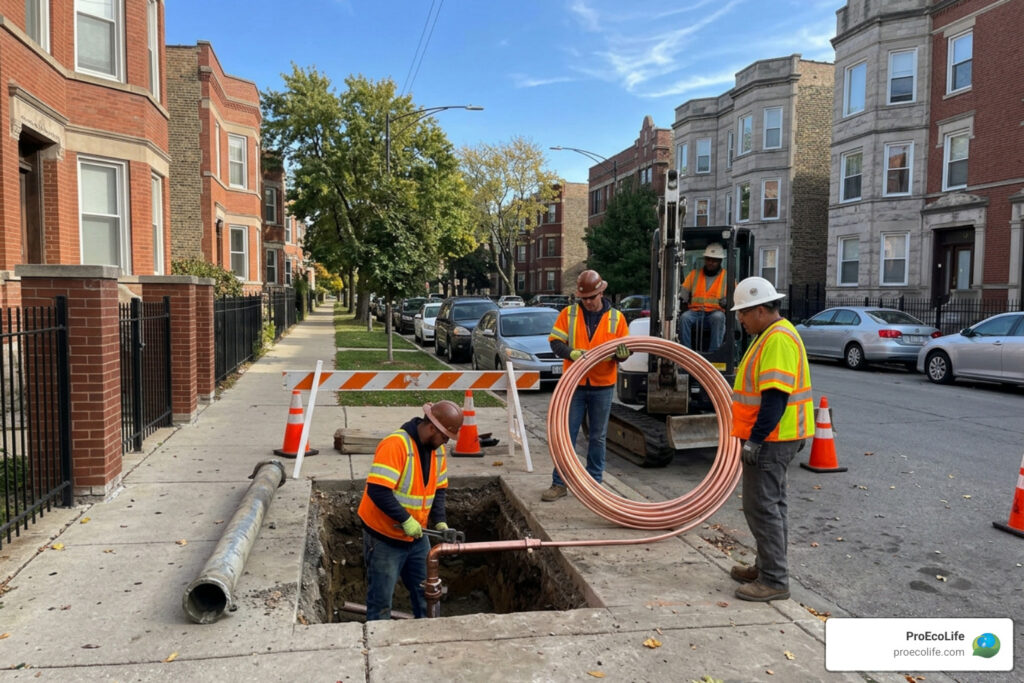
When we look at lead levels chicago families deal with today, we have to look past the source water. Water drawn from Lake Michigan and processed at the city’s Jardine and South Water purification plants is clean and meets standard treatment goals when it leaves the facility. However, the true threat begins in the distribution system—specifically the service line connecting the city main to individual homes.
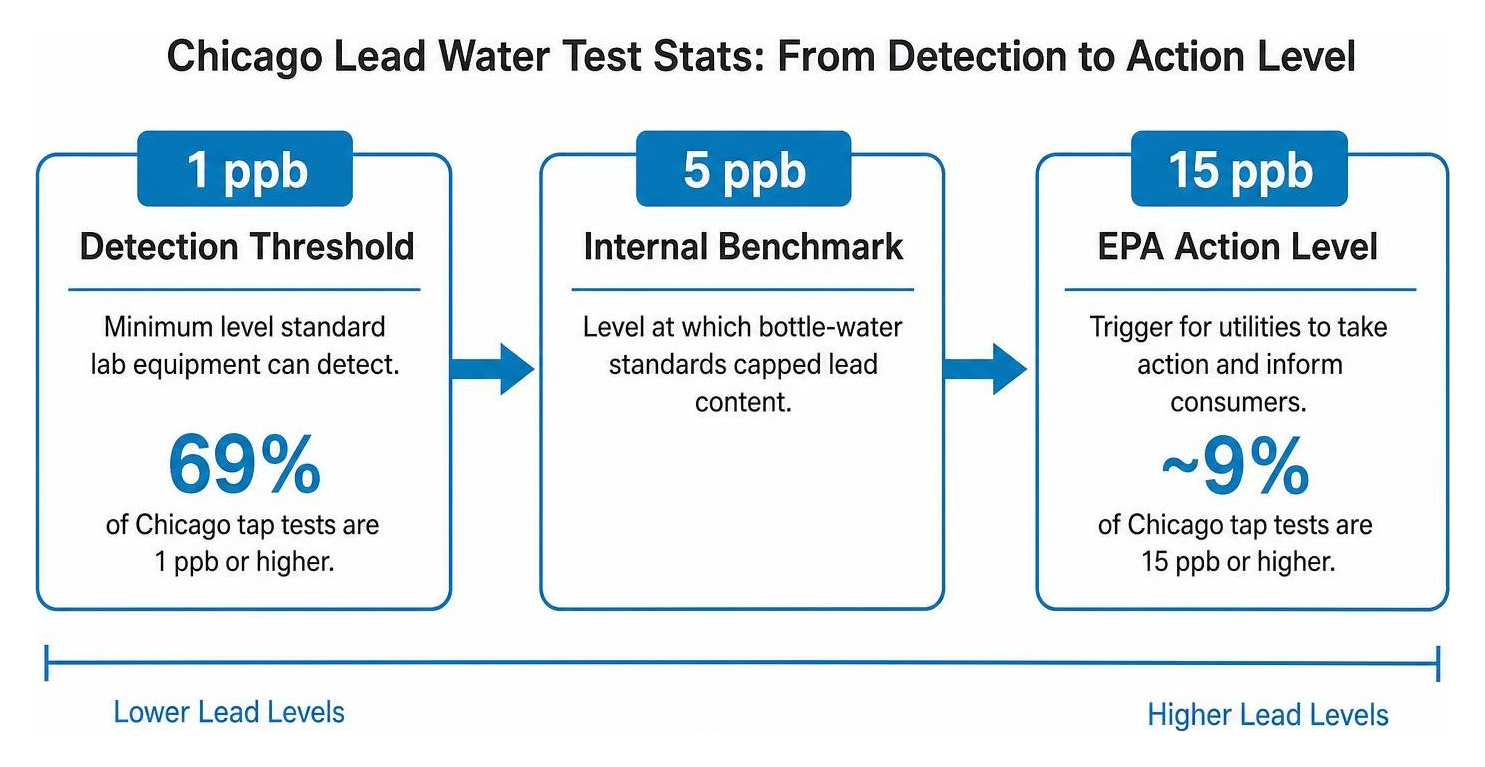
Chicago has approximately 400,000 lead service lines delivering drinking water to up to 2.7 million people. While the Environmental Protection Agency (EPA) sets an official action level of 15 parts per billion (ppb), public health agencies emphasize that no level of lead exposure is safe. In extensive municipal testing, 69% of tap water samples analyzed in Chicago contained detectable lead levels of 1 ppb or higher, and about 9% of tests exceeded the EPA’s 15 ppb action threshold.
Data published in an extensive JAMA Pediatrics study on Chicago childhood lead exposure shows that lead leaching into drinking water is a chronic issue affecting single-family and two-flat residences across the city.
Chicago Infrastructure and the Pre-1986 Pipe Mandate
How did Chicago end up with more lead pipes than any other city in the United States? It was actually written directly into the local building code. Until federal regulations banned the practice in 1986, Chicago municipal plumbing code strictly required builders to install lead service pipes for small residential properties.
For decades, lead was considered the gold standard for plumbing because it was durable and pliable enough to bend easily underground. Today, those legacy choices leave millions of residents dependent on aging lead pipes. You can learn more about how this impacts local homes in our detailed breakdown of Chicago lead water levels.
Measuring Dangerous Lead Levels Chicago Neighborhoods Suffer From
To understand how contamination affects individual households, water utility datasets use key testing metrics:
- 1 ppb Detection Threshold: The minimum level of lead that standard laboratory testing equipment can reliably detect. Over two-thirds (69%) of Chicago tap tests meet or exceed this limit.
- 5 ppb Internal Benchmark: The level at which bottle-water standards capped lead content, highlighting that even moderate levels in tap water require filtration attention.
- 15 ppb EPA Action Level: The trigger point where municipal utilities are required to take corrosion mitigation steps or inform consumers. Roughly 1 in 11 tested homes in Chicago hits or passes this mark.
Health Effects and Vulnerability of Children
Lead is a potent neurotoxin that accumulates in the body over time. When ingested, it mimics vital minerals like calcium, disrupting basic cellular functions and interfering with central nervous system development. Adults exposed to lead can suffer from cardiovascular complications, elevated blood pressure, and reduced kidney function, but infants and young children bear the heaviest health burden.
Because growing bodies absorb lead much faster than adult bodies do, drinking water can account for 40% to 60% of an infant’s overall lead intake—especially when tap water is used to mix baby formula.
How Lead Levels Chicago Children Experience Affect Health
A landmark study from researchers at Johns Hopkins and Stanford estimated that 68% of Chicago children under six—roughly 129,000 toddlers and infants—are routinely exposed to lead-contaminated drinking water. As detailed in the Johns Hopkins Bloomberg School of Public Health lead study report, extended exposure in children is linked to irreversible harm, including:
- Permanent reduction in IQ scores and impaired cognitive processing
- Attention deficit disorders, hyperactivity, and behavioral challenges
- Delayed physical growth and impaired hearing development
- Doubling of overall blood lead levels compared to children in lead-free homes
Blood Lead Reference Thresholds and Screening Schedules
The Centers for Disease Control and Prevention (CDC) uses a blood lead reference value of 3.5 micrograms per deciliter (µg/dL) to identify children with elevated blood levels. However, medical professionals reiterate that no blood lead level in children is considered safe.
The Chicago Department of Public Health (CDPH) mandates routine blood lead testing for young children living in the city at 12, 24, and 36 months of age. If a child’s blood test shows elevated lead levels, CDPH triggers clinical case management, developmental evaluations, and home environmental assessments to inspect for lead paint and plumbing hazards.
Need Clean, Safe Water at Home?
Get a free water test at your home or business. We install and service whole-house filtration and PEL75 reverse osmosis systems across Chicagoland. We also take select projects in Wisconsin and Indiana.
Book a Free Water TestCall (312) 889-8888Racial Inequities and Neighborhood Testing Disparities
The distribution of lead pipes and access to water testing across Chicago is far from equal. Neighborhoods on the South and West Sides face high rates of lead infrastructure while simultaneously experiencing lower rates of official water testing.
Demographic Variations in Service Line Distribution
An analysis combining municipal pipe inventory maps with census data reveals stark racial and economic disparities:
- 92% of water service lines in majority-Latino census tracts require replacement due to lead or suspected lead components.
- 89% of water service lines in majority-Black census tracts require replacement.
- 74% of water service lines in majority-White census tracts require replacement.
In areas like the Southeast Side, lead service lines account for up to 94% of residential connections, compared to far lower concentrations in central commercial zones like the Loop. Reviewing our guide on Chicago water pipe replacement issues offers further insight into how neighborhood infrastructure varies across the city.
The Testing Gap in Historically Underserved Communities
While Chicago offers voluntary tap water testing kits, relying on self-requested samples creates a significant sampling bias. Research indicates that a 10-percentage-point increase in a block’s Black or Hispanic population was associated with a 3% and 6% decrease, respectively, in the likelihood of being tested for lead. Yet, those same demographic increases correlated with a higher risk of actual lead contamination.
Because households in historically underserved areas face higher barriers to requesting city test kits, thousands of families remain unaware of the lead levels in their tap water.
Need Clean, Safe Water at Home?
Get a free water test at your home or business. We install and service whole-house filtration and PEL75 reverse osmosis systems across Chicagoland. We also take select projects in Wisconsin and Indiana.
Book a Free Water TestCall (312) 889-8888Remediation Progress and Municipal Challenges
Replacing Chicago’s 400,000 lead service lines is a massive public works challenge. Under federal rules established by the EPA’s Lead and Copper Rule Improvements, utilities across the nation are expected to remove lead pipes within 10 years. However, due to the sheer density of lead service lines in Chicago, local projections estimate full replacement could stretch until 2076—30 years past the federal target timeline.
City Replacement Programs and Regulatory Timelines
The City of Chicago has launched several programs to accelerate removal, including the Equity Lead Service Line Replacement Program for low-income residents and the Homeowner-Initiated Replacement Program. Despite setting goals to replace 10,000 pipes annually with a multi-hundred-million-dollar budget, progress remains slow.
Administrative backlogs and federal notification delays mean hundreds of thousands of property owners still await full line replacements. Residents can read the official EPA advice on Chicago drinking water for additional regulatory background.
The High Financial Cost of Private Lead Line Replacement
Replacing a lead service line involves two distinct sections: the public side (from the street water main to the property line) and the private side (from the property line into the home meter). While the city manages public main work, replacing the private plumbing line falls on the property owner.
Private replacement costs can range from several thousand dollars up to $26,000 for complex single-family homes or historic two-flats. Though the city waives certain permit fees during construction, the high out-of-pocket plumbing cost leaves many homeowners unable to complete full private line replacements independently.
Practical Household Steps to Reduce Lead Exposure
While long-term infrastructure repairs progress, families must take immediate harm-reduction steps to manage household tap water safety.
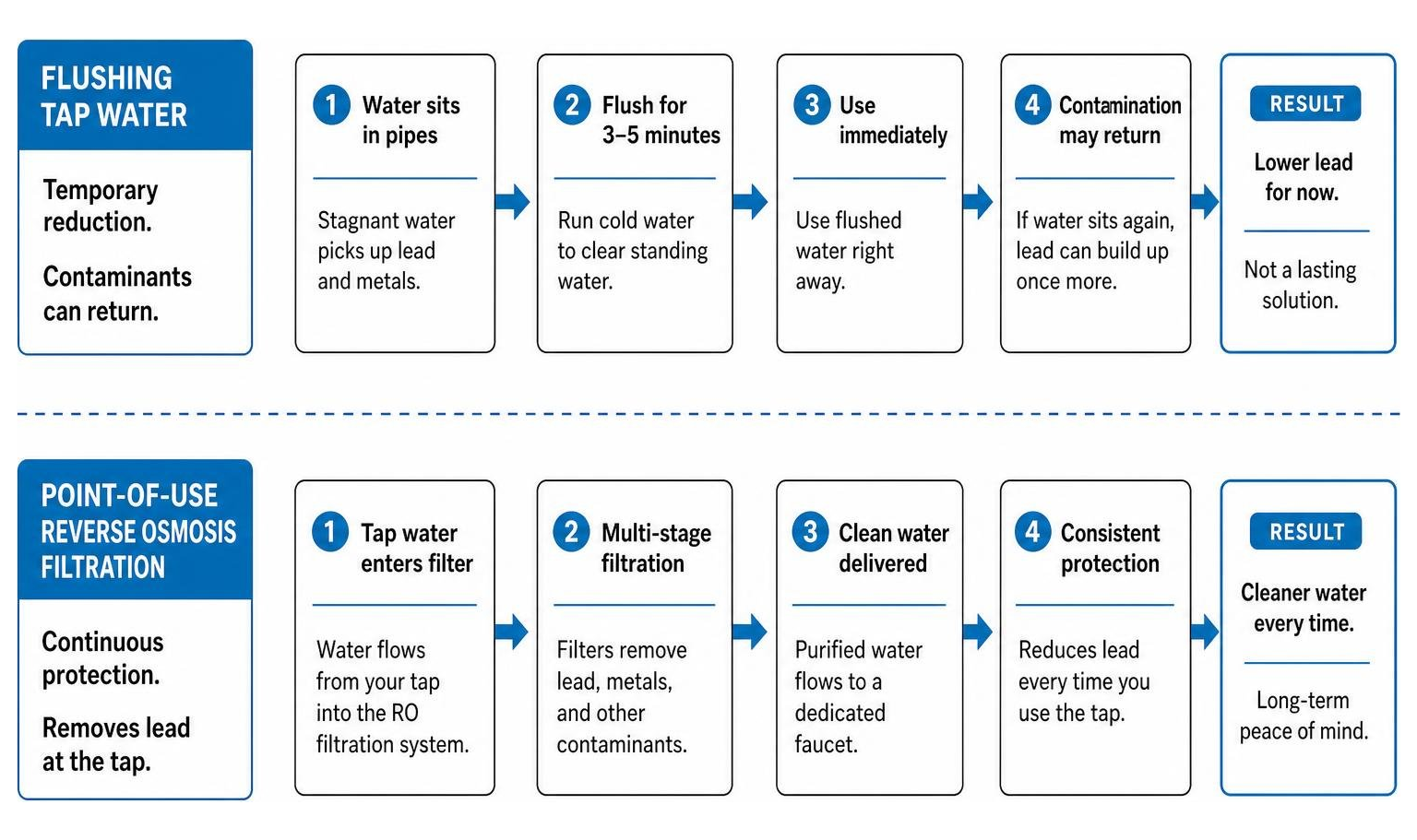
- Flush Your Lines Daily: If water has sat unused in your pipes for 6 hours or longer, run cold water for 3 to 5 minutes before drinking or cooking. Taking a shower, doing laundry, or running the dishwasher first thing in the morning helps flush the main service line efficiently.
- Clean Faucet Aerators: Lead particles and solder debris often collect in the mesh screens inside your faucet spouts. Unscrew the aerators, rinse out sediment, and scrub the mesh with a small brush once a month.
- Use Only Cold Water for Consumption: Always draw cold tap water for cooking, drinking, or preparing baby formula. Hot water leaches lead and heavy metals out of household plumbing much faster than cold water does.
- Test Your Water: Order an official test kit or explore our guide on how to request a Chicago water test kit.
| Action Method | Primary Benefit | Key Limitations |
|---|---|---|
| Tap Flushing (3–5 min) | Pulls fresh water from the city main; clears stagnant lead in line | Uses significant water volume; does not eliminate lead completely during high-corrosion periods |
| Pitcher Filters | Low initial cost; portable point-of-use option | Requires frequent cartridge changes; slow fill times; variable lead removal efficiency |
| Reverse Osmosis Systems | Advanced multi-stage filtration; removes dissolved & particulate lead | Requires professional installation and regular filter cartridge maintenance |
Effective Water Filtration and Certification Standards
Flushing cold water offers basic protection, but certified point-of-use water filtration provides a reliable, daily safeguard against heavy metals. When selecting a water filter for Chicago tap water, check that the system holds verified certifications:
- NSF/ANSI Standard 53: Certified specifically for the reduction of heavy metals, including dissolved and particulate lead. Standard NSF 42 filters only address taste, odor, and chlorine.
- NSF/ANSI Standard 58: Certified for Reverse Osmosis (RO) systems, capable of filtering heavy metals, total dissolved solids (TDS), and microscopic contaminants down to sub-micron levels.
Since founding ProEcoLife in 2014, Karol Dolega has guided our team to focus on local Chicago water challenges. Having our roots right here in the area, we engineer filtration setups specifically tailored to local plumbing realities. For point-of-use protection, our PEL75 9-Stage RO System offers multi-barrier protection right at your kitchen faucet.
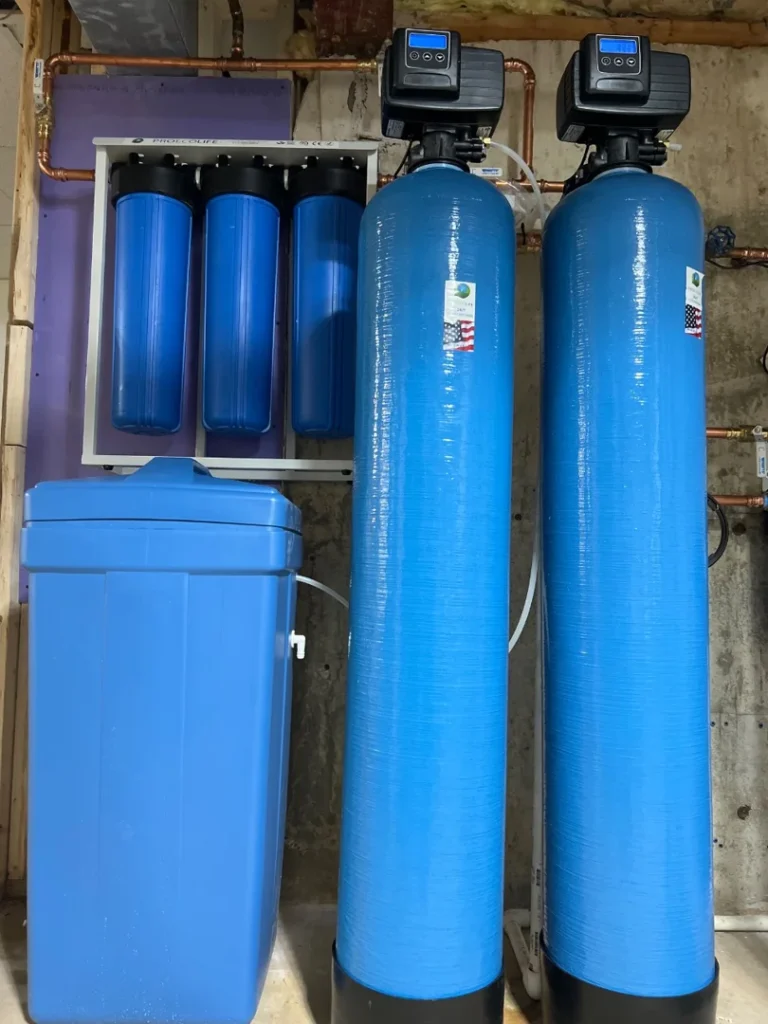
For comprehensive coverage against aging city infrastructure, hard suburban water, and heavy metals, combining point-of-use filtration with our Whole House Filtration, Shower Filter System, or Well Water Conditioning systems ensures every tap in your home delivers clean, clear water. Check out our comprehensive 2026 Chicago water filter selection guide to evaluate which option fits your home layout.
Whether you live in Chicago’s Northwest Side neighborhoods like Norwood Park, Edison Park, or Jefferson Park, or in neighboring suburbs such as Park Ridge, Niles, Des Plaines, Skokie, Glenview, Arlington Heights, or Morton Grove, local water conditions vary widely. Older urban homes struggle with legacy lead pipes, while Northwest suburban communities often contend with hard water mineral scaling that strains plumbing fixtures.
Frequently Asked Questions About Chicago Lead Water
How do I check if my Chicago home has a lead service line?
You can check your property address on the Chicago Department of Water Management online service line inventory map. Alternatively, perform a physical inspection on the pipe entering your basement near the water meter. Lead pipes are soft, dull gray, and easily scratched with a key or coin to reveal a bright silver metal color underneath. Lead pipes will also not attract a magnet.
What should I do immediately if I suspect lead in my drinking water?
Switch to using cold, filtered water for all drinking, cooking, and formula preparation. Flush stagnant taps for 3 to 5 minutes after long periods of non-use, clean your faucet aerators, and schedule an independent laboratory water test to determine your baseline lead levels.
Does boiling water remove lead contamination?
No. Boiling water does not remove lead. In fact, boiling water causes pure water to evaporate as steam, which actually concentrates the remaining lead and heavy metals in the pot. Always rely on certified cold-water filtration or proper line flushing rather than boiling.
Conclusion
Understanding and managing lead levels Chicago residents face is essential for keeping your household safe. While municipal pipe replacement efforts will take decades to complete, you do not have to wait for city infrastructure to catch up. Implementing daily flushing routines, regularly cleaning aerators, and installing high-performance reverse osmosis filtration may help dramatically reduce heavy metals at your kitchen tap.
At ProEcoLife, we take pride in serving our neighbors across Chicagoland with advanced filtration technologies engineered for our unique regional water conditions. Take the first step toward pure, worry-free tap water today. Explore whole-house filtration solutions for clean Chicago water or contact ProEcoLife to schedule a water test at proecolife.com.