

Chicago’s Lead Pipe Crisis: What Every Homeowner Needs to Know Right Now
Does Chicago have lead water pipes? Yes — and the scale of the problem is staggering.
Here’s a quick answer if you’re trying to find out where things stand:
- ~412,000 of Chicago’s roughly 491,000 water service lines are confirmed or suspected to contain lead
- That’s about 84% of all service lines citywide — the highest number of any U.S. city
- Homes built before 1986 are at highest risk, especially houses and two-flats
- Nearly 70% of Chicago children under 6 live in homes with detectable lead in their tap water
- The city’s own plan doesn’t project full replacement until 2076
This is not a small or localized problem. Lead service lines run under streets and yards across virtually every Chicago neighborhood — from the Northwest Side communities of Norwood Park and Jefferson Park to the South and West Sides.
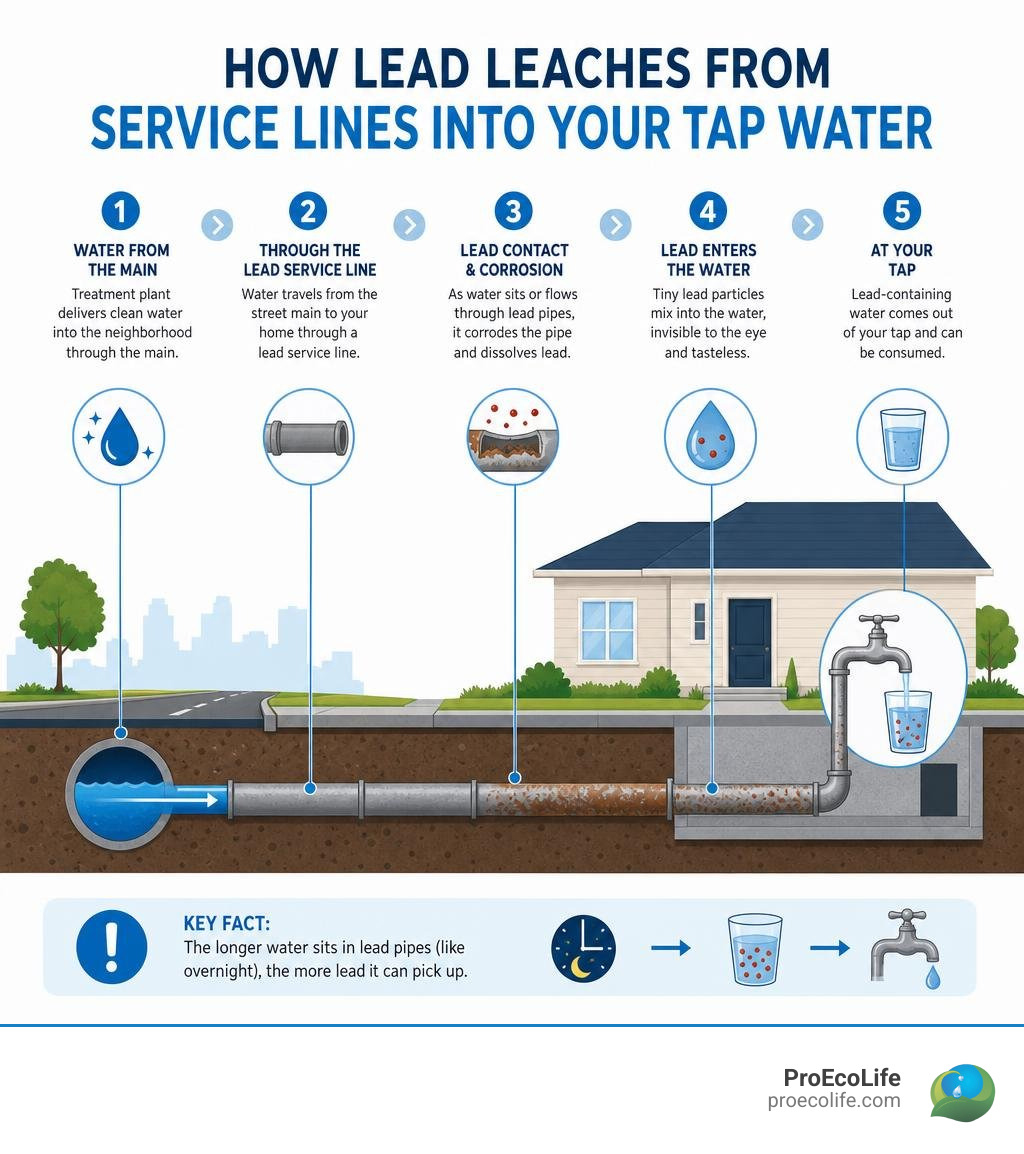
Chicago’s water source — Lake Michigan — is actually quite clean. The issue isn’t at the lake. It’s the aging pipes that carry water from the street main into your home. As water travels through a lead service line, it can pick up lead particles, especially when water sits still for several hours overnight.
If you’re a homeowner in Chicago or a nearby suburb like Park Ridge, Niles, or Des Plaines, this matters to your family’s health right now — not in 2076.
Does Chicago Have Lead Water Pipes? The Scale of the Crisis
To put it simply, Chicago is the epicenter of the nation’s lead service line crisis. According to state and municipal data, Chicago has approximately 400,000 lead service lines. When you look at the total inventory submitted to regulatory bodies, an estimated 412,000 out of roughly 491,000 service lines in the city are either made of lead or contaminated with it. That translates to a jaw-dropping citywide average of about 84% of all lines requiring replacement.
How did we get here? For decades, Chicago’s municipal building codes actively mandated the use of lead water service lines for single-family homes and two-flats. While other major cities began phasing out lead in the mid-20th century, Chicago kept this requirement on the books until the federal government stepped in with a nationwide ban in 1986.
This means if you live in an older Chicago home built before 1986, there is a very high probability that your water service line contains lead. These lines connect the massive city water mains under the street directly to your private home plumbing. Over time, physical disturbances, construction, or changing water chemistry can cause lead to flake off or leach into the water flowing to your kitchen faucet. To understand the deeper history of this local infrastructure challenge, you can read more about Chicagos Risky Water Problem.
Environmental Disparities Across Chicago Neighborhoods
While lead pipes are found throughout the city, the burden of this toxic infrastructure is not shared equally. Data shows a clear and troubling correlation between the concentration of lead pipes, neighborhood demographics, and income levels.
According to mapping analyses, majority-Black and majority-Latino neighborhoods on the city’s South and West Sides bear the heaviest burden. In majority-Latino census tracts, an estimated 92% of water service lines require replacement. In majority-Black tracts, that number sits at 89%. By comparison, majority-white tracts average 74%, and majority-Asian tracts sit at 65%.
These disparities are highlighted in detail by the Chicago Sun-Times investigative mapping tool, which tracks how lead service lines overlap with communities already facing cumulative environmental challenges, such as industrial air pollution and contaminated soil on the Southeast Side.
Interestingly, income alone does not shield a neighborhood from this issue. Because the historical mandate applied citywide, older affluent areas also have high concentrations of lead service lines. For instance, Forest Glen — which has the second-highest median household income in the city — has a service line replacement rate of 91% due to its older housing stock. Citywide, only five community areas have less than 50% of their service lines requiring replacement.
| Demographic / Area Type | Percentage of Service Lines Requiring Replacement |
|---|---|
| Majority-Latino Census Tracts | 92% |
| Forest Glen (High-Income Neighborhood) | 91% |
| Majority-Black Census Tracts | 89% |
| Citywide Average | 84% |
| Majority-White Census Tracts | 74% |
| Majority-Asian Census Tracts | 65% |
| The Loop (Downtown Chicago) | 16% |
Need Clean, Safe Water at Home?
Get a free water test at your home or business. We install and service whole-house filtration and PEL75 reverse osmosis systems across Chicagoland. We also take select projects in Wisconsin and Indiana.
Book a Free Water TestCall (312) 889-8888Health Risks of Lead in Chicago’s Drinking Water
There is no safe level of lead exposure. Lead is a potent neurotoxin that accumulates in the body over time, and the human body cannot easily rid itself of it.
The health risks are particularly severe for infants and young children under the age of six, whose brains and nervous systems are still rapidly developing. Exposure to even low levels of lead in drinking water can cause:
- Lowered IQ and learning difficulties
- Attention deficit disorders and behavioral problems
- Delayed physical development and hearing issues
- Prenatal risks, including low birth weight and premature birth
For adults, chronic exposure to lead can contribute to high blood pressure, kidney damage, reproductive issues, and cognitive decline.
The scale of exposure in Chicago is alarming. Research indicates that nearly 70% of Chicago children under the age of six live in homes with tap water containing detectable levels of lead. Furthermore, testing data from 2024 revealed that about 4% of Chicago children aged 1 to 3 had blood lead levels exceeding the state’s threshold for an elevated result. Because lead is colorless, odorless, and tasteless, many families remain completely unaware of the risk.
According to the federal government, drinking water can account for 20% or more of a person’s total lead exposure. For infants who rely exclusively on tap water mixed with baby formula, that number can skyrocket to between 40% and 60%. This makes water quality a critical first line of defense for growing families. For a comprehensive overview of how to safeguard your household, see the EPA’s official Advice to Chicago Residents About Lead in Drinking Water and check out our guide on No Lead No Worries Your Guide To Lead Free Drinking Water.
Why Does Chicago Have Lead Water Pipes in Older Plumbing Systems?
To understand how lead enters your home, it helps to understand the anatomy of a standard Chicago service line. A water service line is broken down into three main components:
- The Gooseneck: A short, flexible bend of pipe that connects the rigid city water main to the service line. Historically, these were almost always made of pure lead.
- The Public-Side Line: The portion of the pipe running from the water main to the property line (usually under the street or sidewalk).
- The Private-Side Line: The portion of the pipe running from the property line into the home’s internal plumbing.
Even if a home has copper pipes inside, the service line connecting it to the street may still be lead. Furthermore, older galvanized steel pipes present a secondary hazard. Galvanized pipes can act like a “lead sponge,” absorbing lead particles from upstream lead pipes over decades and releasing them back into your water long after other plumbing has been updated. You can read more about how lead travels through regional municipal systems in our article on Lead Found In Bartlett Drinking Water.
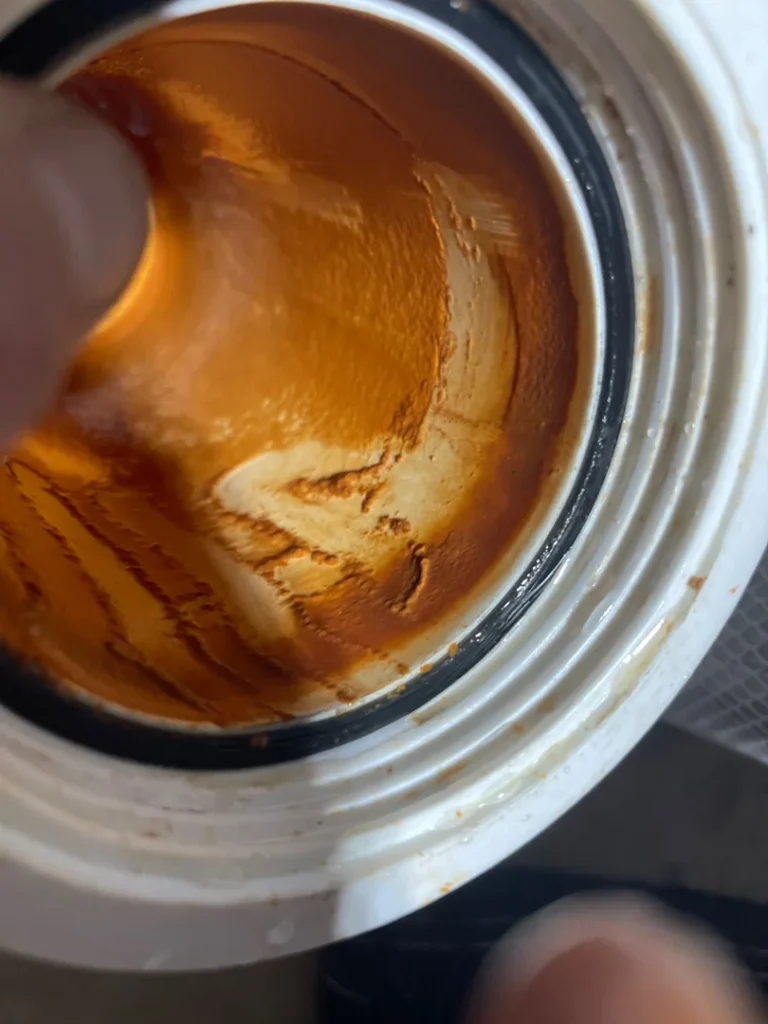
To minimize lead leaching, Chicago’s Department of Water Management adds corrosion control chemicals (specifically orthophosphate) to the water supply. This treatment forms a protective coating on the inside of the pipes, acting as a barrier between the metal and the water. However, this coating is not foolproof. Water main construction, nearby street work, rapid temperature changes, or water sitting stagnant in your pipes for more than six hours can cause this protective layer to break down, allowing lead to dissolve directly into your tap water.
Need Clean, Safe Water at Home?
Get a free water test at your home or business. We install and service whole-house filtration and PEL75 reverse osmosis systems across Chicagoland. We also take select projects in Wisconsin and Indiana.
Book a Free Water TestCall (312) 889-8888How to Check and Protect Your Home from Lead Contamination
If you want to know whether your Chicago household may be at risk, you do not have to rely on guesswork. Older homes across the Northwest Side, including Norwood Park, Edison Park, and Jefferson Park, as well as nearby suburbs like Park Ridge, Niles, Des Plaines, Skokie, Glenview, Arlington Heights, and Morton Grove, often have aging plumbing conditions that deserve a closer look.
The first step is to use local online resources. You can consult the city’s official Service Line Lookup tool or check interactive maps developed by local journalists. These resources allow you to input your address to view the citys current inventory records for your specific property. To learn how to navigate these maps, read our step-by-step guide on How To Use The Wbez Lead Pipe Map To Check Your Chicago Home.
Does Chicago Have Lead Water Pipes at Your Address? How to Verify
Because municipal records are not always 100% complete, a professional inspection of the water pipe entering your home is highly recommended, especially in older Chicago houses and two-flats.
A licensed plumbing or water-quality professional may check the pipe where it enters your basement or utility room before the water meter by looking at:
- The pipe location: The water service line usually enters through the floor or foundation wall.
- The pipe material: Lead service lines are often dull gray and soft, while copper and galvanized steel have different appearances and properties.
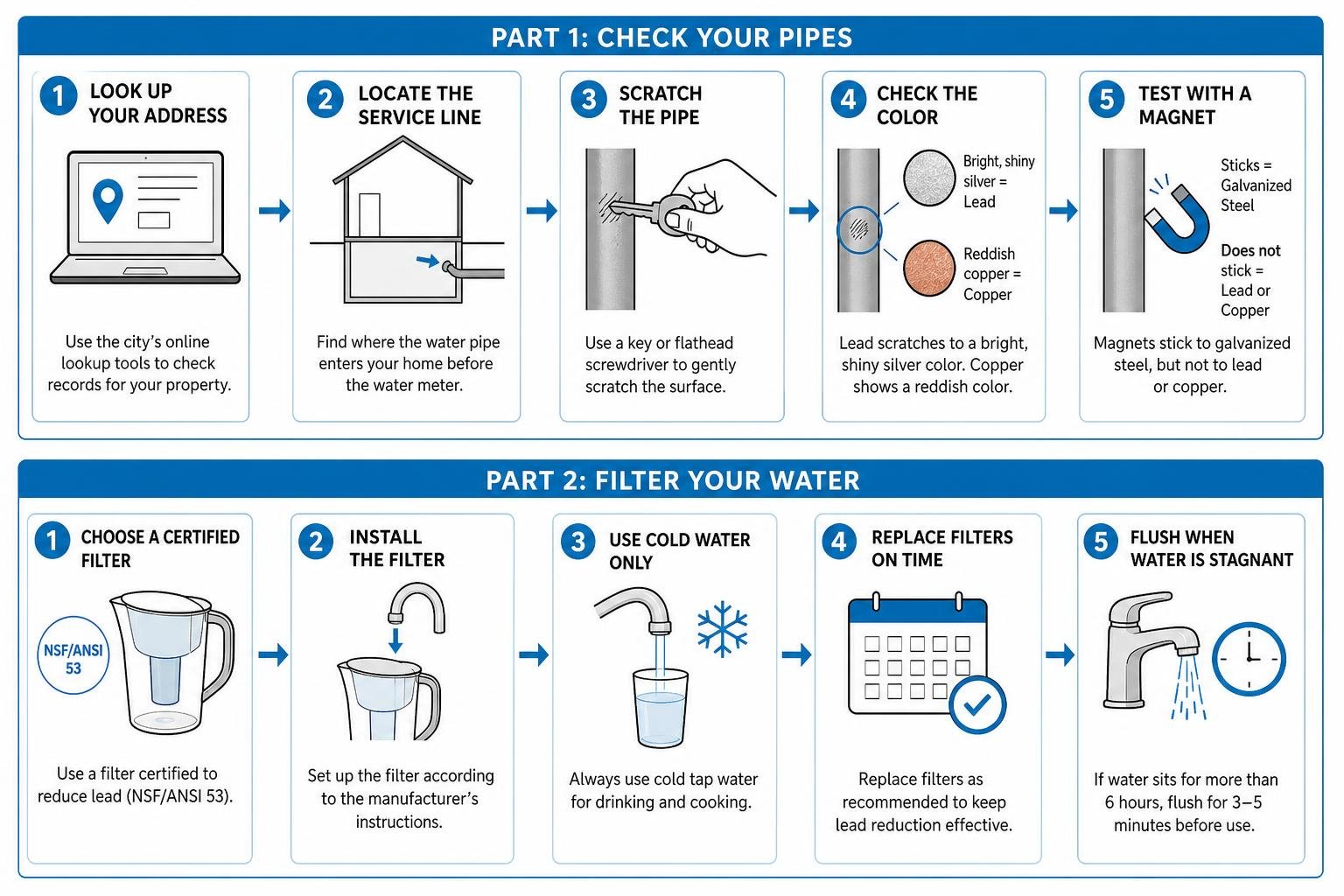
- Magnet response: Magnets will not stick to lead or copper, but they will stick to galvanized steel.
- Local records: The physical inspection should be compared with city inventory data whenever possible.
For a broader look at how these pipe types are distributed across the city’s neighborhoods, you can view Chicagos lead pipe crisis, mapped by Grist.
Immediate Steps to Reduce Lead Exposure
If you confirm or suspect you have a lead service line, there are several immediate, practical steps that may help reduce exposure while waiting for replacement:
- Flush Your Pipes: Always run your cold water tap before using it for drinking or cooking. If the water has sat unused for more than six hours, flush the tap for 3 to 5 minutes. To conserve water, you can run a shower or do a load of laundry first, then flush your kitchen tap for 30 to 45 seconds.
- Use Cold Water Only: Never use hot tap water for drinking, cooking, or preparing baby formula. Hot water dissolves lead much more quickly than cold water.
- Clean Your Aerators: Unscrew the small screen, or aerator, on the tip of your faucets regularly. Tiny particles of lead can become trapped there, continuing to contaminate your water even if the pipes are flushed. Rinse out any accumulated debris and reinstall.
- Use Certified Filtration: Standard pitcher filters and basic refrigerator filters are often not rated to remove lead. Look for systems certified under NSF/ANSI Standard 53 for lead reduction, and consult a local water professional before choosing a setup for your home.
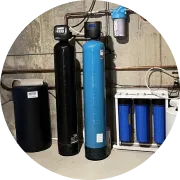
For higher-performance, long-term protection, many Chicago homeowners choose professionally installed point-of-use reverse osmosis systems or comprehensive whole-house filtration designed around local Lake Michigan source water, older service lines, and hard water conditions in the Northwest suburbs. ProEcoLifes proprietary PEL75 9-Stage RO System and Whole House Filtration options are engineered to target common Chicago-area water concerns, including heavy metals, chlorine, sediment, and other urban water contaminants. Results vary by home and water conditions. You can explore your options in our detailed guide on Heavy Metal Meltdown The Best Way To Remove Lead From Drinking Water.
Chicago’s Replacement Programs and the 2076 Timeline
Replacing over 400,000 lead service lines is a monumental infrastructure challenge. Under the federal EPAs Lead and Copper Rule Improvements (LCRI), water utilities nationwide are mandated to identify and replace all lead service lines within a 10-year window. However, due to the sheer volume of lead pipes in Chicago, the federal government granted the city a 20-year extension, meaning Chicago has until approximately 2047 to complete the work under federal guidelines.
Despite this, the city’s currently submitted long-term plan targets a final completion date of 2076 three decades past the federal deadline. To meet the 2047 goal, Chicago would need to replace roughly 73 lead service lines every single day, assuming a standard five-day workweek. As of recent estimates, the city has struggled to scale up to this rate, leaving many residents facing decades of continued exposure.
You can read more about the ongoing policy debates and community concerns regarding this timeline in reports from Inside Climate News on the EPA’s decades-long extension and Grist’s coverage of the replacement plan.
City-Assisted Replacement Initiatives
To help homeowners manage the logistics of pipe replacement, Chicago has established several city-assisted programs:
- Equity Lead Service Line Replacement Program: This program is intended for qualifying low-income homeowners. Eligibility typically depends on income, owner-occupancy, and other city requirements. Priority may be given to households with children under the age of 18 or those with documented elevated lead levels in their water.
- Homeowner-Initiated Program: Homeowners who plan to coordinate their own service line replacements can apply through the citys program process. Under this program, the homeowner must select and hire their own licensed plumbing contractor to perform the work.
- Daycare and Block-Long Programs: The city also runs targeted initiatives for licensed daycare facilities and coordinates replacements on blocks where water main construction is already taking place.
It is important to note that Illinois state law bans partial lead service line replacements. This means when a line is replaced, both the public side under the street and the private side under your property must be fully replaced at the same time to prevent dangerous spikes in lead levels caused by cutting the pipes.
Similar infrastructure programs are underway in surrounding areas. For local municipal guidelines, you can check the programs in Park Ridge, Lincolnwood, and Evanston.
Frequently Asked Questions About Chicago’s Water Quality
How long does it take to flush lead out of tap water?
If your home has a lead service line and the water has sat stagnant for six hours or more, you should flush your tap for 3 to 5 minutes before using it for drinking or cooking. If you have recently had water main construction on your block, or if your service line was disturbed, you may need to perform an intensive flushing protocol of up to 10 minutes to clear out dislodged physical sediment.
Does boiling water remove lead?
No. Boiling water does not remove lead. Because lead is a heavy metal and does not evaporate, boiling your water actually causes some of the water to escape as steam, which slightly concentrates the level of lead remaining in the pot. The only way to remove lead from your water is through physical filtration using certified water filtration systems.
Does Chicago Have Lead Water Pipes in Newer Homes?
Generally, homes built after 1986 do not have lead water service lines, as they were constructed after the national ban took effect. These newer properties typically feature copper or plastic service lines. However, homes built shortly after 1986 may still contain brass fixtures or plumbing solder that contains trace amounts of lead. Additionally, if your newer home is connected to an older galvanized steel main line, there is still a small risk of lead particle contamination from upstream sources.
Secure Your Chicago Home’s Water Quality with ProEcoLife
At ProEcoLife, we believe Chicago families should not have to wait until 2076 to take practical steps toward better-protected drinking water. Founded by Karol Dolega, ProEcoLife has been rooted in the Chicago area since 2014, serving homeowners across the Northwest Side including Norwood Park, Edison Park, and Jefferson Park as well as nearby suburbs like Park Ridge, Niles, Des Plaines, Skokie, Glenview, Arlington Heights, and Morton Grove.
We specialize in advanced water filtration systems designed specifically for Chicago-area water conditions: Lake Michigan source water treated through a major municipal system, aging infrastructure in older city homes, and hard water concerns common in the Northwest suburbs. Whether you are dealing with a suspected lead service line, chlorine taste and odor, sediment, or mineral buildup, our proprietary filtration systems may help improve your homes water quality. Results vary by property and water conditions.
Many of our local customers notice a difference in the taste, odor, and clarity of their tap water after installing ProEcoLife systems such as:
- PEL75 9-Stage RO System: Our proprietary 9-stage reverse osmosis system is designed to help reduce lead, heavy metals, chlorine, and microscopic contaminants at the kitchen tap.
- Whole House Filtration: A comprehensive system designed to help protect every faucet, shower, and appliance in your home from sediment, chlorine, and other common municipal water impurities.
- Shower Filter System: Designed to help reduce exposure to chlorine and treatment chemicals that may affect skin and hair.
- Well Water Conditioning & Commercial Water Filtration Systems: Tailored solutions for suburban properties on well systems and local commercial businesses throughout the Chicago area.
To learn more about finding the right filtration setup for your property, read our in-depth guide on The Best Whole House Water Filtration Systems in Chicago.
Do not leave your familys water quality up to decades-long municipal timelines. Contact ProEcoLife to schedule a water test at (312) 889-8888 or visit proecolife.com.