




Buy a Whole House Water Filter That Fits Your Chicago Home
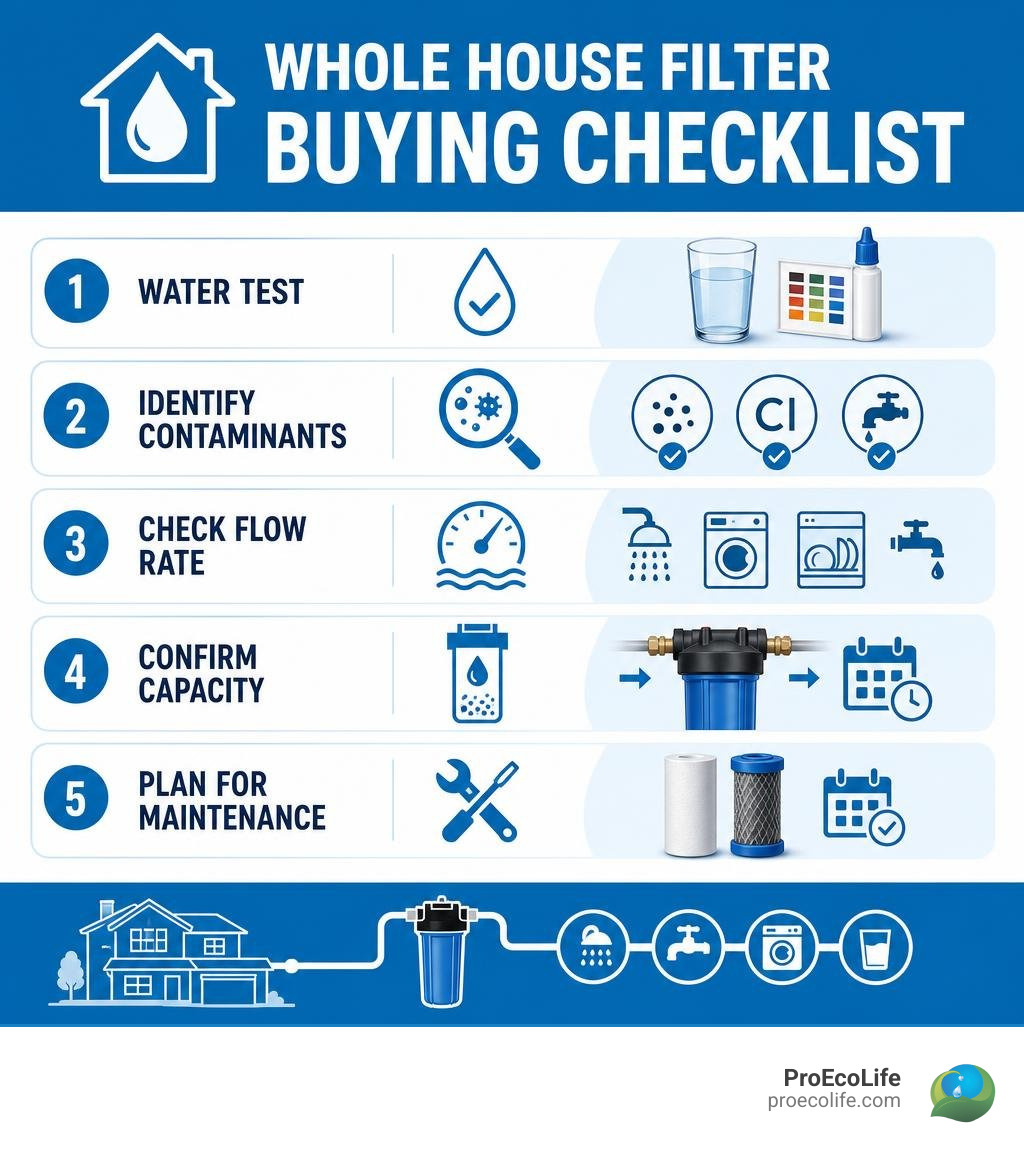
To buy a whole house water filter with confidence, start with a water test and choose a system sized for your home’s peak water use. For many Chicago homes, that means a point-of-entry filter installed where water enters the house, with sediment protection and media designed to reduce chlorine, lead, or other contaminants found in the test.
A good whole-home system treats water for every faucet, shower, appliance, and laundry connection. Unlike a pitcher or under-sink filter, it can help protect water throughout the home.
Before choosing, focus on three things:
- Your water concerns: Chicago city water, aging service lines, and home plumbing can create different risks. Look for independently verified contaminant-reduction claims, especially if lead is a concern.
- Flow rate: The system should support simultaneous showers, laundry, and dishwasher use without a major pressure drop.
- Whether you need softening too: Carbon and sediment filters do not usually remove hard-water minerals. A separate softener or a combined system may be needed for scale control.
Whole-house filtration may improve chlorine taste and odor, reduce sediment, and target selected metals or chemicals, depending on the filter media. Results vary by system, incoming water quality, and maintenance. This guide compares the whole-house configurations worth considering this year, so you can match filtration to your water, plumbing, and household demand.
Buy whole house water filter basics:
What to Look for When You Buy Whole House Water Filter Systems

When evaluating water treatment for your entire property, understanding what happens at the main supply line is essential. When you set out to buy whole house water filter hardware, you are investing in point-of-entry protection that intercepts municipal or well water before it branches out to your kitchen, bathrooms, water heater, and outdoor spigots.
Whole house water filters can remove up to 99% of common contaminants like chlorine, sediment, and heavy metals from all water taps in a home. In our service areas across Chicago—from vintage bungalows in Norwood Park, Edison Park, and Jefferson Park to newer builds in Park Ridge and Skokie—incoming water profiles vary considerably. While Lake Michigan provides a reliable surface water source, aging infrastructure and municipal service lines can introduce particulate matter, rust, and heavy metals directly into residential plumbing.
Key performance criteria to evaluate include:
- Micron Rating: A nominal or absolute micron rating indicates the physical size of particles captured. A 5-micron pre-filter captures fine silt, rust, and pipe scale, preventing downstream stages from clogging prematurely.
- Media Formulation: Catalytic carbon, standard activated carbon, KDF (Kinetic Degradation Fluxion), and specialty ion-exchange resins target distinct chemical compounds. Activated carbon excels at adsorbing chlorine and volatile organic compounds (VOCs), while catalytic carbon is required for persistent chloramines and advanced PFAS reduction.
- Operating Pressure & Pressure Drop: Every filter creates some resistance to water flow. High-capacity housings minimize friction loss, preserving the dynamic pressure required for multi-story homes.
- Appliance and Plumbing Protection: Households with whole house water filters report a 20-30% reduction in scale buildup in pipes and appliances, extending the lifespan of water heaters and dishwashers by up to 5 years.
Understanding Point-of-Entry vs Point-of-Use Filtration
Point-of-entry (POE) systems treat 100% of the water entering the structure, ensuring that water used for showering, laundering, handwashing, and cooking contains significantly lower chemical and sediment loads. In contrast, point-of-use (POU) units—such as an under-sink reverse osmosis system or our PEL75 9-Stage RO System—focus solely on refining drinking and cooking water at a single dedicated tap.
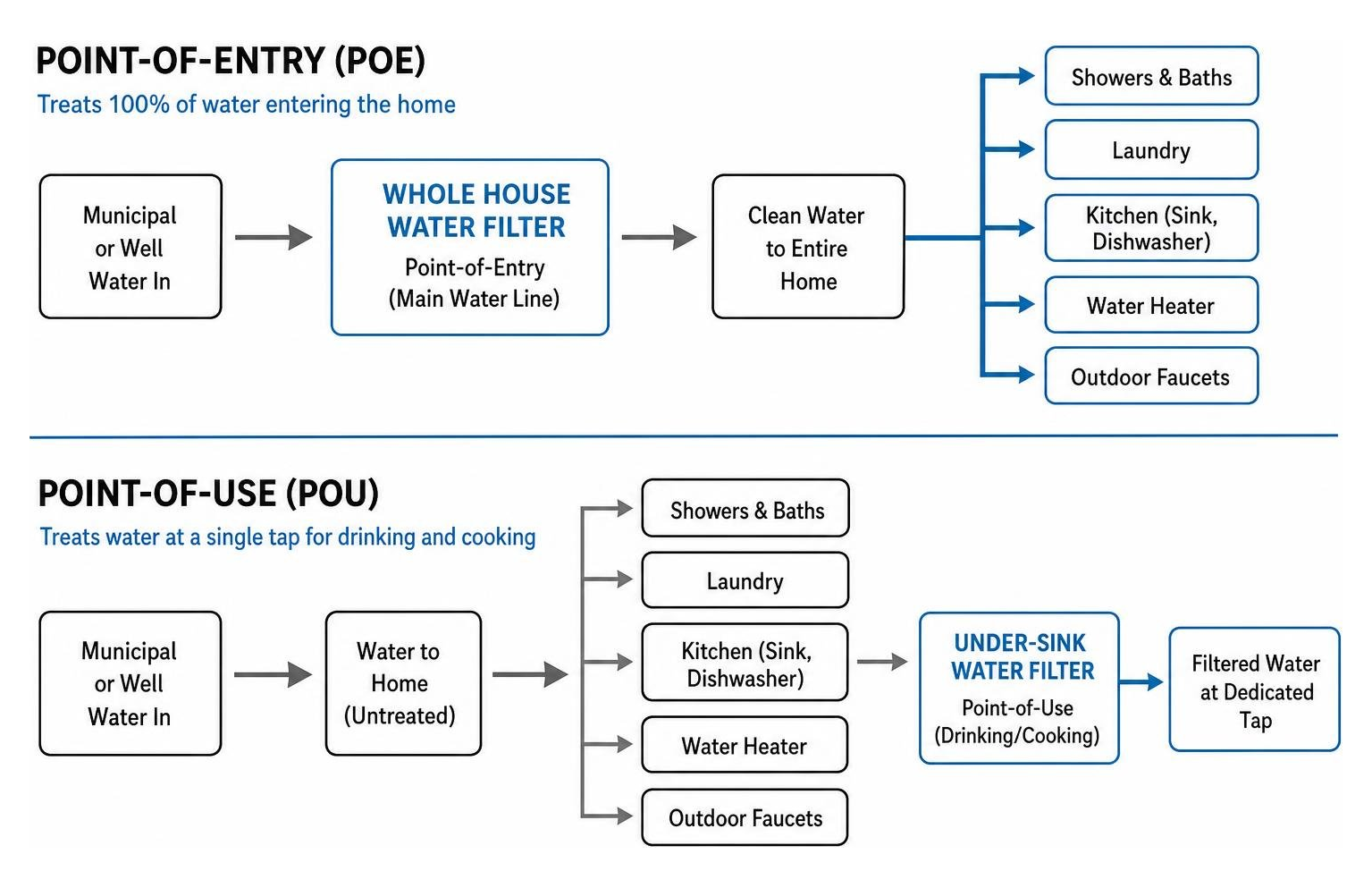
Treating water at the point of entry provides unique whole-home advantages:
- Inhalation & Skin Absorption: Hot showers vaporize chlorine and disinfection byproducts into chloroform gas and other inhalable vapors. POE systems strip these chemicals at the source, which many customers notice leaves skin and hair feeling less irritated. For localized bathroom needs, a dedicated Shower Filter System can provide supplementary polishing.
- Whole-Home Fixture Preservation: Coarse particulate from municipal pipe repairs in older neighborhoods can score ceramic valve cartridges in modern faucets and clog aerators. A POE system acts as a mechanical barrier for all downstream fixtures.
- Optimized Synergy: Pairing whole-home mechanical and carbon filtration with our advanced under-sink units delivers complete protection. You can explore from shower to sink finding the best all house water filtration system to see how these dual setups harmonize.
How Flow Rate and Pipe Sizing Impact Your Decision to Buy Whole House Water Filter Units
Undersizing a whole-home system is one of the most common mistakes homeowners encounter. Sizing must be calculated around peak flow demand—measured in gallons per minute (GPM)—rather than total daily volume.
A standard two-bathroom home running a shower (2.0–2.5 GPM), a washing machine (3.0–4.0 GPM), and a kitchen faucet (1.5–2.0 GPM) simultaneously requires a minimum supply flow of 7 to 9 GPM without incurring an unmanageable pressure drop. In larger properties across Glenview, Northbrook, or Arlington Heights with multiple rainfall showerheads and irrigation systems, peak demand often exceeds 15 to 20 GPM.
| Metric | 3/4-Inch Main Line | 1-Inch Main Line | 1.25-Inch to 1.5-Inch Main Line |
|---|---|---|---|
| Typical Household Size | 1–2 Bathrooms | 2.5–3.5 Bathrooms | 4+ Bathrooms / High Demand |
| Recommended Flow Rate | 9–12 GPM | 15–20 GPM | 20–25+ GPM |
| Recommended Filter Size | 10″ x 4.5″ or Standard Tank | 20″ x 4.5″ or Tank System | High-Flow Multi-Tank Setup |
Matching the inlet/outlet ports of the filter housing to your incoming main prevents restrictive bottlenecks. Homeowners with 3/4-inch copper piping can consult the homeowners guide to 34 inch whole house water filters for specific sizing insights. If your household runs several high-flow fixtures concurrently, reading about how to never lose water pressure again with these 20 gpm whole house filters will help you calculate system throughput accurately.
Need Clean, Safe Water at Home?
Get a free water test at your home or business. We install and service whole-house filtration and PEL75 reverse osmosis systems across Chicagoland. We also take select projects in Wisconsin and Indiana.
Book a Free Water TestCall (312) 889-8888Top Whole House Water Treatment Configurations and Types

The global whole house water filter market is projected to grow at a CAGR of 8.5% from 2023 to 2030, driven by increasing concerns about municipal water quality, infrastructure aging, and emerging chemical pollutants. Depending on the contaminants present in your supply, several proven system configurations are available.
Multi-Stage Sediment and Carbon Block Systems
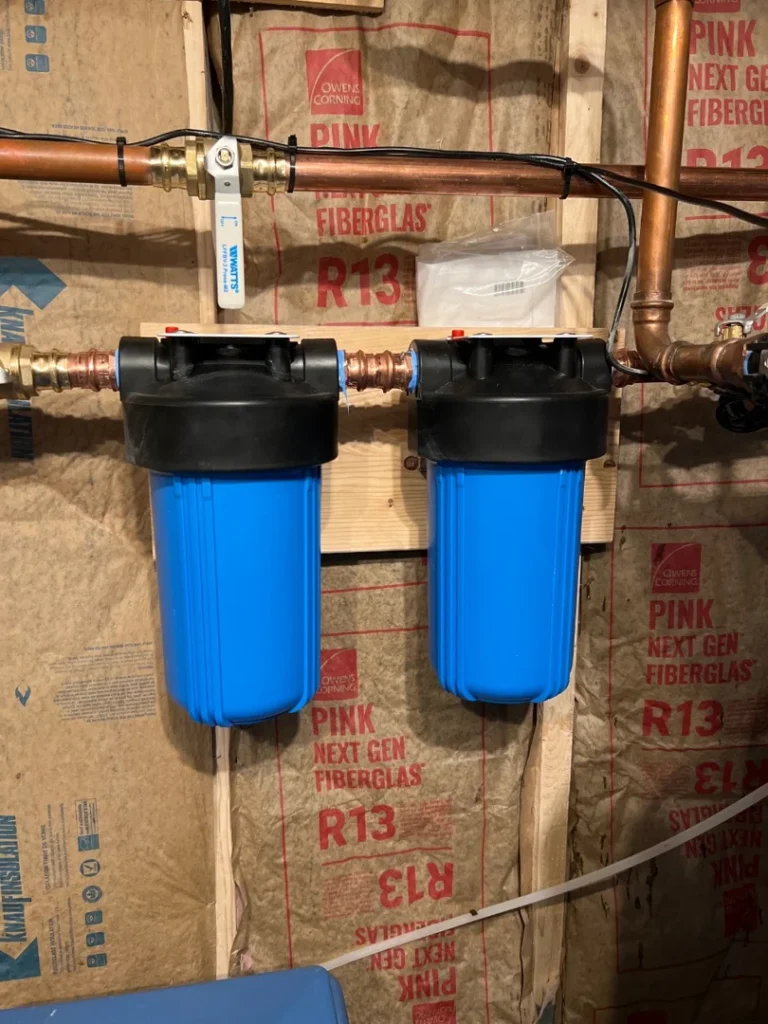
Multi-stage cartridge configurations utilize heavy-duty “Big Blue” style filter housings (typically 4.5 inches in diameter by 10 or 20 inches in height) placed in series.
- Stage 1: Melt-Blown or Pleated Sediment Cartridge. Traps suspended solids, rust flakes, micro-sand, and pipe debris down to 5 microns. Pleated designs offer greater surface area for higher sediment loads.
- Stage 2: Radial Flow or Extruded Carbon Block. Adsorbs municipal chlorine, chloramines, trihalomethanes (THMs), and agricultural run-off chemicals, improving overall water odor and taste.
For larger properties with elevated flow demands, using high-capacity housings ensures adequate contact time between the water and filter media. Learn more by checking out go big or go home demystifying the 20 x 45 whole house water filter to see if high-volume cartridges fit your property footprint.
Heavy Metal and Lead Removal Systems
Lead contamination remains an ongoing consideration in older metropolitan areas. In Chicago, hundreds of thousands of residential properties were connected to street water mains via lead service lines prior to the federal ban under the Safe Drinking Water Act in 1986. Ground vibrations, street construction, and shifting water chemistry can dislodge lead particulates into home tap water.
To address heavy metals, systems integrate specialized media such as:
- KDF-55 and KDF-85: Redox (oxidation-reduction) media formulations that reduce soluble lead, mercury, nickel, and dissolved iron while imparting bacteriostatic properties to prevent microbial growth within the bed.
- Specialty Hybrid Resins: Advanced media with a high affinity for divalent lead ions and inorganic arsenic.
For a deeper dive into municipal heavy metal treatment strategies, read about the best whole house water filtration systems in Chicago for crystal clear water.
Integrated Water Softener and Filtration Combinations
Over 85% of U.S. homes have hard water, and whole house water softeners/filters can reduce calcium and magnesium levels by 95%, improving soap efficiency and skin health. While the City of Chicago receives Lake Michigan water with moderate hardness (around 7 to 9 grains per gallon), surrounding Northwest suburbs like Des Plaines, Niles, Morton Grove, and Mount Prospect often experience higher mineral hardness or utilize deep well supplements.
Carbon filters do not remove dissolved calcium and magnesium minerals. To eliminate crusty scale from shower doors, plumbing elements, and appliances, a dual-configuration whole house filtration system combined with an ion-exchange softener or physical conditioner is recommended. For properties drawing from private or community wells across unincorporated areas, dedicated Well Water Conditioning systems manage extreme hardness, dissolved iron, and hydrogen sulfide odors. Commercial Water Filtration Systems are also available for larger multi-unit residential buildings and industrial facilities.
Need Clean, Safe Water at Home?
Get a free water test at your home or business. We install and service whole-house filtration and PEL75 reverse osmosis systems across Chicagoland. We also take select projects in Wisconsin and Indiana.
Book a Free Water TestCall (312) 889-8888System Sizing, Installation, and Cost Breakdown
Selecting the correct architecture requires balancing water test results, peak demand, physical utility room footprint, and routine maintenance requirements.
| System Type | Primary Target Contaminants | Flow Capacity | Typical Maintenance Cadence |
|---|---|---|---|
| Multi-Stage Cartridge System | Sediment, Chlorine, Bad Taste, Odor, Fine Particulates | 10–15 GPM | Cartridge swaps every 6–12 months |
| Backwashing Media Tank | Heavy Chlorine/Chloramines, VOCs, Heavy Metals, PFAS | 12–25 GPM | Media bed life of 5–10 years |
| Hybrid Filter + Softener Combo | Scale-forming Hardness Minerals + Chemical Contaminants | 12–20 GPM | Salt replenishment monthly; filter swaps semi-annually |
Essential Steps to Buy Whole House Water Filter Configurations for City vs. Well Water
Installing a whole house water filter can reduce the risk of gastrointestinal illnesses by up to 30% in households relying on well water or older municipal systems.
For municipal water users in Harwood Heights, Norridge, Elmwood Park, or Chicago’s Portage Park, the primary objective is eliminating disinfectant chemicals, microplastics, and heavy metals dislodged from public infrastructure.
For well water supplies found near outer suburbs like Palatine, Wheeling, or Buffalo Grove, the water treatment configuration must address naturally occurring iron, sulfur odors, sediment loads, and microbial contaminants. Well water typically demands multi-tier pre-treatment before carbon filtration can operate without fouling.
Installation Expenses and Routine Maintenance Schedules
Proper system installation involves integrating bypass valves, pressure relief ports, dual isolation shut-offs, and calibrated pressure gauges before and after each filter housing.
Key ongoing maintenance procedures include:
- Differential Pressure Monitoring: A drop of 10 to 15 PSI across the filter bank indicates the media or cartridge has reached particulate capacity and requires servicing.
- Sediment Cartridge Replacements: In areas with older municipal mains, sediment cartridges are typically serviced every 3 to 6 months to maintain optimum flow.
- Carbon Media Longevity: Standard carbon blocks typically require replacement after 6 to 12 months, whereas large backwashing tanks provide continuous treatment for several years depending on incoming water quality and volume.
Because improper installation can cause severe leaks, water hammer, or backflow complications, whole-home filtration systems should always be integrated directly into main plumbing lines by certified professionals.
Frequently Asked Questions About Whole House Filtration
Does a whole home filter eliminate hard water minerals?
No. Standard whole house sediment and carbon systems filter suspended particulate and adsorb dissolved chemical compounds, but they do not remove dissolved calcium and magnesium ions. Eliminating scale and mineral hardness requires an ion-exchange water softener or specialized anti-scale conditioning system installed alongside your primary filtration setup.
How frequently should whole home cartridges be replaced?
Replacement timing depends entirely on water consumption, incoming turbidity, and filter media capacity. As a baseline, 5-micron sediment pre-filters are generally replaced every 3 to 6 months, while high-capacity carbon block cartridges last between 6 and 12 months. Large-format media tanks can operate for multiple years before media re-bedding is necessary.
Will installing a whole house system reduce water pressure?
When a system is sized appropriately for your property’s peak GPM and incoming pipe diameter, any drop in water pressure is minimal and often unnoticeable. Noticeable pressure drops typically occur when systems are undersized relative to household demand or when filter cartridges become loaded with trapped sediment over time.
Conclusion
Every home has unique plumbing materials, water chemistry, and daily consumption patterns. Since 2014, founder Karol Dolega and the team at ProEcoLife have helped homeowners across Chicago and surrounding suburbs implement robust, lasting water treatment solutions. Whether you live in a classic brick bungalow on the Northwest Side or a modern home in the suburbs, a professionally installed whole house filtration system may help protect your plumbing infrastructure, enhance appliance efficiency, and improve everyday water quality at every tap.
To discover the right filtration setup for your property, contact ProEcoLife to schedule a comprehensive water test by visiting proecolife.com.