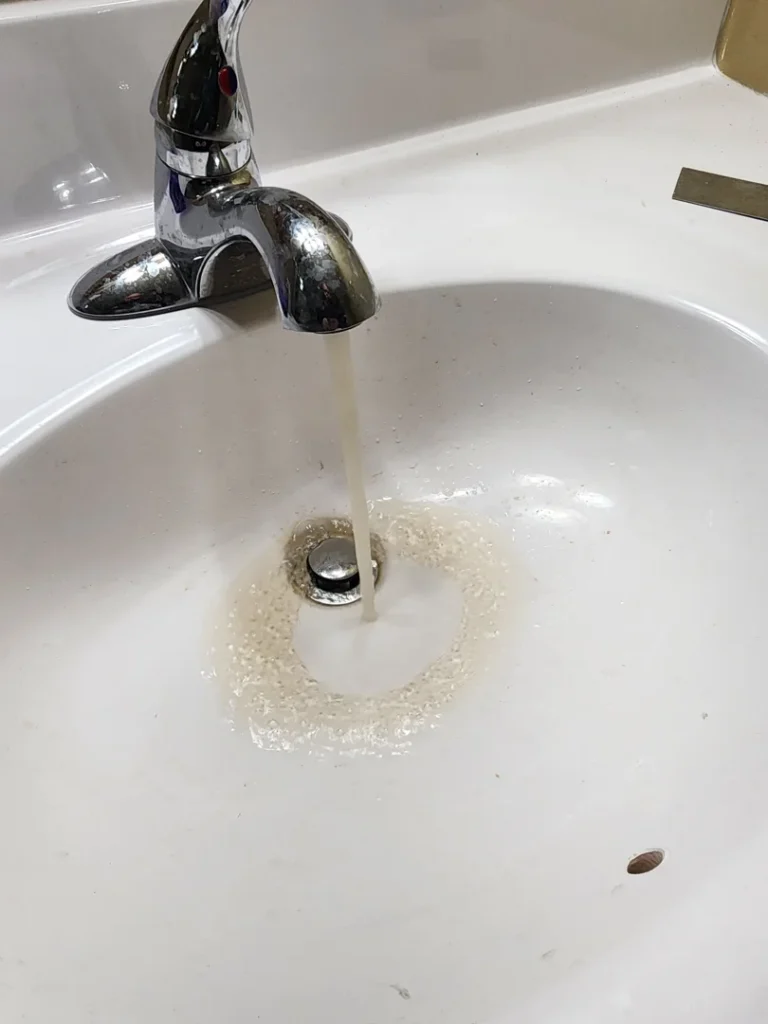
Choose a Certified Filter for Lead in Water
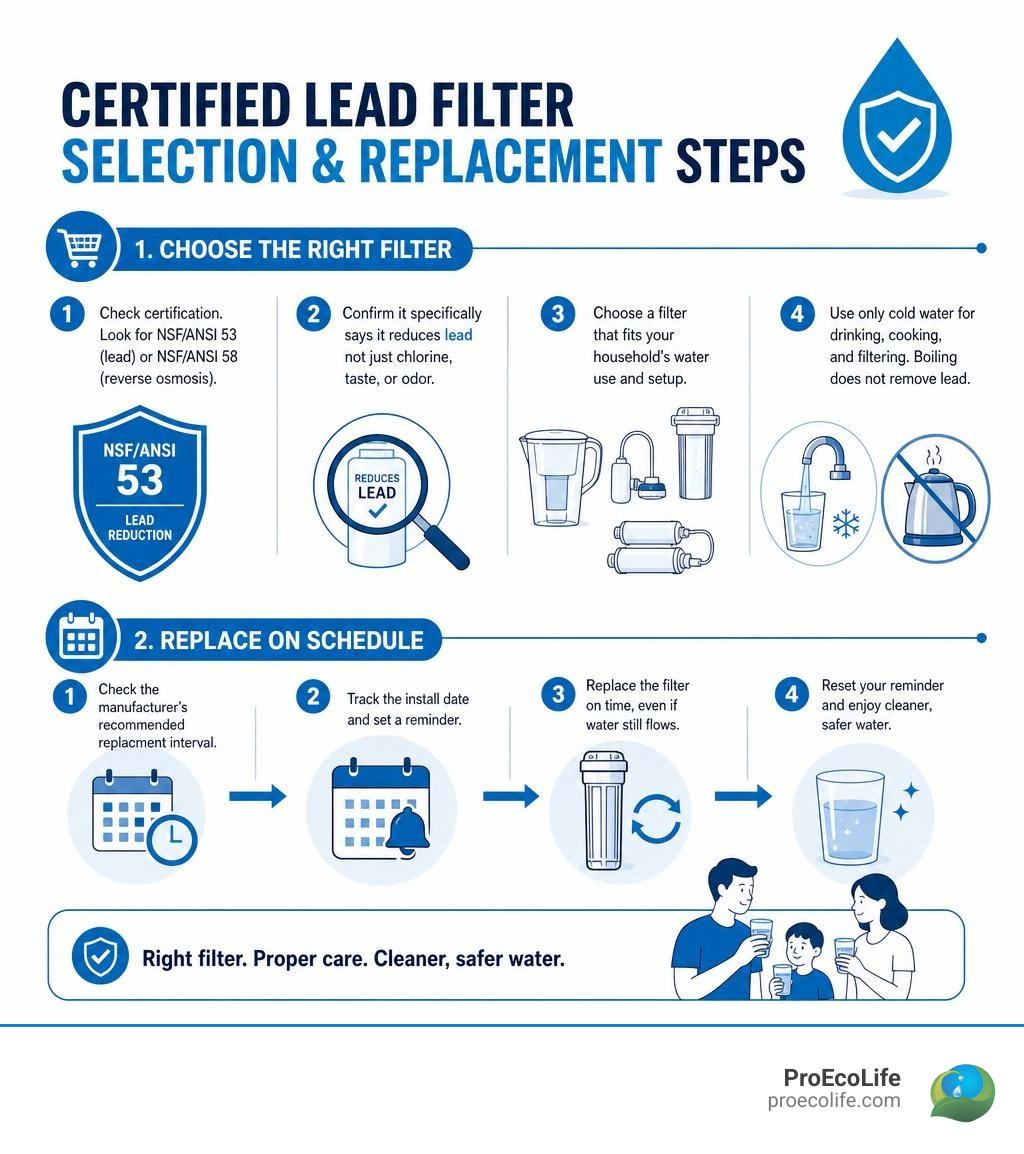
To reduce lead at the kitchen tap, choose a point-of-use filter certified for lead reduction and use it exactly as directed. For most Chicago homes, that means looking for a pitcher, faucet filter, refrigerator cartridge, under-sink unit, or reverse osmosis system with a verified lead-reduction claim under NSF/ANSI Standard 53 or, for reverse osmosis, NSF/ANSI Standard 58.
Before you buy:
- Check the exact model in an independent certification directory or its performance data sheet.
- Confirm it specifically says it reduces lead, not only chlorine, taste, or odor.
- Replace cartridges on schedule, even when water still flows normally.
- Use only cold water for drinking, cooking, and filtering. Boiling does not remove lead and can concentrate it.
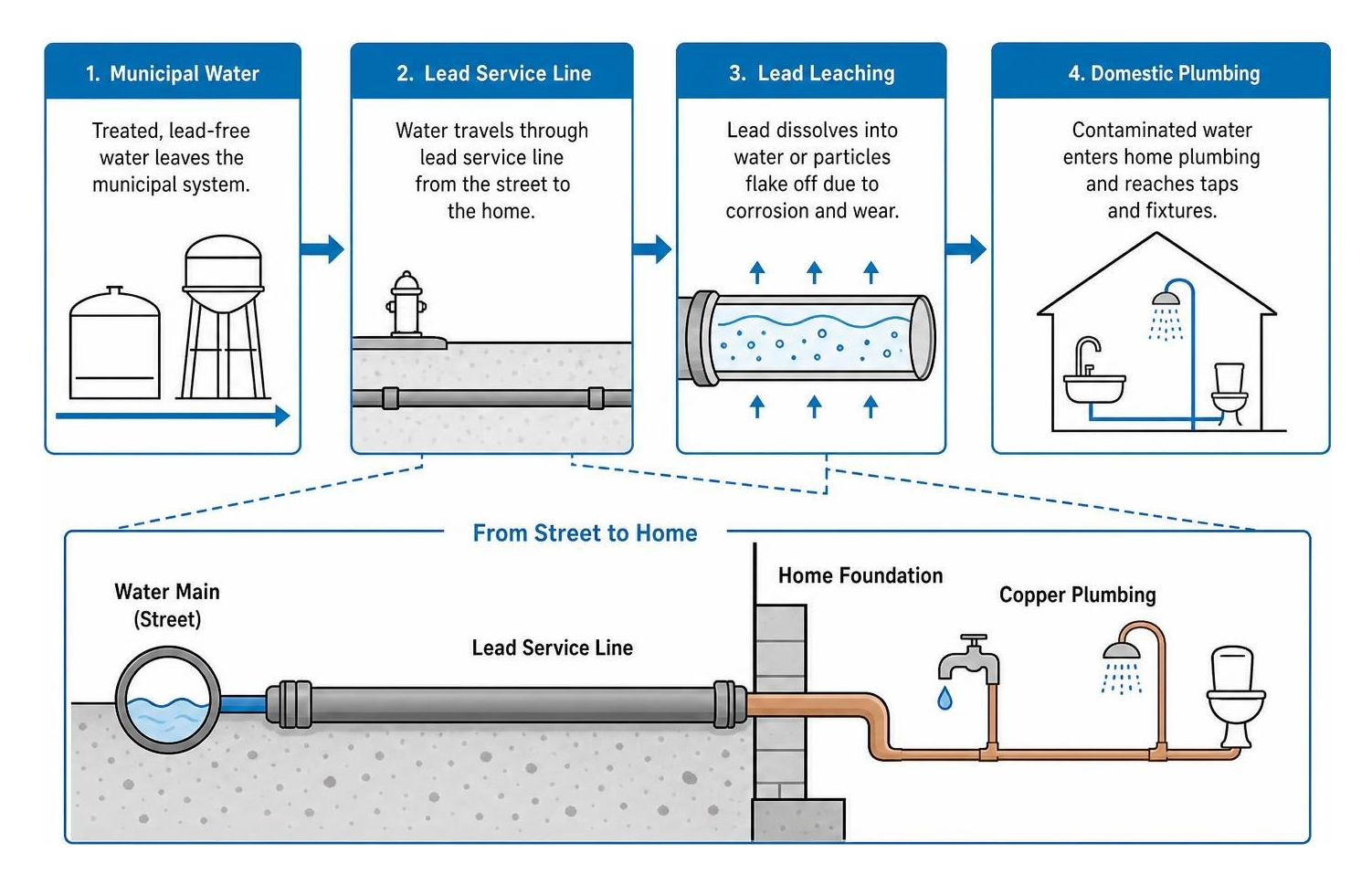
Chicago’s aging plumbing and lead service lines can allow dissolved or loose particulate lead to enter water after it leaves the municipal system. A certified filter at the tap can help reduce that exposure, but the filter must match your household’s water use and be maintained carefully.
Filter for lead in water helpful reading:
Understanding Lead in Drinking Water and Health Risks
Lead is a toxic heavy metal that poses severe neurological and developmental risks, particularly to infants, young children, and pregnant women. Unlike many common water contaminants, lead is completely odorless, tasteless, and invisible to the naked eye. In drinking water, it generally appears in two forms: dissolved lead, which has chemically leached into the water, and particulate lead, which consists of tiny physical flecks sheared off deteriorating pipes.
The U.S. Environmental Protection Agency (EPA) sets a maximum action level for lead in public drinking water at 15 parts per billion (ppb). However, medical consensus from public health authorities confirms that there is no truly safe blood lead level in human beings.
While Lake Michigan serves as a pristine, high-quality freshwater source, lead rarely originates at the municipal treatment plant. Instead, contamination occurs during the final journey through legacy infrastructure. In older properties across Northwest Side neighborhoods like Norwood Park, Edison Park, and Jefferson Park, as well as surrounding communities like Skokie and Niles, lead service lines connect street water mains directly to residential foundations.
To tackle this historical challenge, regional efforts and safe water initiatives have expanded public awareness regarding pipe replacement across Cook County. While long-term municipal pipe replacement programs proceed in towns like Lincolnwood and Evanston, running a dedicated filter for lead in water directly at the tap provides an immediate, essential line of defense. Because corrosion rates fluctuate based on temperature, ground vibration, and water chemistry, comprehensive water testing remains the only definitive way to measure the exact heavy metal concentration entering your home.
Need Clean, Safe Water at Home?
Get a free water test at your home or business. We install and service whole-house filtration and PEL75 reverse osmosis systems across Chicagoland. We also take select projects in Wisconsin and Indiana.
Book a Free Water TestCall (312) 889-8888Most Effective Technologies in a Filter for Lead in Water
Filtering heavy metals requires specialized media capable of chemical bonding or tight physical separation. Not all filtration mechanisms target heavy metals; basic sediment screens and standard taste-and-odor carbon carafes often leave dissolved lead untouched.
| Filtration Technology | Lead Removal Mechanism | Typical Lead Reduction | Secondary Contaminant Benefits |
|---|---|---|---|
| Reverse Osmosis (RO) | Semi-permeable membrane separation & multi-stage pre/post-filtration | Up to 99.1% | Total dissolved solids, nitrates, PFAS, heavy metals |
| Solid Carbon Block & Adsorption | Ion-exchange media blended with compressed carbon matrix | Reduces lead to 5 ppb or less (when certified) | Chlorine taste, odor, Class I particulates |
| Distillation | Thermal boiling, vapor capture, and condensation | Very high (99%+) | Minerals, biological microbes, dissolved solids |
Reverse Osmosis vs Distillation: Choosing an Advanced Filter for Lead in Water
Reverse osmosis (RO) stands out as one of the most reliable and efficient methods to protect household drinking water. High-performance reverse osmosis filters force pressurized tap water through a semi-permeable membrane with microscopic pores sized around 0.0001 microns. Independent studies demonstrate that reverse osmosis can remove 99.1% of lead in water alongside other dissolved inorganic solids.
Distillation is an alternative physical process where water is boiled into steam and recondensed into liquid, leaving non-volatile contaminants behind in the boiling chamber. While distillation removes heavy metals, it is a very slow process and requires a lot of energy, making it not optimal for everyday home use compared to reverse osmosis. A modern under-sink system delivers on-demand water volume for drinking and cooking without running continuous heating elements.
Multi-Stage Carbon and Adsorption Media Capabilities
Solid block carbon filters engineered for lead reduction utilize a dense blend of activated carbon and specialized ion-exchange resins or metal-adsorbing binders. These blocks capture particulate lead mechanically while binding dissolved lead ions at a molecular level through chemical adsorption.
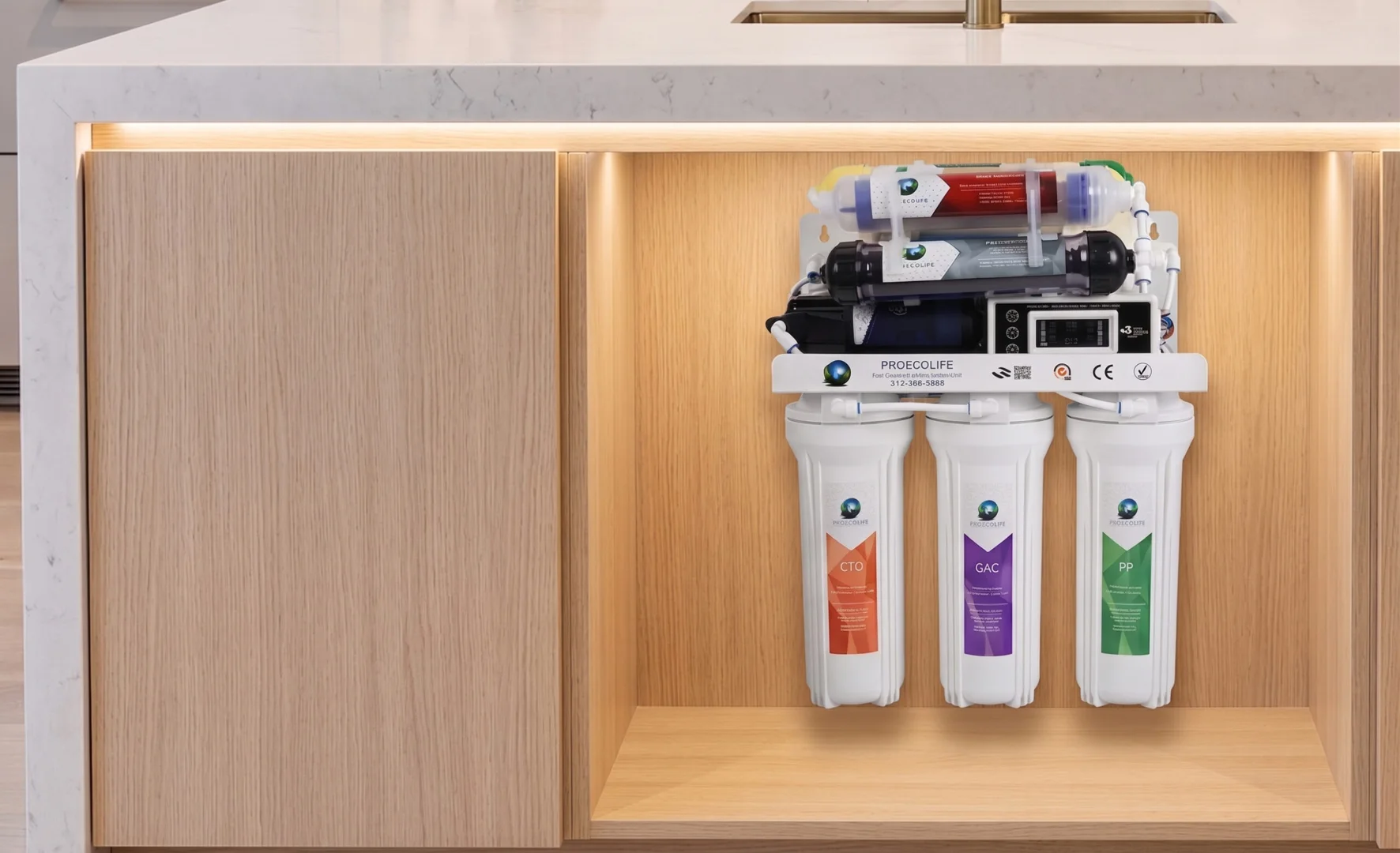
In areas throughout Des Plaines, Park Ridge, and Arlington Heights, municipal water often carries a noticeable chlorine aroma alongside mineral hardness. Multi-stage systems combine sediment pre-filters, solid carbon blocks, and specialized finishing stages to address chlorine odor and capture Class I particulates (particles between 0.5 and 1 micron) before water reaches the final dispensing tap.
Need Clean, Safe Water at Home?
Get a free water test at your home or business. We install and service whole-house filtration and PEL75 reverse osmosis systems across Chicagoland. We also take select projects in Wisconsin and Indiana.
Book a Free Water TestCall (312) 889-8888How to Identify Certified Filter Configurations for Lead Reduction
When selecting equipment, independent third-party performance certification is vital. Packaging claims stating that a filter “improves purity” or “reduces chemicals” do not indicate lead reduction.
Accredited testing organizations—such as NSF International, the Water Quality Association (WQA), IAPMO R&T, and UL Solutions—evaluate products using standardized laboratory challenge protocols. Consumers can reference the official Consumer Tool for Identifying Point-of-Use and Pitcher Filters Certified to Reduce Lead in Drinking Water to verify exact product numbers against accredited registries.
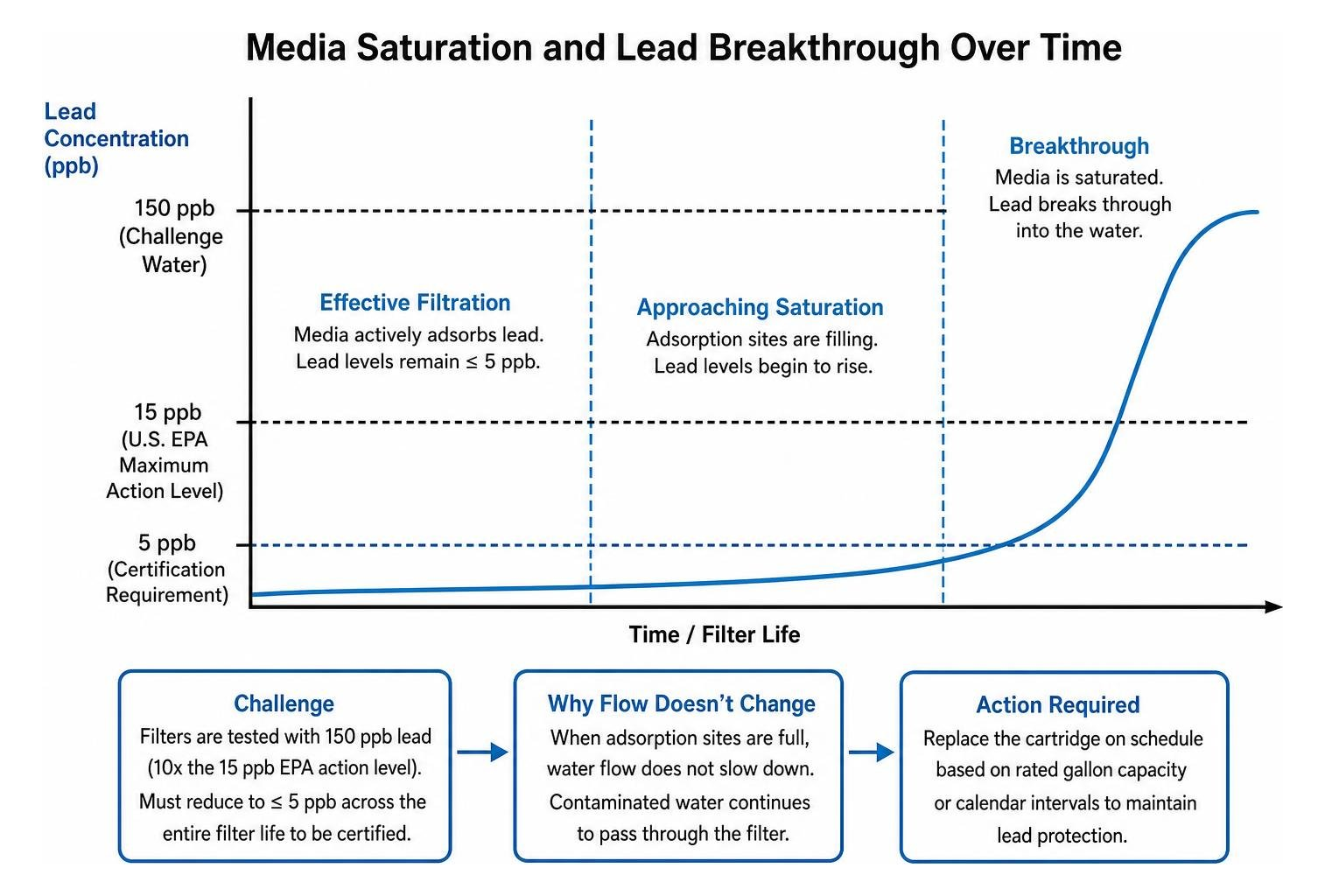
During certification testing, filters are subjected to challenge water containing 150 parts per billion (ppb) of lead—a concentration ten times higher than the U.S. EPA maximum action level of 15 ppb. To achieve certification, the filter must successfully reduce that heavy metal challenge concentration down to 5 ppb or less across its entire operational lifespan.

NSF/ANSI Standard 53 vs Standard 58 Explained
Understanding the specific standard printed on the certification mark clarifies how the device was evaluated:
- NSF/ANSI Standard 53 (Health Effects): Applies to point-of-use systems (such as carbon block cartridges, plumbed under-sink canisters, and pour-through carafes) that target specific health contaminants. For lead reduction, it confirms the unit reduces both dissolved and particulate lead to 5 ppb or below.
- NSF/ANSI Standard 58 (Reverse Osmosis Systems): Specifically evaluates reverse osmosis drinking water treatment systems. It validates overall total dissolved solids (TDS) reduction and verifies high-percentage heavy metal extraction across the RO membrane under pressure.
- NSF/ANSI Standard 42 (Aesthetic Effects): Covers aesthetic parameters like chlorine taste, odor, and particulate reduction (Class I). Many certified lead filters carry dual certifications (Standard 42 and Standard 53) to address taste, clarity, and health risks simultaneously.
Selecting the Right Type of Filter for Lead in Water
Choosing the right format depends on household demand, plumbing layout, and kitchen space:
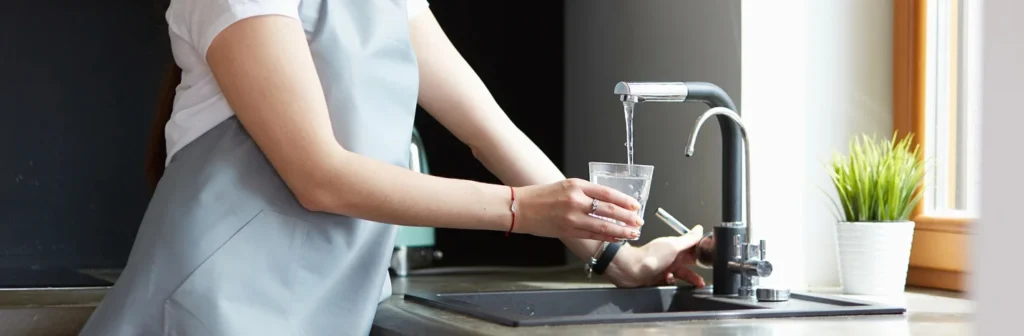
- Under-Sink and Dedicated Tap Units: Installed beneath the kitchen counter, under-sink filtration systems deliver high filtration capacities and supply dedicated drinking faucets without cluttering countertops.
- Faucet-Mount Systems: Attached directly to standard sink spouts, faucet-mount filter options offer quick switching between unfiltered utility water and filtered drinking water.
- Pour-Through Filter Pitchers: Gravity-fed filter pitchers require no plumbing connections, making them accessible options for rental properties, though cartridges have lower gallon capacities and require frequent replacement.
- Refrigerator and Inline Ice Filters: Plumbed into refrigerator water and ice lines, ensuring cold drinking water and ice cubes remain protected from internal building pipe leaching.
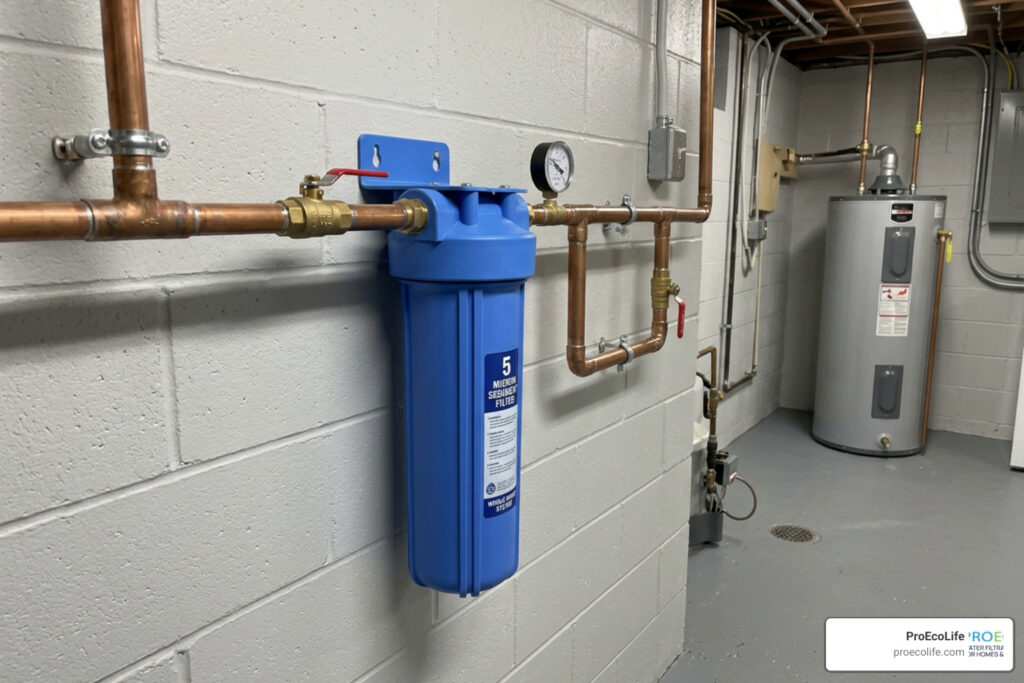
- Point-of-Entry / Whole-House Systems: While whole-house water filtration treats all incoming water for sediment, hardness, or chlorine, point-of-use (POU) filtration at the kitchen sink remains the recognized approach for lead, protecting against metal leached from interior household copper pipe soldering and legacy brass fixtures.
Maintenance, DIY Limitations, and Extreme Contamination Handling
A lead filter operates primarily through surface adsorption and microscopic barrier filtration. As water flows through the media, active chemical binding sites steadily capture lead ions.
Crucially, when these adsorption sites become fully saturated, water flow does not slow down. Water will continue to pass through the cartridge normally, but lead will break through into the finished water. Relying on changes in water pressure to determine when to change a cartridge is an unsafe practice.
Why Regular Cartridge Replacement Is Critical
To maintain consistent protection, follow manufacturer service schedules based on rated gallon capacity or calendar intervals. Many systems incorporate electronic LED indicators or timed shut-off mechanisms to prevent media over-exhaustion.
Always utilize genuine, manufacturer-specified replacement cartridges. Non-certified aftermarket cartridges may lack specialized lead-binding resins or feature slightly mismatched O-ring dimensions, allowing unconditioned water to bypass the media entirely.
Furthermore, lead filters are certified and calibrated for cold water use at 68°F (20°C). Never run hot water through an adsorption or reverse osmosis filter, as high temperatures can damage internal seals and trigger desorption, releasing bound contaminants back into your drinking glass.
The Myth of DIY Filtration and Handling Levels Above 150 ppb
Homemade filter contraptions (such as layering sand, gravel, and unbonded charcoal) cannot capture dissolved heavy metals. Similarly, attempting DIY distillation using makeshift heating components is inefficient, carries scald risks, and can concentrate impurities through uncontrolled evaporation.
In rare scenarios where residential testing reveals extreme lead contamination exceeding 150 ppb (the upper testing limit for NSF/ANSI 53 challenge tests), single-stage filters should not be relied upon in isolation. Immediate action requires multi-stage filtration solutions (such as comprehensive multi-stage RO systems) combined with utility notification, municipal service line investigations, and active pipe remediation.
Frequently Asked Questions about Lead Water Filtration
Can boiling water remove dissolved or particulate lead?
No. Boiling water does not remove lead. Because lead is a persistent heavy metal element with a high vaporization point, boiling causes pure water to evaporate away as steam, concentrating the remaining lead in the pot.
Why shouldn’t I run hot water through a lead filter?
Standard lead reduction media is tested and certified specifically for cold water operation (around 68°F / 20°C). Passing hot water through the system can degrade the structural integrity of carbon blocks, damage delicate reverse osmosis membranes, and cause ion-exchange media to release previously captured lead ions.
Does a TDS meter tell me if my lead filter is working?
No. A Total Dissolved Solids (TDS) meter measures the general conductivity of benign dissolved mineral ions (such as calcium and magnesium) in parts per million (ppm). Lead is hazardous at parts per billion (ppb) levels—concentrations far too small to register on a basic handheld TDS meter. A solid carbon lead filter will leave healthy minerals in the water while capturing toxic lead, meaning your TDS reading will remain largely unchanged. Only certified laboratory analysis can confirm lead reduction.
Conclusion
Understanding what is in your tap water is the first step toward safeguarding your family’s health. Founded by Karol Dolega, ProEcoLife has served homeowners across the Chicago area since 2014, delivering comprehensive water treatment solutions tailored to regional conditions. Whether addressing Lake Michigan water quality or the mineral hardness common in suburban communities like Glenview and Morton Grove, our advanced systems—including the PEL75 9-Stage RO System, Whole House Filtration, Shower Filter System, Well Water Conditioning, and Commercial Water Filtration Systems—provide multi-barrier defense.
While individual household results vary depending on incoming water chemistry and pipe age, adopting certified filtration may help provide peace of mind at the tap. For guidance on choosing the best lead water filter for your property, contact ProEcoLife to schedule a professional water test at proecolife.com.