Water Filter Lead Removal Starts With Certified Protection
For Chicago homes with older plumbing, the best first step is to choose a point-of-use filter certified to reduce lead at the faucet, pitcher, refrigerator dispenser, or under-sink tap where your family gets drinking and cooking water.
Before you buy, check for:
- An ANSI-accredited certification mark, such as NSF, WQA, IAPMO R&T, UL Solutions, or CSA Group.
- A specific NSF/ANSI Standard 53 lead-reduction claim. Reverse osmosis systems should also carry an NSF/ANSI Standard 58 claim where applicable.
- A model-specific Performance Data Sheet and active listing in the certifier’s product directory.
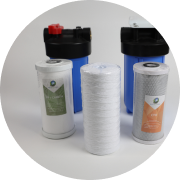
- Clear cartridge replacement instructions you can realistically follow.
A certified filter is not a permanent fix for a lead service line or aging indoor pipes. But when it is properly installed, used with cold water only, and replaced on time, it may reduce lead exposure at the tap. Certified lead filters are tested with water containing 150 parts per billion (ppb) of lead and must reduce lead to 5 ppb or less under test conditions.
This roundup compares practical options for Chicago kitchens, from lower-cost pitchers and faucet mounts to under-sink and reverse osmosis systems. The goal is simple: find a filter with verified lead reduction that fits your water use, plumbing, and maintenance routine.
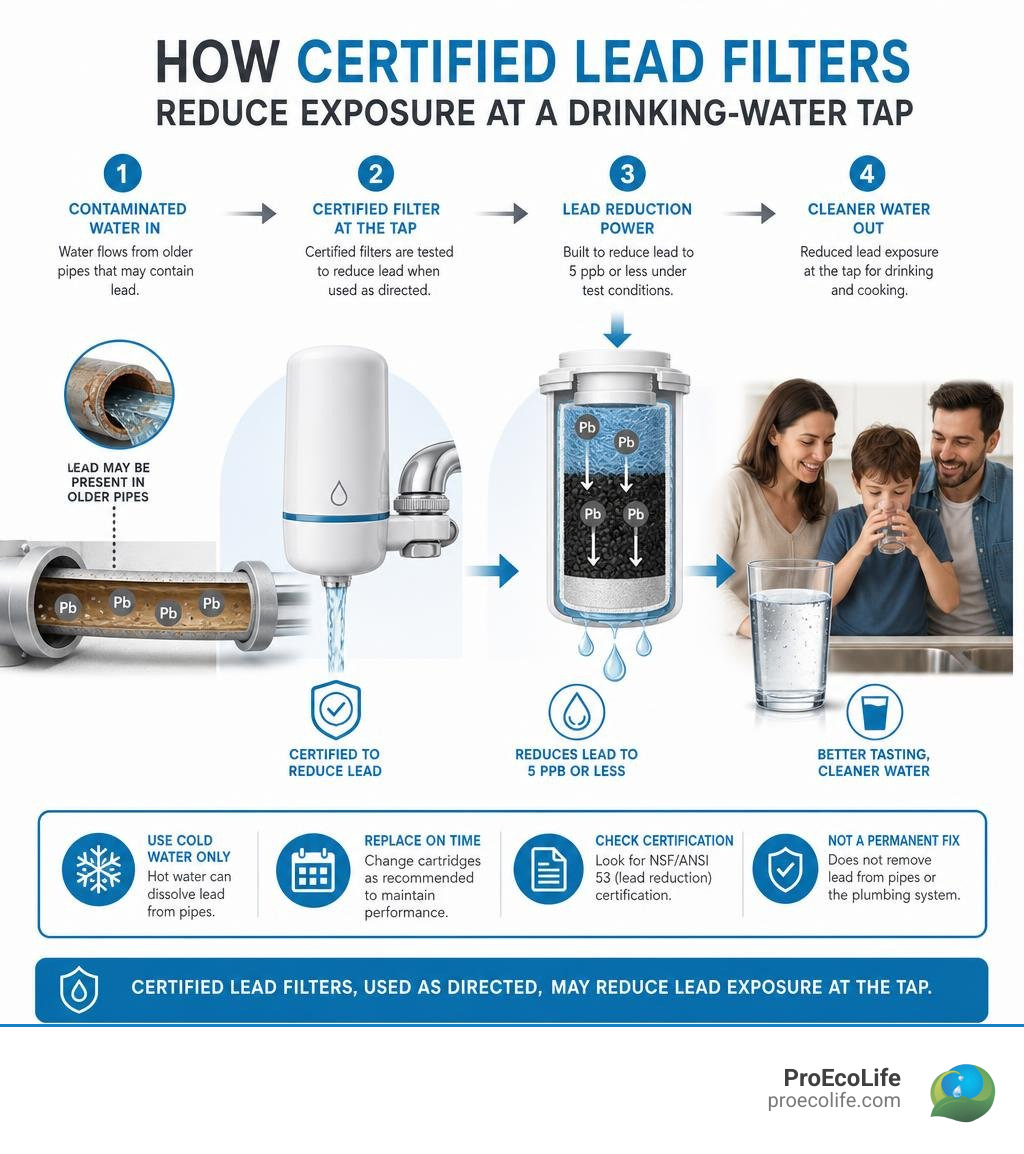
Know your water filter lead removal terms:
Understanding Water Filter Lead Removal and Certification Standards
When dealing with heavy metals in residential plumbing, marketing claims mean nothing without independent verification. Chicago receives its municipal water supply from Lake Michigan, which is naturally lead-free when treated. However, as that water travels through hundreds of thousands of legacy lead service lines and interior plumbing fixtures across older Chicago homes, lead can leach into the flow.
To ensure a treatment unit actually captures dissolved and particulate heavy metals, third-party certification is essential. Independent testing organizations follow rigorous evaluation protocols:
- NSF/ANSI Standard 53: The primary health-effects standard evaluating point-of-use media for reducing specific health contaminants, explicitly requiring verified reduction of lead.
- NSF/ANSI Standard 58: The performance standard applied specifically to point-of-use reverse osmosis systems, confirming that semi-permeable membranes capture dissolved inorganic metals.
- NSF/ANSI Standard 42 (Class I Particulate Reduction): An aesthetic and mechanical standard that tests a system’s ability to filter tiny sediment particles down to 0.5 to 1 micron, which helps trap particulate lead flakes scraped from old pipes.

Certified lead units undergo challenge testing with incoming water spiked to 150 parts per billion (ppb)—a concentration 10 times higher than the EPA action level of 15 ppb. To pass, the system must consistently reduce that contamination down to 5 ppb or less. Under extreme conditions, such as research evaluations conducted during municipal water crises with spikes up to 1,000 ppb, properly engineered certified filters continued to capture heavy metals.
Consumers can verify these claims by inspecting packaging for registered certification marks from ANSI-accredited bodies, including NSF International, the Water Quality Association (WQA), IAPMO R&T, UL Solutions, or CSA Group. Always check the official Performance Data Sheet or consult the Consumer Tool for Identifying Point-of-Use and Pitcher Filters Certified to Reduce Lead in Drinking Water before assuming any unit protects against lead.
Top Filtration Types for Eliminating Lead at Home
Different filtration designs address lead using distinct physical and chemical mechanisms. The table below outlines how common configurations compare:
| Filtration Type | Typical Rated Capacity | Primary Filtration Mechanism | Lead Removal Performance Profile |
|---|---|---|---|
| Pitcher Filter | ~40 Gallons | Gravity-fed blended carbon & ion-exchange resin | Reduces soluble lead at low volumes; requires frequent cartridge swaps |
| Faucet-Mount Filter | ~100 Gallons | Compressed activated carbon block with binding agents | Point-of-use capture for drinking/cooking; compact footprint |
| Under-Sink Solid Block | ~500–1,500 Gallons | Dense catalytic carbon block & heavy-metal selective media | High-capacity point-of-use protection; preserves line flow |
| Multi-Stage Reverse Osmosis | ~1,000+ Gallons (Membrane lasts 2–3 yrs) | Multi-barrier: Sediment + Carbon + RO Membrane + Post-Filters | Comprehensive removal of dissolved ions, particulate lead, and micro-contaminants |
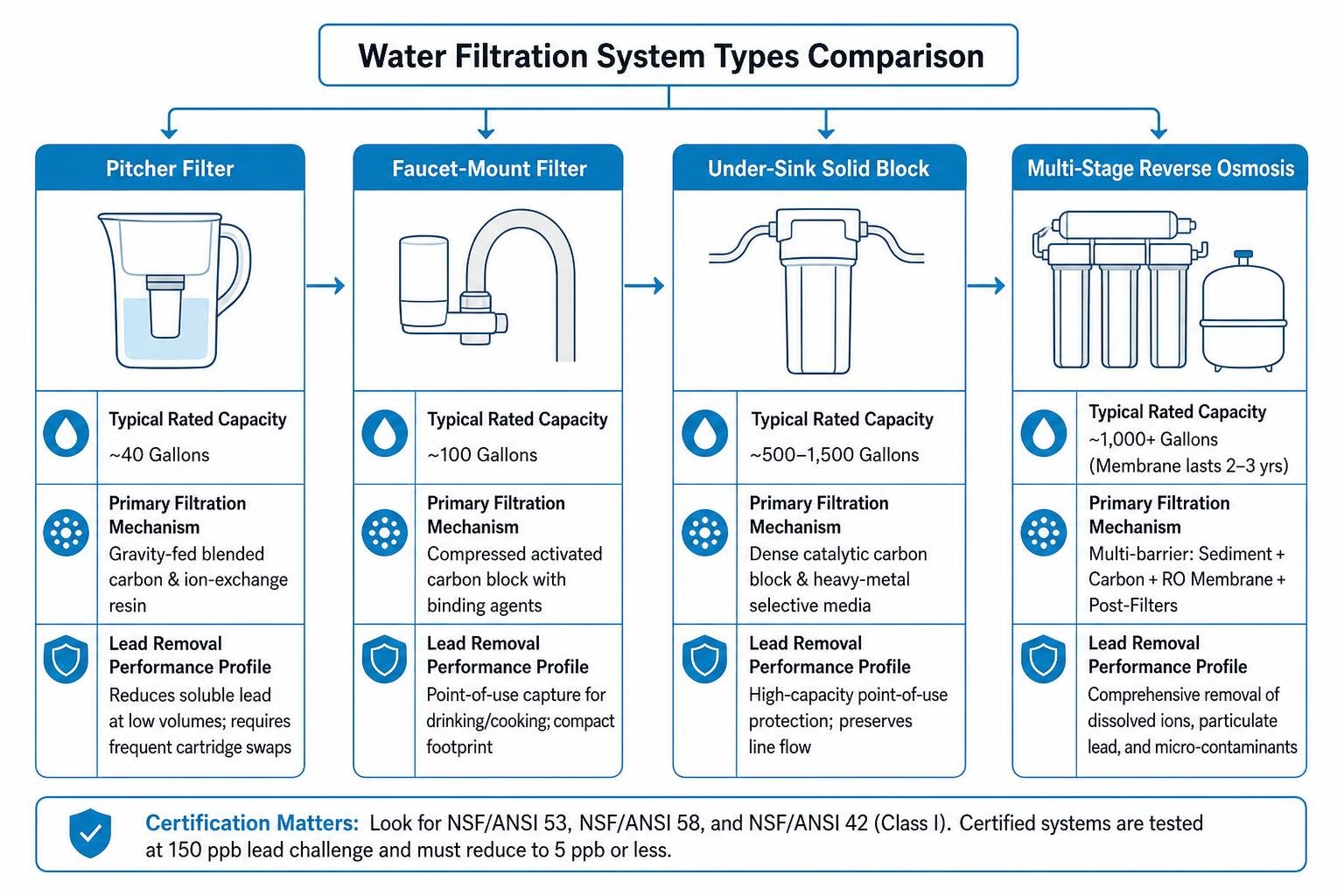
Comparing Systems for Water Filter Lead Removal
Standard consumer units rely on compressed activated carbon blocks or specialized resin media. A water filter pitcher to remove lead offers a portable starting point, but with an average rating of about 40 gallons, a typical family may exhaust the cartridge in a matter of weeks.
Faucet-mounted units offer roughly 100 gallons of capacity, threading directly onto standard kitchen faucets. While convenient, they restrict tap flow rates and can be difficult to mount securely on decorative or pull-out faucets. For homeowners seeking higher daily volume without cluttering the sink deck, dedicated under sink lead filters provide solid block media designed to handle thousands of gallons between service intervals.
Advanced Multi-Stage and Reverse Osmosis Solutions
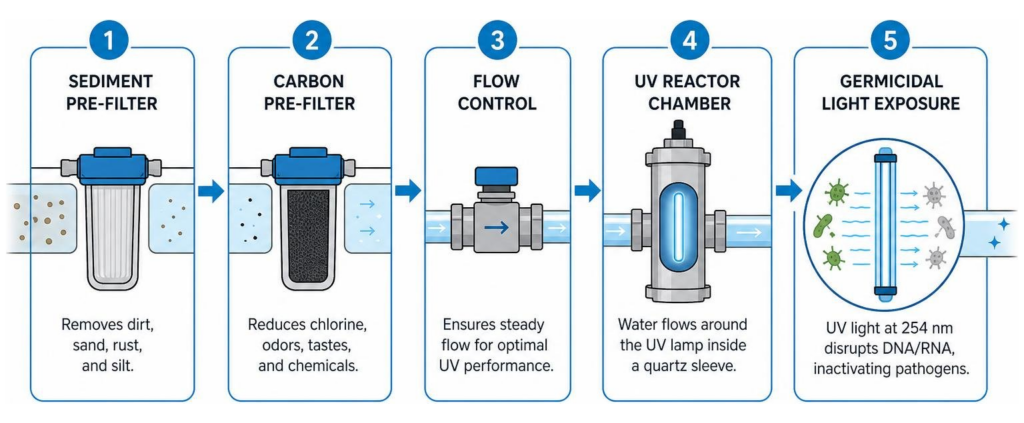
When municipal supplies exhibit heavy multi-contaminant loads or when older plumbing lines experience unpredictable heavy metal spikes, single-stage carbon filtration can face limitations. Multi-barrier systems leverage a semi-permeable membrane capable of rejecting particles down to 0.0001 microns.

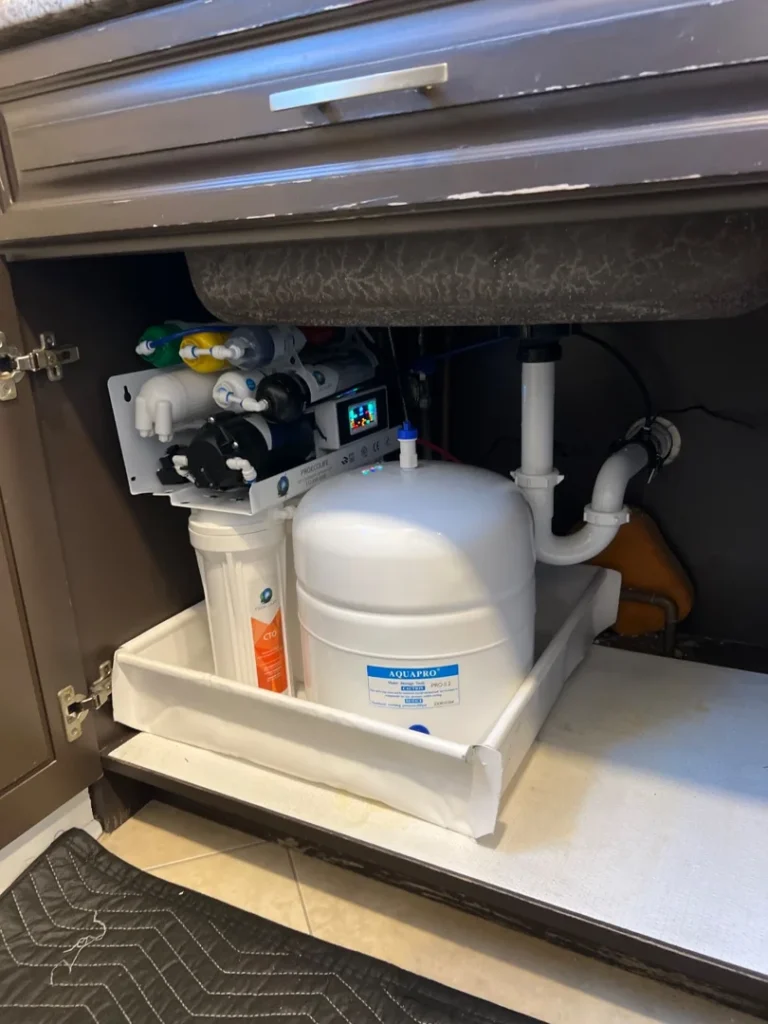
Dedicated multi-stage systems, such as advanced reverse osmosis systems, isolate dissolved heavy metals, nitrates, total dissolved solids, and chemical residues simultaneously. For residents seeking reliable access to safe water, integrating multi-barrier filtration creates redundant physical layers that help protect against fluctuating pipe corrosion.
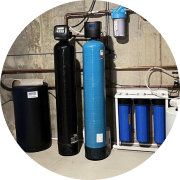
Ever since ProEcoLife was founded in 2014 by Karol Dolega, our focus has centered on tackling Northern Illinois water challenges, from municipal treatment conditions to hard water in the Northwest suburbs. For comprehensive household protection, our proprietary PEL75 9-Stage RO System provides thorough multi-stage purification directly under the kitchen counter, while our Whole House Filtration, Shower Filter System, Well Water Conditioning, and Commercial Water Filtration Systems address broader property needs.
Why Lead Filters Fail and How to Prevent It
Even a fully certified filter can fail if operated outside its engineered specifications. Understanding how media degrades prevents accidental heavy metal exposure. For a comprehensive overview of filtration principles, refer to our Best Way to Remove Lead from Water Guide.
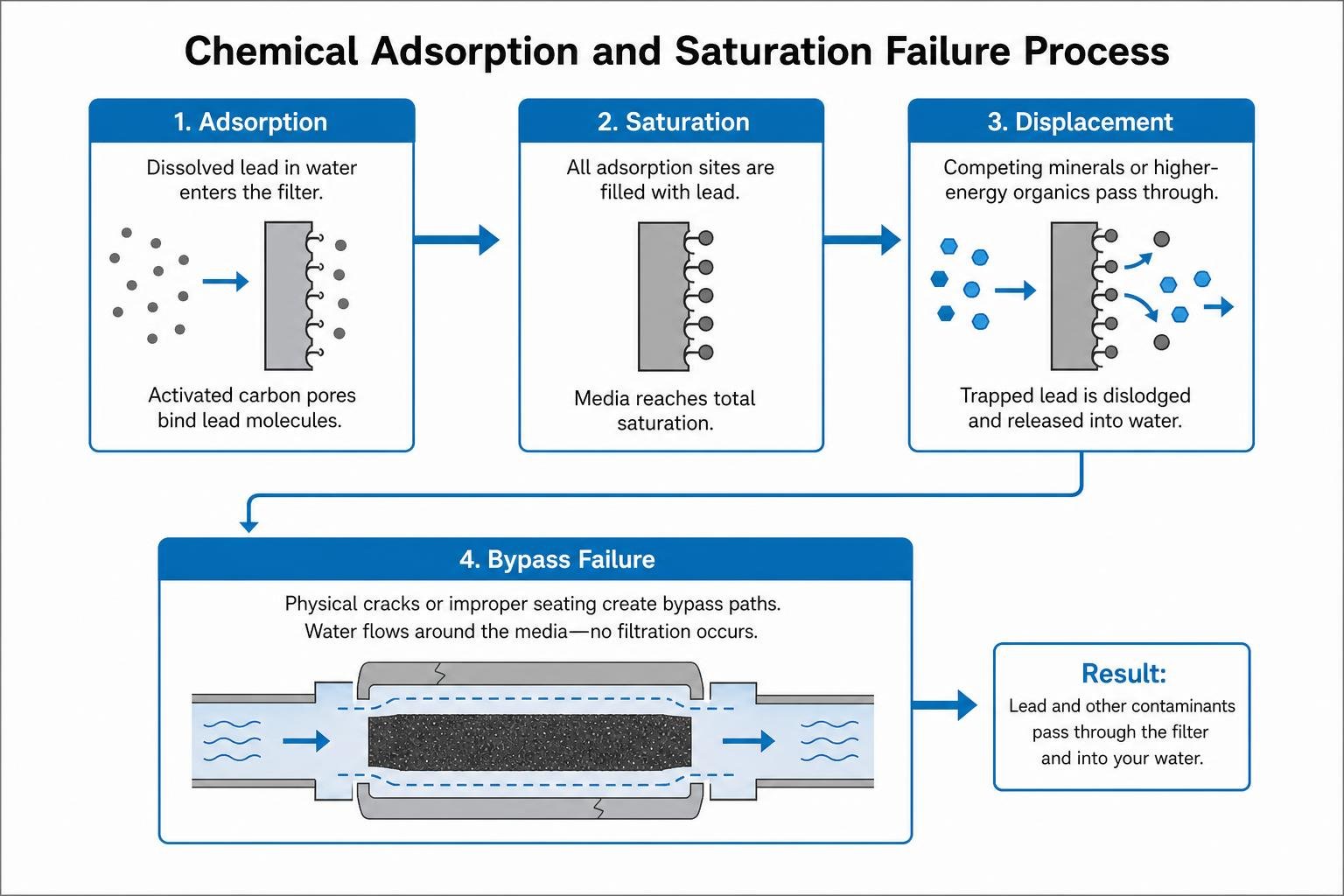
Activated carbon utilizes microscopic pores that chemically bind dissolved lead molecules—a process known as adsorption. Think of the filter surface as a wall covered in tiny hooks. Once every hook captures a lead particle, the media reaches total saturation.
If an exhausted filter remains in service, competing minerals or higher-energy organic contaminants passing through can physically displace the previously trapped lead, knocking it loose and washing it directly into your glass. Furthermore, physical cracks within an unseated cartridge allow water to bypass the media block entirely, providing zero filtration benefit.
Critical Maintenance Rules for Water Filter Lead Removal
To keep filtration media working effectively, follow these core operational practices:
- Track Gallon Capacities Manually: Do not depend solely on internal battery indicators, as built-in timer lights may fail before the actual gallon capacity is reached. Log cartridge installation dates on your calendar.
- Adhere to Replacement Intervals: Replace faucet cartridges around 100 gallons, pitcher filters around 40 gallons, and larger under-sink elements as specified by the manufacturer.
- Run Cold Water Exclusively: Never pass hot water through carbon or membrane elements designed for drinking water treatment.
- Perform Recommended System Flushes: Whenever a new cartridge is installed or a system sits unused for several days, run cold water through the unit for several minutes to clear loose carbon fines and purge stagnant water.
Frequently Asked Questions About Lead Water Filters
Why should you only run cold water through a lead-removal filter?
Running hot or warm water through an activated carbon block or reverse osmosis membrane compromises performance in three distinct ways:
- Weakens Chemical Bonds: Elevated water temperatures weaken the physical-chemical adsorption bonds holding lead molecules to the carbon surface, increasing the risk of desorbing captured contaminants back into the stream.
- Accelerates Kinetic Movement: Heat increases the kinetic energy of water molecules, causing fluid to pass too rapidly across binding sites without allowing sufficient contact time for heavy metal capture.
- Encourages Bacterial Colonization: Warm environments inside a moist filtration housing can foster microbial growth across the carbon bed.
If hot water is accidentally run through a drinking filter, immediately flush the housing with cold water for at least two to three minutes. If the unit was exposed to scalding temperatures for an extended period, replace the cartridge.
How do I know if my lead filter is damaged or improperly installed?
A damaged or incorrectly seated filter often presents distinct physical warnings:
- Unfiltered Bypass: If tap water pressure remains completely unchanged after installing a dense carbon block, water may be leaking around the O-rings or bypass seals rather than forcing its way through the microscopic pores.
- Sudden Drop or Surge in Flow: A sudden drop in flow can indicate premature sediment clogging from rust flakes in older iron mains, whereas a sudden burst in flow might mean the internal filtration membrane has torn or ruptured.
- Loose or Cross-Threaded Adapters: Faucet-mount units forced onto mismatched aerator threads often leak from the collar, spraying unfiltered water into the finished stream. Always hand-tighten fittings level without applying excessive wrench torque that can crack plastic housings.
Where can I find official resources and printable guides on drinking water lead?
Residents across Chicago’s Northwest Side neighborhoods—including Norwood Park, Edison Park, and Jefferson Park—as well as nearby suburban communities like Park Ridge, Niles, Des Plaines, Skokie, Glenview, Arlington Heights, and Morton Grove, can utilize several official resources to monitor local plumbing risks:
- EPA Consumer Guidance: Download printable guides and factsheets from the EPA’s drinking water portal detailing certified point-of-use units.
- Local Municipal Utilities: Review annual Consumer Confidence Reports (CCRs) published by your local public works department to examine Lake Michigan water metrics and utility pipe replacement schedules.
- Certified Laboratory Testing: To confirm baseline lead concentrations at your individual taps, submit water samples to a state-certified environmental testing laboratory.
Conclusion
Managing heavy metal risks in older plumbing requires a clear understanding of certification standards, routine maintenance, and proper system selection. Whether using point-of-use carbon blocks or advanced reverse osmosis technology, selecting independently verified equipment helps protect household drinking water from legacy pipe corrosion. To explore specific system configurations for your home, review our detailed guide on how to choose the best lead water filter in Chicago.
Because water chemistry and plumbing conditions differ from home to home across the Chicago area, results vary based on local pipe composition and usage habits. Many customers notice improved water quality and peace of mind after installing dedicated point-of-use treatment. Contact ProEcoLife to schedule a water test for your home by visiting proecolife.com.