

Why Lead Free Drinking Water Matters for Chicago Homeowners
Lead free drinking water is something every Chicago homeowner deserves — but aging pipes and older infrastructure across the city and its Northwest suburbs make that harder to verify than most people realize.
Quick answer: How to work toward lead free drinking water at home
- Test your water first — use a certified lab to check for lead levels
- Flush your taps — run cold water for 1-2 minutes after periods of non-use
- Use a certified filter — look for NSF/ANSI Standard 53 or 58 certification
- Avoid hot tap water for drinking, cooking, or mixing baby formula
- Have your plumbing assessed — homes built before 1986 are most likely to have lead service lines or solder
- Contact a professional — a local water expert can test, assess, and install the right solution
Lead is invisible. It has no smell. No taste. You cannot tell it’s there without testing. Yet the EPA and the CDC both agree on one sobering fact: there is no known safe level of lead in a child’s blood.
For families in Chicago neighborhoods like Norwood Park, Edison Park, and Jefferson Park — or in suburbs like Park Ridge, Niles, and Des Plaines — this isn’t an abstract concern. Many homes in these areas were built decades before lead was banned from plumbing materials in 1986. That means older service lines, lead solder, and brass fixtures may still be quietly leaching lead into tap water every day.
According to the EPA, drinking water can account for 20% or more of a person’s total lead exposure. For infants drinking formula mixed with tap water, that number can jump to 40–60%.
This guide walks you through everything you need to know — from where lead comes from and who’s most at risk, to how ProEcoLife helps Chicago-area families better understand their water and choose treatment options that may help reduce lead exposure.
The Reality of Lead in Chicago’s Tap Water

When we turn on our kitchen faucets, we expect pure, refreshing water. After all, our water originates from Lake Michigan—one of the largest and most reliable freshwater sources in the world. However, the journey from the lake to your glass is a long one.
While the water leaving our treatment plants meets strict safety standards, it travels through a massive, aging network of underground pipes to reach Chicago’s Northwest Side neighborhoods and neighboring suburbs.
In older residential areas like Jefferson Park, Norwood Park, and Edison Park, as well as classic suburbs like Park Ridge, Niles, Des Plaines, Skokie, Glenview, Arlington Heights, and Morton Grove, much of this distribution network was built in an era when lead was the industry standard. This historic reliance on lead has left us with a persistent local challenge, often referred to as Chicago’s Risky Water Problem.
In fact, research shows that Illinois is home to some of the highest concentrations of lead service lines in the nation, earning it a reputation as one of the Illinois One of Worst Contaminated Water States. To help residents navigate this complex challenge, federal agencies provide specific Advice to Chicago Residents About Lead in Drinking Water | US EPA , emphasizing that household-level awareness is key to protecting your family.
Sources of Lead in Local Infrastructure
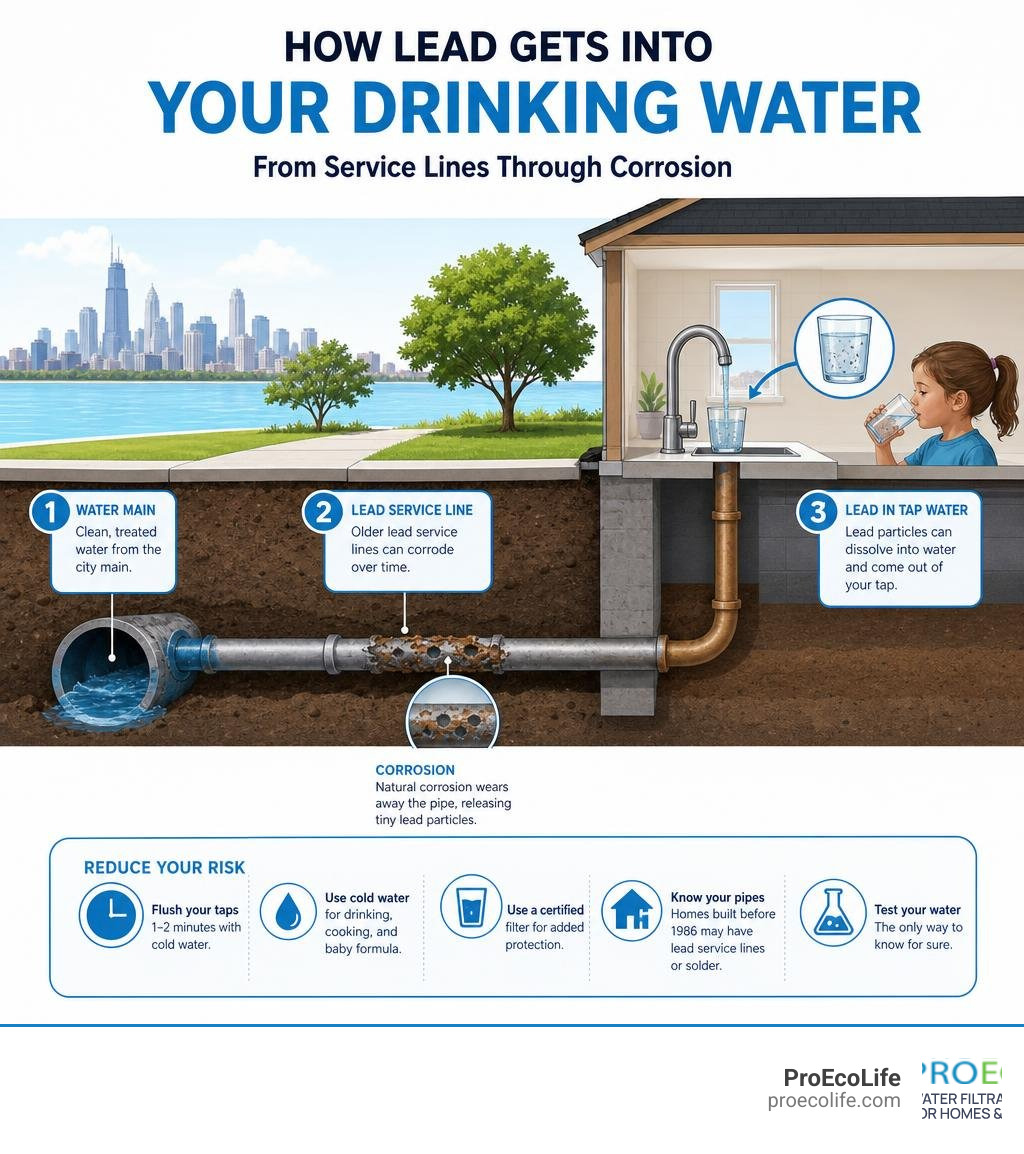
How exactly does lead find its way into your tap water? It rarely originates in the source water itself. Instead, lead enters the stream as a direct result of corrosion—a chemical reaction between the water and the metal plumbing materials inside and outside your home.
The primary culprits include:
- Lead Service Lines (LSLs): These are the underground pipes that connect the municipal water main in the street directly to your home’s internal plumbing. In many older Chicago suburbs, these pipes are still made entirely of lead.
- Galvanized Pipes: Over time, old galvanized steel pipes can trap lead particles released from upstream lead service lines. Even after an LSL is replaced, these old galvanized pipes can continue to release accumulated lead into your tap water.
- Brass Fixtures and Faucets: Many older brass faucets and valves contain small percentages of lead to make the metal easier to shape during manufacturing.
- Lead Solder: Before 1986, plumbing copper pipes were commonly joined using solder containing high concentrations of lead.
Local municipalities are actively working to catalog and address these issues. For instance, you can review progress and guidelines via the Lead Service Line Replacement – Park Ridge resources or check the Water Service Distribution Information | Niles, IL – Official Website to see how local distribution mains affect your neighborhood. Even if you live in nearby communities, consulting databases like the Des Plaines – EWG Tap Water Database can provide valuable context regarding local contaminant levels.
Water Chemistry and Corrosion Factors
The rate at which lead leaches into water depends heavily on water chemistry. Factors such as pH, mineral content, and water temperature dictate how corrosive the water is.
Lake Michigan water is treated with corrosion inhibitors (such as orthophosphate) to form a protective coating on the inside of pipes, which may help prevent lead from dissolving into the water. However, changes in water temperature, physical disturbances from nearby street construction, or changes in water flow can disrupt this protective coating.
Additionally, our Northwest suburbs are known for having highly mineralized, hard water. While hard water minerals like calcium and magnesium can sometimes create a natural scale inside pipes that acts as a barrier, they also cause scale buildup on appliances and fixtures. Many homeowners choose to manage this with an Expert Water Softener Installation in Chicago: Protect Your Plumbing.
It is important to understand how water softening interacts with your plumbing, as softened water can sometimes alter the water’s chemistry and affect how it interacts with older plumbing materials.
Need Clean, Safe Water at Home?
Get a free water test at your home or business. We install and service whole-house filtration and PEL75 reverse osmosis systems across Chicagoland. We also take select projects in Wisconsin and Indiana.
Book a Free Water TestCall (312) 889-8888Health Risks of Lead Exposure in Drinking Water

Unlike many other water contaminants, lead is a cumulative toxicant. This means it builds up in the body over time, storing itself in our bones, blood, and soft tissues. Because lead mimics calcium, the body readily absorbs it, which can lead to serious, long-term health complications.
For comprehensive medical insights, the CDC provides detailed information About Lead in Drinking Water | Childhood Lead Poisoning Prevention | CDC , outlining how lead affects different bodily systems. In adults, chronic low-level exposure can contribute to high blood pressure, kidney damage, and reproductive issues. However, the most severe risks are reserved for our most vulnerable population: developing children.
Vulnerable Populations and Exposure Statistics
For pregnant women, infants, and young children, lead exposure is particularly dangerous. A child’s developing brain and nervous system are highly sensitive to lead, and their rapidly growing bodies absorb up to five times more lead than an adult’s body does from the same exposure level.
- Neurological Impacts: Exposure in young children has been linked to lower IQs, learning disabilities, shortened attention spans, and increased behavioral challenges.
- Infants and Formula: Infants who consume formula mixed with tap water face a unique risk. Because their diet consists almost entirely of liquid, they can receive 40% to 60% of their total lead exposure directly from drinking water.
- Global Burden: This is a widespread challenge; globally, approximately 1 in 3 children (nearly 800 million) have elevated blood lead levels.
If you are wondering, “Is Your Water Contaminated?“, the first step is understanding that there is no safe threshold for lead exposure. For older homes in Chicago’s Northwest Side and nearby suburbs, professional water testing and properly selected filtration may help reduce drinking-water-related lead exposure.
Need Clean, Safe Water at Home?
Get a free water test at your home or business. We install and service whole-house filtration and PEL75 reverse osmosis systems across Chicagoland. We also take select projects in Wisconsin and Indiana.
Book a Free Water TestCall (312) 889-8888How to Achieve Lead Free Drinking Water in Your Home
Achieving lead free drinking water requires a systematic approach. While municipal pipe replacement programs are underway, they are multi-decade projects. Fortunately, Chicago-area homeowners can take steps at the household level instead of relying only on city construction timelines.
By taking control of your home’s water filtration with professional guidance, you can establish a reliable barrier against lead and other heavy metals. If you are unsure where to start, reading about How to Tell If You Need a Water Filter can help you assess your home’s current water quality and determine the best path forward.
Professional Testing for Lead Free Drinking Water
You cannot see, smell, or taste lead. The only way to know if your plumbing is leaching lead is to have it tested by professionals. While home test kits are available at hardware stores, they are often difficult to read and may not provide the precise parts-per-billion (ppb) measurements needed to understand your home’s risk.
A professional water analysis typically involves collecting two types of samples:
- First-Draw Samples: This test measures water that has sat stagnant in your pipes overnight (for at least 6 hours). It represents the highest potential concentration of lead, reflecting what has leached from your home’s fixtures and internal plumbing.
- Running Samples: This test measures water after the tap has run for several minutes, representing the quality of the water coming directly from the service line or water main.
To get an accurate picture of your home’s water quality, we recommend utilizing a Reliable Water Testing Service in Chicago for Your Home or Business. Our team can help you Test Your Water to identify exactly what is coming out of your taps and design a customized treatment plan.
Advanced Filtration Systems for Lead Free Drinking Water
When it comes to reducing dissolved lead in water, not all filters are created equal. Basic carbon pitchers often lack the contact time and specialized media required to reliably reduce heavy metals. To protect your household, you should look for systems certified to NSF/ANSI Standard 53 (for lead reduction) or NSF/ANSI Standard 58 (for reverse osmosis).
At ProEcoLife, we have spent years refining advanced filtration technologies specifically designed to handle the unique water conditions of the Chicago area:
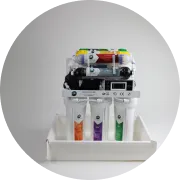
- PEL75 9-Stage RO System: This is our flagship drinking water system. Using a multi-stage purification process—including a high-rejection reverse osmosis membrane—it is designed to reduce lead, heavy metals, chlorine, and microscopic impurities, leaving you with cleaner drinking water.
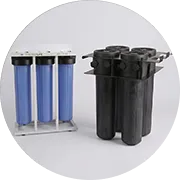
- Whole House Filtration: This system protects your entire home by filtering water at the point of entry. It helps supply cleaner, filtered water to showers, baths, and faucets throughout the house.
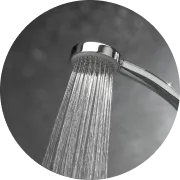
- Shower Filter System: Designed to reduce chlorine and heavy metals, this system may help protect your skin and hair from the harsh chemicals often found in municipal water.
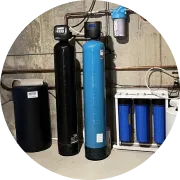
- Well Water Conditioning: For homes in the outer Northwest suburbs utilizing private wells, this system targets iron, sulfur, hardness, and potential heavy metals.
- Commercial Water Filtration Systems: We also design robust, high-capacity systems for local businesses, schools, and offices requiring high-volume water purification.
For a detailed look at how to select the right system for your property, read our comprehensive guide on How to Choose the Best Lead Water Filter in Chicago: A 2026 Guide. If you are interested in the scientific mechanics behind heavy metal removal, you can also explore our resource on Jak usunąć metale ciężkie z wody.
Practical Steps to Reduce Daily Exposure
While installing a professional filtration system provides stronger ongoing protection, there are several simple daily habits you can adopt right now to reduce your exposure to lead:
- Flush Your Pipes: If water has sat unused in your pipes for several hours, run the cold water tap for 1 to 2 minutes before using it for drinking or cooking. You can also flush the system by taking a shower or running a load of laundry.
- Use Only Cold Water: Always use cold tap water for drinking, cooking, and preparing baby formula. Hot water dissolves lead much more quickly than cold water does.
- Clean Aerators Regularly: Unscrew the small screens (aerators) on the tips of your faucets and rinse out any trapped sediment or metal particles that may contain lead.
- Select Certified Fixtures: When updating your kitchen or bathroom, work with a qualified plumbing professional and ensure all new faucets and valves are certified to meet the federal standards outlined in the Use of Lead Free Pipes, Fittings, Fixtures, Solder, and Flux for Drinking Water | US EPA regulations.
Local and Federal Regulations Safeguarding Our Water
The safety of public drinking water is governed by a combination of federal laws and local municipal initiatives. Understanding these regulatory standards helps homeowners interpret their water quality reports and understand the legal limits of lead exposure.
| Regulatory Standard | Concentration Limit | Health & Safety Objective |
|---|---|---|
| EPA Maximum Contaminant Level Goal (MCLG) | 0 µg/L (ppb) | The ideal health-based goal; there is no known safe level of lead exposure. |
| EPA Action Level (Lead & Copper Rule) | 15 µg/L (ppb) | The threshold that triggers mandatory municipal treatment changes and public education. |
| Federal “Lead-Free” Plumbing Standard | 0.25% weighted average | The maximum allowable lead content on the wetted surfaces of pipes and plumbing fixtures. |
The Safe Drinking Water Act regulates public water systems, while the Lead and Copper Rule requires water utilities to monitor lead levels at residential taps. If more than 10% of tested homes exceed the action level of 15 micrograms per liter (µg/L), the utility must take immediate corrective action, such as adjusting corrosion control treatments.
Looking forward, global and national initiatives like the Lead-Free Water Pledge aim to completely eliminate lead from public drinking water infrastructure by 2040.
Municipal Replacement Programs and Equity
Replacing millions of lead service lines is a monumental financial and logistical task. In communities across the Chicago area, municipal governments are rolling out structured replacement programs. However, because water utilities typically only own the portion of the service line from the water main to the property line, replacing the private portion (from the property line to the home) is often the responsibility of the property owner.
To address this, cities and villages are utilizing federal grants and American Rescue Plan Act (ARPA) funding to help residents offset the cost of private-side replacements. Local programs are designed to prioritize high-risk areas and lower-income neighborhoods to ensure equitable access to safe infrastructure.
You can learn more about how local communities are managing these efforts by visiting the Lead Service Line Replacement | Lincolnwood Village, IL portal or reviewing the Water Quality and Safety | Skokie, IL guidelines.
Frequently Asked Questions About Lead in Water
Can I boil water to remove lead?
No. Boiling water does not remove lead. In fact, because boiling causes some of the water to evaporate, it actually increases the concentration of lead in the remaining water. To reduce lead, you must use a physical filtration method, such as a certified reverse osmosis system or a specialized carbon block filter.
Is it safe to shower in lead-contaminated water?
Yes. Bathing and showering are generally considered safe because human skin does not absorb lead from water. Lead exposure primarily occurs through ingestion (drinking or cooking with contaminated water).
How do I know if my Chicago home has lead pipes?
If your home was built before 1986, there is a strong possibility that it contains lead service lines or lead solder. A water professional or qualified plumbing professional can assess the pipe entering your home near the water meter and help identify potential lead-related risks.
Lead pipes are typically dull gray, soft enough to be scratched, and may reveal a shiny silver color underneath. A magnet will not stick to a lead pipe.
This issue is not confined to the city center; even surrounding areas have faced similar concerns, as detailed in our report on Lead Found in Bartlett Drinking Water.
Conclusion
At ProEcoLife, we believe that achieving lead free drinking water should not be a source of constant worry for your family. Founded by Karol Dolega, we have been rooted in the Chicago community since 2014, helping our neighbors protect their homes with reliable, high-performance filtration technology.
By combining professional water testing with custom-tailored filtration solutions like our PEL75 9-Stage RO System and Whole House Filtration systems, we help Chicago-area homeowners better understand their water and choose systems that may help reduce lead, hard water concerns, chlorine taste and odor, and other local water quality issues. Results vary based on plumbing, source water, and household conditions.
If you are ready to take the first step toward securing peace of mind for your home, explore our guide on How to Choose the Best Lead Water Filter in Chicago: A 2026 Guide or reach out to our team today.
Contact ProEcoLife to schedule a water test at (312) 889-8888 or proecolife.com.