
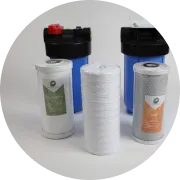
Choosing a Non Electric Water Purifier for a Chicago Bungalow
A non electric water purifier is a useful backup during a power outage, but the right filter depends on what is in your water. Ceramic and ultrafiltration units can trap sediment and bacteria. For lead, choose a model with verified lead-reduction performance; do not assume every gravity filter removes dissolved lead.
Chicago’s water comes from Lake Michigan, but aging pipes in older bungalows can add lead before it reaches the tap. Hard water in parts of the Northwest suburbs poses a different problem: gravity filters generally do not remove dissolved minerals. Compare filters by the contaminants they reduce, their storage capacity, and how often cartridges need replacing.
I’m Maciej Spadlo, and I draw on ProEcoLife’s experience with Chicago-area water filtration to help homeowners make sense of their options. A non electric water purifier can be part of an emergency plan, so let’s look at what each type can and cannot do.
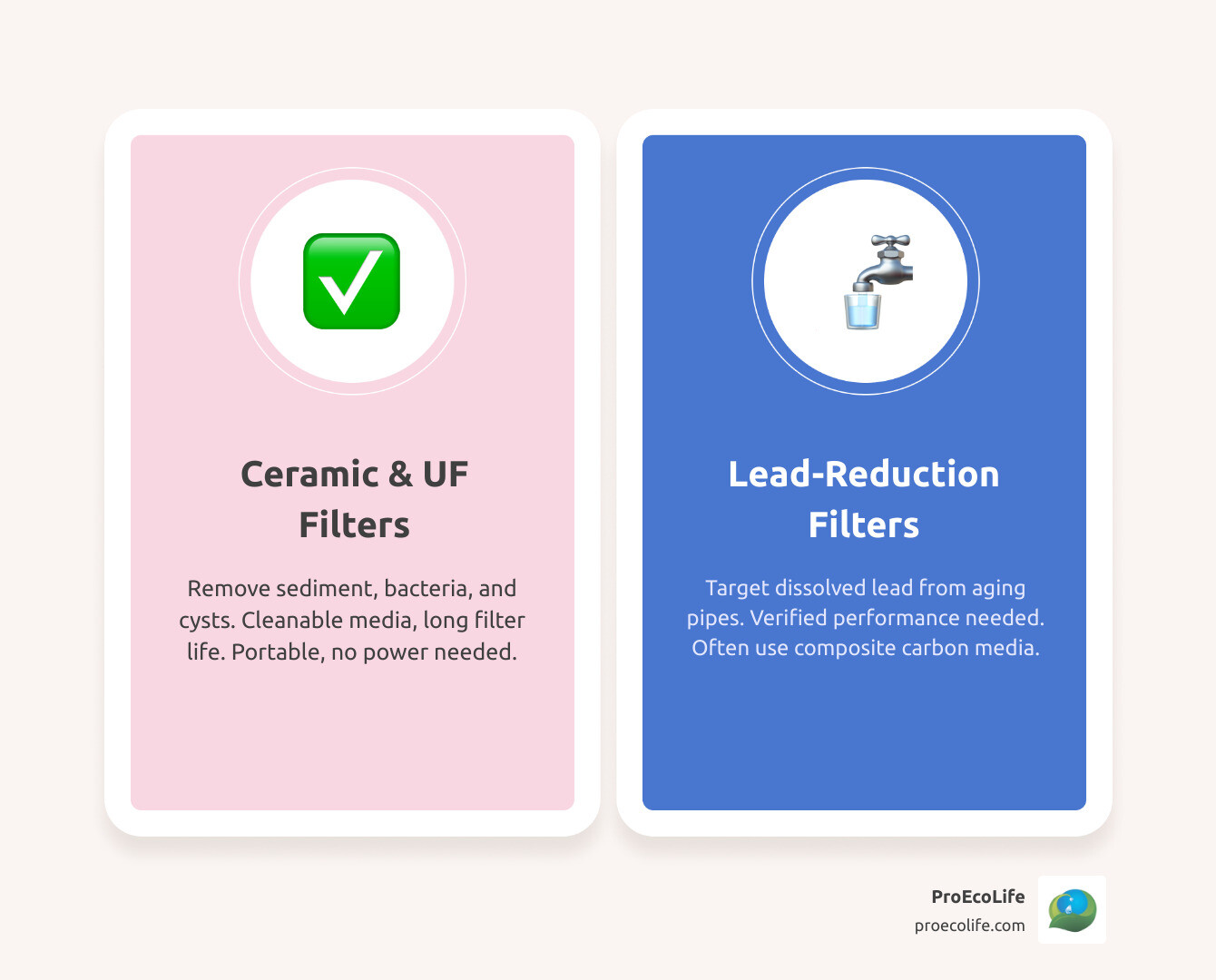
Easy non electric water purifier glossary:
Understanding How Non-Electric Filtration Safeguards Older Homes
Living in a classic brick bungalow on Chicago’s Northwest Side comes with unmistakable architectural charm, but it also means dealing with century-old utility realities. Across neighborhoods like Jefferson Park, Portage Park, and Norwood Park, tens of thousands of homes remain connected to city mains via legacy lead service lines. Under normal circumstances, municipal treatment helps keep interior pipe scale stable, meeting general municipal water quality standards. However, severe weather, local main breaks, or grid-down blackouts can disrupt that balance instantly.

When municipal pumping stations experience pressure drops or nearby street construction shakes loose decades of pipe scale, particulate rust and heavy metals can surge toward your tap. In worst-case scenarios—such as summer storm blackouts or winter freeze events—boil-water advisories may be issued just when electric-powered purification appliances stop working. A manual, gravity-fed purifier provides physical filtration that safeguards your drinking supply completely off-grid, ensuring uninterrupted access to safe drinking water for your family.
How a Gravity-Fed Non Electric Water Purifier Operates Without Power
Unlike advanced under-sink installations that rely on municipal water pressure or booster pumps, a gravity water purifier works entirely on static fluid dynamics. The construction typically features two stacked chambers. You manually pour untreated tap or stored water into the upper reservoir. The natural weight of the liquid creates downward hydrostatic pressure, slowly drawing the water through microporous filter elements into the lower storage reservoir.
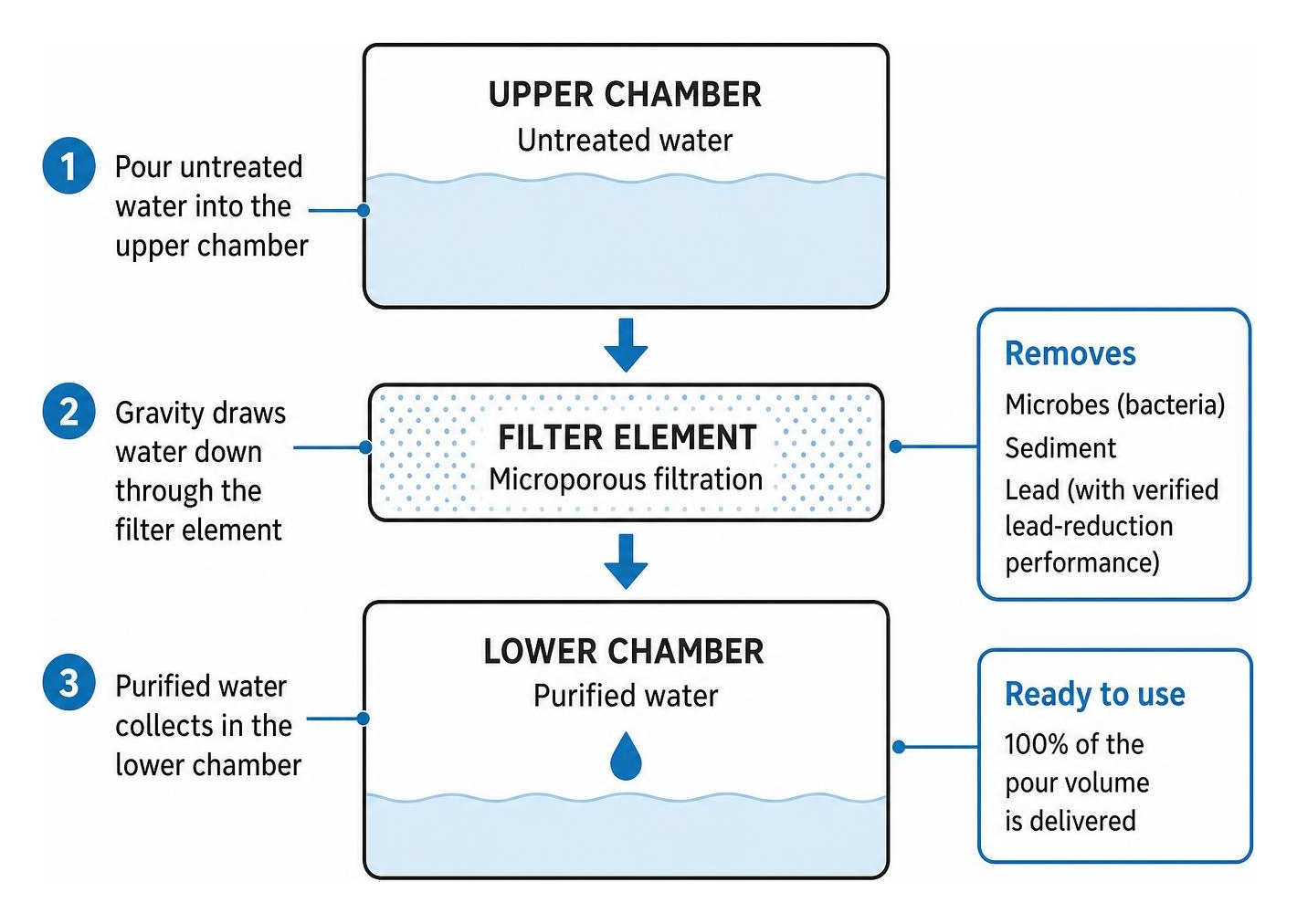
This mechanical filtration mechanism yields two major operational advantages:
- Zero Electric Dependence: You do not need batteries, solar generators, or wall outlets to produce purified drinking water.
- Zero Water Wastage: Unlike pressurized systems that flush a portion of water down the drain to rinse filter membranes, gravity filters deliver 100% of the pour volume directly into your clean holding tank.
Microbial, Lead, and Sediment Removal Capabilities
Gravity-fed purifiers utilize dense filtration media such as extruded carbon blocks, fine ceramic shells, and hollow-fiber ultrafiltration (UF) membranes. High-grade UF elements boast pore sizes down to 0.01 microns, effectively creating a physical barrier against waterborne microorganisms, protozoan cysts, and heavy turbidity.
For older homes where lead service lines are the primary concern, standard sediment screens alone are insufficient. Lead enters residential water as both physical flakes (particulate lead) and invisible dissolved ions. While microporous media trap particulate rust and lead flakes, reducing dissolved lead requires specialized solid-block activated carbon impregnated with ion-exchange binders. For homeowners seeking permanent, whole-property protection against these heavy metals, exploring total lead removal options offers a complete solution alongside temporary emergency backups.
Need Clean, Safe Water at Home?
Get a free water test at your home or business. We install and service whole-house filtration and PEL75 reverse osmosis systems across Chicagoland. We also take select projects in Wisconsin and Indiana.
Book a Free Water TestCall (312) 889-8888Comparing Main Types of Non Electric Water Purifier Systems for Emergency Prep
When selecting an emergency countertop unit for a bungalow or suburban residence in nearby areas like Niles, Skokie, or Park Ridge, choosing the right filter chemistry is essential. The table below details the performance, typical flow rates, and maintenance characteristics of the three primary gravity purifier configurations:
| Purifier Type | Primary Filter Media | Pore Size / Rating | Key Contaminants Reduced | Average Flow Rate | Filter Lifespan |
|---|---|---|---|---|---|
| Ceramic Candle | Porous diatomaceous ceramic with silver core | 0.2 to 0.5 microns | Bacteria, cysts, sediment, suspended rust | 0.4 to 1.5 gal/hr | Up to 10,000+ gallons (cleanable) |
| Ultrafiltration (UF) | Semi-permeable hollow fiber membrane | 0.01 to 0.02 microns | Bacteria, viruses, protozoa, microplastics | 1.0 to 3.5 gal/hr | 12 months / 3,000 to 5,000 liters |
| Multi-Stage Carbon Block | Compressed activated carbon & ion exchange resin | 0.5 to 1.0 microns | Dissolved lead, chlorine, VOCs, bad tastes | 0.5 to 2.0 gal/hr | 6 to 12 months / 1,000 to 6,000 gallons |
Ceramic Candle and Ultrafiltration Gravity Units
Ceramic filter candles represent one of the oldest and most reliable physical filtration formats. The outer ceramic shell traps suspended solids, silt, and microbes on its microscopic surface. Many ceramic designs incorporate silver ions directly into the clay matrix to inhibit bacterial growth inside the cartridge walls. A distinct benefit of ceramic elements is cleanability: when silt or rust from older Chicago main lines coats the surface and slows the drip rate, you can gently scrub the outer layer with a non-abrasive pad to restore flow.
Ultrafiltration gravity models use bundles of hollow-fiber tubules with tiny 0.01-micron pores. They provide exceptional defense against biological pathogens without requiring chemical disinfectants. While UF does not strip dissolved minerals or heavy metals on its own, it functions as an exceptional pathogen and turbidity barrier during urban flood conditions or storm-related boil-water alerts.
Mineral Pot and Multi-Stage Carbon Gravity Systems
Multi-stage mineral pot systems often pair a ceramic micro-filter dome at the top with a multi-layered vertical cartridge underneath. As water drains through, it traverses activated carbon, silver-impregnated granules, and natural mineral stones. These units excel at absorbing municipal disinfectant chemicals like chlorine and chloramines, neutralizing chemical odors, and polishing taste.
For emergency storage in basements or pantries, look for units housed in heavy-gauge, food-grade 304 stainless steel or certified BPA-free polymers. Stainless steel models prevent light penetration, helping suppress algae growth if purified water sits stored in a warm kitchen over several days.
Flow Rate, Storage Capacity, and Maintenance Needs

Gravity purifiers operate slowly by design; physical micro-filtration takes time without electric pump pressure. Typical flow rates range between 0.4 and 3.5 gallons per hour depending on the number of active cartridges installed in the upper reservoir.
To maintain proper throughput:
- Batch Capacity: A 2-to-3-gallon lower reservoir generally supplies the daily drinking and cooking needs of a standard four-person household.
- Cleaning Intervals: Sponge out lower reservoirs monthly to avoid biofilm buildup.
- Cartridge Replacement: Carbon-based elements require replacement every 6 to 12 months (or after treating their rated gallon capacity), as adsorption sites eventually saturate.
- Flow Drop Monitoring: A sudden drop in filtration speed indicates surface clogging from sediment, signaling it is time to scrub ceramic elements or flush pre-filter pads.
Need Clean, Safe Water at Home?
Get a free water test at your home or business. We install and service whole-house filtration and PEL75 reverse osmosis systems across Chicagoland. We also take select projects in Wisconsin and Indiana.
Book a Free Water TestCall (312) 889-8888Comprehensive Guide: Non-Electric Emergency Units vs. Whole-Home Systems
While a standalone gravity purifier provides valuable emergency insurance during power disruptions, it is fundamentally a point-of-use survival appliance. It cannot manage the high-volume water demands of daily residential living across laundry, hot water heaters, dishwashers, and showers. Homeowners looking for broader structural insights can consult our comprehensive Chicago water filter guide to understand how portable backups integrate with comprehensive property filtration.
Choosing the Right Non Electric Water Purifier for Chicago Bungalow Infrastructure
Selecting the right unit for an older brick bungalow in Edison Park, Forest Glen, or Dunning requires assessing your specific household risks:
- Plumbing Age and Lead Exposure: If your home retains an original lead service line, prioritize carbon-composite gravity elements specifically rated for heavy metal adsorption rather than basic sediment-only ceramic filters.
- Countertop Real Estate: Bungalow kitchens often feature limited counter space. Compact 1.5-to-2.25-gallon two-tier stainless units fit comfortably next to sinks without blocking prep areas.
- Suburban Water Hardness: In Northwest suburbs like Des Plaines, Glenview, Arlington Heights, and Morton Grove, deep municipal wells or mixed supplies introduce high dissolved mineral hardness. A gravity filter will allow these harmless minerals to pass through, preserving water taste but leaving kettle scale untouched.
Limitations of Standalone Gravity Filters and When Advanced Treatment Is Required
It is equally important to understand what a gravity-fed non-electric unit cannot accomplish:
- Total Dissolved Solids (TDS): Gravity filters do not remove dissolved inorganic salts, nitrates, or total hardness minerals.
- Flow Volume: Producing water by the drop cannot supply pressurized water for daily dishwashing, bathing, or multi-bath household routines.
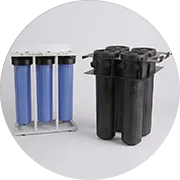
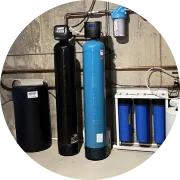
- Broad-Spectrum Lead Abatement: To eliminate heavy metals from every tap, shower, and appliance simultaneously, homeowners rely on high-capacity installations like dedicated lead removal whole-house filtration.
When daily municipal tap water requires comprehensive purification—removing dissolved chemicals, heavy metals, microplastics, and mineral salts—understanding how reverse osmosis works illustrates why advanced multi-stage membrane separation remains the gold standard for daily drinking water.
Frequently Asked Questions About Non-Electric Filtration in Chicago
Can a gravity-based filter remove lead from older plumbing?
Some gravity purifiers can reduce lead, but only if they utilize dense solid-block activated carbon with specialized ion-exchange media. Basic ceramic candles and standard sediment filters only catch physical, particulate lead flakes; they let dissolved lead ions pass straight into your drinking glass. Always verify that replacement cartridges carry specific test data for both particulate and soluble lead reduction.
How often do gravity filter cartridges require replacement?
Most manufacturers recommend replacing gravity carbon elements every 6 to 12 months, or after filtering between 1,000 and 3,000 gallons per element. If raw tap water carries high sediment loads—common during municipal hydrant flushing or water main work in older wards—flow rates may decline sooner, requiring earlier maintenance or cartridge replacement.
Does gravity filtration reduce high TDS or hard water minerals?
No. Gravity-based filtration utilizes physical pore barriers and carbon adsorption, which do not separate dissolved mineral ions like calcium, magnesium, or sodium from water molecules. If your home in Park Ridge or Arlington Heights experiences heavy mineral scale, reducing total dissolved solids requires pressurized membrane separation such as reverse osmosis or specialized ion-exchange conditioning.
Conclusion: Building Complete Water Resilience in Your Chicago Home
A quality gravity-fed purifier serves as an outstanding secondary safeguard, ensuring your family has immediate access to clean drinking water during severe weather blackouts, line ruptures, or boil-water alerts. However, true long-term water quality across Chicago’s historic bungalows and Northwest suburbs demands a multi-layered defense.
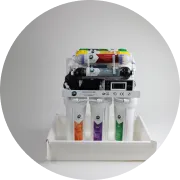
Since 2014, ProEcoLife founder Karol Dolega has helped local homeowners tackle regional water challenges, from historic lead service lines in Jefferson Park and Norwood Park to hard water issues across Niles, Skokie, and Des Plaines. While keeping a gravity unit on hand prepares you for emergencies, pairing it with ProEcoLife’s permanent systems—including our advanced PEL75 9-Stage RO System for pristine kitchen drinking water, Whole House Filtration for whole-property plumbing protection, Shower Filter Systems, and dedicated Well Water Conditioning—ensures complete purity every single day.
Ensure your home’s water is safe under all conditions. Contact ProEcoLife today to schedule a professional water test at (312) 889-8888 or visit proecolife.com to book your expert Chicago water filter system consultation.