

How to Remove a Stuck Whole-House Water Filter Safely
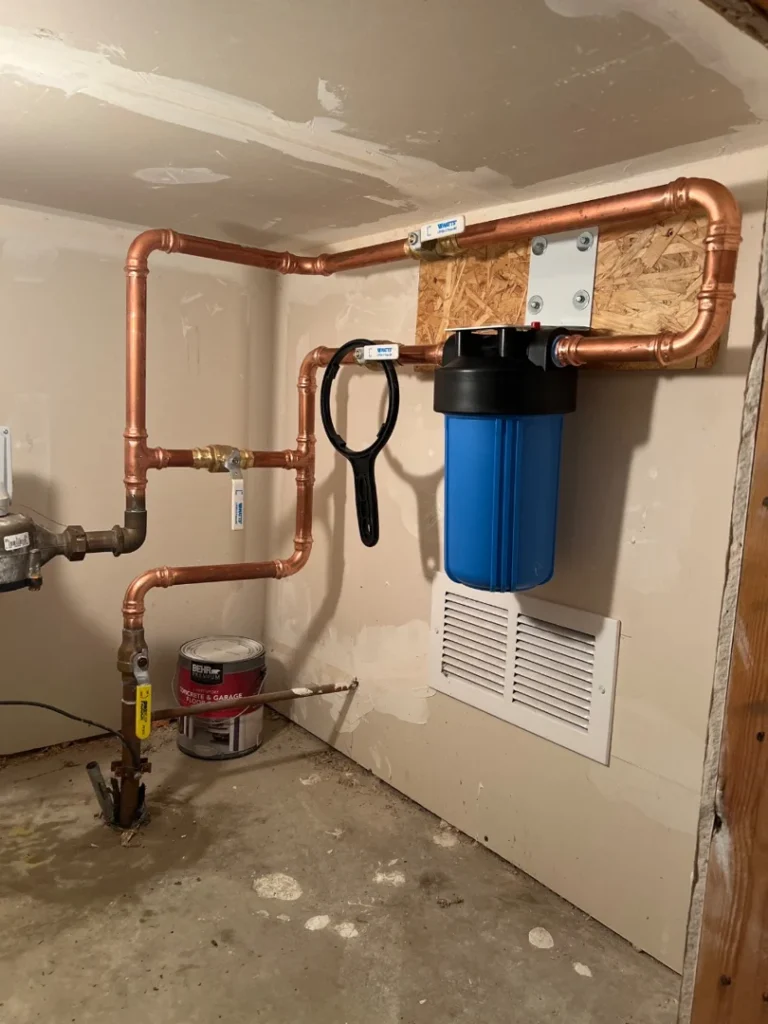
When removing whole house water filter units or replacing seized filter canisters, safety and proper pressure isolation must always come first. Attempting to force a stuck housing can cause major pipe stress, cracked fittings, or water damage. Licensed plumbers begin by isolating the main water supply, relieving line pressure through downstream fixtures, and supporting the overhead plumbing before applying counter-torque to the sump.
In Chicago and nearby suburbs, understanding local water quality is critical before modifying your setup. Lake Michigan water can pick up lead in older residential plumbing, while mineral scale from hard water in the Northwest suburbs often binds housing threads. When updating your equipment, choosing a 20 gpm whole house water filter or a heavy-duty 20 x 4.5 water filter ensures your home maintains balanced water volume. If you plan to buy whole house water filter units, professional guidance ensures proper pipe sizing and bypass configuration.
Understanding Why Filter Housings Seize and Preparing the Area
Dealing with a water filter sump that refuses to budge is a familiar challenge for many homeowners across the Chicago area. Whether you live in a classic brick bungalow in Norwood Park or a home out in Des Plaines, water filter housings often lock up over time due to mechanical and environmental factors.
Two main physical forces cause filter housings to seize: internal hydraulic vacuum lock and mineral crusting. When the incoming municipal line stays pressurized, water pushes outward against the internal threads and squashes the rubber O-ring into its seating groove. Over months of service, calcium and magnesium deposits—which are especially prevalent in private wells and outlying distribution systems across the Northwest suburbs—crystallize inside the micro-gaps of the housing threads. This turns a simple threaded connection into a bonded, stubborn joint.
Before professional service technicians begin working on your filtration setup, the mechanical workspace must be prepared to avoid water damage and maintain compliance with Illinois safe drinking water guidelines.
- Clearing away any storage boxes, laundry supplies, or electrical appliances within a wide perimeter around the water line.
- Laying down heavy absorbent containment towels or drop cloths directly underneath the filter assembly.
- Positioning a commercial utility bucket directly under the sump body to capture residual discharge when the seal releases.
- Wearing ANSI-rated safety glasses to protect against unexpected water spray or debris.
Isolating Water Lines and Relieving Line Pressure
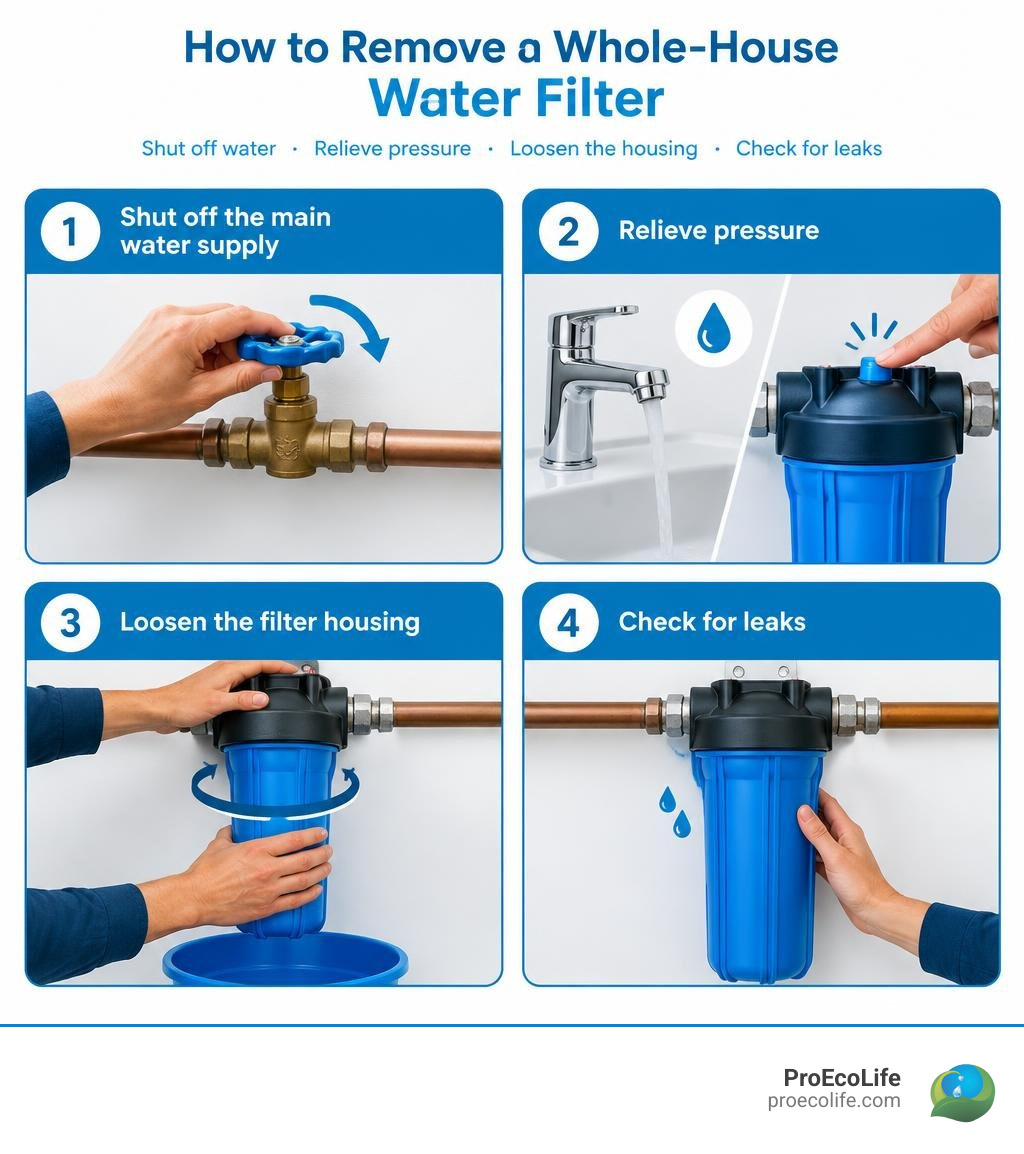
Attempting to unscrew a housing under active pressure is hazardous and virtually impossible, as line pressure binds the threads completely.

First, technicians locate the home’s main water shut-off valve. In older neighborhoods like Edison Park or Jefferson Park, this valve is typically found in the basement near the front foundation wall where the main copper pipe enters from the street meter. In suburban homes around Niles or Skokie, it may be in a utility closet or near the water heater. The valve must be closed completely.
Next, the nearest downstream cold-water fixture—such as a basement utility sink or an outdoor hose bib—is opened until flow ceases completely.
If the filter head features a pressure-relief button on top, depressing it vents trapped air and residual pressure. For systems with an integrated bypass manifold, rotating the inlet and outlet valves to the closed position isolates the filtration canister while keeping water available to household plumbing.
Professional Tools for Servicing Filter Housings
When a factory plastic spanner wrench is missing, warped, or slipping around the canister ribs, certified technicians use specialized strap wrenches designed specifically for composite plumbing fixtures.
Professional strap wrenches distribute turning force evenly around the entire circumference of multi-stage filter housings. This uniform contact prevents localized stress points that could otherwise crack or deform the composite housing under high torque.
Need Clean, Safe Water at Home?
Get a free water test at your home or business. We install and service whole-house filtration and PEL75 reverse osmosis systems across Chicagoland. We also take select projects in Wisconsin and Indiana.
Book a Free Water TestCall (312) 889-8888Safe Methods to Loosen a Seized or Stuck Housing
Plastic sumps require a delicate balance of firm torque and gentle handling. Applying excessive, uneven force using metal pipe wrenches or channel lock pliers can warp or fracture the canister, resulting in immediate plumbing failure.
When viewed from the bottom of the filter looking up toward the ceiling, the housing turns counter-clockwise to loosen (standard right-hand thread). Because technicians often work beside or above the unit, maintaining proper orientation is essential to avoid accidental overtightening.
The table below outlines the primary leverage techniques, their safety profiles, and professional applications:
| Method | Tool Applied | Grip Mechanism | Risk Level | Application Profile |
|---|---|---|---|---|
| Professional Strap Wrench | Reinforced rubber or nylon strap | Full-circumference friction | Very Low | Seized sumps with dry or swollen O-rings |
| Dual-Wrench Counter-Torque | Matched plumbing strap wrenches | Opposing force on head and sump | Low | Installations with unanchored copper lines |
| Controlled Thermal Expansion | Regulated warm air circulation | Thermal differential on outer threads | Low to Moderate | Mineral-crusted threads in cold basements |
| Standard Spanner Wrench | Molded factory spanner | Rib engagement notches | Moderate | Routine filter cartridge replacements |
| Metal Pipe Wrenches | Hardened steel jaw wrenches | Direct tooth bite on canister | High (Not Recommended) | Poses severe risk of cracking plastic sumps |
Breaking Vacuum Lock When Servicing Filter Housings
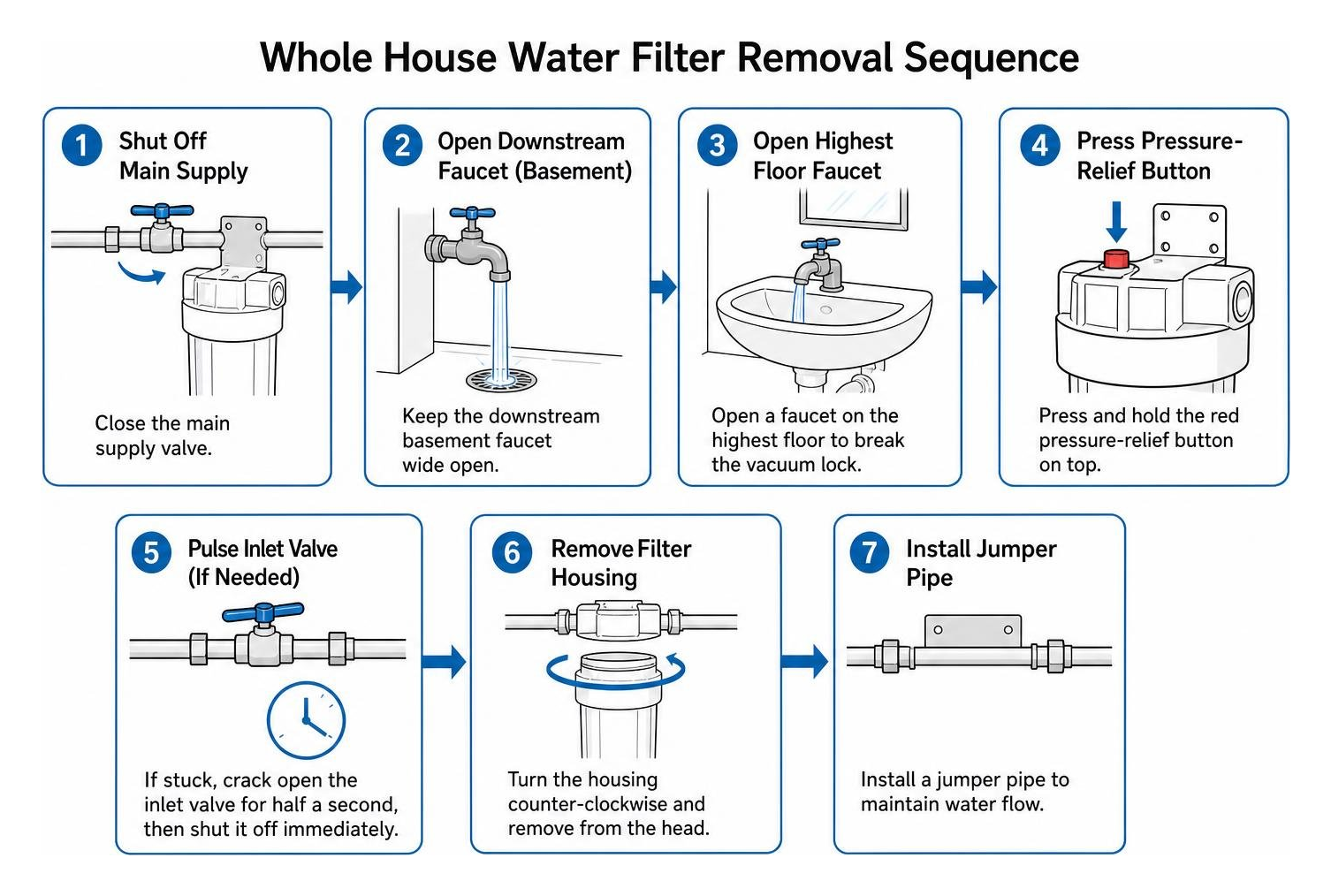
When water lines are isolated, a hydraulic vacuum lock can form inside the sealed housing, holding the sump in place even when external gauge pressure reads zero.
To equalize internal pressure safely:
- The main water supply must remain completely shut off.
- The lowest downstream faucet is kept open.
- An upper-floor fixture is opened to vent the vertical water column and allow air into the system.
- The housing’s pressure-relief valve is depressed to equalize internal atmospheric pressure.
Once the vacuum seal is broken, the housing can be turned smoothly using proper plumbing tools.
Controlled Thermal Expansion and Professional Leverage
When hard water mineral deposits bond the plastic threads, controlled thermal application may help break the mineral seal. Warming the outermost threaded collar slightly allows the outer plastic to expand away from the inner threads.

Plumbing professionals apply gentle, indirect heat evenly around the threaded collar without concentrating temperature in a single area. Open flames, propane torches, or industrial heat guns must never be used, as excessive heat permanently compromises the structural integrity of composite plastics.
With the overhead plumbing securely braced to prevent twisting the copper lines, counter-clockwise torque is applied smoothly until the mineral seal releases.
Need Clean, Safe Water at Home?
Get a free water test at your home or business. We install and service whole-house filtration and PEL75 reverse osmosis systems across Chicagoland. We also take select projects in Wisconsin and Indiana.
Book a Free Water TestCall (312) 889-8888Step-by-Step Procedure for Removing Whole House Water Filter Systems
Whether servicing a stuck filter housing for routine cartridge replacement or completely removing whole house water filter setups during plumbing upgrades, following a structured process protects your home’s plumbing infrastructure.
Handling Filter Media and Housing Components
Once the housing turns freely, the heavy, water-filled sump must be supported from the base. A standard 20-inch high-capacity housing filled with water and saturated filter media can weigh upwards of 15 to 25 pounds.
The sump is carefully lowered away from the mounting bracket and placed inside a utility bucket. The spent cartridge can then be removed and examined. In older areas with aging infrastructure, sediment cartridges frequently trap rust flakes, silt, and pipe scale.
The rubber O-ring is inspected for flat spots, cracks, or stretching. During professional reassembly, technicians apply a light coating of certified food-grade silicone lubricant to ensure a watertight seal and prevent future thread seizing.
Professional Line Bridging and Bypass Configuration
If a whole-house filtration unit is permanently decommissioned or temporarily removed for system upgrades, the plumbing gap must be bridged by a licensed plumber.
- Integrated Bypass Systems: Systems equipped with a 3-valve bypass manifold allow isolation of the filtration unit while keeping household water flow active through the bypass line.
- Professional Jumper Pipe Installation: If the filter was plumbed directly in-line, a certified technician cuts and installs an appropriate copper or PEX jumper pipe, securing all connections to meet local plumbing codes.
- Controlled Repressurization: The main shut-off valve is opened slowly to repressurize the plumbing grid gradually, preventing water hammer shocks to household appliances.
- Leak Verification: All joints and connections are closely inspected over time to confirm there is no weeping or pressure loss.
Homeowners evaluating whether their current system requires upgrading can benefit from identifying water quality issues with professional testing.
Common Servicing Mistakes to Avoid
Avoiding common installation and servicing missteps helps prevent costly pipe repairs:
- Skipping Total Depressurization: Attempting to force a housing open before relieving line pressure can strip plastic threads or crack the mounting cap.
- Using Petroleum-Based Lubricants: Petroleum products degrade Buna-N and EPDM rubber O-rings, causing them to swell and fail. Only food-grade silicone lubricant should be used.
- Applying Unopposed Torque: Turning a stuck housing without bracing overhead pipes can twist copper joints, potentially causing concealed leaks.
- Overtightening Upon Reassembly: Filter sumps rely on radial O-ring compression rather than extreme thread torque. Overtightening damages the seal and causes future seizing.
- Ignoring Flow Rate Requirements: Sizing filtration properly for household demand is essential; never losing water pressure with proper high-flow systems ensures consistent performance across multiple fixtures.
Frequently Asked Questions About Stuck Filter Housings
Which direction turns a stuck filter housing to loosen it?
When looking at the filter unit from the bottom up toward the ceiling, the housing turns counter-clockwise to loosen (standard right-hand thread). Viewing the unit from above can make the direction appear reversed, which often leads to accidental overtightening. Technicians always verify rotation from the base of the canister.
Can lubricants like WD-40 be used to loosen stuck filter threads?
No. Penetrating oils, WD-40, and petroleum-based lubricants should never be applied to potable water filter housings. Petroleum compounds degrade composite polymers, ruin rubber O-rings, and introduce toxic residues into the drinking water supply. Mineral binding is addressed through professional pressure relief and controlled mechanical leverage.
What should be done if the pressure relief button is jammed?
If a pressure relief button is jammed by mineral scale, depressurization can be achieved through household plumbing fixtures. Shutting off the main water valve and opening both the lowest and highest cold-water faucets in the home drains the vertical water column and vents the lines naturally.
Conclusion
Safely servicing or removing a stuck whole house water filter housing comes down to proper depressurization, steady leverage, and careful workspace preparation. By understanding how vacuum locks and mineral buildup affect plumbing components, you can manage routine cartridge changes or system removals without damaging your pipes.
At ProEcoLife, we have served homeowners across Chicago and the surrounding communities since 2014. Founded by Karol Dolega, our mission is to ensure every family enjoys clean, great-tasting water free from local contaminants. Whether you are dealing with lead concerns from aging service lines in Norwood Park, Jefferson Park, and Edison Park, or dealing with hard well water and mineral scale in Park Ridge, Des Plaines, Niles, Skokie, Glenview, Arlington Heights, or Morton Grove, our team provides tailored treatment solutions.
Our comprehensive product line includes our advanced PEL75 9-Stage RO System, whole-house filtration platforms, specialized Well Water Conditioning, dedicated Shower Filter Systems, and high-capacity Commercial Water Filtration Systems. Many homeowners notice a dramatic improvement in water clarity, taste, and fixture longevity after installing an updated whole house filtration system, though results vary depending on source water chemistry and home plumbing age.
If your filtration housing is damaged, seized, or simply outdated, let our local water experts help you evaluate your home’s setup. Contact ProEcoLife today to schedule a water test at (312) 889-8888 or visit proecolife.com.