Can a Pitcher Water Filter Remove Lead?
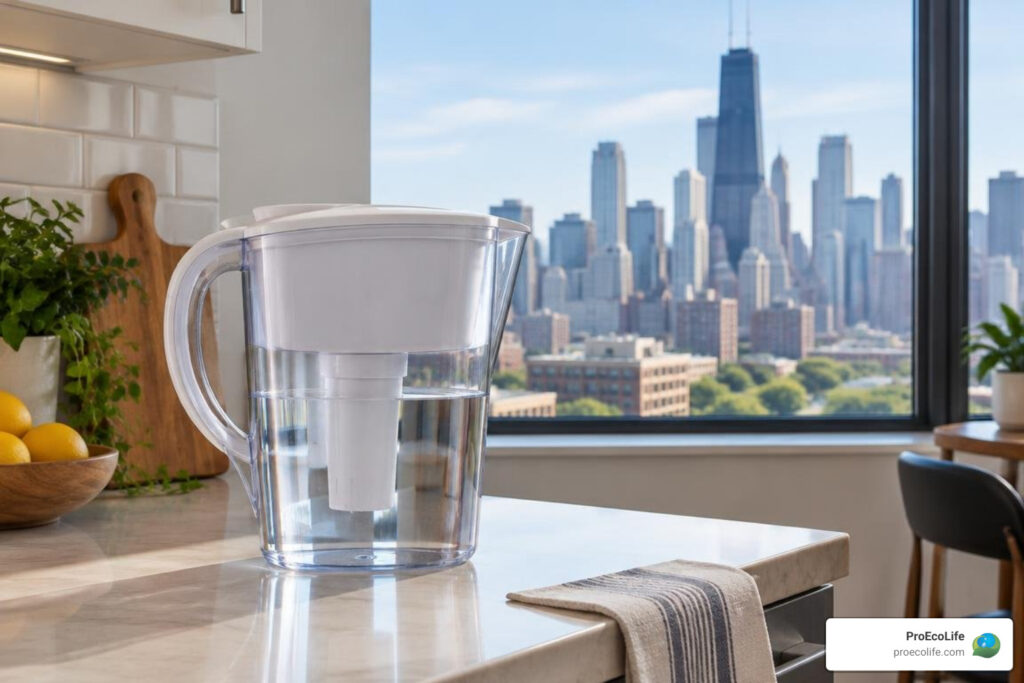
Yes, but the cartridge matters. A pitcher fitted with a certified lead-reduction cartridge is tested to reduce lead by 99% under specified conditions. A standard cartridge is not certified for lead reduction. If lead is your concern, check the cartridge label for NSF/ANSI 53 lead-reduction certification and replace it on schedule.
Chicago’s drinking water comes from Lake Michigan, but lead can enter it through aging service lines and plumbing in older homes. Hard water in the Northwest suburbs can also affect how quickly a pitcher filters. A certified pitcher treats the water you pour through it; it does not fix the pipes supplying your home.
I’m Maciej Spadlo. At ProEcoLife, I use our team’s experience with water testing and filtration to help Chicago homeowners make informed filtration choices for their homes.
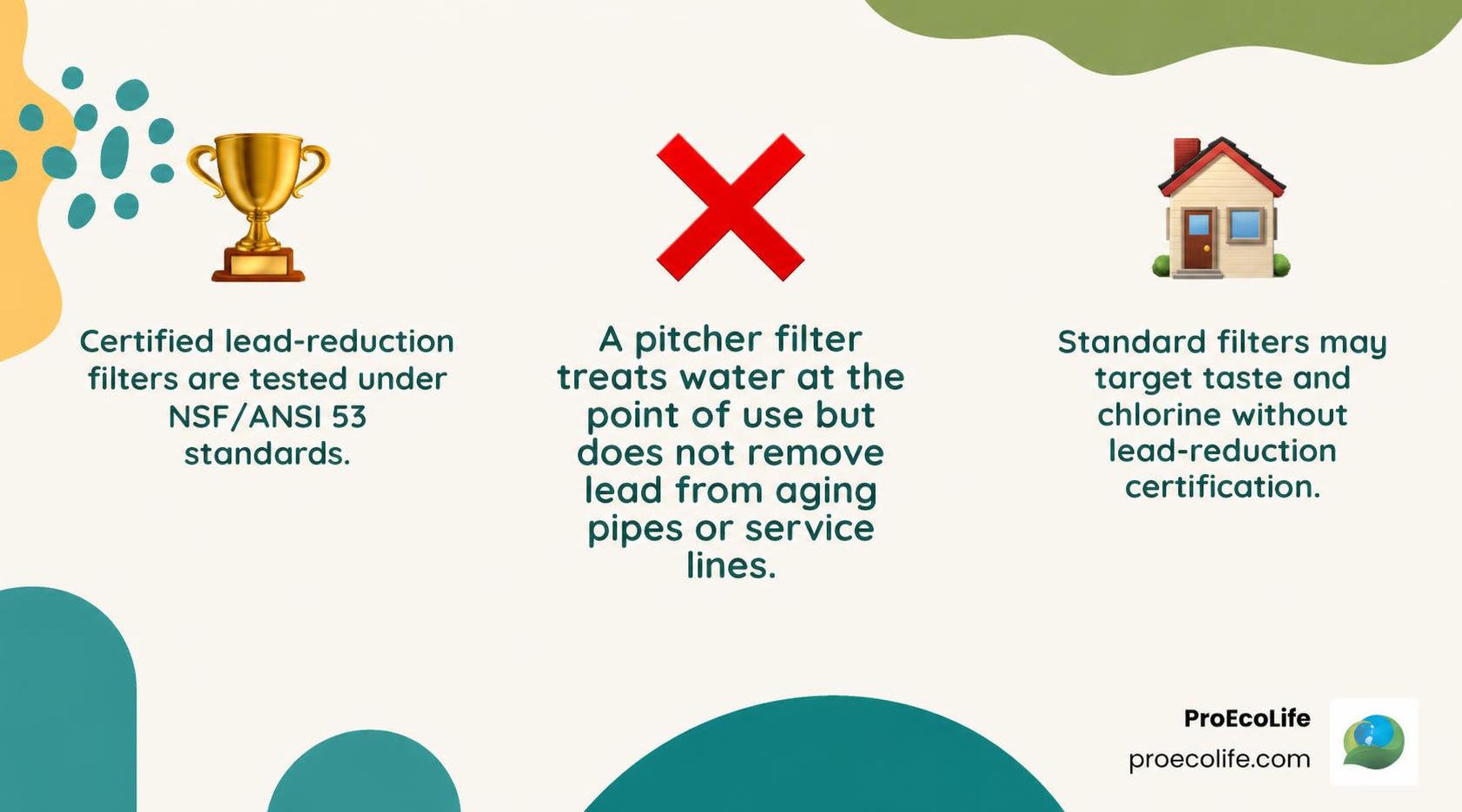
Know your pitcher lead filtration terms:
Evaluating Lead-Reduction Pitcher Filters and Certifications
When choosing a countertop pitcher, understanding filtration standards is critical. The primary certification to look for is NSF/ANSI Standard 53, which verifies health-related contaminant reduction, specifically addressing dissolved and particulate heavy metals.
Standard municipal treatment delivers clean Lake Michigan water to city mains, but older infrastructure causes issues at the property line. In neighborhoods like Jefferson Park, Portage Park, and Norwood Park, lead service lines connect homes to street mains. When water sits stagnant in these service pipes, lead leaches into the flow.
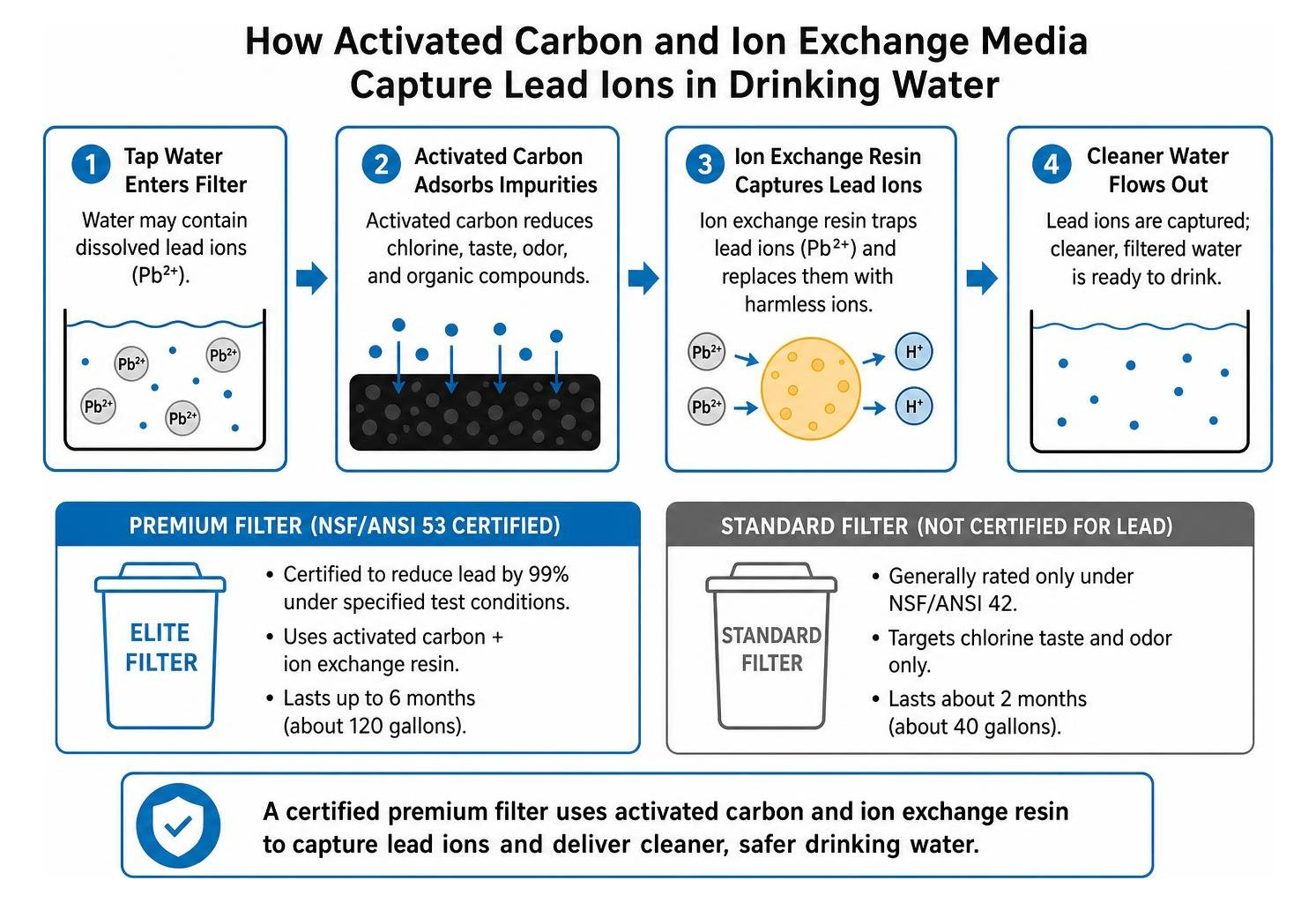
Pitchers certified under NSF/ANSI 53 rely on a blend of activated carbon and specialized ion-exchange resin. The activated carbon adsorbs chlorine and organic compounds, while the ion-exchange resin traps positively charged lead ions, replacing them with harmless ions. This mechanism allows a properly certified pitcher to target concentrations well above the EPA action level of 15 parts per billion (ppb). Residents tracking regional water quality can learn more through municipal safe water initiatives.
Premium vs. Standard Pitcher Filters: Which Performs?
A common mistake among consumers is assuming every replacement cartridge removes lead. Standard pitcher cartridges are generally rated only under NSF/ANSI 42, which targets aesthetic factors such as chlorine taste and odor, leaving heavy metals untouched.
To reduce lead, a certified premium cartridge is required. These advanced cartridges are third-party certified to reduce up to 99% of lead, microplastics, and over 30 other common tap contaminants. They also feature a dense, patented matrix that delivers a lifespan of up to 6 months (approximately 120 gallons), compared to the 2-month (40-gallon) lifespan of standard filters.
Exploring the best water filter pitcher to remove lead can clarify how different filter designs manage heavy metals:
| Performance Feature | Standard Filter Cartridge | Premium Lead-Reduction Filter |
|---|---|---|
| Lead Reduction (NSF 53) | Not certified (0% reduction) | WQA / NSF certified up to 99% reduction |
| Microplastics Reduction | Not certified | Certified reduction |
| Chlorine Taste & Odor (NSF 42) | Certified | Certified |
| Typical Filter Lifespan | 2 months (approx. 40 gallons) | 6 months (approx. 120 gallons) |
| Primary Media Type | Granular activated carbon & basic resin | Dense carbon block with ion-exchange matrix |
Market Trends and Consumer Adoption in 2026
Consumer demand for point-of-use lead filtration has increased across Cook County. Retail sales data indicates that premium lead-reduction replacement cartridges remain top sellers in the pitcher category, averaging 40,000 units sold per month with strong month-over-month growth and maintaining a 4.6-star rating across tens of thousands of verified customer reviews.
A major driver behind this adoption is public awareness of municipal utility challenges. Many suburban communities—including Evanston, Skokie, and Wilmette—regularly update their public works guidance. Homeowners reviewing Lead in Drinking Water – City of Evanston guidelines frequently adopt certified point-of-use units as an initial line of defense.
Need Clean, Safe Water at Home?
Get a free water test at your home or business. We install and service whole-house filtration and PEL75 reverse osmosis systems across Chicagoland. We also take select projects in Wisconsin and Indiana.
Book a Free Water TestCall (312) 889-8888Performance Face-Off: Pitcher Lead Removal and Filtration Metrics
Lead removal efficiency is the most critical metric, but pour speed and taste profiles influence daily compliance. If a pitcher filters too slowly or produces flat-tasting water, household members may bypass the unit and drink straight from the tap.
Independent testing highlights clear differences among leading filter pitcher designs:
| Brand & Filter Model | Lead Reduction Efficiency | TDS Reduction (Tap: 542 ppm) | Filtration Speed | Taste Preference Score |
|---|---|---|---|---|
| Certified Lead-Reduction Pitcher | Up to 99% (NSF 53) | 396 ppm (post-3rd pour) | 1.05 cups / minute | 83% preference |
| Alternative Lead-Reduction Model | Up to 99% (NSF 53) | 511 ppm (post-3rd pour) | 0.80 cups / minute | 69% preference |
| 5-Stage Demineralizing Pitcher | Up to 99% (NSF 53) | 0 ppm | 0.80 cups / minute | 60% preference |
| Unfiltered Tap Water | 0% reduction | 542 ppm | Instant | 51% preference |
According to sales data and independent market research, including industry reports on pitcher filter retail trends, leading pour-through units hold strong consumer appeal largely due to their balance of flow rate and mineral retention. In comparative evaluations such as multi-filter performance testing, testers noted that filters stripping all minerals can leave water tasting noticeably flat.
Testing a Lead-Reduction Pitcher Filter Against Tap Contaminants
In controlled trials starting with tap water at 542 parts per million (ppm) of Total Dissolved Solids (TDS), a certified lead-reduction cartridge lowered readings to 396 ppm by the third pour. Rather than stripping every dissolved mineral, it targets hazardous heavy metals and volatile organics while allowing naturally occurring, harmless minerals like calcium and magnesium to pass through.
This selective filtration is why the pitcher scored an 83% taste preference in blind panels—substantially higher than totally demineralized alternatives. However, for households dealing with multi-contaminant profiles, exploring comprehensive heavy metal defense options ensures both safety and balanced taste across all kitchen taps.
Need Clean, Safe Water at Home?
Get a free water test at your home or business. We install and service whole-house filtration and PEL75 reverse osmosis systems across Chicagoland. We also take select projects in Wisconsin and Indiana.
Book a Free Water TestCall (312) 889-8888Real-World Limits and Municipal Filter Programs
Countertop pitchers provide accessible drinking water filtration, but municipal findings show the scale of local infrastructure challenges. In Chicago, municipal water quality studies identified that 7.1% of metered homes tested above the EPA lead action level of 15 ppb. This prompted city programs to distribute certified lead-filtering pitchers and cartridges to qualifying residents.
Relying entirely on a pitcher requires strict adherence to daily maintenance and flushing routines:
- Flush interior plumbing for several minutes following six or more hours of stagnation.
- Use only cold water for pitcher filtration, as hot water leaches lead from pipes at higher rates.
- Clean pitcher reservoirs weekly to prevent biofilm accumulation.
For families seeking broader protection, reviewing the best home water filters for total lead removal explains how dedicated under-sink and whole-home systems handle high consumption demands.
When Pitchers Fall Short for Whole-Home Protection
While a certified lead-reduction cartridge helps reduce lead in poured drinking water, pitcher designs present distinct practical limitations:
- Volume Bottlenecks: A family consuming water for cooking, coffee, pet hydration, and baby formula can quickly outpace a 10-cup reservoir.
- Sediment Loading: In older areas like Forest Glen, Niles, and Edison Park, construction and main work can shake loose iron and pipe scale. This sediment can prematurely clog pitcher media, slowing filtration speeds well below 1.05 cups per minute.
- Suburban Hardness: In Northwest suburbs such as Arlington Heights, Des Plaines, Mount Prospect, and Buffalo Grove, elevated mineral hardness can exhaust ion-exchange resin faster than normal wear schedules predict.
- Unfiltered Fixtures: Pitchers do not treat water used for brushing teeth, washing produce, or showering.
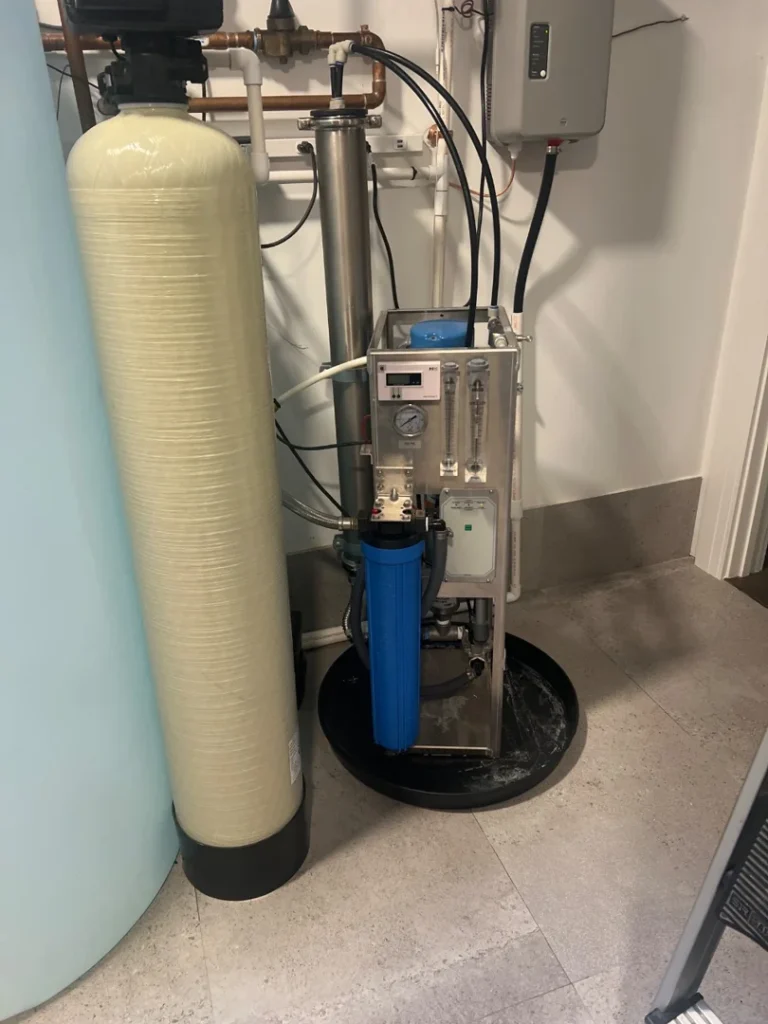
Since 2014, ProEcoLife founder Karol Dolega has developed solutions specifically engineered for these regional conditions. Our multi-stage setups—such as the PEL75 9-Stage Reverse Osmosis System, Whole House Filtration, Shower Filter System, Well Water Conditioning, and Commercial Water Filtration Systems—address lead, heavy metals, chlorine, and hardness at the point of entry and dedicated drinking taps.

Frequently Asked Questions About Pitcher Water Filters
Does a standard pitcher filter remove lead from tap water?
No. Standard white pitcher cartridges are certified under NSF/ANSI 42 strictly for aesthetic chlorine, taste, and odor reduction. They lack the specialized ion-exchange media required to capture dissolved heavy metals. Using a standard cartridge for lead defense creates a false sense of security. Always verify that the replacement cartridge displays NSF/ANSI 53 certification for lead reduction.
How often should you replace a certified pitcher filter for lead protection?
A certified lead-reduction cartridge is rated for up to 120 gallons, which translates to roughly six months of typical household use. However, if your home in Park Ridge, Glenview, or Morton Grove has higher sediment or mineral content, the cartridge may need earlier replacement. Adhering to the manufacturer’s indicator light prevents water channeling, where unfiltered tap water bypasses exhausted filter media.
Can boiling water remove lead if you do not have a certified filter?
No. Boiling tap water does not remove lead. Because water evaporates during the boiling process while lead remains behind, boiling actually concentrates the heavy metal. The safest immediate practice is to flush the faucet with cold water for several minutes and filter it through an NSF 53 certified device, or install a dedicated point-of-use system.
Conclusion: Choosing the Right Lead Defense for Your Home
Countertop pitchers equipped with certified lead-reduction cartridges provide an accessible starting point for reducing lead in drinking water. However, managing aging utility pipes, mineral hardness, and whole-home water needs often requires a more robust approach, such as a whole-house filtration system or a dedicated reverse osmosis unit tailored to your plumbing.
Protect your household with water filtration engineered for local plumbing and source water. Contact ProEcoLife to schedule a professional water test by calling (312) 889-8888 or visiting proecolife.com today.