

Is a High-Flow Whole House Filter Right for a Chicago Home?
A high-flow whole house filter treats domestic water at its point of entry where the main supply line enters the residence. These point-of-entry setups are designed to reduce particulate sediment, rust flakes, chlorine taste, and chemical odors throughout the property. Choosing a high-flow model helps minimize pressure drops when several fixtures run at the same time. However, it does not increase incoming municipal water pressure, and specific lead reduction capabilities depend strictly on specialized filter cartridges with third-party verified performance.
That distinction is crucial for property owners across the Chicagoland area. Water sourced from Lake Michigan travels through miles of legacy distribution mains and aging residential service pipes in older city neighborhoods. Meanwhile, stubborn mineral hardness remains a persistent challenge across the Northwest suburbs. While a point-of-entry filter may help resolve aesthetic complaints, chemical disinfectants, and suspended debris, standard sediment and carbon cartridges do not remove dissolved calcium or magnesium hardness minerals.
I’m Maciej Spadlo, writing from ProEcoLife’s extensive field experience evaluating residential water quality across northern Illinois. In this guide, I examine how point-of-entry cartridge filtration performs against the real-world conditions local homeowners encounter, covering flow dynamics, media selection, and operational boundaries.
How High-Flow Whole-House Filters Protect Water Pressure and Flow
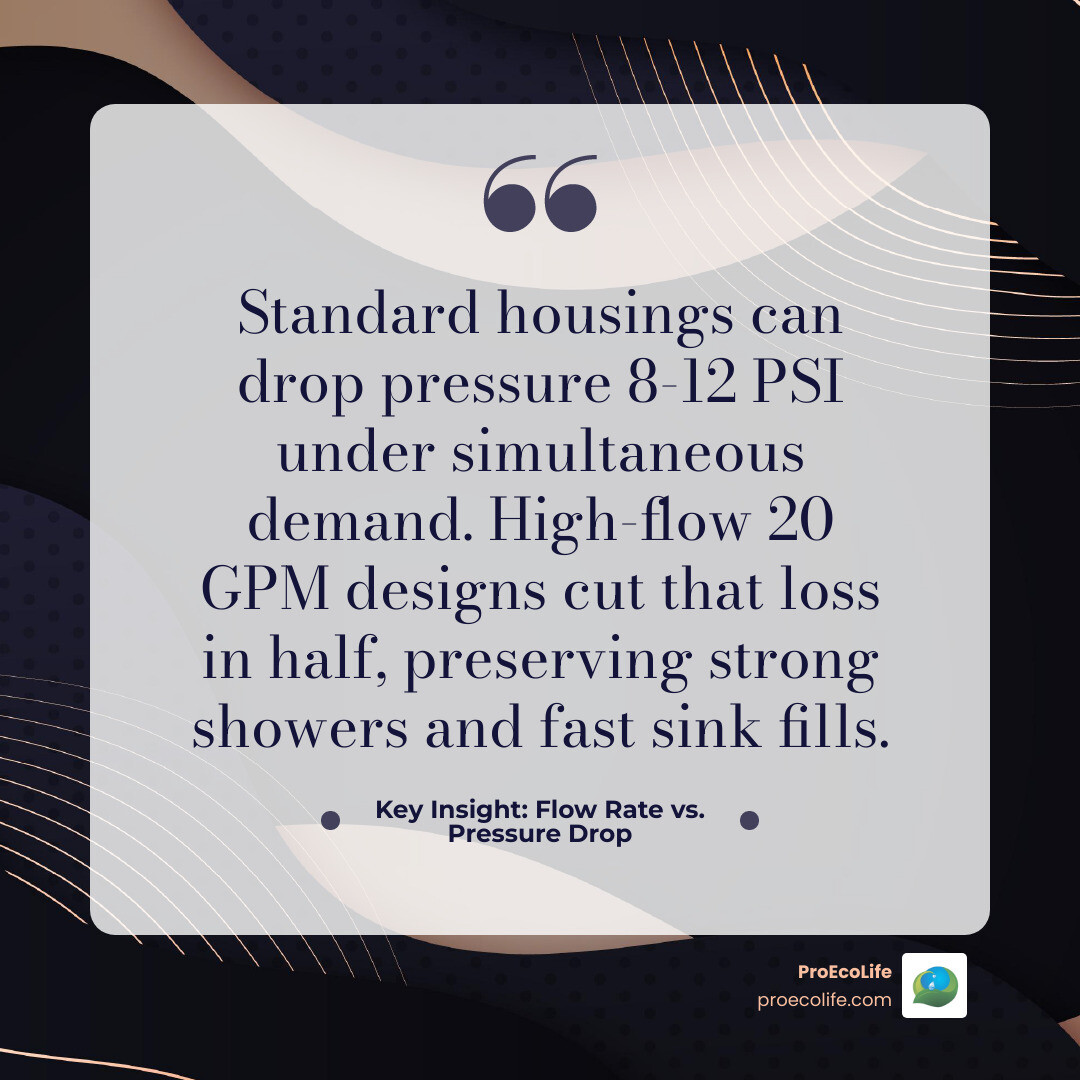
When connecting water treatment equipment directly to a home’s primary incoming water main, maintaining proper domestic hydraulic balance is essential. A frequent frustration reported by local property owners who install undersized point-of-entry systems is a sudden loss of shower pressure or a sluggish kitchen stream whenever an automatic appliance cycles on. High-flow filtration equipment addresses this common issue through deliberate hydrodynamic design and generously sized internal flow paths.

Every mechanical filtration setup creates a measurable degree of friction loss as pressurized water travels through tightly packed media layers. Standard residential units with narrow ports act as restrictive bottlenecks, choking total flow during busy morning routines when multiple family members use water simultaneously. Heavy-duty point-of-entry systems feature wide ports and expanded internal pathways rated for substantial delivery volumes. Ensuring your residential plumbing accommodates 20 GPM flow rate requirements allows multi-bath residences across Park Ridge, Niles, and Des Plaines to maintain steady dynamic pressure across simultaneous taps, showers, and laundry cycles.
Engineering High Flow Rates with Oversized Filter Housings
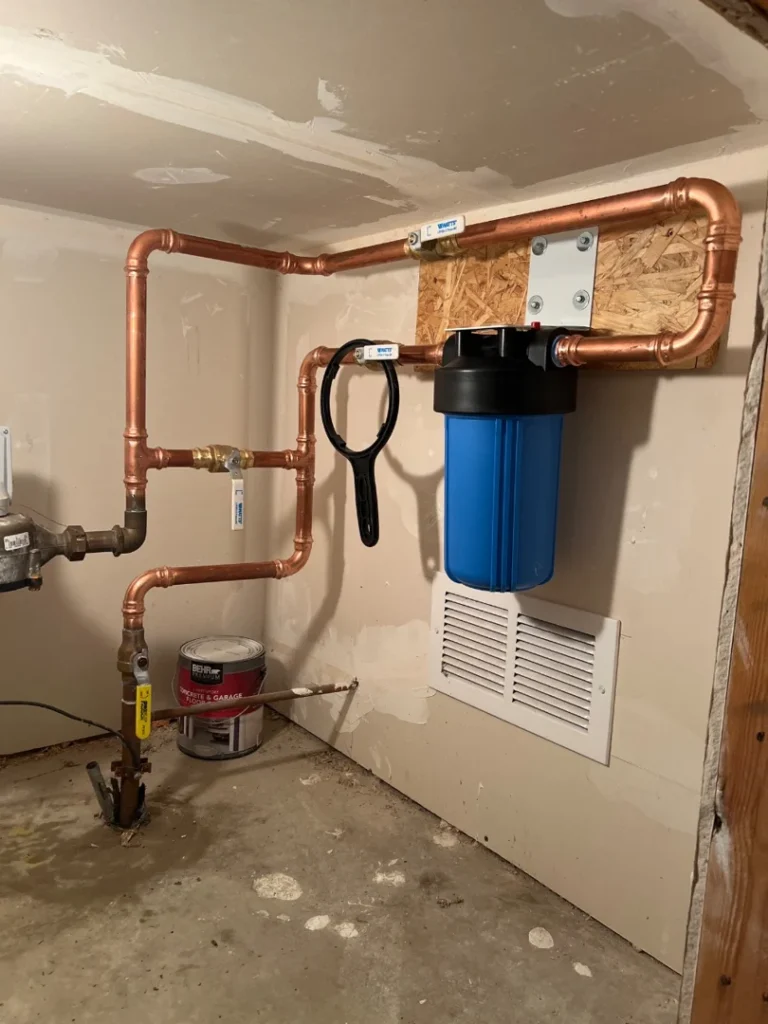
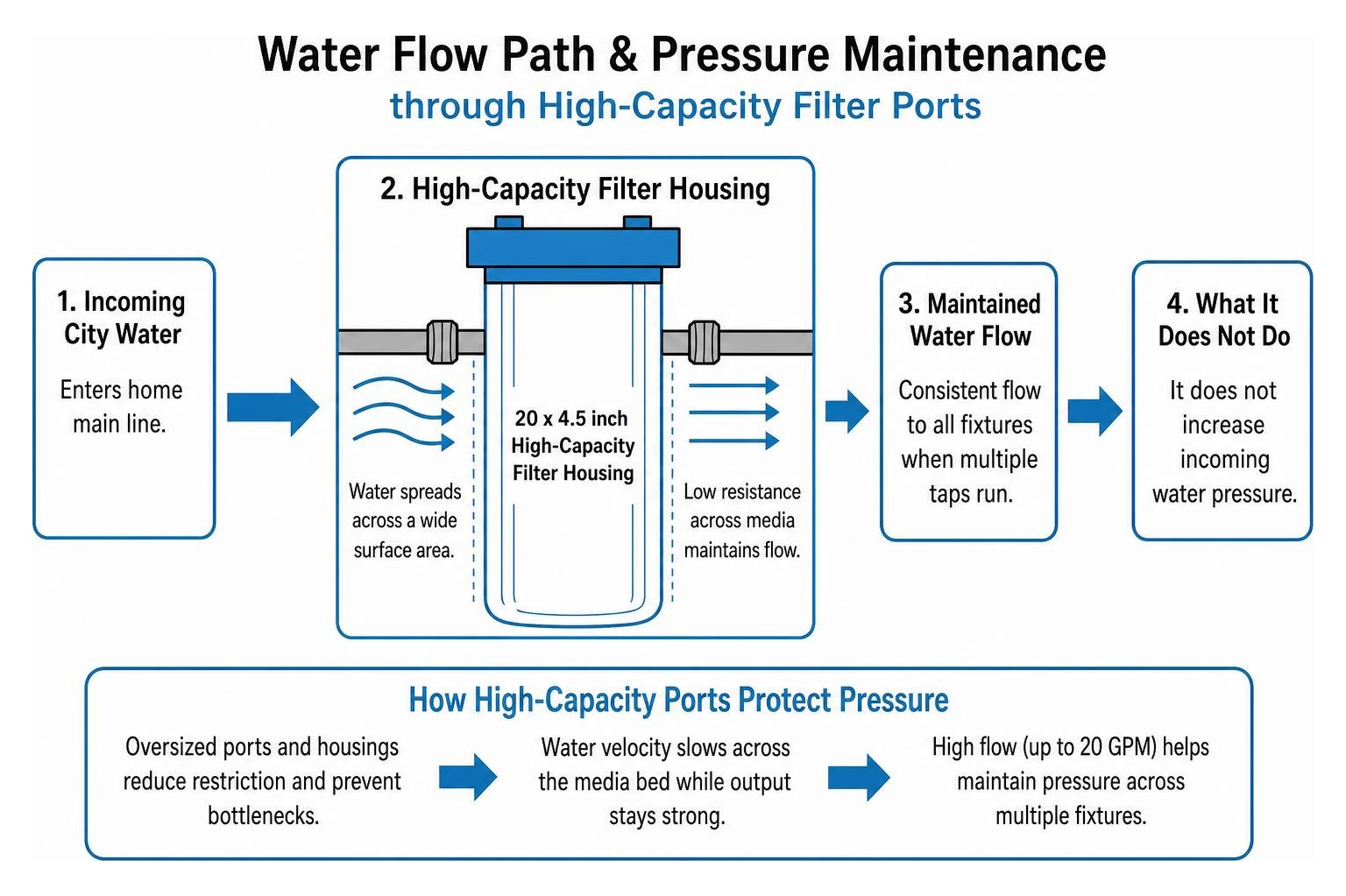
The foundation of consistent high-flow performance is spacious, heavy-duty filter sumps. Instead of compact residential canisters that blind quickly when exposed to seasonal main flushes, heavy-duty point-of-entry filtration utilizes 20 x 4.5 inch high-capacity filter housings. These oversized blue or clear sumps provide an expansive physical surface area for liquid contact, drastically reducing resistance across the cartridge surface.
Distributing incoming water across a wider cross-sectional area slows fluid velocity through the media bed without decreasing downstream supply volume. Advanced dual-gradient polypropylene sediment cartridges capture coarser rust and sand on their looser outer layers while trapping finer micro-sediments inside their dense interior core. This progressive depth filtration prevents rapid surface clogging, supporting flow rates up to 20 gallons per minute (GPM) while extending cartridge longevity between service intervals.
Evaluating Contaminant Removal in Whole-House Filters
Point-of-entry filtration treats general household water for bathing, cleaning, and appliance protection. On municipal supplies, reducing chlorine and disinfectant byproducts is often the primary goal. Premium catalytic carbon and high-density coconut shell carbon blocks are engineered to remove up to 95% of free chlorine taste and chemical odors. This provides a cleaner showering experience while protecting delicate rubber fixtures, water heater components, and plumbing seals from oxidative corrosion.
Beyond basic chlorine treatment, high-capacity systems capture suspended rust particles, pipe scale, silt, and volatile organic compounds (VOCs). When fitted with specialized media blends, select configurations also address heavy metal contamination, achieving up to 99% lead reduction under specified testing standards. For homeowners reviewing specialized whole-home lead reduction options, matching media capabilities to verified water test results is vital, especially when dealing with vintage plumbing lines common in Norwood Park, Edison Park, and Jefferson Park.
Need Clean, Safe Water at Home?
Get a free water test at your home or business. We install and service whole-house filtration and PEL75 reverse osmosis systems across Chicagoland. We also take select projects in Wisconsin and Indiana.
Book a Free Water TestCall (312) 889-8888Comparing Multi-Stage Filtration Designs and Housing Configurations
Whole-home water filtration is never a universal, off-the-shelf solution. Divergent architectural layouts, family usage patterns, and localized supply chemistries require carefully matched cartridge stages. While many homeowners begin their research by searching for a home master whole house filter, choosing the right setup ultimately depends on matching housing diameters and media stages to local water chemistry and peak fixture demand.

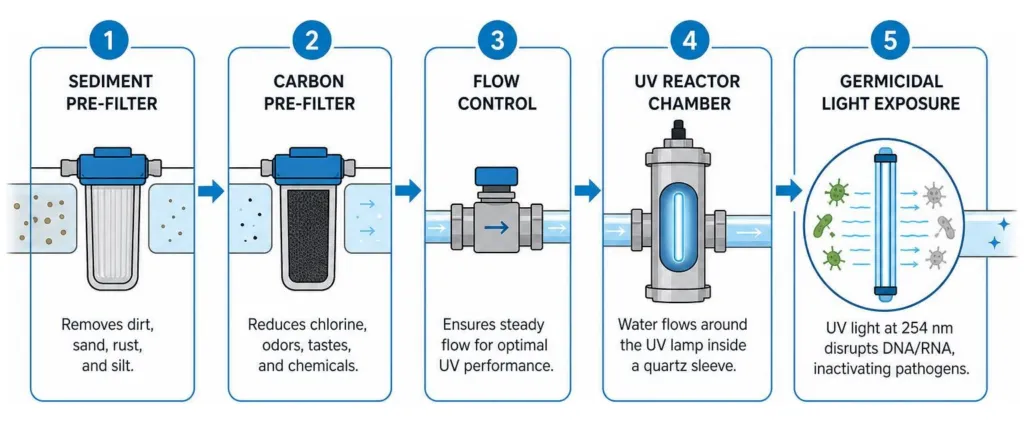
Most premium systems use multi-stage cartridge filtration connected in series to target distinct groups of contaminants progressively. The initial stage uses graded-density polypropylene to strain out heavy suspended solids, grit, and pipe scale. This critical pre-filtration stage shields downstream carbon blocks from prematurely loading with physical dirt. Subsequent stages employ dense radial-flow carbon blocks or specialized kinetic degradation fluxion (KDF) redox alloys, which target chlorine, heavy metals, hydrogen sulfide, and dissolved iron before water reaches household fixtures.
| Configuration Stage | Primary Contaminant Focus | Flow Rate Capability | Typical Service Life | Best Suited Application |
|---|---|---|---|---|
| 2-Stage System | Sediment, Particulate Rust, Chlorine, Odors | 15–20 GPM | Up to 12 Months | 1–3 Bathroom Municipal Homes |
| 3-Stage System | Sediment, Heavy Metals, Lead, VOCs, Iron | 15–20 GPM | Up to 12 Months | 3+ Bathroom Homes, Well Water, Aging Pipes |
Is a Whole-House Filter Right for Your Household Size?
Selecting an appropriately sized system depends on peak concurrent demand rather than total monthly water volume. A classic single-story brick bungalow in Skokie with one or two bathrooms operating a shower and washing machine simultaneously has very different flow requirements than an expansive four-bathroom residence in Glenview or Arlington Heights running multiple luxury shower heads, lawn irrigation, and kitchen appliances at once.
Municipal water piped from Lake Michigan carries chemical disinfectants and minor pipe scale, whereas private well supplies in outlying suburban pockets often introduce dissolved iron, hydrogen sulfide odors, and heavy sediment. Correctly sizing filter housings and matching stage media to your fixture count prevents noticeable pressure drops during peak morning usage hours.
Maintenance Cycles and Professional Cartridge Replacement
High-capacity cartridges generally provide a functional service life of up to 12 months, though real-world longevity depends on household consumption and raw water clarity. As trapped particulates fill the cartridge pores, internal resistance rises. Differential pressure gauges installed before and after the filter bank provide clear visual confirmation when media replacement is due.
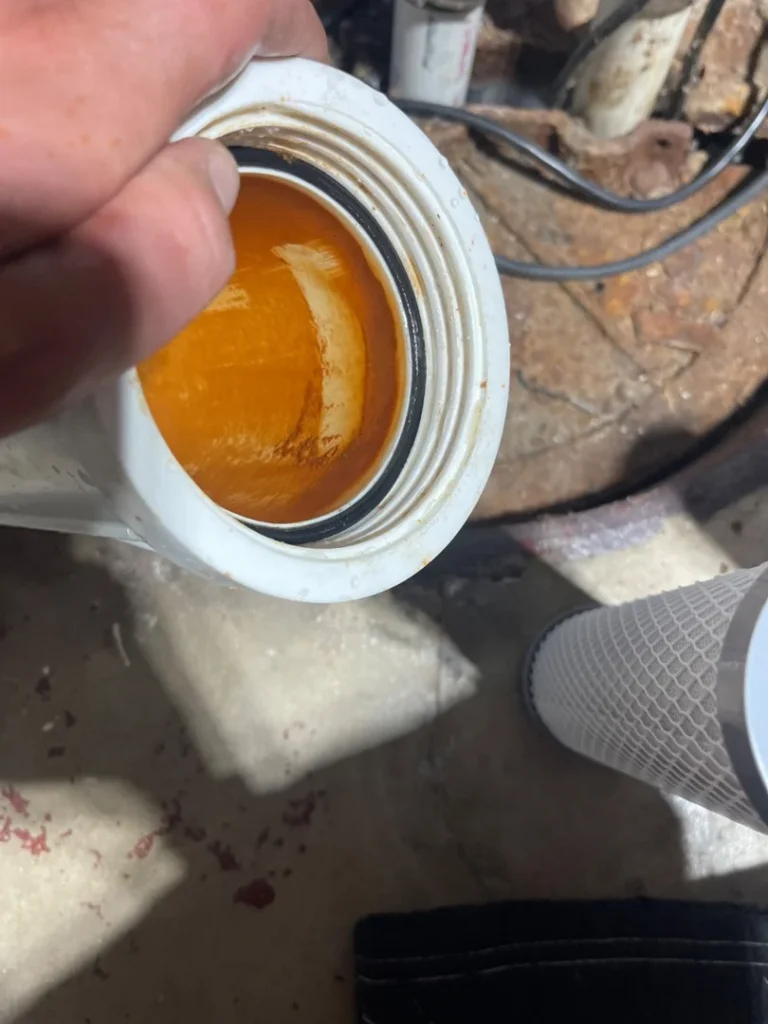
Replacing dense, water-saturated 20-inch filter elements requires proper housing depressurization, sanitary cleaning of internal sump bowls, and careful O-ring inspection to prevent micro-leaks. Incorporating custom whole house filtration ensures that bypass loops, isolation valves, and monitoring gauges are correctly configured, allowing certified technicians to perform routine annual maintenance quickly and safely.
Need Clean, Safe Water at Home?
Get a free water test at your home or business. We install and service whole-house filtration and PEL75 reverse osmosis systems across Chicagoland. We also take select projects in Wisconsin and Indiana.
Book a Free Water TestCall (312) 889-8888Understanding System Limitations for Municipal and Well Water Sources
While high-flow point-of-entry cartridge systems provide substantial benefits for household water aesthetics, recognizing their functional limits is critical for comprehensive home protection.
Mechanical sediment filters and activated carbon blocks do not alter total dissolved solids (TDS) and cannot remove dissolved calcium or magnesium ions responsible for hard water scale. In suburban communities like Morton Grove, Buffalo Grove, and Wheeling, hard well or blended municipal water requires dedicated ionic conditioning rather than standard physical filtration alone. Furthermore, standard cartridge housings are not certified to eliminate live microbiological pathogens from untreated private wells.
To achieve complete water security, many local homeowners find that pairing main-line physical filtration with high-purity point-of-use purification delivers the best overall results. Since 2014, ProEcoLife founder Karol Dolega has engineered comprehensive local treatment strategies tailored to the unique water conditions of northeastern Illinois. Our product lineup includes our proprietary PEL75 9-Stage RO System for pristine drinking water, dedicated Whole House Filtration hardware, specialized Well Water Conditioning units, inline Shower Filter System equipment, and robust Commercial Water Filtration Systems for demanding applications.
Frequently Asked Questions About Whole-House Filtration
How often should sediment and carbon cartridges be replaced?
Most large-format cartridges maintain reliable performance for approximately 12 months under standard municipal water conditions. However, homes with higher daily occupancy or properties in older neighborhoods with aging utility mains carrying elevated particulate loads may require service sooner if incoming water pressure begins to decline.
Can point-of-entry filters remove heavy metals like lead?
Standard carbon and sediment cartridges do not reliably remove dissolved heavy metals from water. Capturing lead requires specialized, high-density extruded carbon blocks or advanced media specifically tested for heavy metal extraction. Because results vary based on pipe age and water chemistry, pairing whole-home filtration with an under-sink reverse osmosis system is widely recommended for dedicated drinking water taps.
Will a whole-home system resolve hard water mineral scaling?
No. Standard whole-house cartridge systems trap suspended physical particles and adsorb chlorine, but dissolved hardness minerals remain unaffected. Resolving limescale buildup on plumbing fixtures and protecting water heaters requires dedicated water softening or salt-free conditioning systems designed specifically to treat dissolved calcium and magnesium.
Conclusion
Installing a high-flow point-of-entry water treatment system helps protect residential plumbing, reduces chemical odors during showers, and preserves balanced water pressure across demanding household fixtures. Because water characteristics vary significantly between Lake Michigan municipal supplies and mineral-dense suburban wells across the Chicago area, a thorough professional evaluation of your home’s unique plumbing and water chemistry is the most reliable first step toward cleaner water.
Contact ProEcoLife to schedule a water test at (312) 889-8888 or visit proecolife.com to explore the ideal water treatment setup for your home.