
Is Your Chicago Tap Water Safe? What You Need to Know Before You Test
If you’ve been searching for a Chicago water testing kit, here’s the fastest path to getting one:
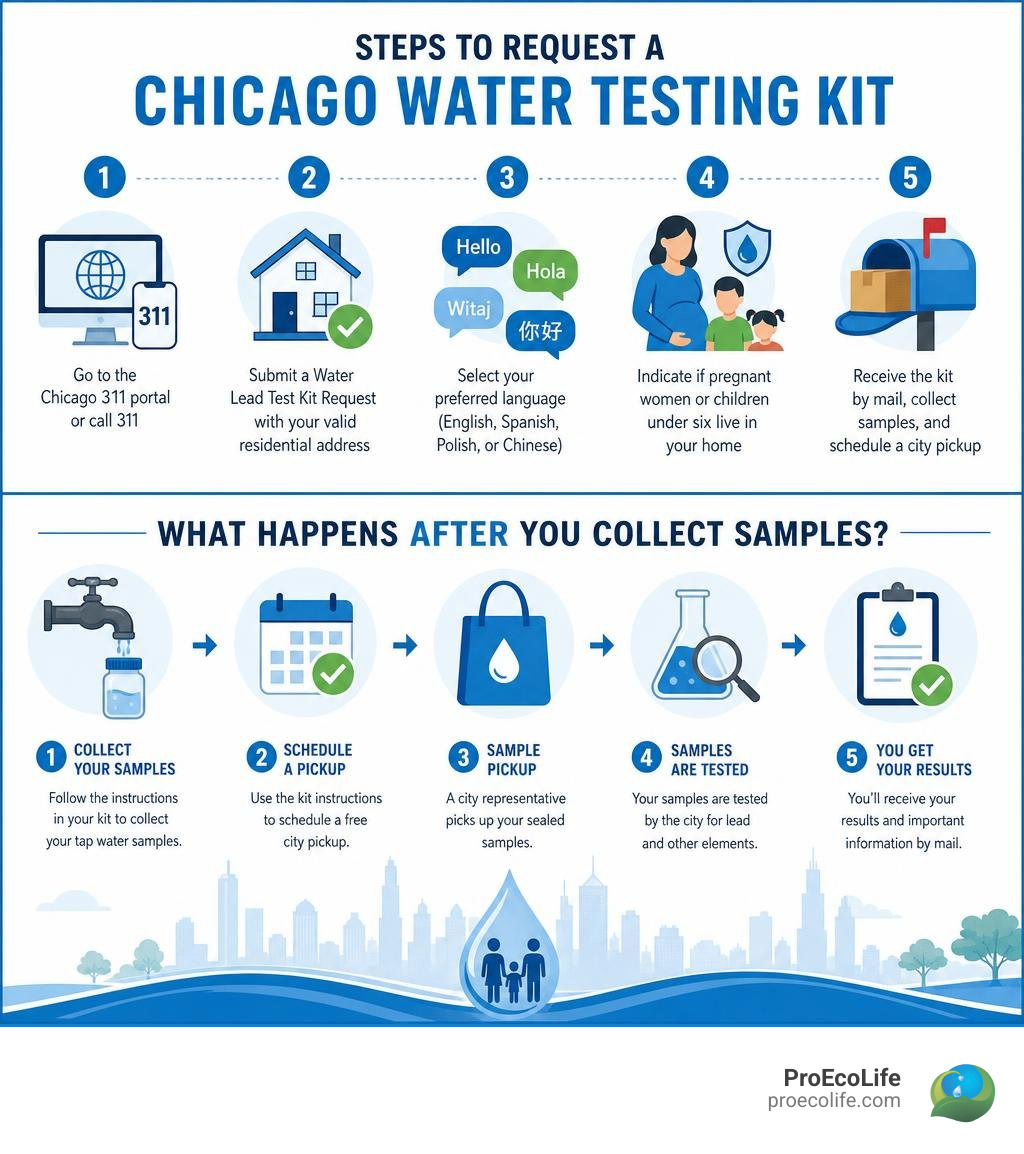
How to get a free Chicago water testing kit:
- Go to the Chicago 311 portal or call 311
- Submit a Water Lead Test Kit Request with your valid residential address
- Select your preferred language (English, Spanish, Polish, or Chinese)
- Indicate if pregnant women or children under six live in your home
- Receive the kit by mail, collect samples, and schedule a city pickup
Chicago’s drinking water starts clean. It’s sourced from Lake Michigan and treated at two of the largest water treatment plants in the world. In fact, the Chicago Department of Water Management performs over 600,000 water quality tests per year — and there is zero detectable lead when water leaves the treatment facilities.
So where does the lead come from?
It comes from the pipes inside your home and the service line connecting your house to the city main. Chicago has an estimated 400,000 lead service lines still in the ground — one of the highest concentrations of any city in the country. If your home was built before 1986, there’s a strong chance your service line is lead.
That’s why testing matters. You can’t see lead, smell it, or taste it. Testing is the only way to know.
Chicago water testing kit terms you need:
Understanding Chicago’s Lead Infrastructure and the Need for Testing
As a team of local water experts serving the Chicago area since 2014, we have witnessed how aging infrastructure impacts families across our local neighborhoods. The reality is that Chicago’s historical building codes actually mandated the use of lead service lines for single-family homes and two-flat buildings right up until the federal ban in 1986.
This means that if you live in older homes on Chicago’s Northwest Side—including classic bungalows in Norwood Park, Edison Park, or Jefferson Park—or in neighboring suburbs like Park Ridge, Niles, and Des Plaines, your plumbing is highly likely to rely on a lead service line.
While the Chicago Department of Water Management (DWM) purifies and delivers almost one billion gallons of safe, clean drinking water daily, that water must travel through miles of underground pipes before it reaches your faucet. When water rests in lead pipes for hours, lead can leach into your supply. This phenomenon is at the heart of Chicago’s Risky Water Problem, making regular testing an essential step for peace of mind.
Need Clean, Safe Water at Home?
Get a free water test at your home or business. We install and service whole-house filtration and PEL75 reverse osmosis systems across Chicagoland. We also take select projects in Wisconsin and Indiana.
Book a Free Water TestCall (312) 889-8888How to Request and Use Your Chicago Water Testing Kit
To help residents identify lead risks, the Chicago Department of Water Management offers a testing program in collaboration with the city’s 311 services. Any resident living in a home or apartment within city limits can request a municipal water testing kit.
To start the process, you can submit an online request directly via the Chicago 311 portal. The city prioritizes requests based on the presence of vulnerable populations, such as pregnant women or young children under the age of six. Once your request is processed, the city will mail a multi-bottle testing kit directly to your home. For a deep dive into the official city testing program, you can read our guide on the DWM Water Test Kit: How to Test Your Chicago Tap Water.
Step-by-Step Guide to Collecting Samples with Your Chicago Water Testing Kit
When your chicago water testing kit arrives, you will find three color-coded collection bottles, a detailed instruction sheet (available in English, Spanish, Polish, and Chinese), and a return shipping box. To ensure the certified laboratory receives accurate data, you must follow the collection steps precisely.

- Observe the Stagnation Period: Do not run any water in your home for at least 6 hours before testing. We highly recommend doing this first thing in the morning or immediately upon returning home from work. This includes avoiding toilet flushes, showers, and running appliances like dishwashers.
- First Draw (Bottle 1): Place the first bottle directly under your kitchen cold-water faucet. Turn on the cold water and fill the bottle to the designated fill line. Do not let the water run before filling. This sample represents the water that has been sitting in your immediate faucet fixture.
- Second Draw (Bottle 2): Immediately fill the second bottle without turning off the tap. This sample captures water from your interior household plumbing.
- Third Draw (Bottle 3): Keep the water running. After a designated flushing period (usually 3 minutes of continuous flow), fill the third bottle. This sample represents water drawn directly from the outdoor service line connecting your home to the city main.
- Schedule Pickup: Pack the bottles securely back into the shipping box. Place the box in a visible, accessible location on your porch or entryway, and contact 311 or use the online portal to schedule a direct pickup by DWM staff.
Checking Your Pipes with the Chicago Service Line Inventory
Before your test results even arrive, you can investigate your home’s pipes using the city’s online Service Line Inventory map. This database allows residents to search by address or water account number to view the recorded material of their service line.
If the database lists your service line as “Suspected Lead” or “Lead,” you should treat your water with extra care. You can also cross-reference municipal records with independent mapping tools. Learn how to navigate these public records by reading our walkthrough on How to Use the WBEZ Lead Pipe Map to Check Your Chicago Home.
Interpreting Your Results and City Mitigation Programs
Once the laboratory analyzes your samples, you will receive a report detailing the lead concentration in parts per billion (ppb). The Environmental Protection Agency’s (EPA) action level for lead in drinking water is 15 ppb. However, health organizations agree that there is no truly safe level of lead exposure, especially for developing children.
Historically, the city’s MeterSave program—which installed water meters in residential properties—was suspended because research showed that approximately 7.1% of homes receiving new water meters experienced a temporary spike in lead levels exceeding the 15 ppb threshold. The physical disruption of cutting into lead service lines can dislodge lead particulates directly into the home’s water stream.
If your certified test results show lead levels above 15 ppb, you may qualify for a free water filter pitcher set with replacement cartridges from the city. Additionally, under current municipal guidelines, 100% of individual apartments within two-flat buildings qualify for these filter sets. To understand what these numbers mean for your family’s health, consult A Practical Guide to Chicago Lead Water Levels.
LeadCare Illinois for Schools and Child Care Facilities
The risk of lead exposure is not limited to residential properties. Licensed child care facilities and schools across Illinois are legally mandated to test their drinking water. The LeadCare Illinois program provides free testing kits, professional training, and mitigation support specifically for these educational spaces.
If lead contamination is identified in a licensed facility, LeadCare Illinois helps administrators develop a comprehensive mitigation plan and provides reimbursement options for plumbing upgrades and faucet replacements to protect young children.
Need Clean, Safe Water at Home?
Get a free water test at your home or business. We install and service whole-house filtration and PEL75 reverse osmosis systems across Chicagoland. We also take select projects in Wisconsin and Indiana.
Book a Free Water TestCall (312) 889-8888Immediate Steps to Reduce Lead Exposure in Your Home
If you suspect or confirm that your home has a lead service line, there are several immediate, practical actions you can take to lower your exposure risk:
- Flush Your Taps: If your water has been sitting unused for 6 hours or more, run your cold-water tap for at least 5 minutes before using it for drinking or cooking. You can also flush your lines by running water-intensive appliances like your washing machine, taking a shower, or running your dishwasher.
- Use Only Cold Water: Always use cold tap water for drinking, cooking, and preparing baby formula. Hot water dissolves lead much more quickly than cold water, increasing the rate of leaching from your pipes.
- Clean Faucet Aerators: Unscrew the aerator screens on your faucets regularly. Silt, sediment, and tiny lead particles can become trapped in these screens, continuously contaminating your water as it passes through. Clean them out with water and a small brush every few months.
- Replace Old Brass Fixtures: Older brass faucets, valves, and fittings can contain trace amounts of lead. Replacing them with modern, certified lead-free fixtures can significantly reduce first-draw lead levels.
For more helpful daily habits to keep your household safe, read our guide on How to Keep Your Drinking Water Safe.
Long-Term Protection with Advanced Filtration
While flushing your taps and cleaning aerators are helpful temporary measures, they do not address the root cause of the issue. For true peace of mind and continuous protection, installing a high-quality water filtration system is the most reliable long-term solution.
At ProEcoLife, founded by Karol Dolega, we have been helping Chicago families protect their homes since 2014. We understand the unique challenges of local water, from the lead infrastructure on the Northwest Side to the heavy hard water scale commonly found in Northwest suburbs like Skokie, Glenview, Arlington Heights, and Morton Grove.

Our proprietary water treatment systems are engineered to handle these exact conditions:
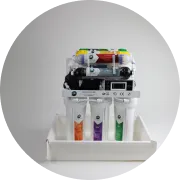
- PEL75 9-Stage RO System: Our premier under-sink reverse osmosis system utilizes a multi-stage filtration process designed to target lead, heavy metals, chlorine, and microscopic contaminants, delivering pristine drinking water straight to your tap.
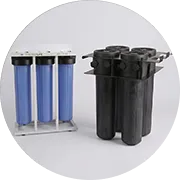
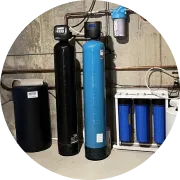
- Whole House Filtration: These comprehensive systems protect your entire home by filtering water at its point of entry, ensuring that every shower, bath, and tap is supplied with cleaner water.
- Shower Filter System: Protect your skin and hair from chlorine and synthetic chemicals with our specialized shower filtration units.
- Well Water Conditioning & Commercial Water Filtration Systems: We also provide specialized solutions for commercial properties and residential wells throughout the surrounding suburbs.
To find out how we can help you secure your household water supply, explore our Reliable Water Testing Service in Chicago for Your Home or Business.
Frequently Asked Questions
How Do I Request a Free Chicago Water Testing Kit?
You can request a municipal water testing kit by calling Chicago 311 or visiting the online portal. You will need to provide a valid residential address within the city limits. The instructions are available in English, Spanish, Polish, and Chinese. If you would like to explore professional testing options with us, you can learn more about how to Test Your Water for a wider range of contaminants.
Does the City’s Corrosion Control Completely Eliminate Lead Risk?
No. Although the Chicago Department of Water Management adds orthophosphate during the purification process to coat the interior of lead pipes and prevent leaching, this barrier is not foolproof. Physical vibrations from nearby water main construction, street paving, or water meter installations can easily crack this protective coating, releasing lead into your water. To learn more about common tap contaminants, read Is Your Water Contaminated?.
What Should I Do If My Test Shows Lead Levels Above 15 ppb?
If your water test results exceed 15 ppb, stop using unfiltered tap water for drinking, cooking, or preparing baby formula. You should contact the Chicago Department of Water Management to report the results and check your eligibility for city-provided filter programs. For long-term safety, we recommend consulting with a water treatment professional to discuss robust filtration options. You can also read about how similar issues affect surrounding areas in our article on Lead Found in Bartlett Drinking Water.
Conclusion
Since 2014, our founder Karol Dolega and the entire team at ProEcoLife have been dedicated to providing families across Chicago and the Northwest suburbs with high-quality water solutions. From Norwood Park and Edison Park to Niles and Glenview, we believe that every home deserves clean, safe, and delicious water.
Don’t leave your family’s health to chance. If you are concerned about lead service lines or want to learn more about our advanced filtration systems, we invite you to check out the best whole house water filtration systems in Chicago for crystal clear water.
Take the first step toward pure, clean water today. Contact ProEcoLife to schedule a professional water test at (312) 889-8888 or visit proecolife.com.