
What Every Chicago Homeowner Should Know About Reverse Osmosis and Water Purification
Reverse osmosis and water purification go hand in hand — and if you’re a Chicago homeowner, understanding how this technology works could matter more than you think.
Here’s the quick answer:
Reverse osmosis (RO) is a water purification process that forces water through a semi-permeable membrane with pores as small as 0.0001 microns. That membrane blocks up to 99% of dissolved contaminants — including lead, PFAS, arsenic, nitrates, and heavy metals — while letting clean water molecules pass through. The result is purified drinking water at your tap.
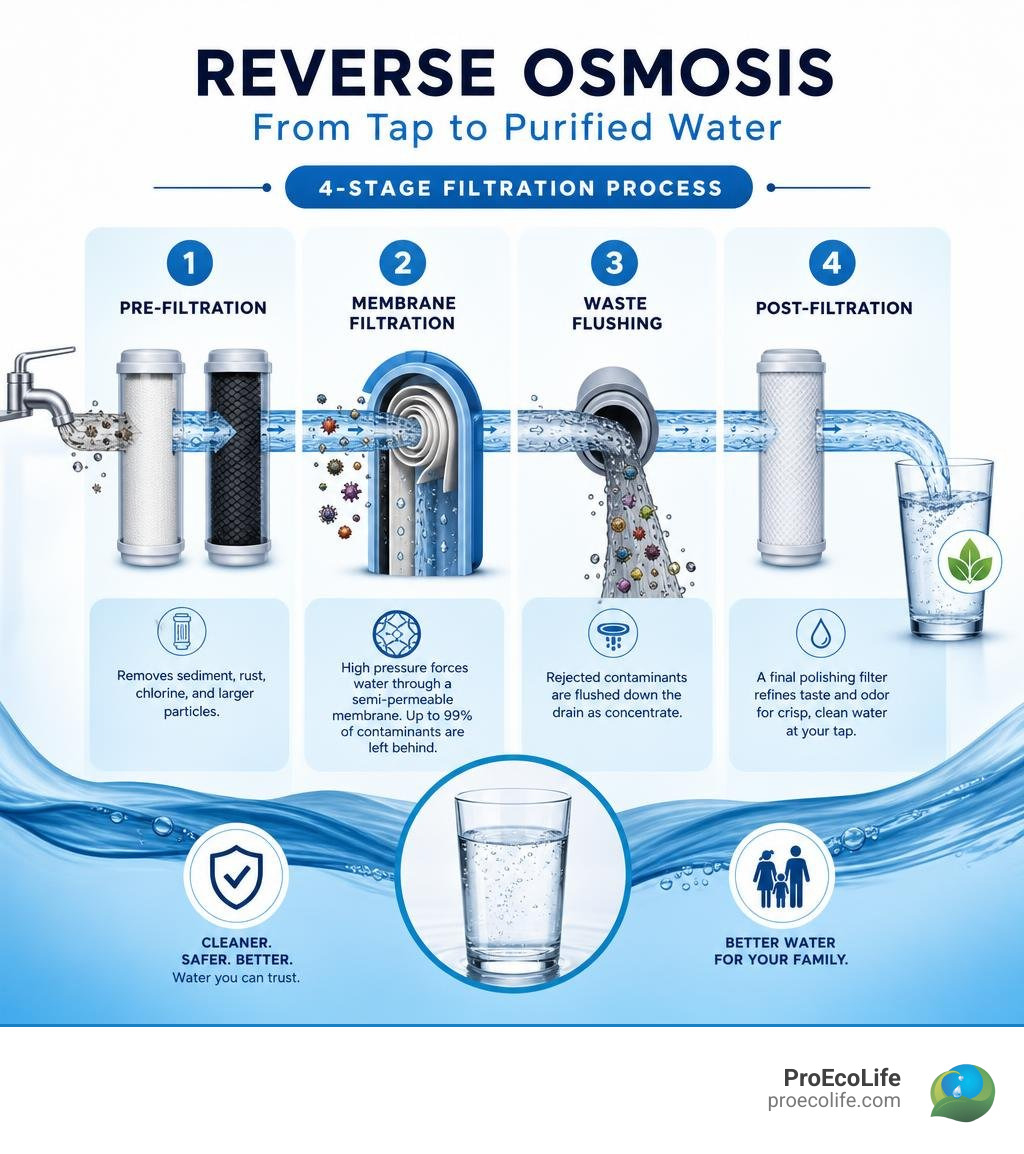
How it works in 4 steps:
- Pre-filtration — Sediment and carbon filters remove larger particles and chlorine before water reaches the membrane
- Membrane filtration — High pressure forces water through the semi-permeable membrane, leaving contaminants behind
- Waste flushing — Rejected contaminants are flushed down the drain as “concentrate”
- Post-filtration — A final polishing filter refines taste and odor before the water reaches your glass
Chicago’s drinking water comes from Lake Michigan — one of the world’s largest freshwater sources. But by the time it travels through aging pipes and old lead service lines into your home, it can pick up contaminants that no municipal treatment plant can fully control at the tap. Neighborhoods like Norwood Park, Edison Park, and Jefferson Park sit on infrastructure that in many cases predates modern plumbing standards.
That’s exactly why so many Chicago-area families are turning to reverse osmosis systems for a final line of defense at the point of use.
This guide walks you through exactly how RO works, what it removes, and what to look for when choosing a system built for Chicago’s specific water challenges.
Reverse osmosis and water purification word guide:
What is Reverse Osmosis and Water Purification?
To understand how a home reverse osmosis system operates, we first have to look at the heart of the technology: the semi-permeable membrane. This membrane is a specialized barrier that acts as an ultra-fine sieve. While standard filters rely on simple physical straining to trap dirt and rust, reverse osmosis operates on a molecular level.
In municipal water treatment, standard filtration is highly effective at clearing out suspended solids, but it struggles with dissolved inorganic compounds, heavy metals, and chemical residues. This is where reverse osmosis step-changes the water purification process. By applying pressure to force water through a nonporous, semi-permeable membrane, we separate clean water from dissolved salts, metals, and complex chemicals. The clean water (known as the permeate) passes through to your faucet, while the concentrated impurities (known as the concentrate or brine) are safely flushed away.
The Science of Osmosis vs. Reverse Osmosis
To truly appreciate this technology, it helps to look at the natural biological process that inspired it. In nature, osmosis is a passive process occurring in all cell-based organisms. When two solutions of different concentrations are separated by a semi-permeable membrane, water naturally flows from the lower solute concentration (fresher water) to the higher solute concentration (saltier water) to equalize the balance.
According to Reverse osmosis – Wikipedia, reverse osmosis is the exact opposite. Instead of letting water flow naturally to dilute a concentrated solution, we apply external mechanical pressure to overcome the natural osmotic pressure. This forces the water molecules to flow in the reverse direction — from the high concentration of contaminants to the low concentration side. Because the semi-permeable membrane relies on solvent diffusion rather than simple physical size exclusion, it blocks dissolved ions, heavy metals, and synthetic chemicals, allowing only pure H2O to cross.
How Pressure Drives Reverse Osmosis and Water Purification
Because we are fighting against natural thermodynamics, reverse osmosis cannot happen passively. It requires applied pressure to force the feed water against the membrane.
The amount of pressure required depends heavily on the concentration of total dissolved solids (TDS) in the incoming feed water:
- Fresh and brackish water typically require operating pressures between 2 and 17 bar (30 to 250 psi).
- Seawater desalination, which must overcome a natural osmotic pressure of approximately 27 bar (390 psi), requires massive industrial pumps operating between 40 and 82 bar (600 to 1,200 psi).
For Chicago homes drawing from the municipal system, our standard pipeline pressure is usually sufficient to run a residential RO system. However, in some Northwest suburbs where municipal or private well water pressures fluctuate, a dedicated booster pump may be integrated into the system configuration to maintain optimal filtration efficiency.
How a Multi-Stage RO System Works Step-by-Step

A high-performing home reverse osmosis system is never just a single membrane. Because the semi-permeable membrane is highly sensitive and fragile, it must be protected by a series of pre-filters. A complete system is designed as a “treatment train,” where each stage prepares the water for the next, maximizing overall system efficiency and extending the lifespan of the delicate membrane.
Pre-Filtration: Protecting the Membrane
The first stages of a multi-stage RO system are dedicated to pre-filtration. Thin-film composite (TFC) membranes, which are the industry standard for high-efficiency residential systems, are incredibly effective but highly vulnerable to chlorine and large sediment particles. Municipal water in Chicago and surrounding suburbs is treated with chlorine or chloramines for disinfection. If chlorine reaches a TFC membrane, it will rapidly oxidize and degrade the polymer material, ruining its filtration capabilities.
To prevent this, we utilize a multi-step pre-filtration process:
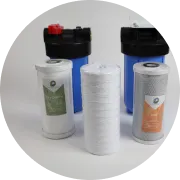
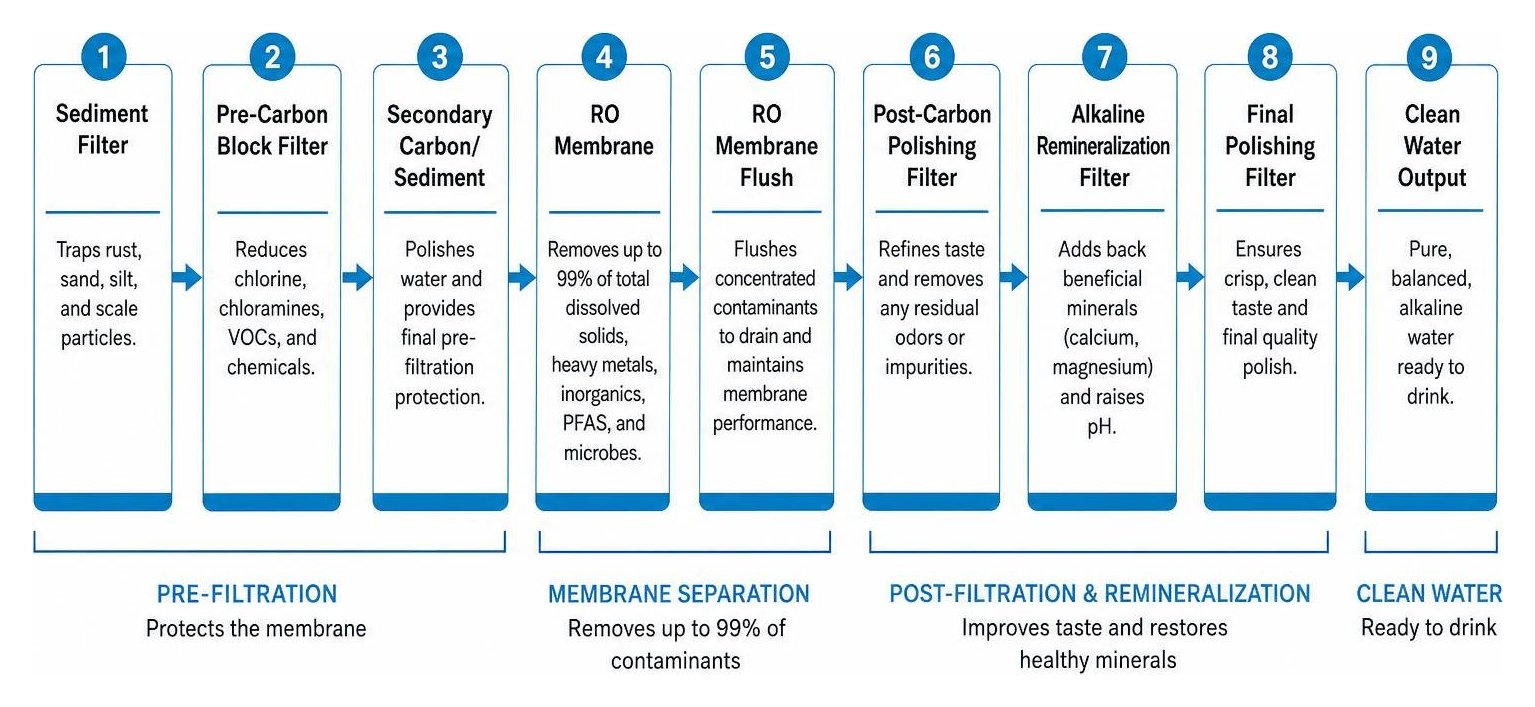
- Sediment Filter: This stage traps physical particulates like rust, sand, silt, and scale that travel through aging iron pipes.
- Pre-Carbon Block Filter: Activated carbon or catalytic carbon chemically adsorbs chlorine, chloramines, and volatile organic compounds (VOCs), protecting the subsequent membrane from chemical attack.
- Secondary Carbon/Sediment Stage: In advanced systems, an additional pre-filter provides a final barrier to ensure zero chlorine or fine sediment bypasses to the membrane.
The Semi-Permeable Membrane: Molecular Separation
Once the pre-filters have cleared the way, the water is forced under pressure through the reverse osmosis membrane. With a microscopic pore size of approximately 0.0001 microns (0.2 nanometers), this stage performs the heavy lifting of molecular separation.
At this stage, the system physically rejects and flushes away a massive list of dissolved contaminants:
- Heavy Metals: Lead, copper, chromium, mercury, and arsenic.
- Inorganic Salts: Nitrates, sulfates, fluorides, and sodium.
- Synthetic Chemicals: PFAS (“forever chemicals”), pesticides, industrial solvents, and pharmaceuticals.
- Microscopic Pathogens: Bacteria, viruses, and pyrogens (protein-based substances from bacteria that can cause fevers).
According to technical standards outlined in the Reverse Osmosis and Nanofiltration, Second Edition M46 manual, RO is recognized as one of the most comprehensive separation technologies available, reducing Total Dissolved Solids (TDS) by up to 99%.
Post-Filtration and Remineralization
After passing through the membrane, the purified water is temporarily stored in a pressurized tank or sent directly to the faucet in tankless systems. Because highly purified water can sometimes taste slightly flat or “hungry” due to the complete removal of minerals, a high-quality residential system does not stop at the membrane.
This is where advanced post-filtration and remineralization come into play. A post-carbon polishing filter removes any residual taste or odor that may have been picked up from the storage bladder. Simultaneously, an alkaline remineralization stage introduces balanced amounts of essential organic minerals like calcium and magnesium back into the water. This raises the pH to a healthy, slightly alkaline level, restoring a crisp, refreshing taste.
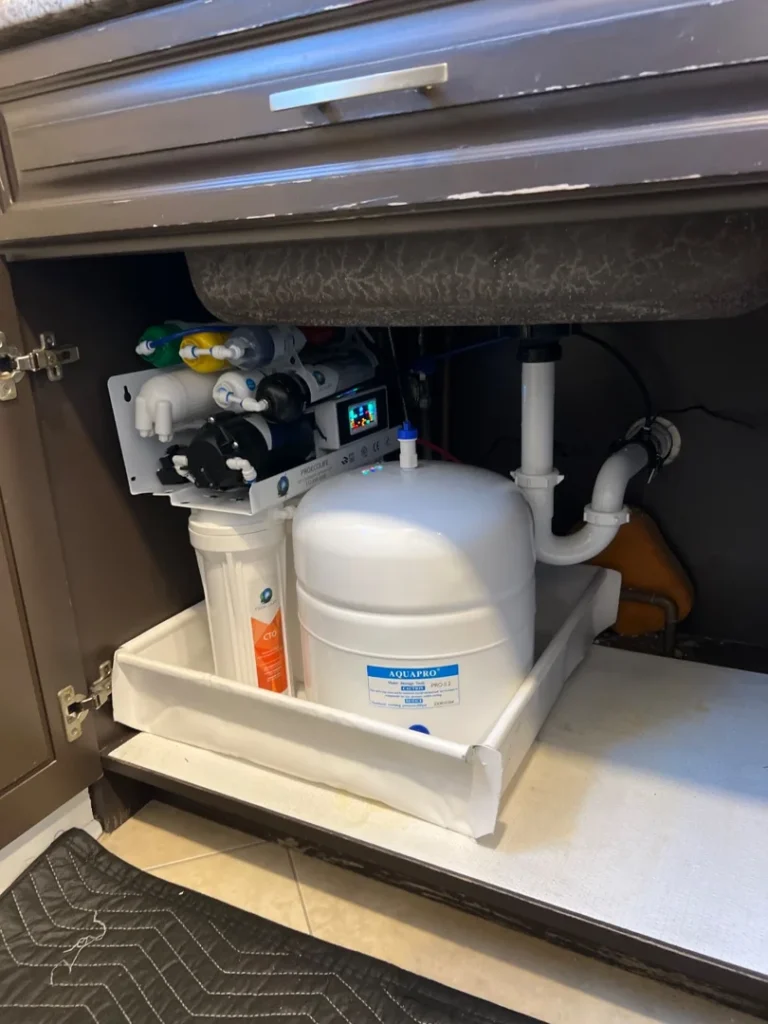
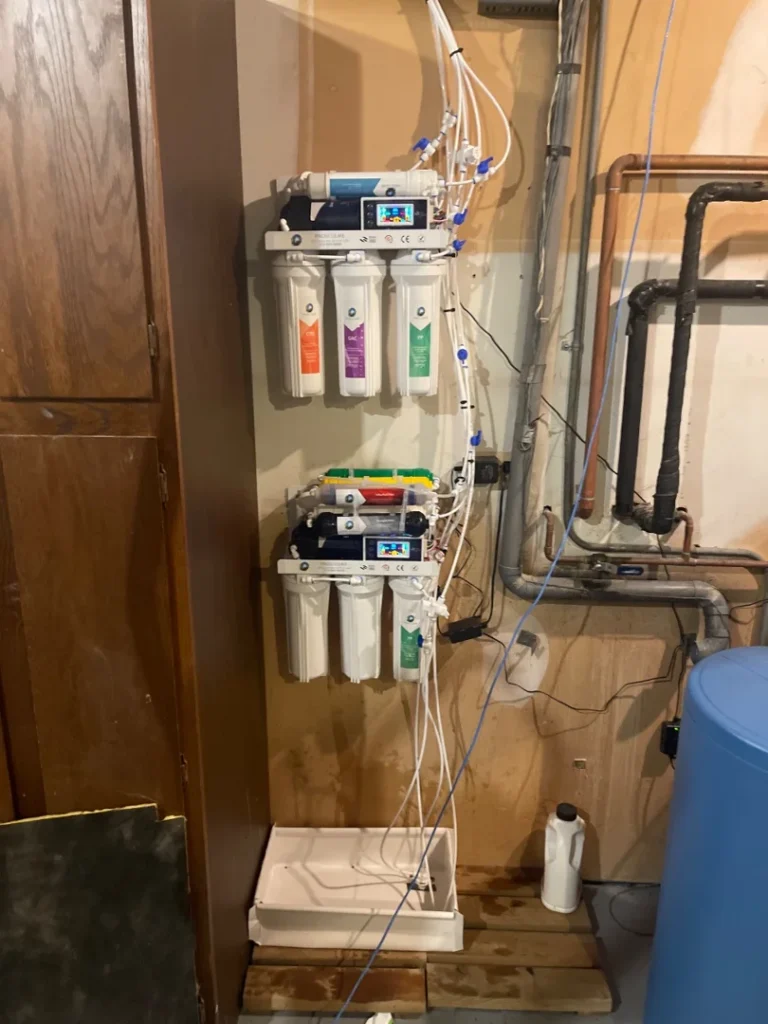
Our proprietary PEL75 9-Stage RO System was designed under the leadership of ProEcoLife founder Karol Dolega to perfect this exact process. By combining multi-stage pre-filtration, high-rejection membrane technology, and a specialized remineralization cycle, we ensure that Chicago-area families receive water that is not only molecularly pure but also optimally balanced for health and taste.
Choosing the Right System for Chicago Homes

When selecting a water purification system, a one-size-fits-all approach does not work. Local water chemistry, the age of your home’s plumbing, and your specific geographic location play a massive role in determining which system configuration will perform best over the long term.
Addressing Chicago Lead and Hard Water Challenges
Chicago and its surrounding suburbs present a unique set of water quality challenges. On one hand, our primary source water from Lake Michigan is of high quality. On the other hand, Chicago has more lead service lines than any other city in the United States. If your home was built before 1986, there is a high probability that the water entering your tap is traveling through lead pipes. Even if the municipal water leaves the treatment plant clean, it can pick up lead at the point of use as it enters your home.
Furthermore, municipal water reports, such as the Park Ridge, IL Water Quality Report 2026, highlight that while local water meets federal standards, the presence of hard water minerals (calcium and magnesium) is highly prevalent in Northwest suburbs like Niles, Des Plaines, Skokie, Glenview, Arlington Heights, and Morton Grove. Hard water can cause scale buildup in home appliances, degrade plumbing, and shorten the lifespan of sensitive RO membranes.
To combat these challenges, we often recommend a comprehensive approach:
- At the Tap: An under-sink reverse osmosis system like the PEL75 to target heavy metals, ensuring you Get The Lead Out How Reverse Osmosis Filters Save Your Tap.
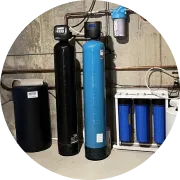
- For the Whole House: Integrating a Whole House Filtration or Well Water Conditioning system to manage hardness and protect your home’s entire plumbing infrastructure, including showers and appliances.
Tankless vs. Traditional Systems
If you are choosing a point-of-use reverse osmosis system, you will generally choose between a traditional tank-based system and a modern tankless system.
Traditional systems store purified water in a pressurized tank containing a rubber bladder. While highly reliable, these tanks take up significant under-sink space and run the minor risk of bacterial growth in the bladder if the system is left stagnant for long periods without regular flushing.
Tankless systems, by contrast, utilize high-capacity membranes (often rated for 400 to 1,200 Gallons Per Day) paired with internal booster pumps to purify water on demand, eliminating the need for a storage tank entirely.
| Feature | Traditional Tank RO Systems | Modern Tankless RO Systems |
|---|---|---|
| Footprint | Requires significant under-sink space (approx. 12″ x 15″ tank) | Compact, space-saving design |
| Water Flow | Relies on tank pressure; flow rate drops as tank empties | Consistent, continuous flow on demand |
| Hygiene | Stagnant water in rubber bladder requires routine flushing | On-demand purification minimizes standing water |
| Wastewater Ratio | Typically higher (3:1 to 5:1 waste-to-pure ratio) | Highly efficient (often 1:1 or 2:1 ratio) |
| Power Requirement | Usually operates on line pressure alone (no electricity) | Requires an electrical outlet to power the internal pump |
The Role of Reverse Osmosis and Water Purification in Modern Homes
A dedicated RO system is the gold standard for drinking and cooking water, but it is most effective when viewed as part of a complete home water wellness strategy.
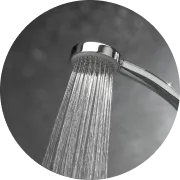
For instance, while an under-sink system provides pristine water for drinking, ice, and cooking, a Shower Filter System can protect your skin and hair from chlorine irritation in the bathroom. For businesses, larger Commercial Water Filtration Systems ensure that restaurants, coffee shops, and offices across the Northwest Side — from Norwood Park and Edison Park to Jefferson Park — can deliver consistent, high-purity water to customers and protect commercial equipment from scale damage.
Frequently Asked Questions About Reverse Osmosis
Investing in a water purification system naturally brings up practical questions about efficiency, health, and ongoing maintenance.
How much water does an RO system waste?
Because reverse osmosis uses water to wash away the rejected contaminants from the membrane, some level of wastewater (concentrate) is a natural part of the self-cleaning process. Traditional, older RO systems could be quite water-intensive, sometimes generating 5 to 10 gallons of reject water for every single gallon of purified water produced.
Fortunately, modern engineering has dramatically improved these ratios. The EPA’s WaterSense standards specify that highly efficient point-of-use RO systems must send 2.3 gallons or less of water down the drain for every gallon of treated water produced. Choosing a highly efficient model can reduce household water use on average by more than 3,100 gallons per year compared to older, inefficient systems.
Does reverse osmosis remove beneficial minerals?
Yes, reverse osmosis is highly non-selective and will remove beneficial minerals like calcium and magnesium alongside harmful heavy metals. However, from a nutritional standpoint, the human body primarily digests organic minerals from food rather than the inorganic minerals found in tap water.
To ensure that your water has a balanced taste and a neutral-to-alkaline pH, our PEL75 system features an active alkaline remineralization stage. This restores a healthy mineral balance post-purification, giving you the best of both worlds: absolute purity and great taste.
How long do RO membranes and filters last?
To keep your system running at peak performance, routine professional maintenance is essential:
- Pre-filters (Sediment & Carbon): Should typically be replaced every 6 to 12 months to protect the membrane from chlorine and sediment fouling.
- Post-carbon Polishing Filters: Should be changed every 12 months.
- Reverse Osmosis Membrane: Typically lasts between 2 to 3 years (and sometimes up to 5 years depending on the hardness and quality of your incoming water).
Using a simple TDS meter during routine service checks allows us to measure the exact filtration efficiency of your membrane, ensuring it continues to reject 95% to 99% of dissolved solids before a replacement is required.
Conclusion
Since 2014, ProEcoLife has been deeply rooted in the Chicago area, helping families and businesses secure clean, safe, and delicious water. We understand the unique challenges of Lake Michigan source water, old lead service lines on the Northwest Side, and hard water in the surrounding suburbs.
We believe that professional installation and regular water analysis are key to long-term water safety. If you are looking to secure your home’s water supply, we invite you to take the first step. You can read more in our How Does Reverse Osmosis Work guide or schedule a professional Reliable Water Testing Service In Chicago For Your Home Or Business to see exactly what is in your tap water.
Ready to protect your home’s drinking water? Contact ProEcoLife today to schedule a comprehensive water test at (312) 889-8888 or visit us at proecolife.com.