

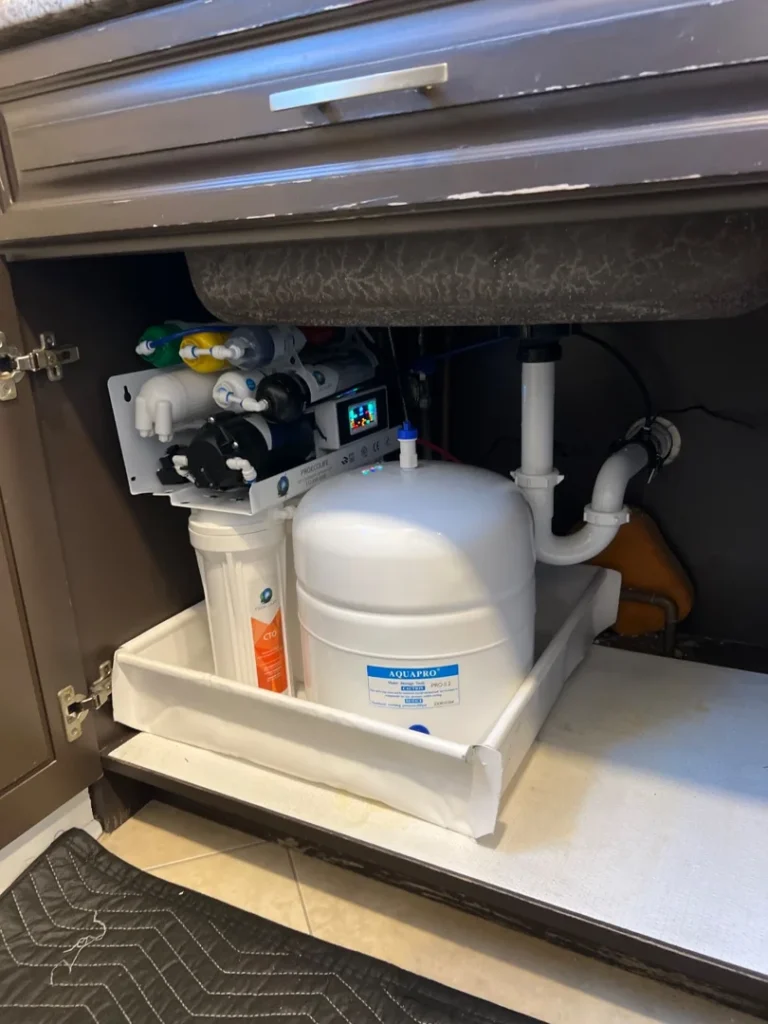
Why Reverse Osmosis Low Water Pressure Happens
Reverse osmosis low water pressure usually comes down to one of a few issues: a storage tank with too little air charge, clogged filters, low incoming water pressure, a restricted feed valve, or a membrane that is no longer producing well.
For Chicago homeowners, the problem can be especially frustrating. An RO system may be working to reduce dissolved contaminants from city water, but the faucet only delivers a trickle when you need a glass of water.
| What you notice | Likely area to check |
|---|---|
| Flow starts strong, then quickly slows | RO storage tank air pressure |
| Tank takes a very long time to refill | Low feed pressure, cold water, or clogged filters |
| Flow dropped after filter replacement or plumbing work | Air lock, closed valve, or pinched tubing |
| Water flow and quality both seem worse | Fouled RO membrane or inadequate feed pressure |
Most residential RO systems perform best with roughly 45-80 psi at the inlet. Below about 40 psi, the membrane can make water much more slowly, and filtration performance may decline. Since an RO membrane produces water slowly even under ideal conditions, the storage tank and feed pressure both matter as much as the faucet itself.
This guide walks through the practical checks that can help identify where pressure is being lost before you replace parts unnecessarily.
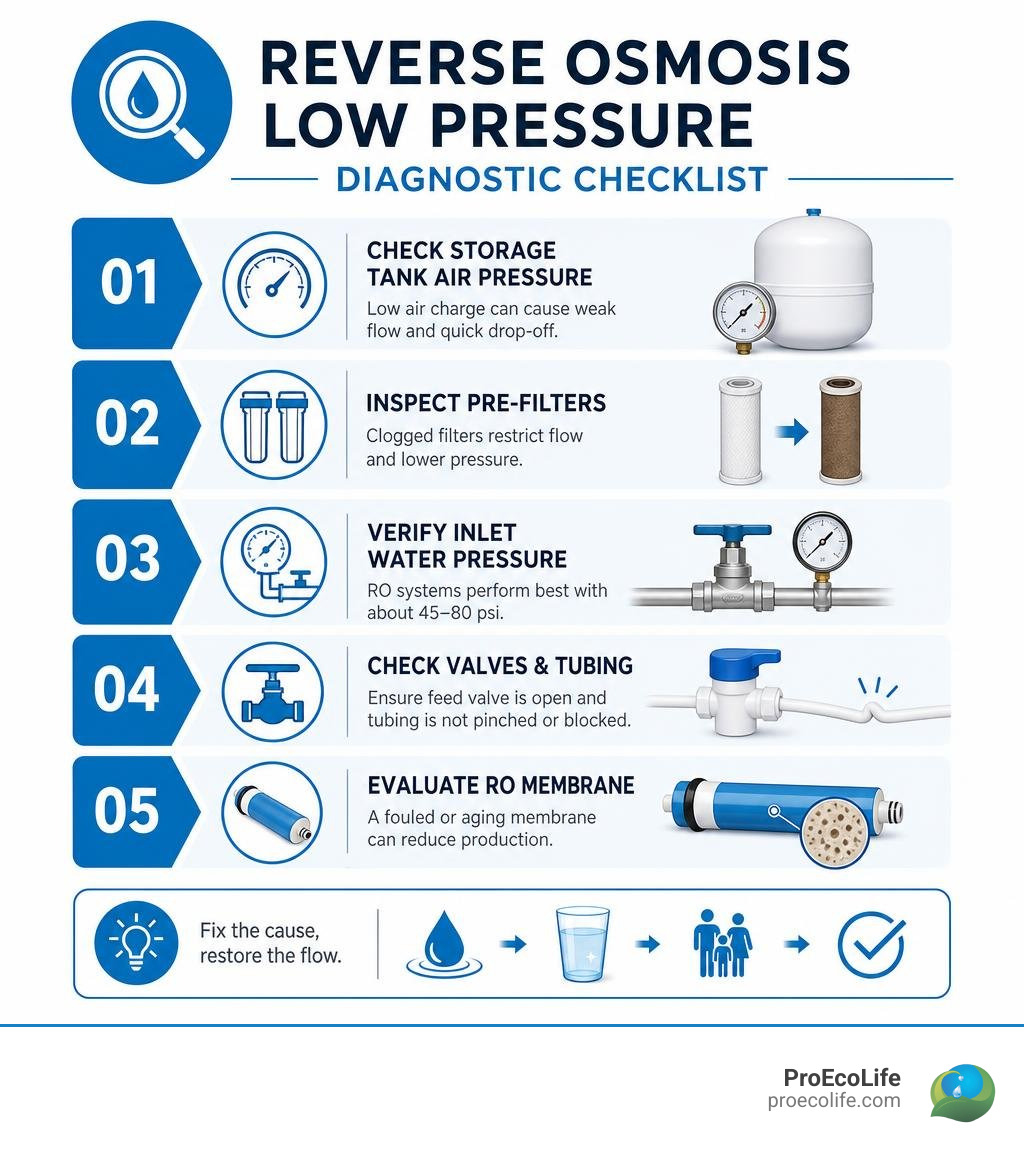
Quick look at reverse osmosis low water pressure:
Root Causes of Reverse Osmosis Low Water Pressure
When a reverse osmosis system drops to a weak trickle at the faucet, understanding the root cause requires evaluating the system as an interconnected balance of pressure, temperature, and mechanics. Since 2014, when Karol Dolega founded ProEcoLife in Chicago, our team has evaluated thousands of residential water filtration systems across the Greater Chicago area. Whether in older homes throughout Edison Park, Norwood Park, and Jefferson Park or nearby communities like Park Ridge, Niles, and Des Plaines, low pressure is one of the most common issues homeowners face.
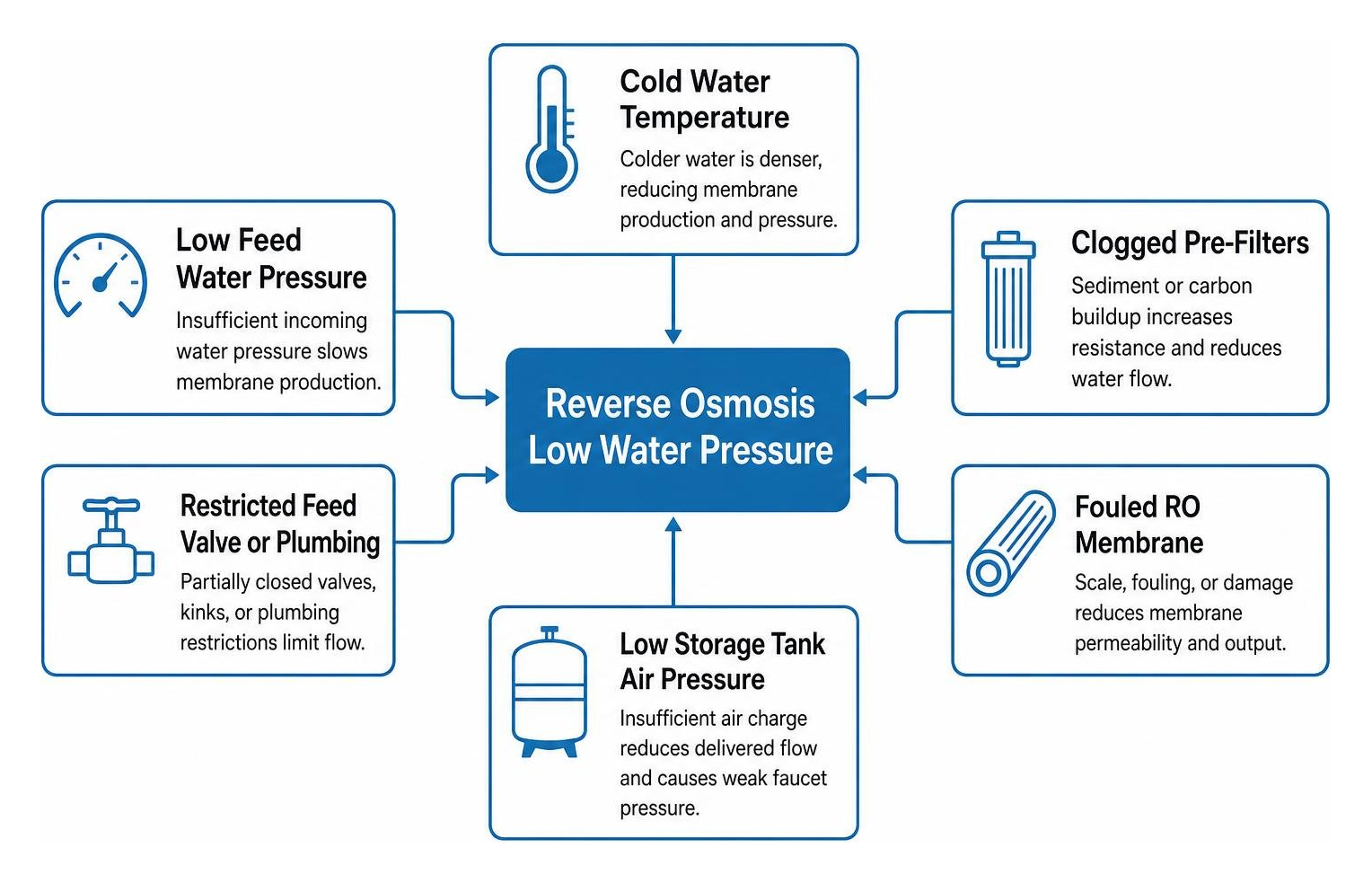
A residential reverse osmosis system relies on driving incoming feed water through semi-permeable membranes with microscopic pores measuring roughly 0.0001 microns wide. To force clean water through pores that fine, adequate hydraulic pressure is essential. When incoming tap pressure drops, or when internal resistance builds up within the filter cartridges, water production slows to a crawl.
Municipal incoming feed pressure, plumbing restrictions, cold municipal supply lines, and clogged filtration media are the primary drivers of reverse osmosis low water pressure. Identifying which component is causing the drop helps ensure the system receives the correct adjustments or professional service.
Key Cause #1: Low Feed Pressure, Cold Water, and Altitude Dynamics
The fundamental engine of reverse osmosis is driving net pressure. Most standard residential units require a minimum feed water threshold of 40 psi (pounds per square inch) to produce acceptable output, with 45 to 80 psi representing the ideal operating window. When municipal water pressure sits below 40 psi, permeate flux–the rate at which purified water passes through the membrane–drops drastically.
Water temperature plays a massive role that often catches Midwest homeowners off guard during winter months. Lake Michigan source water drops significantly in temperature during cold Chicago winters. As water cools, its viscosity increases, making it substantially harder for water molecules to pass through microscopic membrane pores.
Research demonstrates that when feed water temperature increases from approximately 77°F to 113°F at constant pressure, permeate flux increases by roughly 49 percent. Conversely, when winter cold chills municipal feed lines down toward 40°F, water production flux can drop by nearly half.
Elevation changes and municipal supply variations also affect line pressure:
- Elevation Head Loss: Every 2.31 feet of vertical pipe rise reduces static line pressure by approximately 1 psi. Upper-floor installations or homes situated on elevated ground experience reduced natural line pressure.
- Municipal Pressure Drops: During peak community usage hours in suburbs like Skokie, Evanston, or Glenview, main supply pressures can fluctuate downward. Local infrastructure considerations, such as municipal pipe upgrades discussed in resources detailing how to increase water pressure in local plumbing systems, highlight how municipal supply variations directly impact residential filtration performance.
- TDS and Osmotic Resistance: Dissolved minerals exert natural osmotic pressure against the membrane. As a rule of thumb, every 100 ppm of total dissolved solids (TDS) creates roughly 1 psi of osmotic backpressure that your incoming line pressure must overcome.
Key Cause #2: Clogged Filters and Membrane Fouling
Before raw water ever touches the main membrane, it must pass through pre-filtration stages designed to remove heavy sediments, rust particles, and chlorine. In older Chicago neighborhoods where century-old municipal cast-iron mains are still common, rust particles and sediment can saturate pre-filters ahead of schedule.
As pre-filters capture debris, pressure drops across each filter housing:
- Sediment Pre-Filter Clogging: Heavy sediment accumulation acts like a physical dam. A fresh sediment filter may only drop line pressure by 1-2 psi, but a fully loaded filter can strip 20 to 30 psi away from the feed stream before it reaches the membrane.
- Carbon Block Exhaustion: Carbon blocks remove chlorine and organic compounds that would otherwise degrade thin-film composite membranes. Over time, trapped particulate matter inside the carbon block chokes water passage.
- Membrane Scaling and Fouling: Hard water minerals–predominant in private well systems across Northbrook, Deerfield, and Buffalo Grove, as well as unsoftened municipal supplies–gradually deposit calcium and magnesium scale on the membrane surface. Mineral scale reduces active membrane surface area, decreasing permeate flow and increasing waste water volume.
When pre-filters clog, the membrane receives inadequate driving force. The result is slow tank refill cycles, elevated waste water ratios, and a weak stream at the drinking faucet.
Key Cause #3: Airlocks and Feed Valve Restrictions
Not all pressure issues originate from line pressure or filter life; mechanical restrictions and trapped air pockets often restrict flow unexpectedly:
- Saddle Valve Restrictions: Legacy installations frequently rely on self-piercing saddle valves connected to cold water copper lines. These valves punch a tiny hole into the copper pipe, creating a narrow orifice easily clogged by pipe corrosion or mineral scale.
- Partially Closed Feed Valves: Following plumbing work or routine filter inspection, an under-sink supply valve may not be fully re-opened, restricting volume and dynamic operating pressure.
- Airlocks: Air pockets often become trapped inside filter housings after cartridge replacements or municipal water main flushing. Because air compresses under pressure, trapped air locks cushion the driving force, halting continuous flow through auto shut-off valves.
Because these restrictions can involve plumbing connections, pressurized components, and water quality performance, a qualified water filtration technician can verify the supply connection, valve position, tubing route, and filter housing condition without guesswork.
Need Clean, Safe Water at Home?
Get a free water test at your home or business. We install and service whole-house filtration and PEL75 reverse osmosis systems across Chicagoland. We also take select projects in Wisconsin and Indiana.
Book a Free Water TestCall (312) 889-8888How to Diagnose and Fix Storage Tank Air Pressure Issues
When a reverse osmosis system delivers a robust multi-second burst of water that abruptly collapses into a thin trickle, the root cause almost always points to the pressurized storage tank.
Residential reverse osmosis membranes produce purified water at a slow rate–a standard 75-gallon-per-day (GPD) membrane produces roughly 0.05 gallons per minute under ideal lab conditions. To provide instant flow when you open the faucet, systems store purified water inside an expansion storage tank equipped with an internal butyl rubber bladder and an air charge chamber.
Step-by-Step Storage Tank Pressure Calibration
Calibrating an RO storage tank requires measuring static pre-charge air pressure while the internal rubber bladder is completely empty of water. Because the procedure involves isolating pressurized water lines, draining the system, and verifying the tank bladder condition, it is best handled as a professional service procedure rather than a homeowner repair. Professional technicians typically verify tank pressure using a controlled sequence:
- Water Line Isolation: The cold water supply line feeding the filtration unit and the tank valve are isolated to prevent unintended flow during testing.
- System Depressurization and Tank Drainage: The RO drinking faucet is opened to relieve line pressure, and stored water is drained until the tank is fully empty, light, and hollow-sounding.
- Schrader Valve Inspection: The protective plastic valve cap located on the lower side or bottom of the metal storage tank casing is removed so the air chamber can be evaluated.
- Pre-Charge Pressure Measurement: A calibrated pressure gauge is attached to the Schrader valve. The standard target reading for an empty storage tank is 6 to 8 psi.
- Air Charge Adjustment: If the pressure reading is outside the target range, the technician carefully adjusts the air chamber to the appropriate benchmark using suitable service equipment.
- System Re-Engagement and Refill Check: Supply valves are re-opened, the system is checked for proper operation, and the membrane is allowed time to refill the storage chamber before faucet delivery rate is evaluated.
Differentiating Structural Tolerance from Pre-Charge Pressure
A common point of confusion among homeowners involves conflicting pressure labels printed on storage tank jackets:
- Maximum Casing Tolerance (e.g., 100 PSI): This rating represents the maximum structural water pressure the steel or composite outer shell can safely contain without bursting.
- Empty Pre-Charge Air Pressure (6-8 PSI): This represents the target air pressure needed inside the dry air chamber before water enters the tank.
If an empty storage tank reads 0 psi and water leaks out of the Schrader valve when the valve core is pressed during professional testing, the internal rubber bladder has likely ruptured. Once a bladder ruptures, the tank becomes waterlogged–meaning pure water occupies both the air and water chambers, destroying the kinetic push needed to deliver water to the faucet. A waterlogged tank must be replaced by a certified specialist.
Step-by-Step Guide: Measuring Pressure Across Your RO System
Accurate diagnosis of reverse osmosis low water pressure requires evaluating pressure levels at critical junctions along the filtration pathway.
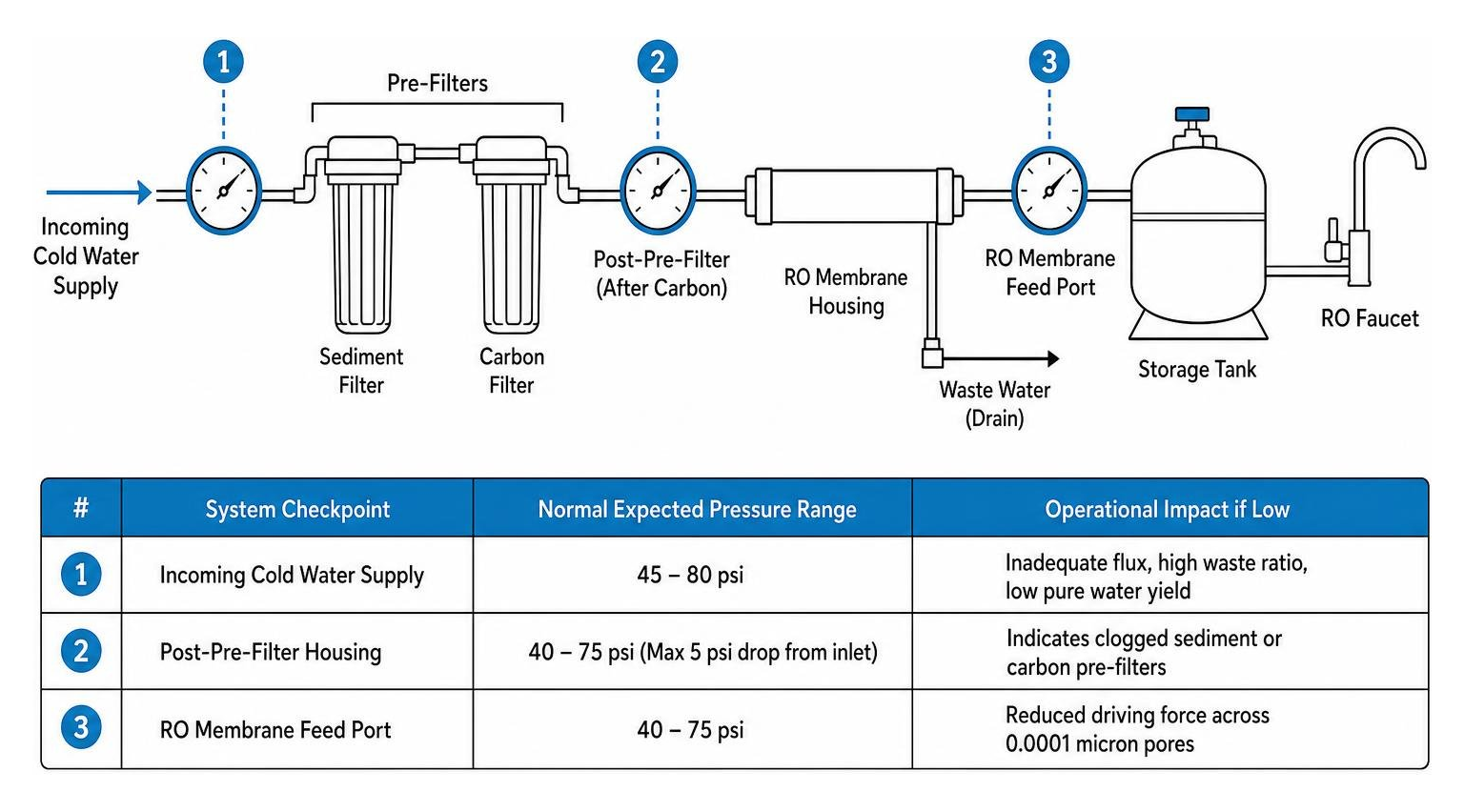
| System Checkpoint | Normal Expected Pressure Range | Operational Impact if Low |
|---|---|---|
| Incoming Cold Water Supply | 45 – 80 psi | Inadequate flux, high waste ratio, low pure water yield |
| Post-Pre-Filter Housing | 40 – 75 psi (Max 5 psi drop from inlet) | Indicates clogged sediment or carbon pre-filters |
| RO Membrane Feed Port | 40 – 75 psi | Reduced driving force across 0.0001 micron pores |
| Permeate Output Port | Dependent on tank backpressure | Slow production, auto shut-off failure |
| Storage Tank Schrader Valve | 6 – 8 psi (Empty) / 30 – 45 psi (Full) | Weak flow at faucet or waterlogged tank chamber |
How to Calculate Net Driving Pressure
Net driving pressure (NDP) represents the actual net force available to push pure water molecules across the semi-permeable membrane barrier. NDP accounts for incoming line pressure, natural osmotic backpressure, and opposition from storage tank backpressure.
The simplified formula used by water quality specialists is:
$$text{Net Driving Pressure} = text{Applied Feed Pressure} – text{Osmotic Pressure} – text{Tank Backpressure}$$
- Applied Feed Pressure: The static water pressure reaching the RO membrane housing port (e.g., 50 psi).
- Osmotic Pressure: Every 100 ppm of Total Dissolved Solids (TDS) creates roughly 1 psi of osmotic resistance. For instance, tap water with 300 ppm TDS exerts approximately 3 psi of osmotic resistance.
- Tank Backpressure: As an RO storage tank fills, the compressed air bladder pushes back against incoming purified water. A full storage tank exerts 30 to 40 psi of backpressure against the membrane.
If feed line pressure sits at 42 psi, osmotic pressure requires 3 psi, and tank backpressure sits at 30 psi, the net driving pressure drops to just 9 psi (42 − 3 − 30 = 9 psi). Under such low net driving pressure, water production stalls almost completely long before the tank reaches capacity.
Detailed research on elevated TDS and membrane performance in low-pressure settings can be found in technical studies on reverse osmosis performance for low tap pressures.
Evaluating Permeate Pump Performance
A permeate pump is a non-electric, hydro-powered device designed to eliminate storage tank backpressure. Driven by the energy of the system’s wastewater stream, a permeate pump isolates the RO membrane from the backpressure built up by the expanding storage tank bladder.
Benefits and signs of permeate pump performance include:
- Elimination of Backpressure: The membrane operates as if it is discharging water into an atmospheric vessel, maintaining full net driving pressure until the tank is completely full.
- Wastewater Reduction: Standard RO systems may discard 3 to 5 gallons of wastewater per gallon of purified water produced. A permeate pump can reduce wastewater volume by up to 80%.
- Clicking Sound Diagnostics: Permeate pumps produce a rhythmically audible clicking noise during operation as internal pistons stroke back and forth. If clicking stops entirely while the storage tank remains empty, the internal diaphragms or auto shut-off valve may require professional inspection or replacement.
Need Clean, Safe Water at Home?
Get a free water test at your home or business. We install and service whole-house filtration and PEL75 reverse osmosis systems across Chicagoland. We also take select projects in Wisconsin and Indiana.
Book a Free Water TestCall (312) 889-8888Upgrading Your Hardware: When to Install an RO Booster Pump
When natural municipal feed pressure consistently measures below 40 psi, mechanical pressure boosting becomes necessary to restore proper flow rates and filtration efficacy.

Homeowners in elevated topography zones, rural well-water properties in Arlington Heights or Palatine, or older multi-story homes in Skokie often encounter permanent line pressure deficits. Installing a specialized electric booster pump raises incoming line pressure into the optimal 60 to 80 psi window.
Installing a Booster Pump for Reverse Osmosis Low Water Pressure
A residential RO booster pump consists of a high-torque electric motor, a diaphragm pump head, a low-voltage transformer, and automated pressure sensing switches:
- High-Pressure Switch: Wired into the purified permeate water line, this switch automatically shuts off electrical power to the pump once storage tank pressure reaches approximately 40 psi, conserving energy and preventing over-pressurization.
- Low-Pressure Switch: Placed on the incoming feed line, this switch cuts electrical power if municipal supply water drops out entirely, protecting internal pump diaphragms from running dry.
- Operating Target: An optimized booster pump raises feed line pressure to a stable 65–75 psi, dramatically increasing production speed while improving salt rejection efficiency.
Professional installation ensures electrical transformers, pressure switches, and auto shut-off components are integrated safely without risk of plumbing leaks or electrical shorts.
Upgrading to High-Flux Thin-Film Membranes
In addition to booster pumps, upgrading the underlying membrane element can significantly improve output under suboptimal line pressure conditions. High-flux thin-film composite (TFC) membranes are specifically engineered with advanced polyelectrolyte surface coatings that offer superior water permeability at reduced operating pressures.
Field research on membrane physics under extreme high-elevation conditions—such as studies exploring RO systems in highlands and low pressure dynamics—confirms that high-flux membranes maintain high salt rejection percentages even when driven by low net line pressure. Upgrading from standard CTA (Cellulose Triacetate) membranes to high-capacity TFC membranes may help optimize flow for low-pressure municipal connections.
Preventive Maintenance Schedule to Prevent Low Pressure Problems
Preventive maintenance is essential for avoiding sudden pressure drops, protecting delicate membranes, and ensuring continuous production of pure drinking water.
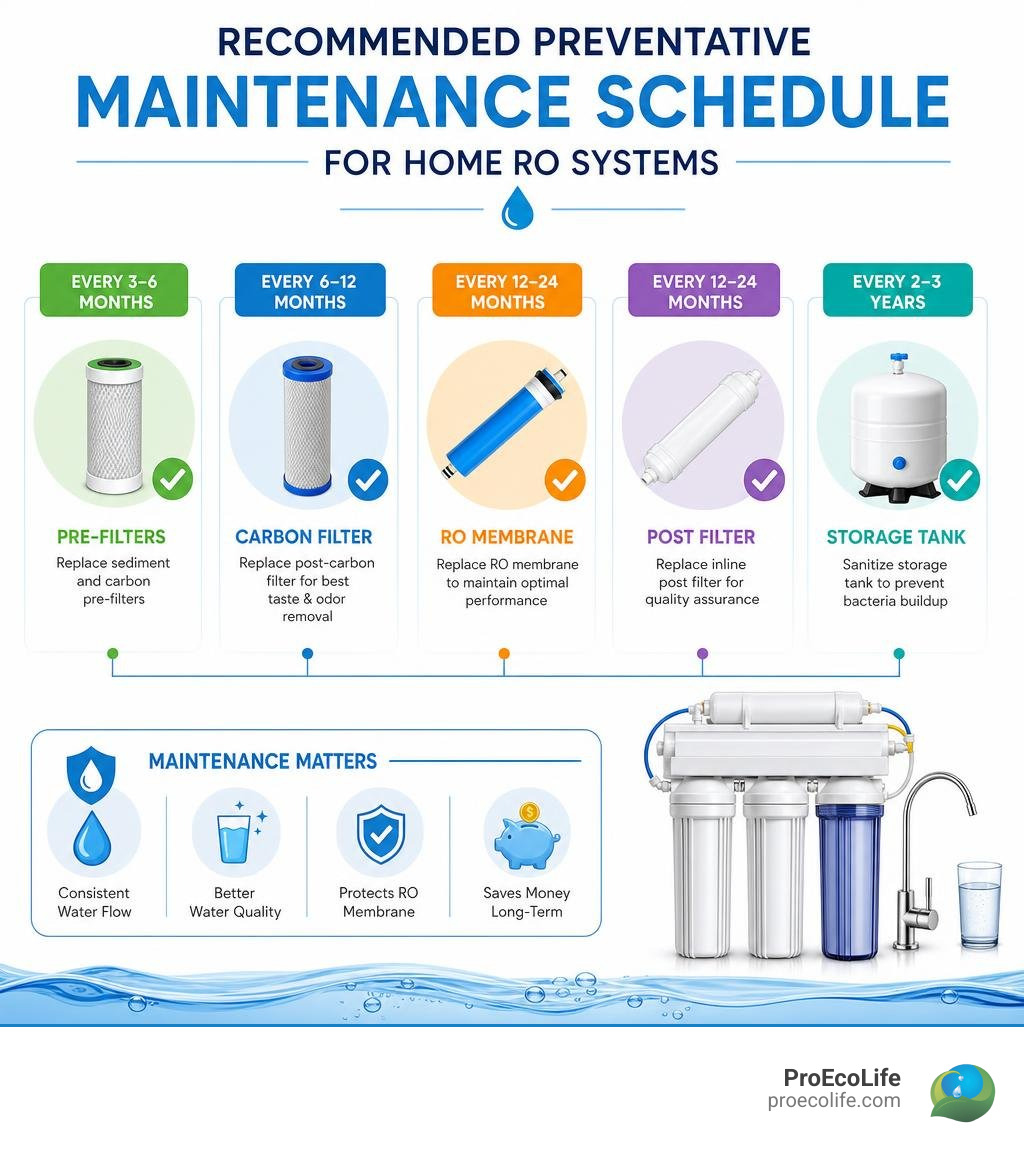
Adhering to a structured routine prevents filter binding, scale accumulation, and bacterial buildup inside under-sink filtration components. Homeowners across Chicago’s Northwest Side and surrounding suburbs can refer to comprehensive guides detailing top reverse osmosis system options in Chicago for pure water to select systems built for long-term durability.
Routine Filter and Membrane Replacement Timeline
To maintain optimal flow velocity and protect drinking water quality, professional service technicians recommend the following replacement intervals:
- Stage 1 Sediment Pre-Filter (Every 6–12 Months): Captures sand, silt, pipe scale, and suspended solids before they reach pre-carbon stages.
- Stage 2 & 3 Carbon Block Filters (Every 6–12 Months): Absorbs disinfectant chemicals, chlorine, chloramines, and synthetic VOCs to prevent oxidative damage to the thin-film membrane.
- Stage 4 Reverse Osmosis Membrane (Every 2–3 Years): Filters heavy metals, lead, total dissolved solids, and chemical compounds down to 0.0001 microns.
- Stage 5 Post-Carbon / Alkaline Remineralization (Every 12 Months): Polishes taste and restores beneficial minerals like calcium and magnesium to purified water before delivery at the tap.
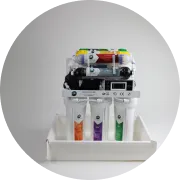
Systems featuring advanced multi-stage technology—such as ProEcoLife’s proprietary PEL75 9-Stage RO System—utilize extended pre-filtration matrices designed to shield the high-rejection membrane against premature mineral fouling and unexpected pressure loss.
Clearing Airlocks to Prevent Reverse Osmosis Low Water Pressure
After changing filter cartridges or performing municipal water line service, air locks frequently become trapped inside filter housings, severely choking water delivery.
Professional technicians clear air locks using a systematic purging sequence:
- Shut off the storage tank valve while keeping the main cold water inlet valve open.
- Open the dedicated RO faucet completely.
- Allow water to trickle directly from the membrane through the faucet for 10 to 15 minutes. Initial flow will sputter as trapped air bubbles escape the housing heads.
- Once a smooth, continuous trickle is restored, close the drinking faucet and open the storage tank valve to resume standard pressurized storage filling.
Frequently Asked Questions About Reverse Osmosis Systems
Why is my reverse osmosis water pressure low suddenly?
A sudden drop in reverse osmosis pressure usually points to a closed feed valve, an air lock following recent plumbing service, or a sudden loss of pre-charge air pressure inside the storage tank bladder. Additionally, main line work carried out by municipal water departments in Chicago neighborhoods can dislodge pipe rust, instantly blinding sediment pre-filters and dropping incoming pressure.
Does cold winter water reduce my RO system pressure?
Yes. Cold groundwater significantly increases water viscosity, making it harder for water molecules to traverse 0.0001 micron membrane pores. When Lake Michigan source water temperatures drop in winter, water production rates can decrease by up to 30–50%. This lower yield often feels like reduced line pressure at the faucet.
Can an airlock cause low water pressure in my RO faucet?
Yes. Trapped air pockets inside filter housings compress under incoming water line pressure, acting as an elastic cushion that absorbs hydraulic force. This cushion prevents auto shut-off valves from opening properly, reducing water flow to the membrane and causing weak faucet pressure. Purging trapped air through the drinking faucet typically restores balanced system operation.
Conclusion
Managing reverse osmosis low water pressure involves evaluating incoming line pressure, checking pre-filter condition, verifying tank bladder calibration, and addressing seasonal water temperature shifts. Whether you live in Norwood Park, Jefferson Park, Edison Park, or nearby suburbs such as Park Ridge, Niles, Des Plaines, Skokie, or Glenview, maintaining proper driving pressure may help your filtration equipment function more reliably.
Since 2014, ProEcoLife has provided advanced home filtration solutions engineered specifically to handle local water conditions, aging infrastructure, and hard water challenges across the Greater Chicago area. From our proprietary PEL75 9-Stage RO System to Whole House Filtration, Shower Filter System models, Well Water Conditioning, and Commercial Water Filtration Systems, our team delivers systems tailored to your home’s unique plumbing requirements.
If your reverse osmosis faucet is dripping, trickling, or struggling to keep up with your household’s daily hydration needs, professional evaluation can quickly pinpoint the cause. Learn more about how reverse osmosis works or contact ProEcoLife through proecolife.com to schedule a water test.