Can a Refrigerator Water Filter Remove Lead?
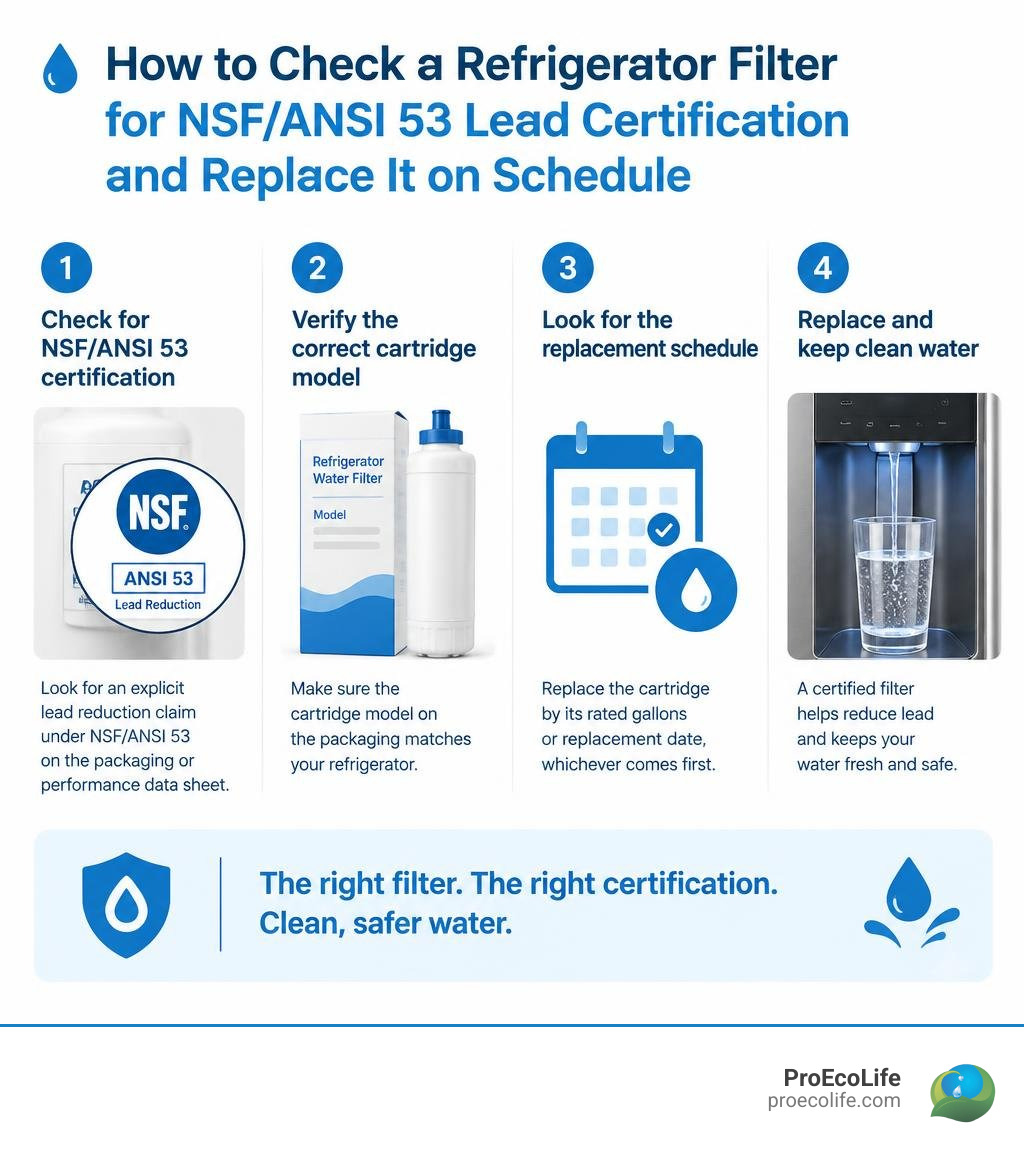
Yes, but only if your specific filter is certified to reduce lead. When it comes to refrigerator water filter lead reduction, check the cartridge’s packaging or performance data sheet for an explicit lead reduction claim under NSF/ANSI 53. NSF/ANSI 42 certification alone does not mean the filter removes lead. Replace a certified cartridge by its rated gallons or replacement date, whichever comes first.
Chicago gets its water from Lake Michigan, but lead can enter through aging service lines and plumbing in older homes. Hard water in the Northwest suburbs is a separate issue; a filter that improves taste or handles minerals is not necessarily a lead filter. If you are concerned about your home’s water, test it and verify the exact cartridge model before relying on a refrigerator water filter for lead removal.
For homeowners researching refrigerator water filter lead removal capabilities, exploring the best water filter for lead, installing a dedicated lead water filtration system, and understanding overall water filter lead removal options helps safeguard your family against toxic contaminants.
Does Your Refrigerator Water Filter Lead Removal Actually Work?
Many homeowners rely on the built-in dispenser on their fridge door for daily drinking water and ice, assuming that because the water tastes crisp and clear, it is completely free from harmful heavy metals. In reality, when evaluating any refrigerator water filter, lead is not automatically removed unless the cartridge contains specialized internal media backed by verified testing standards.
Lead reaches domestic taps primarily in two distinct physical states: particulate lead (tiny fragments or flakes that mechanically break away from corroding lead service lines or interior solder) and dissolved lead (soluble heavy metal ions that leach directly into standing water due to chemical corrosion). Standard carbon mesh or coarse sediment screens might capture larger particulate fragments, but dissolved lead ions pass straight through basic activated carbon without specialized binding media.
In older Chicago bungalows and two-flats across neighborhoods like Norwood Park, Edison Park, and Jefferson Park, as well as established properties in Park Ridge, Niles, and Evanston, legacy lead service lines remain a widespread challenge. When water sits stationary in these service pipes overnight, dissolved lead levels can rise significantly.
Standard point-of-use carbon filters that lack specialized ion-exchange resin or dense catalytic carbon blocks leave dissolved lead untouched. Relying on an unverified fridge cartridge can create a false sense of security while delivering water containing heavy metals straight into your glass.
The Certification Trap: NSF 42 vs NSF 53
The single most common mistake consumers make is falling into the “certification trap.” A filter box may boldly state in large lettering that it is “NSF Certified.” Many buyers assume this seal guarantees protection against toxic contaminants. However, without reading the specific standard number, that seal may only cover cosmetic improvements.
There is a fundamental difference between basic aesthetic standards and rigorous health-effects standards:
- NSF/ANSI Standard 42 (Aesthetic Effects): This standard verifies that a cartridge reduces aesthetic or non-health-related contaminants. It primarily tests for the reduction of chlorine taste and odor, chloramines, and general nominal particulate matter (Class I through VI). An NSF 42 rating confirms your water will smell fresh and look clear, but it establishes absolutely zero requirement for heavy metal removal.
- NSF/ANSI Standard 53 (Health Effects): This standard establishes strict performance criteria for health-related contaminants, specifically including dissolved and particulate lead. To achieve NSF/ANSI 53 lead reduction certification, a filter is subjected to rigorous challenge testing using influent water spiked with 150 parts per billion (ppb) of lead—ten times the current EPA action level. The filter must consistently hold effluent water below 5 to 10 ppb throughout its rated lifespan, achieving at least a 97.5% reduction.
| Feature / Standard | NSF/ANSI Standard 42 | NSF/ANSI Standard 53 |
|---|---|---|
| Primary Scope | Aesthetic improvements (taste, odor, clarity) | Health-related contaminant reduction |
| Target Contaminants | Chlorine, taste, odor, coarse sediment | Lead, VOCs, cysts, mercury, chemical toxins |
| Lead Challenge Testing | None (Does not test for lead) | 150 ppb lead challenge water |
| Required Lead Reduction | 0% required | ≥ 97.5% reduction (effluent held ≤ 5–10 ppb) |
| Protection Provided | Better-tasting coffee, clear ice | Heavy metal and chemical toxin reduction |
How to Verify Refrigerator Water Filter Lead Certification
Because exterior packaging can highlight ambiguous marketing claims, verifying the exact capabilities of your cartridge requires checking independent documentation.
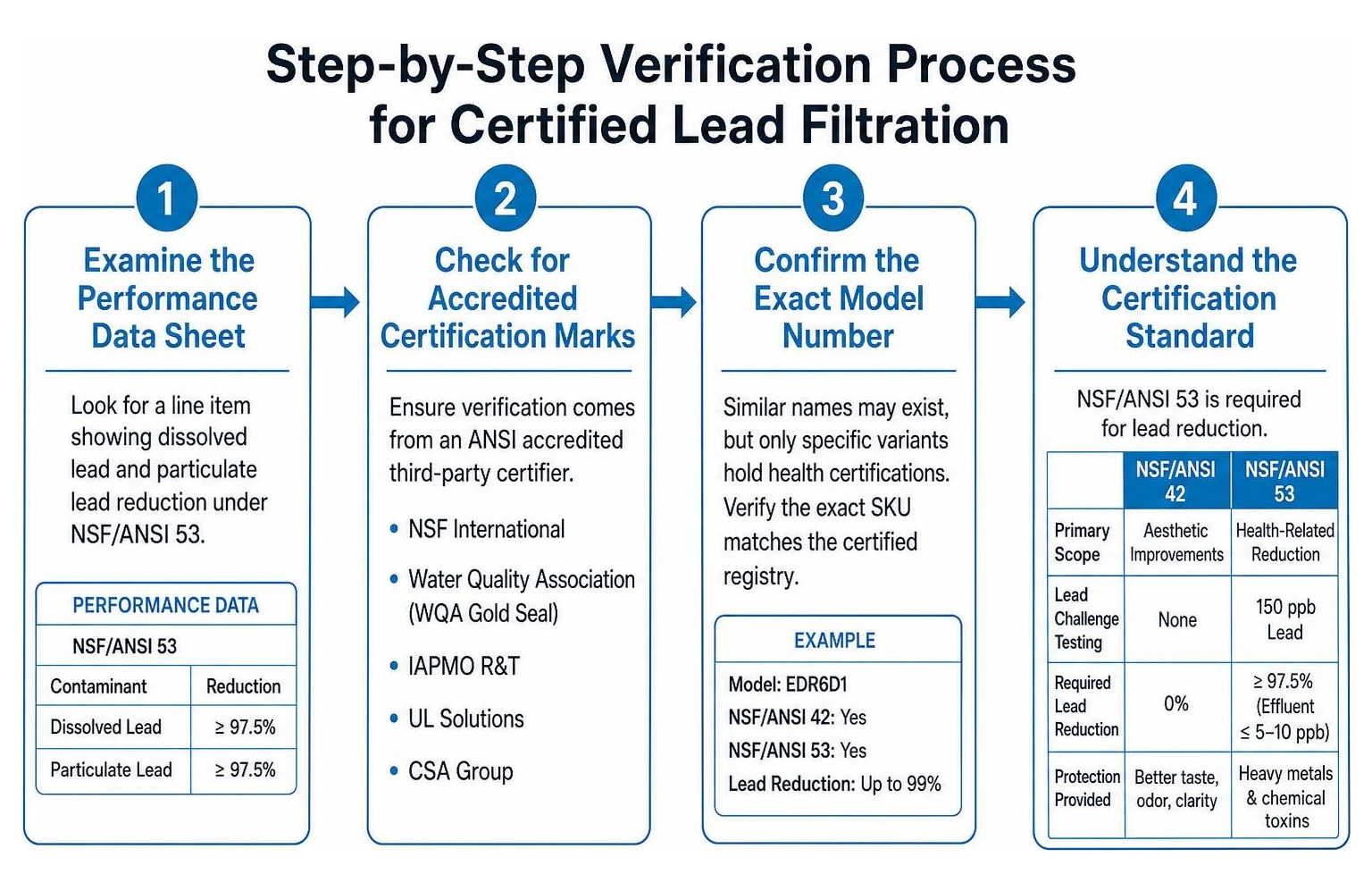
To ensure your refrigerator filter is truly capable of capturing heavy metals, follow these verification steps:
- Examine the Performance Data Sheet: Every legitimate replacement cartridge includes an official Performance Data Sheet inside the packaging or on the manufacturer’s technical specifications page. Look specifically for a dedicated line item detailing dissolved lead and particulate lead reduction under NSF/ANSI 53.
- Check for Accredited Certification Marks: Verification should come from an American National Standards Institute (ANSI) accredited third-party certifier. These include NSF International, the Water Quality Association (WQA Gold Seal), IAPMO R&T, UL Solutions, or the CSA Group.
- Confirm the Exact Model Number: Certain product lines share similar names, but only specific variants hold health certifications. Always ensure the exact SKU matches the certified registry.
- Cross-Reference Regulatory Guidance: Consult the EPA guidance on identifying certified lead filters to double-check certifier directories before assuming a generic aftermarket replacement will keep your family safe.
Understanding how to choose a filter for lead in water helps ensure you do not invest in replacement cartridges that leave your family exposed to invisible heavy metals.
Need Clean, Safe Water at Home?
Get a free water test at your home or business. We install and service whole-house filtration and PEL75 reverse osmosis systems across Chicagoland. We also take select projects in Wisconsin and Indiana.
Book a Free Water TestCall (312) 889-8888Refrigerator Filter Lifespan and the Danger of Filter Exhaustion

A certified lead filter does not last indefinitely. Most built-in refrigerator cartridges have a rated service life of 200 gallons or six months, whichever comes first.
Inside a certified lead cartridge, specialized binding media and ion-exchange sites capture dissolved lead ions. Unlike mechanical sediment filters that visually slow down to a trickle when clogged, chemical adsorption sites fill up silently. When an ion-exchange resin reaches maximum saturation, it cannot absorb additional dissolved lead.
Continuing to run water through an exhausted cartridge introduces the risk of media breakthrough. Water flows through microscopic channels of least resistance, bypassing the exhausted carbon block entirely. An expired lead filter is not merely running at reduced efficiency; for refrigerator water filter lead removal purposes, it functions as approximately no filter at all.
For homeowners seeking the best way to remove lead from water, relying on aging internal cartridges without strict adherence to replacement timelines introduces unnecessary risk.
Why Boiling Water Makes Lead Contamination Worse
When local water advisories occur, many people instinctively turn on the stove to boil their drinking and cooking water. While boiling is the gold standard for neutralizing biological hazards like bacteria, viruses, and parasites, boiling water does not remove lead.
Lead is a non-volatile heavy metal element. When you boil contaminated water, pure water evaporates into steam while the heavy metal atoms remain behind in the pot. As the water volume decreases through evaporation, the concentration of lead in the remaining liquid increases, making the water significantly more hazardous to consume.
Chemical heavy metal contamination must be physically filtered out at the molecular level using certified filtration technology rather than thermal boiling.
Maximizing Refrigerator Water Filter Lead Reduction Performance
If you utilize a certified refrigerator cartridge to manage drinking water in your home, adopting precise operational habits ensures the media functions as intended:
- Establish a Rigid 6-Month Calendar Schedule: Do not wait for your refrigerator’s automated indicator light to turn red. Many indicator lights operate on generic internal timers rather than measuring actual water gallon usage. Set a recurring reminder to replace the filter every 180 days or at 200 gallons.
- Flush the Line After Extended Inactivity: If your home has been vacant for a weekend or if water has sat stationary overnight in an older service line, flush your cold water tap for two to three minutes, then run a few glasses through the fridge dispenser before filling a drinking container.
- Avoid Running Hot Water: Refrigerator supply lines should always be connected to cold water supplies. Warm or hot water degrades carbon block integrity and can trigger premature desorption of captured impurities.
- Source Verified OEM Replacements: Avoid cheap, uncertified knockoff filters online. Generic clone cartridges frequently replicate the plastic casing while omitting the expensive ion-exchange binders required to capture heavy metals.
Need Clean, Safe Water at Home?
Get a free water test at your home or business. We install and service whole-house filtration and PEL75 reverse osmosis systems across Chicagoland. We also take select projects in Wisconsin and Indiana.
Book a Free Water TestCall (312) 889-8888Better Alternatives: Reverse Osmosis for Refrigerator Water and Ice
While certified point-of-use refrigerator cartridges offer baseline protection when changed diligently, they possess built-in limitations. They hold small amounts of filtration media, feature limited contact time, and require frequent recurring replacements that add up over time.
For comprehensive, whole-home drinking water defense, an under-sink reverse osmosis (RO) system connected directly to your refrigerator dispenser and automatic ice maker provides superior purification.
Since 2014, ProEcoLife founder Karol Dolega and our dedicated team have engineered advanced residential treatment systems tailored specifically to local water conditions. In older homes across Skokie, Lincolnwood, Des Plaines, Morton Grove, and Chicago’s Northwest Side, municipal water carries both aging infrastructure contaminants (lead and copper) and water treatment additives. Meanwhile, communities further northwest like Arlington Heights, Buffalo Grove, and Palatine frequently face elevated mineral hardness that exhausts basic fridge filters prematurely.
Integrating a multi-stage system like our PEL75 9-Stage RO System directly behind your refrigerator supply line delivers high-purity water to both your cold water spigot and your automatic ice maker. Utilizing an advanced semipermeable membrane alongside sediment pre-filtration, catalytic carbon blocks, and post-mineralization stages, our systems may reduce lead, total dissolved solids (TDS), microplastics, chlorine, and heavy metals by up to 98% to 99%+.
Homeowners exploring a dedicated reverse osmosis for fridge systems setup or looking at top-rated reverse osmosis systems to remove lead discover that upgrading the fridge supply line eliminates the need to buy proprietary replacement cartridges every few months.
Dedicated Point-of-Use vs Refrigerator Filters
Understanding the structural differences between point-of-use options allows you to select the appropriate level of protection for your household:
| System Type | Typical Lead Reduction | Average Lifespan | Coverage | Mineral & TDS Reduction |
|---|---|---|---|---|
| Standard Fridge Filter (NSF 42) | 0% (Aesthetic Only) | 6 Months / 200 Gal | Fridge Spigot & Ice | None |
| Certified Fridge Filter (NSF 53) | 97.5% – 99% | 6 Months / 200 Gal | Fridge Spigot & Ice | Minimal |
| Multi-Stage Reverse Osmosis | 98% – 99%+ | 12 to 24 Months | Dedicated Tap, Fridge, & Ice Maker | Comprehensive |
| Comprehensive Whole House System | Varies by Media Stage | 1 to 5+ Years | Every Fixture, Shower, & Appliance | Tailored Pre-Treatment |
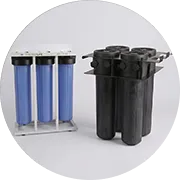
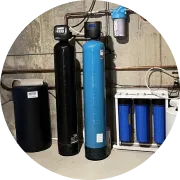
For homes seeking full property protection, pairing our high-efficiency RO units with ProEcoLife Whole House Filtration, a dedicated Shower Filter System, or customized Well Water Conditioning and Commercial Water Filtration Systems ensures every drop entering the home is balanced and clean. Reviewing the best home water filters for total lead removal illustrates how multi-barrier systems offer reliable peace of mind across all household fixtures.
Frequently Asked Questions About Lead in Drinking Water
What is the EPA action level for lead in drinking water?
The Environmental Protection Agency (EPA) currently maintains an action level of 15 parts per billion (ppb) (0.015 mg/L) for public water systems. When more than 10% of customer tap water samples exceed this limit, water utilities are required by federal law to take remedial operational actions, optimize corrosion control treatments, and initiate public notifications.
Under updated federal lead regulations, this action level drops to 10 ppb (0.010 mg/L) on November 1, 2027.
However, regulatory action levels are administrative triggers for public utilities, not biological safety limits. The EPA’s official Maximum Contaminant Level Goal (MCLG) for lead in drinking water is zero. According to medical authorities and the CDC, there is no safe blood lead level in children, as even low-level exposure can impair neurological development, attention span, and cognitive growth. Municipalities across the region provide public data on pipe replacement initiatives, such as the Skokie lead water line data, helping residents assess neighborhood infrastructure risks.
How do I know if my tap water contains lead before filtering?
Because dissolved lead is entirely odorless, tasteless, and invisible, you cannot determine its presence using your senses alone.
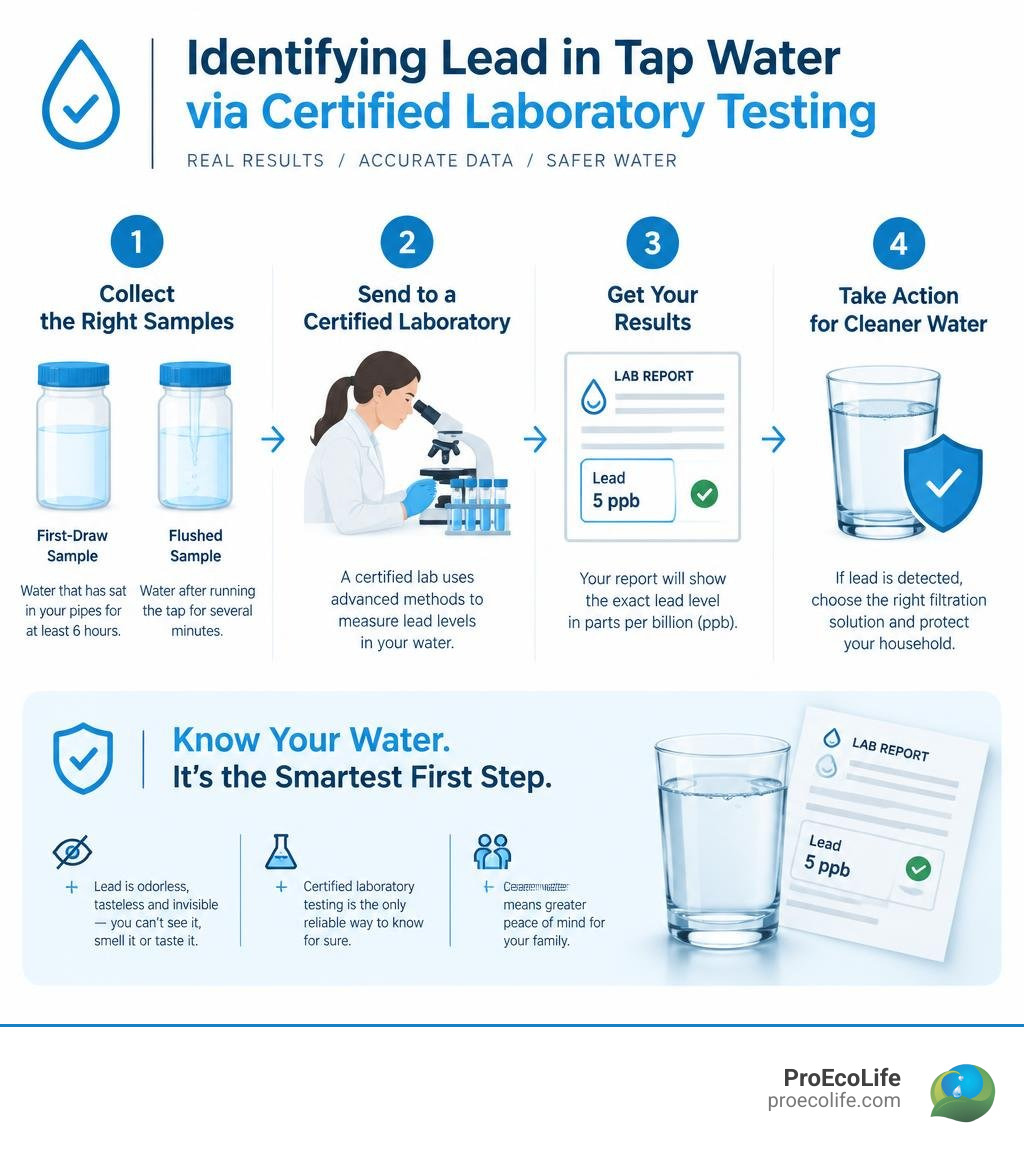
The most accurate method to assess your home’s water is through comprehensive laboratory testing. A proper evaluation involves collecting:
- First-Draw Samples: Water that has sat stationary in your home’s interior pipes and service line for at least six hours.
- Flushed Samples: Water drawn after running the tap for several minutes to measure source water quality directly from the municipal main.
Additionally, homeowners can inspect their basement water meter connection to verify whether their incoming service pipe is made of dull-gray, easily scratched lead metal. Reviewing local public data through platforms like Chicago lead safe water resources and reading your municipality’s annual Consumer Confidence Report provides clarity on community-wide water quality.
What happens if I continue using an expired refrigerator filter?
Continuing to operate a refrigerator filter past its rated capacity or expiration date leads to media exhaustion and flow deterioration. As the internal carbon block fills with particulate matter, water pressure drops, putting strain on your refrigerator’s internal inlet valves.
More importantly, once the chemical binding sites on the ion-exchange media are fully saturated, dissolved lead passes through into your glass without restriction. In severe cases of channel breakthrough or pressure fluctuations, old contaminants trapped in the cartridge can desorb and enter your drinking supply at elevated concentrations.
Conclusion
Understanding what your refrigerator water filter can and cannot do is essential for keeping your drinking water safe. While a genuine, certified NSF/ANSI 53 cartridge offers short-term point-of-use protection when replaced every six months, an uncertified NSF 42 filter leaves heavy metals unaddressed. For long-term peace of mind, high-performance reverse osmosis technology remains the premier solution for upgrading refrigerator dispensers, ice makers, and dedicated drinking taps.
At ProEcoLife, we take pride in serving homeowners across Chicago’s Northwest Side neighborhoods like Norwood Park, Edison Park, and Jefferson Park, as well as suburban communities including Park Ridge, Niles, Des Plaines, Skokie, Glenview, Arlington Heights, and Morton Grove. Whether you want to evaluate an existing filtration setup or learn how to choose the best lead water filter in Chicago, our local specialists are here to help.
To schedule your professional in-home water test and discover the ideal purification system for your household, contact ProEcoLife today at (312) 889-8888 or visit proecolife.com.