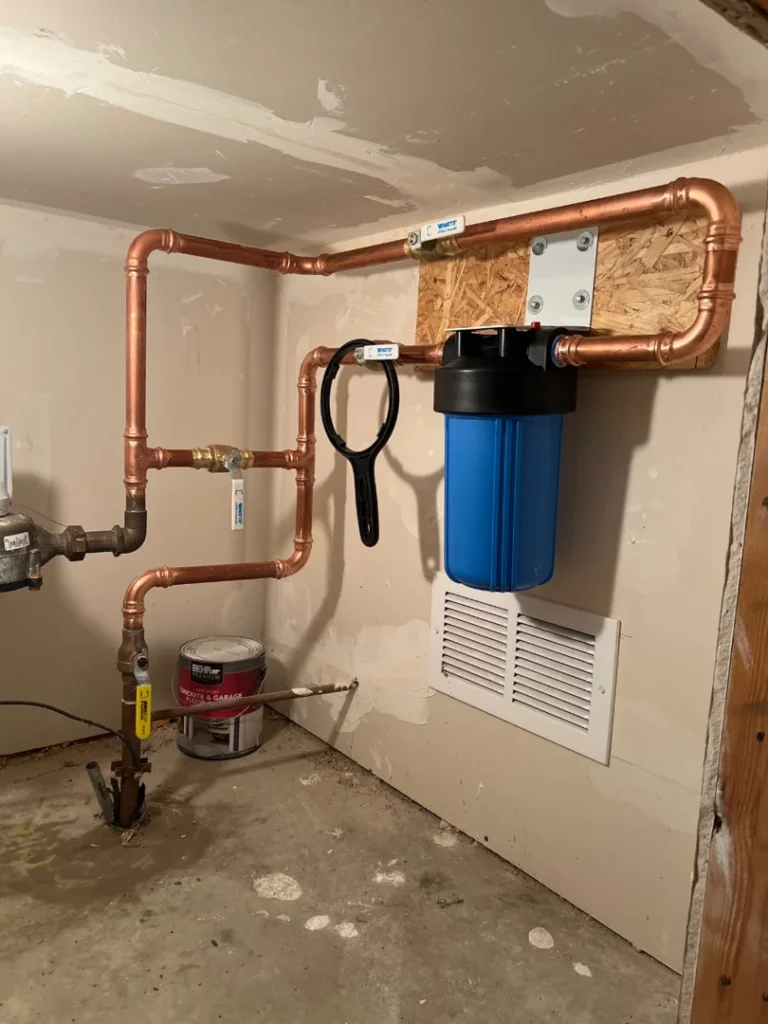

Compact Water Quality Starts With the Right Mini RO System
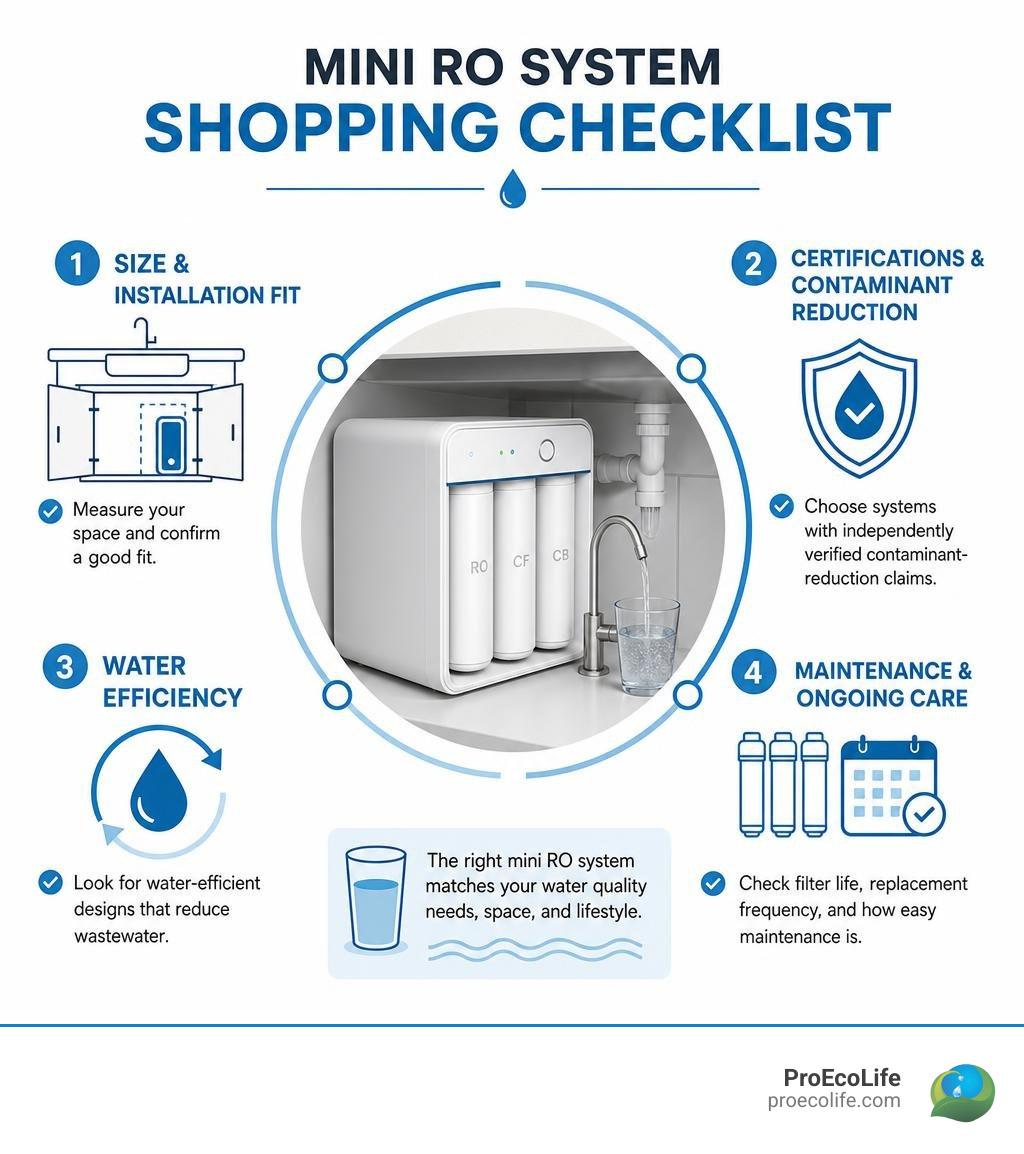
A mini RO system is a compact reverse osmosis filter that can fit under many kitchen sinks or sit on a countertop, giving Chicago households a focused way to reduce dissolved solids and address specific water-quality concerns. For drinking water, look for a point-of-use model with independently verified contaminant-reduction claims, a footprint that fits your cabinet, and a water-efficient design.
For homes with aging plumbing, filtration can be especially worth evaluating. Reverse osmosis systems separate incoming water into filtered permeate and concentrate, but efficiency varies widely. Typical point-of-use RO units may discharge 5 gallons or more of concentrate for every gallon produced. EPA WaterSense-labeled systems are certified to send no more than 2.3 gallons down the drain per gallon of treated water.
This roundup compares compact options by:
- Size and installation fit for tight under-sink spaces
- Contaminant certifications, including lead or other locally relevant concerns
- Water-efficiency ratio and ongoing filter needs
- Convenience features such as auto shutoff, pressure monitoring, and flow indicators
The best choice is not always the smallest unit. It is the one that matches your water test results, available space, and tolerance for filter maintenance and wastewater.
Quick look at mini ro system:
What Is a Mini RO System and How Does It Compare?
When space is at a premium, traditional multi-tank filtration setups can quickly crowd your cabinetry. A mini RO system is an engineered, compact water filtration unit that utilizes semi-permeable membrane technology to separate pure water molecules from dissolved minerals, heavy metals, and organic impurities on a smaller physical footprint.
Since founder Karol Dolega established ProEcoLife in 2014, our mission has centered on delivering high-performance purification tailored to local architecture across Chicago and its neighboring communities. Whether you live in a historic brick bungalow in Norwood Park, a classic two-flat in Jefferson Park, or an updated single-family home in Park Ridge or Niles, under-sink space is often limited by deep basins, garbage disposals, and complex plumbing lines.
Standard residential units often rely on bulky holding tanks, whereas compact point-of-use units optimize internal manifold pathways and high-recovery membranes to minimize spatial requirements while maintaining strong flow rates and reliable permeate recovery. For a deeper technical overview of standard configurations, explore our In-Depth Guide to Reverse Osmosis Systems.
Understanding How a Mini RO System Works
At its core, mini reverse osmosis relies on cross-flow filtration across a specialized semi-permeable sheet. Feed water enters under pressure, passing first through sediment and carbon pre-filtration stages to trap particulate matter and neutralize chlorine before it reaches the delicate membrane surface.
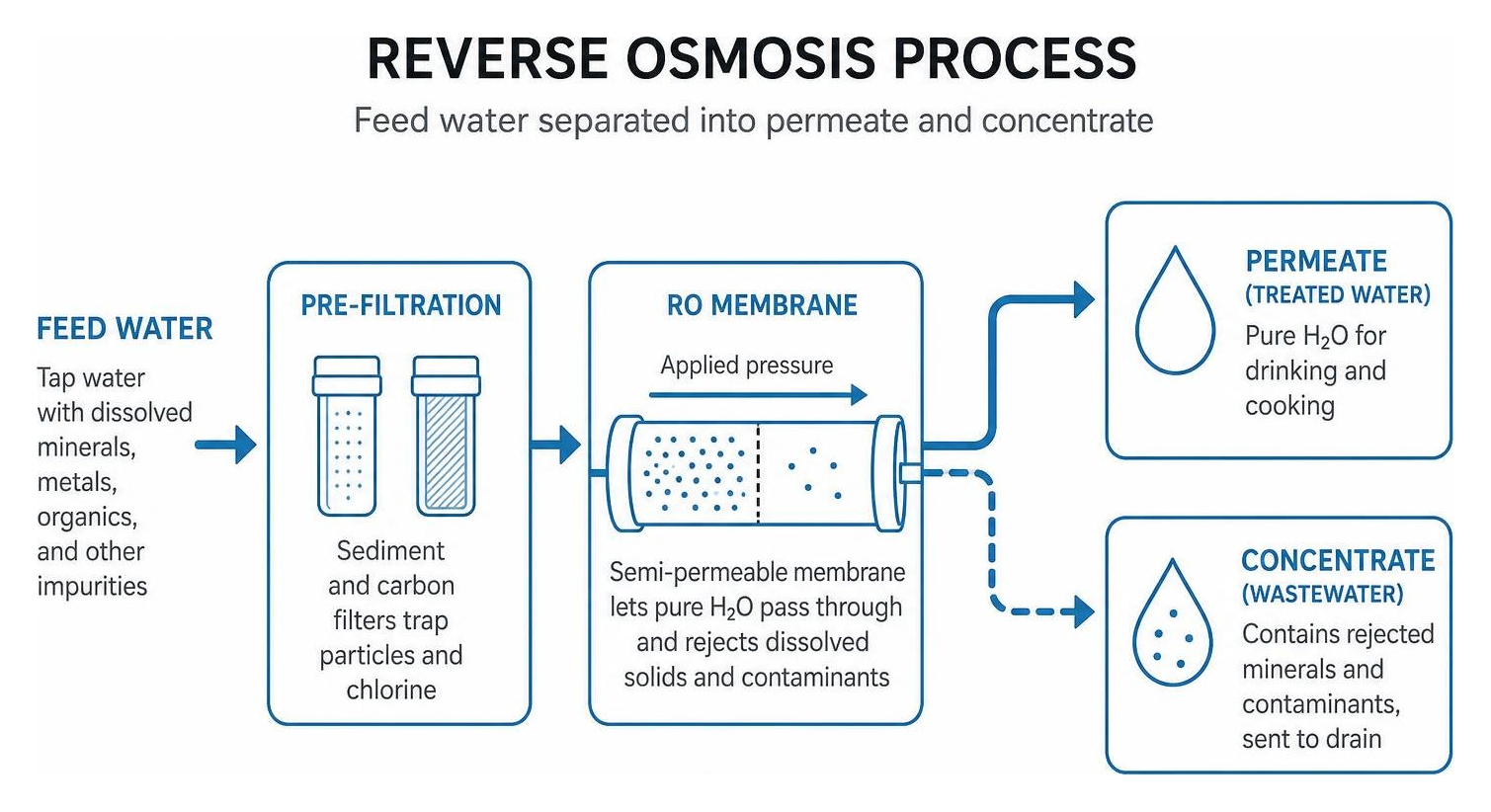
Inside the membrane housing, applied pressure forces pure H2O through microscopic pores measuring roughly 0.0001 microns, effectively rejecting total dissolved solids (TDS), volatile organic compounds, lead, and microbial contaminants. The captured impurities are continuously flushed away in the concentrate (or brine) stream, preventing premature fouling, while the treated permeate is routed directly to your dedicated drinking water faucet or collection vessel.

Point-of-Use Drinking Units vs. Specialized Micro RO Units
Compact reverse osmosis technology extends beyond kitchen drinking water fixtures. In specialized food production and agricultural concentration—such as processing fruit juices or concentrating maple sap—micro RO machines operate on the same membrane principles but with distinct operational parameters.
Specialized micro agricultural systems run on standard 110-volt power, drawing around 8.4 amps, and are built to handle high-volume processing. For example, low-volume maple producers managing fewer than 250 taps utilize rugged micro RO units delivering a throughput of roughly 31 gallons per hour (GPH). These systems can remove approximately 62% of raw water content in a single pass, raising sugar concentration from an initial 2% Brix up to 5.2% Brix. In these agricultural setups, the concentrate (the concentrated sap) is the prized product, while the permeate is discharged. In residential drinking applications, this relationship is inverted: the pure permeate is collected for your glass, and the concentrate carries unwanted dissolved minerals down the drain.
| Specification / Feature | Residential Mini Point-of-Use RO | Specialized Micro Agricultural RO |
|---|---|---|
| Primary Objective | Extract pure drinking water (permeate) | Extract concentrated liquid (concentrate/Brix) |
| Target Application | Single-fixture under-sink / countertop | Boutique juice / small-scale sap concentration |
| Standard Power Supply | Standard 110V AC or non-electric hydraulic | 110V AC, 8.4-Amp draw |
| Flow Throughput | 50 to 75 Gallons Per Day (GPD) | ~31 Gallons Per Hour (GPH) |
| Key Performance Metric | High TDS & heavy metal reduction rate | ~62% water removal; 2% to 5.2% sugar increase |
| Filtration Focus | Lead, PFAS, sediment, chlorine, VOCs | Organic solids preservation & water extraction |
Need Clean, Safe Water at Home?
Get a free water test at your home or business. We install and service whole-house filtration and PEL75 reverse osmosis systems across Chicagoland. We also take select projects in Wisconsin and Indiana.
Book a Free Water TestCall (312) 889-8888Key Features to Look for in a Mini RO System
Selecting a compact system requires balancing size, build quality, and automation features. Just as modern homeowners appreciate compact automation technology for keeping living spaces clean with minimal hands-on effort, advanced mini RO systems incorporate automated monitoring to maintain steady performance.
- Integrated Pressure Gauges: Feed water pressure dictates membrane efficiency. A built-in pressure gauge allows you to confirm that the operating pressure remains in the optimal range, alerting you to sudden pressure drops caused by clogged sediment filters.
- Precision Flow Meters & Dials: Monitoring flow rates ensures your membrane is not fouled. In liquid-concentration units, concentrate adjustment dials let operators fine-tune Brix levels; in residential drinking units, calibrated flow restrictors protect the permeate-to-concentrate balance.
- Automatic Shutoff Valves: Prevents continuous drainage by mechanically or electronically shutting off the feed water supply once the internal pressure indicates that the storage tank or faucet valve is closed.
- Specialized Pre-Filtration Media: High-quality sediment cartridges or synthetic cone prefilters trap suspended particulates before they contact the membrane surface, preventing irreversible scaling.
- Certified Membrane Longevity: Ensure the central membrane element is built to deliver a reliable service lifespan under typical municipal load conditions.
Choosing the Right Mini RO System for Your Space
Navigating tight spaces is a common reality across older Chicago housing stock. From vintage walk-ups in Edison Park and Portage Park to ranch-style homes across Skokie, Glenview, and Des Plaines, under-sink cabinets often house legacy cast-iron drain lines and bulky structural framing.

When selecting a unit, evaluate:
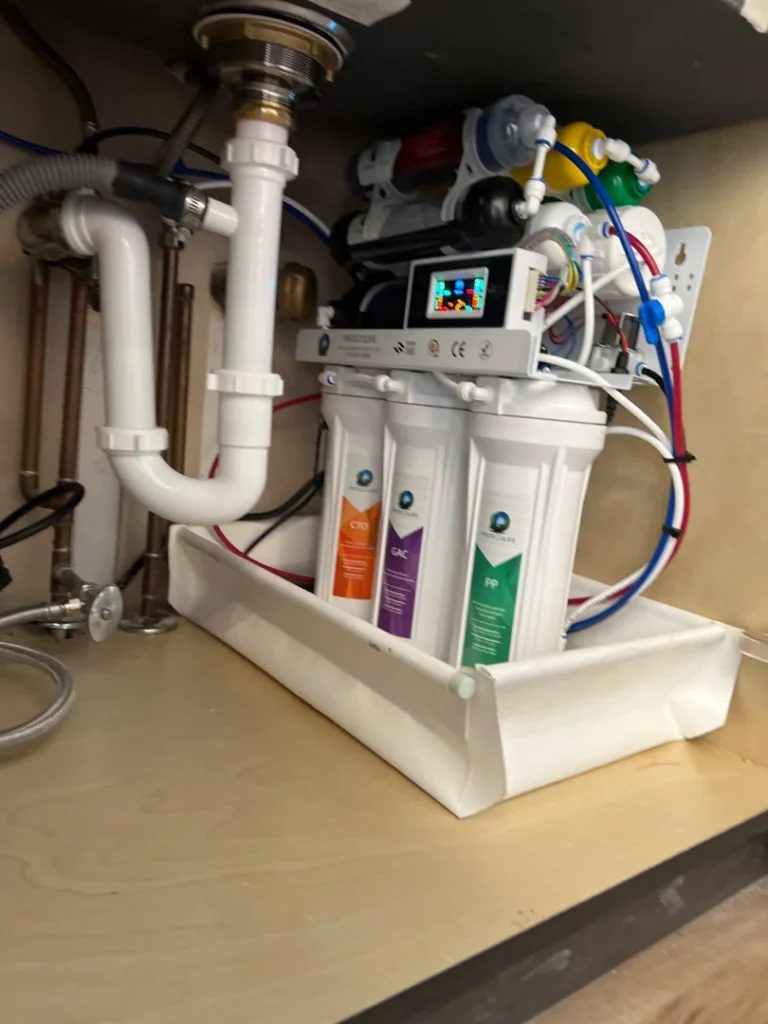
- Cabinet Depth and Height Clearances: Measure vertical clearance from the cabinet floor to the lowest sink basin fixture or garbage disposal bracket. Tankless mini units offer slim vertical profiles, while compact modular systems like our PEL75 9-Stage RO System fit neatly along sidewalls, preserving usable storage.
- Municipal Water Quality Demands: Homes receiving water treated from Lake Michigan must address seasonal temperature shifts and residual chlorine, while Northwest suburbs like Arlington Heights and Buffalo Grove frequently contend with elevated mineral hardness. Furthermore, properties connected via older utility service lines benefit from verified heavy metal reduction. For households concerned about plumbing-related heavy metals, review our recommendations in Top Rated Reverse Osmosis Systems to Remove Lead from Your Home.
- Filtration Depth: While basic mini units use only 2 or 3 stages, premium units combine sediment reduction, dual carbon blocks, high-rejection membranes, remineralization, and post-filtration polishing to ensure comprehensive purification.
Water Efficiency and EPA WaterSense Standards
Wastewater efficiency is an essential metric when comparing compact RO designs. Because reverse osmosis uses a continuous stream of feed water to keep the membrane clean, traditional point-of-use units have historically generated 5 gallons or more of reject water for every single gallon of treated drinking water produced—with inefficient models wasting up to 10 gallons per gallon.
To encourage responsible water stewardship, the EPA established clear WaterSense efficiency benchmarks:
- The WaterSense Benchmark: Certified systems must send 2.3 gallons or less of reject water down the drain for every gallon of treated permeate produced.
- Household Impact: Transitioning to a high-efficiency WaterSense-compliant unit saves an average of more than 3,100 gallons of water per year per household, totaling approximately 47,000 gallons over the system’s operational lifespan.
- National Conservation Potential: If every point-of-use RO unit installed nationwide met these efficiency criteria, over 3.1 billion gallons of water could be saved annually—a volume sufficient to supply the annual household needs of nearly 41,000 American residences.
By choosing a modern, water-efficient system, you reduce municipal utility waste while securing high-purity water for cooking and drinking.
Need Clean, Safe Water at Home?
Get a free water test at your home or business. We install and service whole-house filtration and PEL75 reverse osmosis systems across Chicagoland. We also take select projects in Wisconsin and Indiana.
Book a Free Water TestCall (312) 889-8888Maintenance, Pre-Filtration, and Membrane Longevity
Even the best mini RO setup requires consistent care to prevent membrane degradation. Because the microscopic pores of an RO membrane can easily be fouled by particulate silt, rust flakes from municipal main repairs, or scale buildup, pre-filtration serves as the primary shield.
For homeowners unsure whether their current setup meets their daily demands, reviewing our guide on Is Reverse Osmosis for You? can help clarify daily operational considerations.
To maintain peak efficiency:
- Maintain Pre-Filter Schedules: Standard sediment and activated carbon blocks should be replaced every 6 to 12 months, depending on your household’s total water volume. In portable or agricultural applications, disposable paper or synthetic cone prefilters must be rinsed or changed frequently to prevent organic fouling.
- Monitor Pressure Differentials: A persistent drop on your system’s pressure gauge often indicates that pre-filtration cartridges are saturated and restricting flow before water reaches the membrane.
- Schedule Annual Sanitization: Performing routine sanitization flushes during cartridge changeouts cleans internal manifolds and prevents biofilm accumulation in holding reservoirs or supply lines.
- Track Total Dissolved Solids: Using a handheld or inline TDS meter provides an accurate assessment of membrane rejection performance. When the rejection rate drops significantly below baseline performance, membrane replacement is due.
Frequently Asked Questions About Mini RO Systems
How much wastewater does a compact reverse osmosis system produce?
Wastewater generation depends heavily on the system’s design and operating pressure. Conventional point-of-use systems traditionally generate between 5 to 10 gallons of concentrate for every gallon of purified permeate. However, modern high-efficiency systems adhering to EPA WaterSense standards maintain a ratio of 2.3 gallons or less of reject water per gallon of treated water.
What power and plumbing requirements do mini reverse osmosis units have?
Most residential under-sink drinking RO systems operate hydraulically using line pressure (typically requiring 40 to 80 PSI) without electrical connections, though models with integrated booster pumps or smart monitoring utilize standard 110-volt outlets. Specialized commercial and agricultural micro RO units typically require a dedicated 110-volt, 8.4-amp power circuit to run internal high-pressure pumps. Plumbing-wise, residential units require a cold-water feed connection, an under-sink drain saddle connection for the concentrate line, and a dedicated countertop dispenser faucet.
How often do mini RO membranes and pre-filters need replacement?
Under standard municipal water conditions, pre-filters (sediment and carbon blocks) should generally be replaced every 6 to 12 months to protect the core components. The reverse osmosis membrane itself typically lasts between 2 to 4 years, provided pre-filtration is diligently maintained and feed water mineral hardness remains within manageable thresholds.
Conclusion
Finding the right compact water filtration solution involves balancing physical cabinetry constraints, water efficiency standards, and thorough multi-stage filtration performance. Whether you are outfitting a compact kitchen in Morton Grove, Harwood Heights, or Lincolnwood, selecting an appropriately sized, high-recovery reverse osmosis setup may help improve daily drinking water taste and reduce unwanted dissolved solids.
At ProEcoLife, we take pride in serving our neighbors across the Northwest Side and surrounding suburbs with comprehensive water treatment solutions, including our proprietary PEL75 9-Stage RO System, Whole House Filtration, Shower Filter System, Well Water Conditioning, and Commercial Water Filtration Systems. Every home’s plumbing conditions, pressure levels, and source water characteristics are unique, and results vary across individual installations.
To learn more about membrane filtration fundamentals, explore our guide on How Does Reverse Osmosis Work? to see how modern purification technology can benefit your home.
Contact ProEcoLife today to speak with our local specialists and schedule a comprehensive water test for your property at proecolife.com.