
Lead in Your Shower Water Is a Real Risk — Here’s What Chicago Homeowners Should Know
If you’re looking for a shower head filter to remove lead, here’s the short answer:
- KDF-55 media filters are the most common type used in shower filters to reduce lead and other heavy metals
- No shower filter is certified under NSF/ANSI 177 specifically for lead removal — that standard covers chlorine only
- Whole-home or point-of-use systems (like a reverse osmosis setup) offer more reliable, certified lead reduction
- Shower filters can help reduce exposure, but they are not a complete solution for homes with lead service lines or aging Chicago-area plumbing
Most Chicago homeowners think about lead in their drinking water. But every morning, you’re also standing in a stream of unfiltered tap water for 10 minutes or more — absorbing it through your skin and inhaling steam that carries dissolved contaminants.
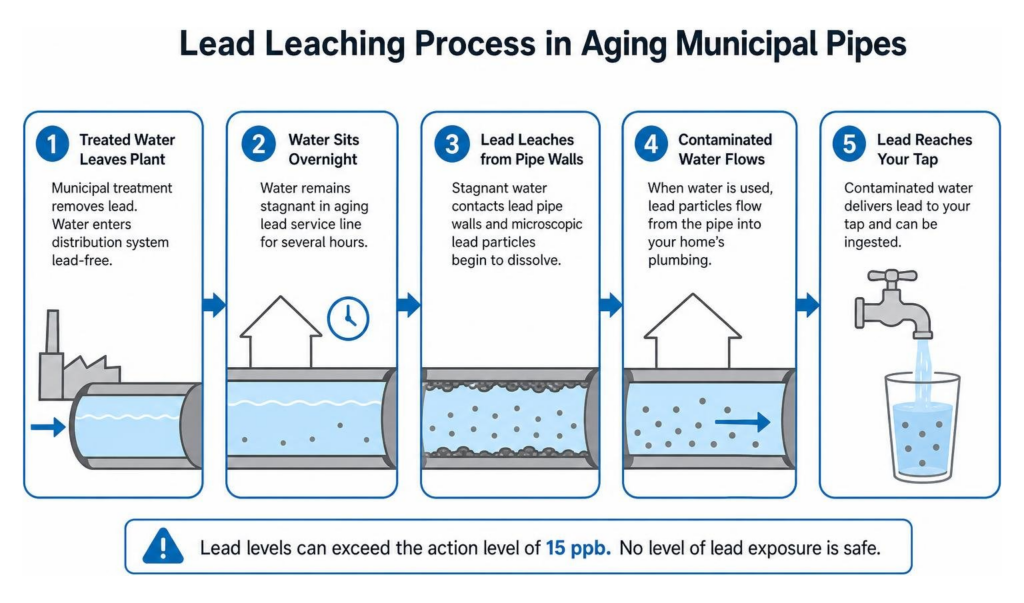
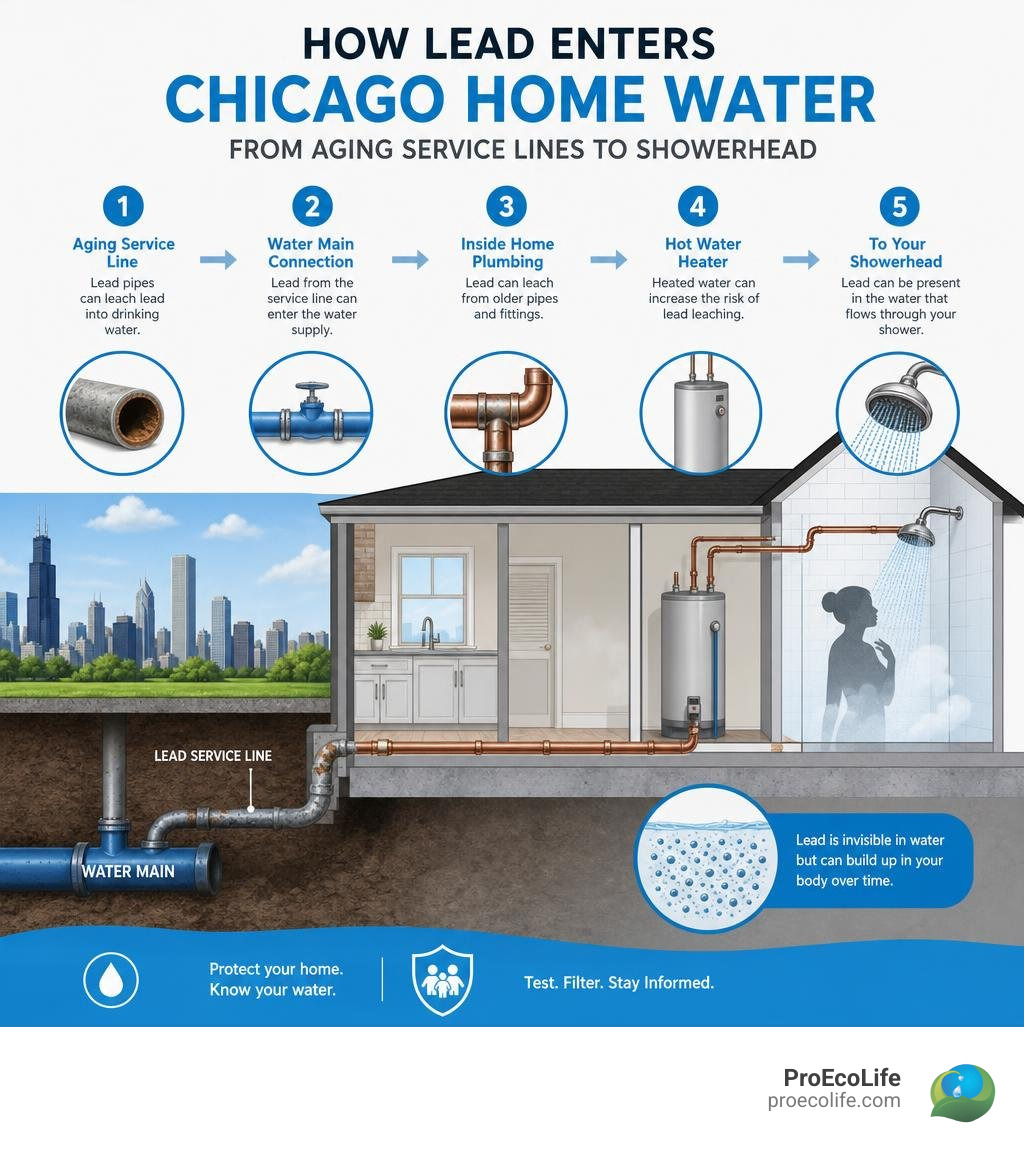
Chicago has one of the largest inventories of lead service lines in the country. Homes on the Northwest Side — Norwood Park, Edison Park, Jefferson Park — and nearby suburbs like Skokie, Des Plaines, and Park Ridge often have aging plumbing infrastructure that can leach lead into water after it leaves the treatment plant. Lake Michigan source water may start clean, but it picks up heavy metals on the way to your showerhead.
That’s why more homeowners are asking whether a shower filter can actually help — and what its real limits are.
Simple guide to shower head filter to remove lead:
- best faucet water filter for lead removal
- best way to remove lead from drinking water
- reverse osmosis filter lead
The Reality of Lead in Chicago’s Water Infrastructure
To understand why a shower head filter to remove lead is such a popular search topic in our area, we have to look closely at the pipes beneath our streets and inside our walls. Chicago’s water infrastructure is historic, but that history comes with a heavy price. For decades, local building codes actually mandated the use of lead service lines for single-family homes and smaller multi-unit buildings. This mandate remained in place until federal law finally banned lead pipes in 1986.
Because of this legacy, our beloved Northwest Side neighborhoods — including Norwood Park, Edison Park, and Jefferson Park — feature some of the highest concentrations of lead service lines in the nation. When Lake Michigan source water leaves our world-class purification plants, it is virtually lead-free. However, as that water travels through miles of aging water mains, transitions into lead service lines, and flows through older residential brass fixtures, lead can leach directly into your household stream.
While we often focus on the water we drink or use to brew our morning coffee, we must remember that water is also our daily bathing medium. When you turn on the hot water for a relaxing morning shower, you are exposing your body to whatever has leached from those pipes. It isn’t just about what goes into your glass; it is about what coats your skin and hair every single day.
Why Aging Pipes in Chicago and Suburbs Pose a Lead Risk
The lead risk does not stop at the Chicago city limits. Many of our surrounding northern and northwestern suburbs share the exact same architectural history and infrastructure challenges. In suburbs like Skokie and Evanston, local officials have been actively working to map and address these legacy plumbing issues.
For example, homeowners can review detailed local guidelines such as the Lead Water Service Lines | Skokie, IL resource to understand how municipal service lines are being tracked and replaced. Similarly, the Lead in Drinking Water – City of Evanston program highlights how lead can enter household water systems through older service connections and interior plumbing.
When municipal water chemistry fluctuates, or when physical construction disrupts water mains on your street, protective mineral scale inside the pipes can flake off. This releases particulate and dissolved lead into the water supply. While municipal water departments treat the water to minimize corrosion, the physical reality of thousands of miles of lead-bearing plumbing means that the risk of lead reaching your showerhead remains a daily concern.
Can a Shower Head Filter to Remove Lead Actually Work?
If you are concerned about heavy metals in your bathroom, installing a shower head filter to remove lead seems like an easy, budget-friendly fix. But does it actually do what the packaging promises?
The short answer is that a shower filter may provide a helpful first line of defense, but its performance depends heavily on the type of filtration media used, the temperature of the water, and the speed at which the water flows.
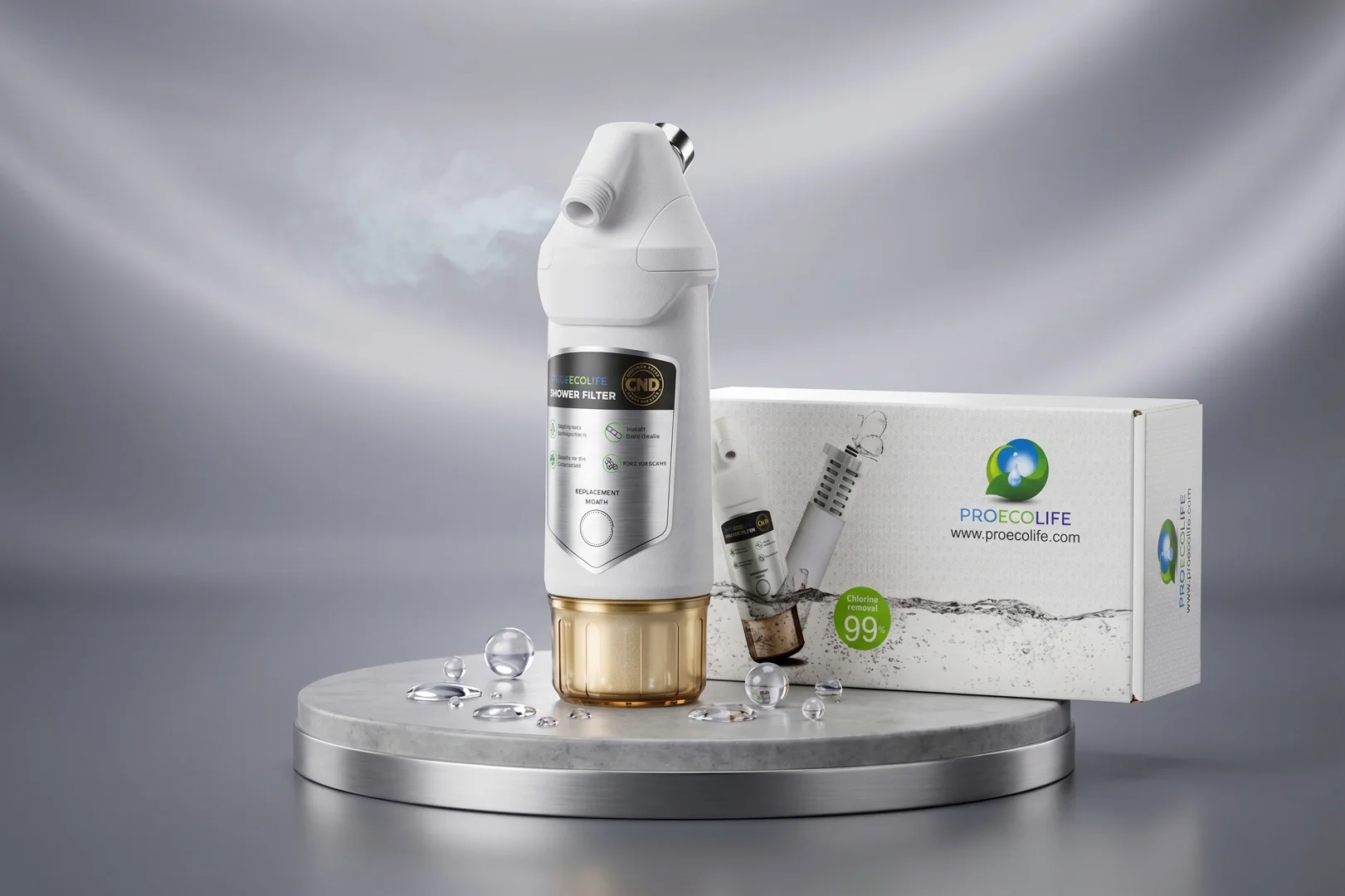
Unlike a slow-dripping kitchen pitcher, a shower filter has to process a high volume of water in real time. A standard showerhead flows at a rate of 1.5 to 2.5 gallons per minute (GPM). This means the water has only a fraction of a second of contact time with the filtration media inside the cartridge. To understand how these systems attempt to improve water quality under these demanding conditions, we have to look at the specialized media inside them.
How Filtration Media Targets Heavy Metals in Hot Water
Most standard retail shower filters rely on a combination of different materials to target impurities. The most effective media for hot-water applications is Kinetic Degradation Fluxion, specifically KDF-55.
KDF-55 is a high-purity copper-zinc formulation that uses a chemical process known as redox, or oxidation-reduction. During this reaction, electrons are transferred between the media and the contaminants. For example, dissolved chlorine is converted into water-soluble chloride ions.
When it comes to heavy metals, the redox process works by causing dissolved lead, mercury, and nickel ions to plate out of the solution, physically bonding to the copper-zinc media. KDF-55 is well suited for showers because it remains stable at hot-water temperatures, unlike standard activated carbon, which can lose effectiveness when exposed to heat.
Many shower filters combine KDF-55 with calcium sulfite and activated carbon to target chlorine reduction, odors, and some dissolved metals. ProEcoLife’s Shower Filter System is selected with Chicago-area water conditions in mind, including Lake Michigan municipal water, older service lines on the Northwest Side, and sediment concerns in homes around Norwood Park, Edison Park, Jefferson Park, Park Ridge, Niles, and Des Plaines. As with any shower filter, results vary based on incoming water quality, flow rate, cartridge condition, and the type of lead present.
The Limitations of a Standard Shower Head Filter to Remove Lead
While KDF-55 is chemically capable of attracting certain heavy metals, a small point-of-use shower filter has clear physical limitations.
First, the contact time is incredibly brief. For a filter to capture a high percentage of dissolved lead, the water must spend enough time in contact with the media for the chemical reaction to take place. At 2.0 gallons per minute, water rushes through a small shower cartridge quickly, which limits complete lead extraction.
Second, shower filters are highly susceptible to clogging from sediment, rust, and iron, which are common in older Chicago plumbing systems. Once the outer surface of the KDF media is coated in sediment, its ability to perform redox reactions drops significantly.
To learn more about the science of heavy metal extraction, you can read our comprehensive Heavy metal meltdown the best way to remove lead from drinking water guide. Additionally, independent community resources like the How to Choose a Water Filter to Protect Against Lead – City Bureau report emphasize that while point-of-use filters can be helpful, they must be chosen and maintained with extreme care to support actual risk reduction.

For a deeper dive into household heavy metals and how to protect your family, check out these helpful guides:
- Lead filter for faucet guide heavy metal is only good for your playlist
- Jak usunac metale ciezkie z wody
- No lead no worries your guide to lead free drinking water
Comparing Shower Filtration to Whole-Home Solutions
If you want to ensure that every drop of water in your home is clean, safe, and free from heavy metals, we need to compare point-of-use shower filters with comprehensive, whole-home filtration systems.
For homeowners in the Northwest suburbs — including Park Ridge, Niles, and Des Plaines — water quality can vary significantly. Some suburban homes rely on municipal Lake Michigan water, while others on older grid systems or private wells face issues with hard water minerals, iron, and sediment.
A point-of-use shower filter only treats the water at one specific fixture. It does nothing to protect the water you use to brush your teeth in the half-bath, wash your laundry, or cook your dinner. To achieve true peace of mind, a broader approach to home water treatment is often required.
Why a Dedicated Shower Head Filter to Remove Lead May Not Be Enough
While a dedicated shower filter can reduce your dermal exposure to chlorine and some heavy metals, it cannot address the wider risks of lead ingestion and inhalation of disinfection byproducts (DBPs) throughout your home.
When municipal water treated with chlorine reacts with natural organic matter, it creates DBPs like trihalomethanes (THMs). In a hot, steamy shower, these compounds vaporize easily, allowing you to inhale them directly into your lungs. A small shower filter may quickly become saturated and lose its ability to capture these volatile organic compounds.
Furthermore, you cannot drink from a shower filter. To protect your family from lead in your drinking water, you need a high-performance system at the kitchen tap.
Our proprietary PEL75 9-Stage RO System is designed specifically to tackle the toughest heavy metal contamination, utilizing multi-stage reverse osmosis membranes to remove up to 99% of lead, arsenic, and other dissolved solids. For comprehensive protection that covers every tap, combining our Shower Filter System with a robust Whole House Filtration setup ensures that your water is clean, whether you are taking a shower, washing your face, or drinking a cold glass of water.
To understand how high-performance filtration works to protect your home’s taps, you can read our guide on how to Get the lead out how reverse osmosis filters save your tap.
Frequently Asked Questions About Shower Filters and Lead
We receive many questions from homeowners across the Chicago area who are trying to separate marketing claims from water treatment science. Here are the facts behind the most common shower filtration myths.
Do shower filters reduce water pressure or flow rate?
Many homeowners worry that adding a filter will turn their high-pressure morning shower into a weak drizzle.
The truth is that a brand-new, high-quality shower filter should not noticeably reduce your water pressure. Most modern showerheads and filters are equipped with internal flow restrictors designed to meet federal standards (typically limiting flow to 2.5 GPM, or 1.8 GPM in stricter states).
However, as the filter cartridge does its job, it captures physical sediment, rust flakes, and pipe scale. Over time, these trapped particles build up inside the filter media. If you live in an area with older municipal water mains — such as Norwood Park or Jefferson Park — you may notice your water pressure gradually dropping after a few months. This pressure drop is actually a helpful physical indicator that your filter cartridge is fully saturated with debris and needs to be replaced.
Can a shower filter soften hard water in Chicago’s Northwest suburbs?
This is one of the most common misconceptions in the water treatment industry. No standard shower filter can soften hard water.
True water softening requires an ion-exchange process, where calcium and magnesium ions (the minerals that cause hard water scale) are physically captured and replaced with sodium or potassium ions. This process requires a dedicated water softening tank and a brine solution to regenerate the system.
Many retail shower filters claim to “soften” water, but what they are actually doing is using polyphosphate media to temporarily keep calcium and magnesium in suspension. While this may help reduce scale buildup on your shower glass, it does not remove the minerals from the water. If you live in the Northwest suburbs where hard water is common, a dedicated Well Water Conditioning system or a true whole-house water softener is the only way to eliminate hard water minerals.
How often do shower filter cartridges need to be replaced?
The lifespan of a shower filter cartridge depends entirely on your household’s water usage and the quality of your incoming tap water.
On average, most standard shower filter cartridges are rated to last between 3 to 6 months, or roughly 5,000 to 10,000 gallons of water. However, if you have a larger family or live in an area with older, sediment-heavy water mains, you may need to replace the cartridge closer to the 3-month mark.
Keeping up with filter maintenance is essential. If you leave a saturated cartridge in place for too long, the trapped contaminants can begin to leach back into your water, and the reduced flow rate will ruin your shower experience.
Conclusion
Finding the right shower head filter to remove lead is a smart step toward reducing unwanted exposure in the bathroom, especially in older Chicago homes where aging service lines and interior plumbing can affect water quality after it leaves the Lake Michigan treatment system. However, as we have explored, a small point-of-use filter has physical limitations when it comes to complete heavy metal remediation. For families in Norwood Park, Edison Park, Jefferson Park, Park Ridge, Niles, Des Plaines, Skokie, Glenview, Arlington Heights, and Morton Grove, a broader multi-stage water treatment strategy is often the safer path.
At ProEcoLife, we have been proud of our deep Chicago roots since 2014. Founded by Karol Dolega, our mission has always been to provide honest, highly effective water filtration solutions tailored specifically to our local water conditions. Whether you are dealing with Lake Michigan water in Glenview and Morton Grove, hard water issues in Arlington Heights, or older plumbing concerns on Chicago’s Northwest Side, we can help you compare options such as the PEL75 9-Stage RO System, Whole House Filtration, Shower Filter System, Well Water Conditioning, and Commercial Water Filtration Systems where appropriate.
To learn more about how to safeguard your household, read our detailed guide on How to choose the best lead water filter in Chicago a 2026 guide.
Ready to take control of your home’s water quality? Contact ProEcoLife to schedule a water test and find the right solution for your home.