Lead in Your Chicago Shower: Why the Right Filter Matters
Finding the best shower filter for lead is especially urgent if you live in an older Chicago home.
When evaluating options for lead reduction, the technology used in the filter media is what matters most:
| Filter Technology | Best For | Key Mechanism | Lead Reduction Capability |
|---|---|---|---|
| KDF-55 Media | Heavy metals + chlorine | Redox (oxidation-reduction) | Highly effective for dissolved lead |
| Activated Carbon | Chlorine & organic chemicals | Adsorption | Limited on its own for heavy metals in hot water |
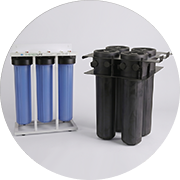
| ProEcoLife Shower Filter System | Chicago-specific lead & chlorine concerns | Professional-grade, multi-stage KDF & Carbon | Engineered for local water conditions with professional installation |
Bottom line: If lead is your primary concern, prioritize systems using high-quality KDF-55 media and look for professional-grade solutions rather than basic retail options. For Chicago homeowners, professional installation and a comprehensive water test are strongly recommended.
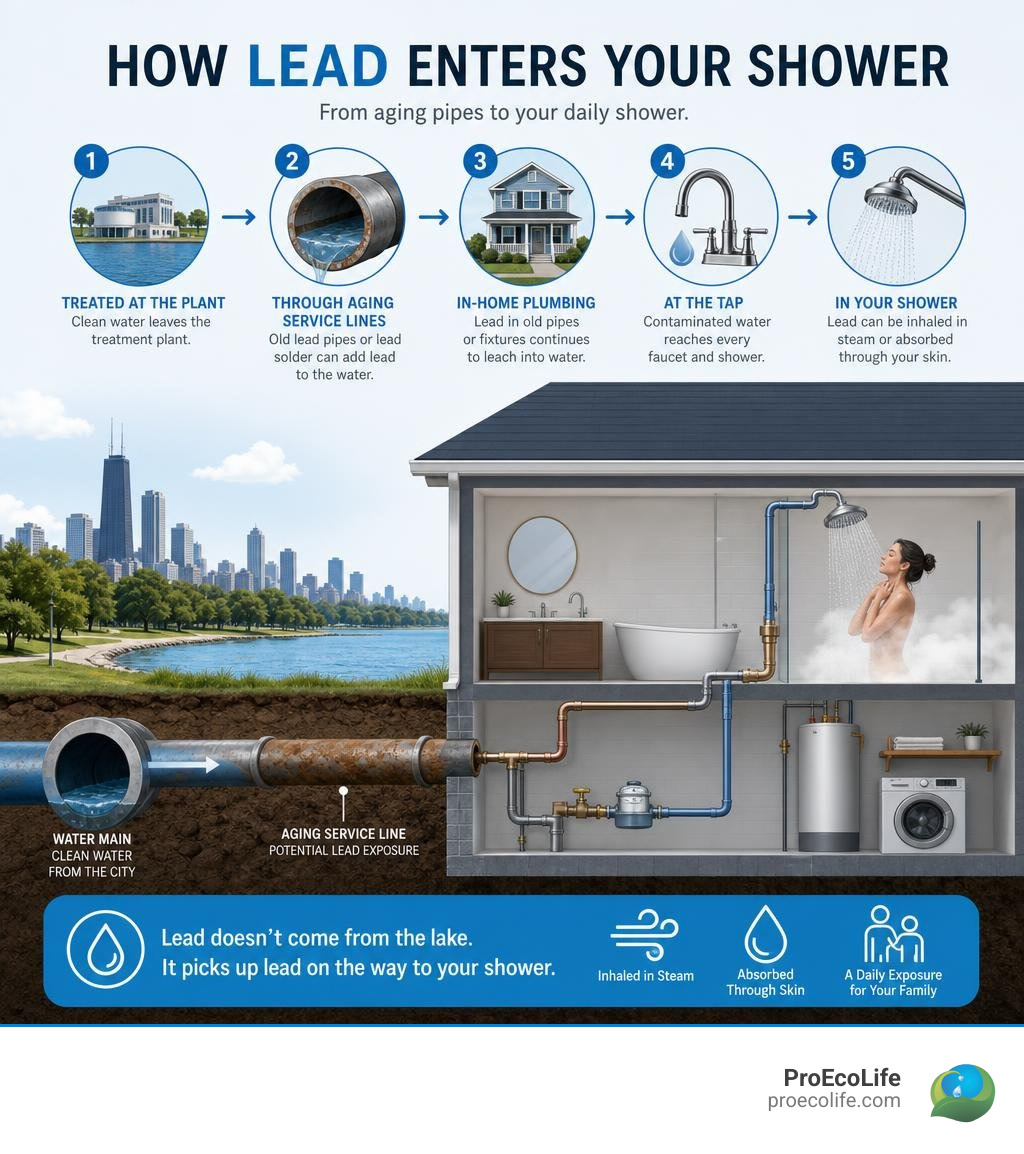
Chicago’s water comes from Lake Michigan — one of the cleanest source water supplies in the country. But here’s the problem: it picks up lead after it leaves the treatment plant, traveling through aging service lines and old in-home plumbing before it reaches your shower.
That means you could be inhaling lead-contaminated steam and absorbing it through your skin every single morning.
Research shows that a hot shower isn’t just a skin-contact event. Steam opens your pores. You breathe in vaporized water. For families in neighborhoods like Norwood Park, Jefferson Park, or Park Ridge — where homes built before the 1980s may still have lead pipes or lead solder — this is a real, daily exposure risk.
A quality shower filter may help reduce that risk. But not all filters are built the same, and very few are designed to handle the specific flow rates and water chemistry of the Chicago area.
This guide cuts through the marketing noise to show you what actually works.
Basic best shower filter for lead glossary:
Understanding Lead Contamination in Chicago’s Water Infrastructure
To understand why finding the best shower filter for lead is so vital, we have to look under our streets. Chicago’s water infrastructure is historic, but that history comes with a heavy price. For decades, city building codes actually mandated the use of lead service lines for single-family homes and small apartment buildings. This mandate remained in place until federal laws banned lead pipes in 1986.
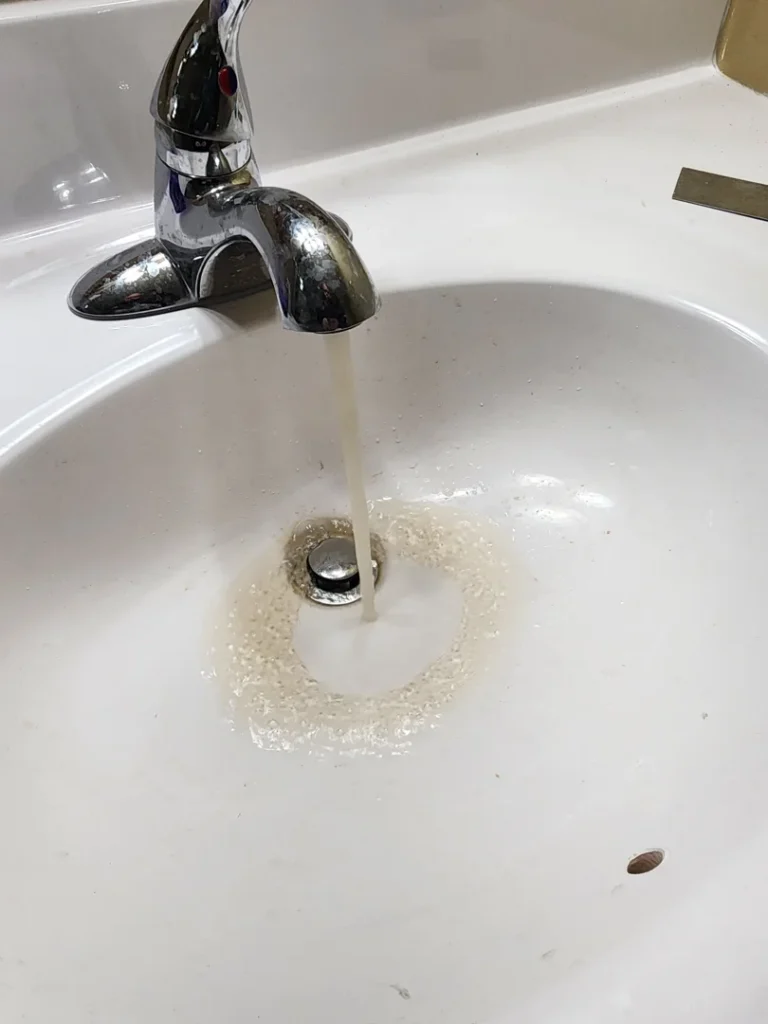
Consequently, Chicago has more lead service lines than almost any other city in the United States. When Lake Michigan water travels through these aging pipes, microscopic lead particles can break off and enter your household supply. While much of the public focus is on drinking water, showering in lead-contaminated water presents unique health concerns.
When you take a hot shower, two things happen:
- Dermal Absorption: Warm water opens your skin’s pores, making it easier for dissolved contaminants to interact with your skin barrier. For those with sensitive skin, eczema, or compromised skin barriers, this can worsen irritation.
- Inhalation of Aerosols: The physical action of the showerhead creates a fine mist. If lead or other heavy metals are bound to small particulates in the water, you may inhale these microscopic water droplets, bypassing the digestive tract entirely.
This is why residents in areas like the Northwest Side (including Norwood Park, Edison Park, and Jefferson Park) as well as neighboring suburbs like Niles and Des Plaines, are increasingly looking for specialized shower filtration. To learn more about selecting the right system for your home, you can read about How to Choose a Water Filter to Protect Against Lead or explore our comprehensive guide on No-Lead No-Worries: Your Guide to Lead-Free Drinking Water.
What is the Best Shower Filter for Lead Reduction?
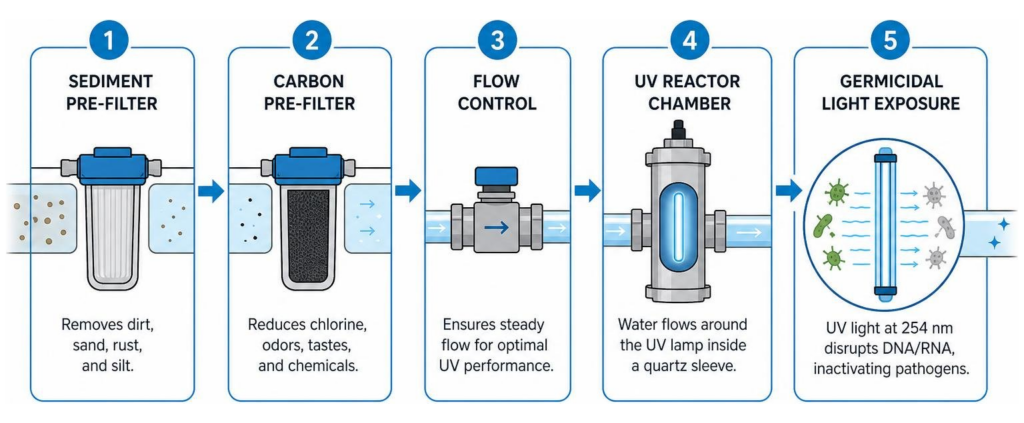
When shopping for the best shower filter for lead, you will quickly realize that the market is flooded with options making bold claims. To make an informed choice, you need to understand the science behind the filter media.
Most shower filters on the market rely on three primary technologies:
1. Kinetic Degradation Fluxion (KDF)
This is the gold standard for heavy metal reduction in hot water. KDF is a high-purity copper-zinc formulation that uses a basic chemical process known as redox (oxidation-reduction). During this reaction, harmful contaminants like lead, mercury, nickel, and chromium are chemically changed into harmless substances or physically bound to the media.
- KDF-55: Highly effective at removing chlorine and reducing heavy metals.
- KDF-85: Excellent for targeting iron and hydrogen sulfide (which causes that “rotten egg” smell).
2. Activated and Catalytic Carbon
Carbon media works through adsorption, trapping organic chemicals, chlorine, and disinfection byproducts (DBPs) in its microscopic pores. While standard carbon can struggle in high-temperature shower environments, catalytic carbon is highly reactive and holds up much better. For our Polish-speaking customers looking to understand carbon filtration in detail, we recommend checking out Filtry Węglowe do Wody: Co Dokładnie Usuwają i Dla Kogo Są Najlepsze.
3. Calcium Sulfite
This media is highly effective at neutralizing chlorine extremely quickly, even in hot, high-pressure water. However, it does not target lead or heavy metals.
Beware of Marketing Gimmicks
Many budget filters boast “15-stage” or “20-stage” filtration. In reality, many of these stages consist of cheap fillers like “magnetic energy balls,” “ceramic stones,” or “far-infrared beads” that have no scientific backing for lead removal. When searching for a reliable solution, look for products that utilize certified, heavy-duty media rather than gimmicky multi-stage retail cartridges.
If you are looking for a reliable, professional-grade option designed specifically to handle tough municipal water, our Shower Filter System offers robust, multi-stage protection without sacrificing your water pressure. You can also read more about general industry testing in The best filtered showerheads of 2026, tested and reviewed and browse popular options on the Best Showerhead Filters list.
How Shower Filters Compare to Whole-House Systems for Lead Removal
While a point-of-use shower filter is a great first step, it has physical limitations. A shower filter must process water at a high flow rate (often 2.0 to 2.5 gallons per minute) within a very small cartridge. This limits the “contact time” the water has with the filtration media, which can reduce its overall lead-removal efficiency over time.
For comprehensive protection, many homeowners opt for a whole-home approach. Let’s look at how these two methods compare:
| Feature | Point-of-Use Shower Filter | Whole House Filtration System |
|---|---|---|
| Primary Target | Chlorine, odor, basic sediment, some heavy metals | Lead, chlorine, PFAS, iron, sediment, and chemicals |
| Water Pressure Impact | May cause a 10-20% drop as the cartridge clogs | Minimal impact; designed for high-flow household demands |
| Lead Removal Efficiency | Moderate (depends on contact time and media quality) | Excellent (uses large-scale media tanks for maximum contact) |
| Maintenance | Replace cartridges every 3–6 months | Long-lasting media; low maintenance |
| Protection Scope | Single showerhead only | Every tap, shower, and appliance in the home |
Particularly in the Northwest suburbs — such as Skokie, Glenview, Arlington Heights, and Morton Grove — municipal water often carries a high mineral content alongside municipal treatment chemicals. This hard water can cause scale buildup that clogs small shower filters prematurely.
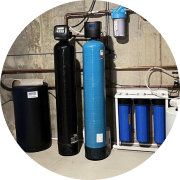
If you want to protect your entire home’s plumbing, water heater, and every single faucet from lead and chemical contaminants, our Whole House Filtration System is the most reliable choice. To dive deeper into the mechanics of heavy metal extraction, read our expert analysis: Heavy Metal Meltdown: The Best Way to Remove Lead from Drinking Water.
Choosing the Best Shower Filter for Lead in Your Chicago Home
Selecting the right water filtration setup requires balancing your household’s specific water quality, industry standards, and installation needs.
Key Features of the Best Shower Filter for Lead
When evaluating your options, keep these key features in mind:
- Certified Media: Look for systems utilizing media certified to NSF/ANSI standards. While NSF/ANSI 177 covers chlorine reduction, NSF/ANSI 53 is the standard for health-related contaminants like lead.
- Real Flow Rate Performance: Ensure the filter is rated to handle at least 2.0 gallons per minute (GPM) so your morning shower doesn’t turn into a weak trickle.
- Cartridge Longevity: A filter is only as good as its last cartridge change. Choose systems with clear replacement intervals (usually 6 months or 10,000 gallons) to maintain performance. Learn more about choosing Water Filters You Can Depend On.
Why ProEcoLife Offers the Best Shower Filter for Lead Protection

At ProEcoLife, we don’t believe in one-size-fits-all retail solutions. Founded by water quality expert Karol Dolega, we have been serving the Chicago area since 2014. We understand the unique challenges of Lake Michigan water, the specific plumbing challenges of older homes on the Northwest Side, and the hard water issues of the surrounding suburbs.
When you choose us, you are not just buying a plastic filter cartridge off a shelf. We provide:
- Customized Assessments: We analyze your home’s water profile to recommend the exact system you need.
- Professional Installation: Our experienced technicians handle the setup of our Shower Filter System or larger residential systems, ensuring leak-free performance and optimal flow.
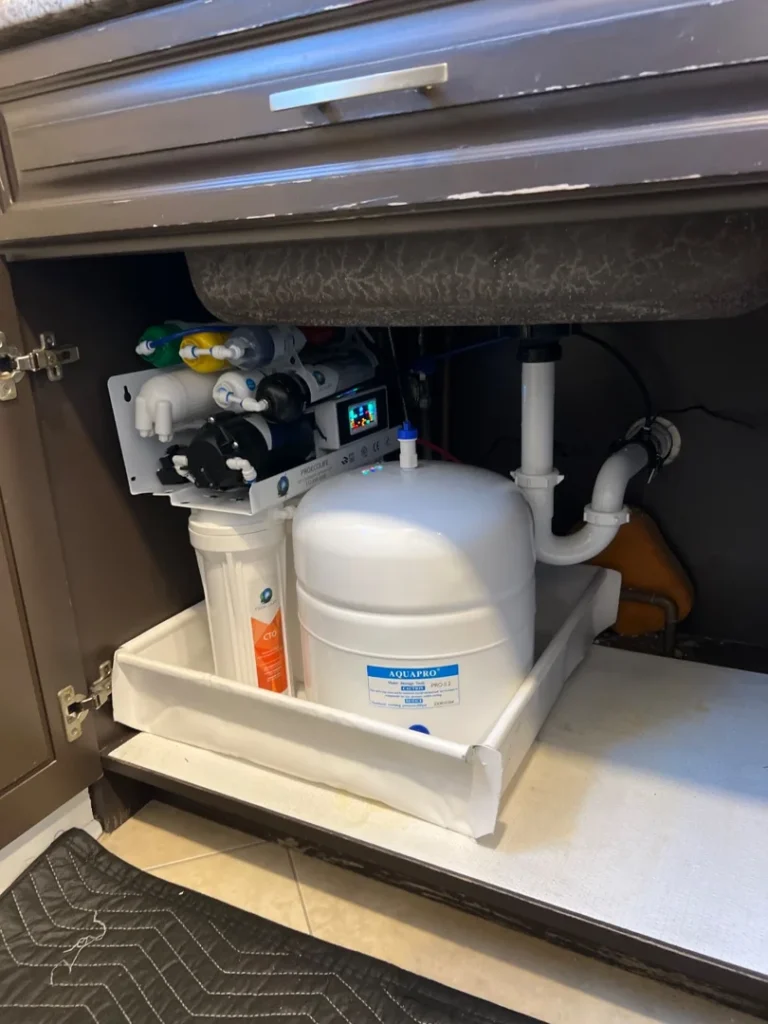
- Uncompromising Standards: From our PEL75 9-Stage RO System for pristine drinking water to our heavy-duty whole-home solutions, we deliver systems engineered for real-world Chicago conditions. Learn more about our Expert Water Filter Installation Services in Chicago.
Frequently Asked Questions About Shower Filtration
Do shower filters remove hard water minerals?
No. This is one of the most common myths in the water filtration industry. Shower filters can reduce chlorine, sediment, and heavy metals, but they cannot soften water or remove calcium and magnesium minerals. To address hard water scale, dry skin from minerals, and plumbing protection in the Northwest suburbs, you need a dedicated water softener. Discover how we can help protect your home with our Expert Water Softener Installation in Chicago: Protect Your Plumbing.
How often do shower filter cartridges need to be replaced?
For most homes, shower filter cartridges should be replaced every 3 to 6 months (or after roughly 10,000 gallons of water usage). If you notice a sudden drop in water pressure or the return of a distinct chlorine smell, it means the filter media is saturated and needs to be swapped out immediately.
Can a shower filter completely eliminate lead exposure?
While a high-quality KDF-55 shower filter may help reduce lead levels at the showerhead, it cannot completely eliminate all exposure pathways in your home. Lead can still be present in your kitchen tap, bathroom sinks, and laundry lines. For complete peace of mind, a comprehensive whole-home approach is highly recommended. Explore our top choices in The Best Whole House Water Filtration Systems in Chicago for Crystal Clear Water.
Conclusion
Your home should be a sanctuary, and your morning shower should bring peace of mind, not worries about aging infrastructure and heavy metals. Led by founder Karol Dolega, our team of local Chicago water experts is dedicated to helping you find the absolute best water treatment solutions for your family.
Whether you want to start with a targeted point-of-use filter or explore a whole-home system to address Chicago’s lead challenges, we are here to guide you every step of the way. For a deeper look at local water solutions, check out How to Choose the Best Lead Water Filter in Chicago: A 2026 Guide.
Ready to take control of your home’s water quality? Contact ProEcoLife today to schedule a professional water test and find the perfect filtration system for your needs.
Call us at (312) 889-8888 or visit proecolife.com to get started.