Find the Right Chicago RO Water System for Your Home
A Chicago RO water system can add a strong extra layer of filtration after municipal treatment, especially for homeowners concerned about lead from aging service lines, disinfectant taste, and minerals that leave spots on fixtures. For drinking water, an under-sink RO unit is often the practical choice. For low-TDS water at every tap, a properly designed whole-house system may be worth considering.
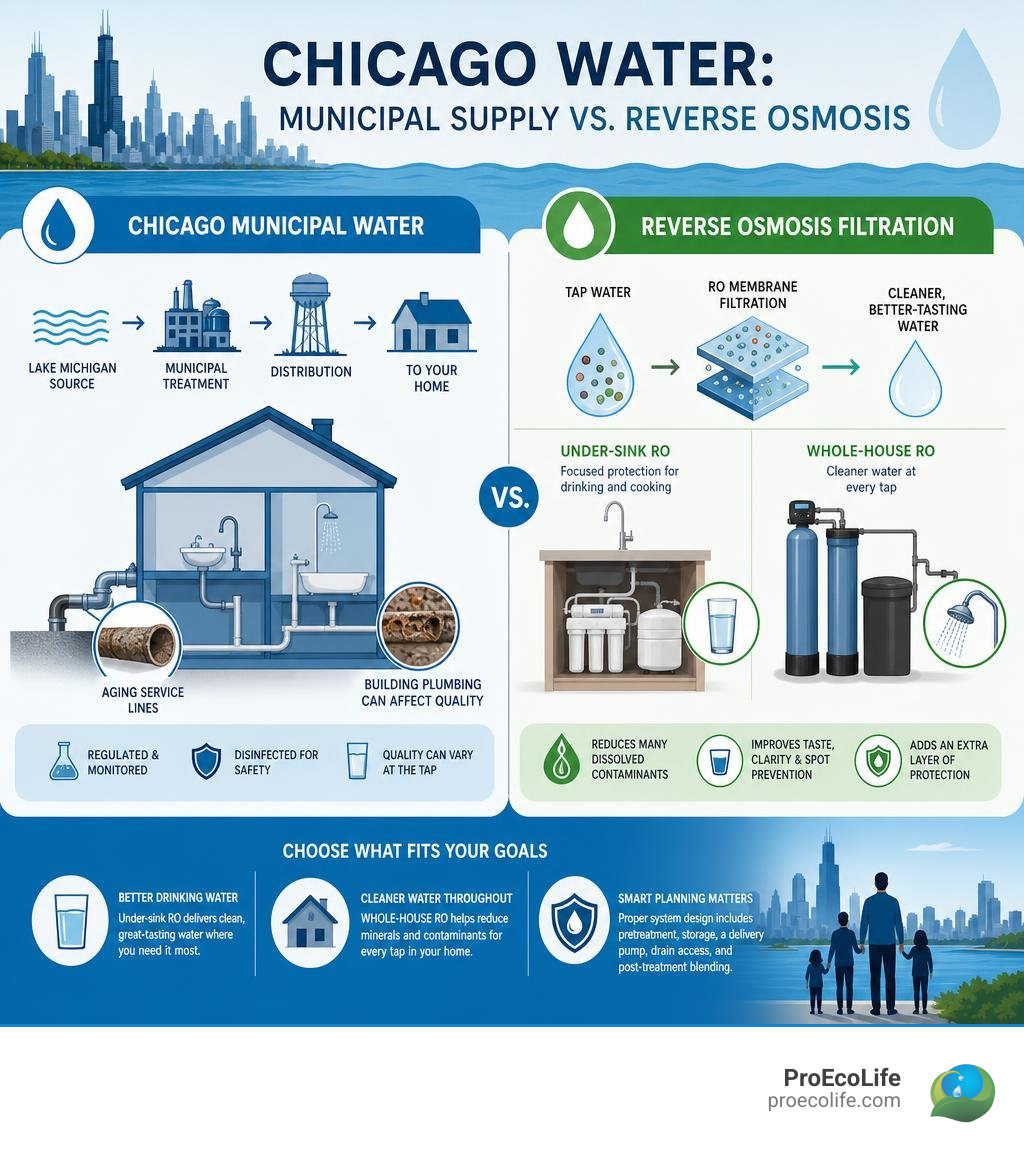
Chicago receives its water from Lake Michigan and treats it at large municipal plants before it reaches homes. That water is regulated and monitored, but the water quality at your faucet can still be shaped by your building’s plumbing and the service line connecting it to the street.
Reverse osmosis uses a fine membrane to reduce many dissolved materials. The best fit depends on your goals:
- Lead and better-tasting drinking water: Consider an under-sink RO system at the kitchen tap.
- Spot-free glass, lower mineral residue, and filtered water throughout the home: Explore whole-house RO.
- Whole-house RO planning: Expect pretreatment, storage, a delivery pump, drain access, and post-treatment blending or remineralization to help protect plumbing and improve taste.
This guide compares Chicago reverse osmosis options, explains what installation involves, and helps you identify the questions to ask before choosing a system.
Chicago RO water system terms simplified:
Chicago Water Quality and Why You Need Advanced Filtration
Our city draws surface water directly from Lake Michigan through deep offshore intake cribs and shore stations. Two of the world’s largest water purification facilities—the James W. Jardine Water Purification Plant north of Navy Pier and the Eugene Sawyer Water Purification Plant on the South Side—process billions of gallons weekly. According to official Cook County water system details, this public water utility serves over 2.7 million residents across 526,000+ active service connections.
While municipal treatment rigorously targets biological pathogens using conventional coagulation, settling, filtration, and chlorine disinfection, the water leaving the plant is not always identical to what comes out of your tap. The journey through miles of aging water mains and local utility lines can introduce distinct challenges. Understanding how reverse osmosis works is essential when evaluating how to safeguard your home against secondary contamination, pipe scale, and disinfectant byproducts.

Understanding Lead Risks in Cook County Service Lines
The primary challenge in Chicago and adjacent communities like Lincolnwood, Des Plaines, and Skokie is legacy infrastructure. Until the federal ban in 1986, Chicago building code mandated the use of lead pipes for service lines connecting street mains to residential meters. As a result, hundreds of thousands of residential structures in neighborhoods such as Norwood Park, Edison Park, and Jefferson Park still receive water through lead pipes.
When utility work, vibration, or temperature fluctuations disrupt the protective lining inside these pipes, microscopic lead particles and dissolved lead ions may enter household water. Even minor lead exposure presents health risks, particularly for infants and young children. Our detailed lead removal filtration guide explains why point-of-use mechanical barriers and semi-permeable membranes remain the gold standard for intercepting heavy metals at the kitchen sink.
Need Clean, Safe Water at Home?
Get a free water test at your home or business. We install and service whole-house filtration and PEL75 reverse osmosis systems across Chicagoland. We also take select projects in Wisconsin and Indiana.
Book a Free Water TestCall (312) 889-8888Selecting the Right Chicago RO Water System for Your Home
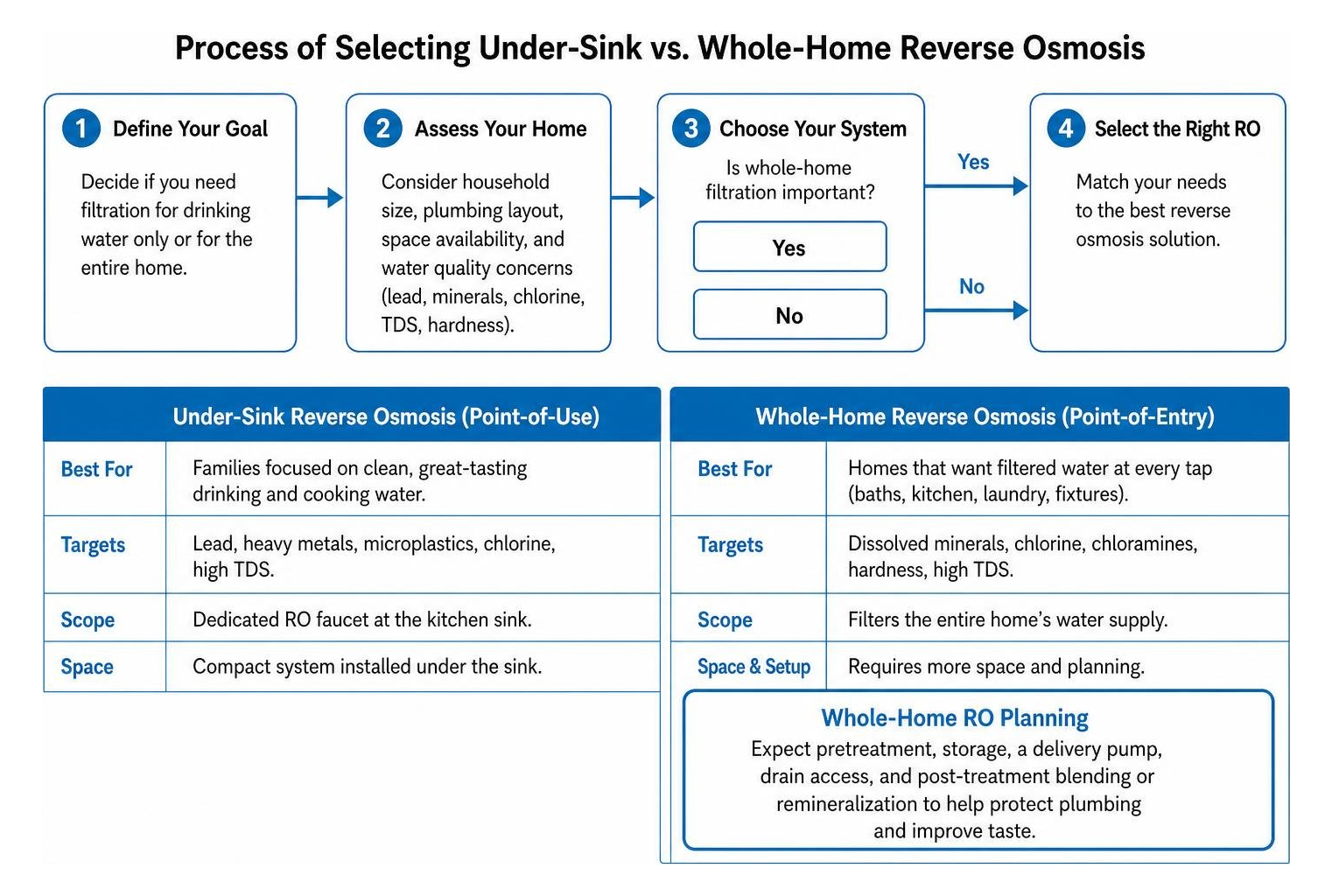
Choosing the ideal filtration setup depends on your household size, layout, and overall water treatment goals. While some families focus strictly on cooking and drinking water, others want to address hardness, chlorine, and total dissolved solids (TDS) across every fixture in the home.
| System Type | Primary Application | Target Contaminants | Daily Production Rate | Space Requirement |
|---|---|---|---|---|
| Point-of-Use Under-Sink RO | Dedicated drinking & cooking faucet | Lead, heavy metals, microplastics, chlorine, high TDS | 50 – 75 Gallons Per Day (GPD) | Compact (Cabinet under sink) |
| Whole-House Point-of-Entry RO | Complete home supply (baths, kitchen, laundry) | Dissolved minerals, chlorine, chloramines, hardness | 500 – 2,000+ GPD | Dedicated utility room (20–40 sq. ft.) |
| Whole House Carbon + Softening | Complete home general filtration | Chlorine, chloramine, hardness minerals, sediment | 8 – 15 Gallons Per Minute (GPM) | Moderate basement footprint |
Point-of-Use Under-Sink Chicago RO Water System Options
For most residential properties in Chicago, an under-sink system provides focused protection where it matters most. These units tuck neatly under the kitchen sink, sending treated water to a dedicated designer faucet.
Investing in top-rated reverse osmosis systems to remove lead gives homeowners peace of mind regarding heavy metals and microplastics. In addition to purity, the benefits of drinking reverse osmosis water include noticeably crisper taste, clearer ice cubes, and enhanced flavors when brewing coffee or tea.
Whole-House Point-of-Entry Chicago RO Water System Engineering
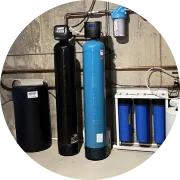
A whole-house Point-of-Entry (POE) RO configuration treats all water entering the building. In Chicagoland, designing a POE RO system requires professional engineering:
- Pretreatment Stages: Catalytic carbon backwashing filters eliminate chlorine and chloramines that would otherwise degrade delicate RO membranes. In northern suburbs like Glenview, Arlington Heights, and Niles where water hardness is elevated, upstream water softening is vital to prevent rapid mineral scaling.
- Atmospheric Storage Tanks: Because RO membranes filter water at a steady trickle, purified water collects in food-grade atmospheric holding tanks ranging from 150 to 500 gallons.
- Variable Speed Booster Pumps: A dedicated delivery pump maintains consistent household water pressure (typically 50–60 PSI) across multiple showers and appliances simultaneously.
- Plumbing Protection: Low-TDS water can be naturally aggressive toward traditional copper piping found in vintage Chicago bungalows and two-flats. A properly balanced whole-house design incorporates remineralization columns or precise blending valves to protect household plumbing from corrosion.
Need Clean, Safe Water at Home?
Get a free water test at your home or business. We install and service whole-house filtration and PEL75 reverse osmosis systems across Chicagoland. We also take select projects in Wisconsin and Indiana.
Book a Free Water TestCall (312) 889-8888Key Stages and Features of Modern Reverse Osmosis Systems
A modern RO setup uses multi-stage filtration to protect its core components and deliver clean, balanced water. The 5 essential stages explained in our water engineering guides illustrate how each filter layer serves a specific purpose.

Multi-Stage Purification and Mineral Restoration
Standard reverse osmosis removes impurities, but comprehensive multi-stage units take purification further. Many local homeowners select 9-stage water filtration platforms, such as our proprietary ProEcoLife PEL75 9-Stage RO System.
- Sediment Pre-Filtration: Traps rust, silt, and pipe scale originating from older municipal mains.
- Dual Catalytic Carbon Blocks: Neutralizes chlorine, chloramines, and volatile organic chemicals (VOCs).
- High-Rejection RO Membrane: Filters out dissolved metals, lead, nitrates, and microscopic contaminants down to 0.0001 microns.
- Remineralization & Mineral Balancing: Restores essential calcium, magnesium, and potassium ions to raise water pH and ensure a naturally crisp, balanced taste.
- Post-Carbon Polishing & Far-Infrared Finishing: Enhances molecular stability and taste profile before reaching your glass.
Maintenance Schedules and System Longevity
To keep your filtration equipment running reliably, follow structured service routines as detailed in our comprehensive guide to Chicago water filters:
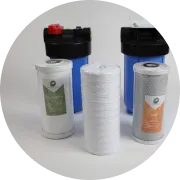
- Pre-Filters (Sediment & Carbon): Replace every 6 to 12 months to protect the main membrane from chlorine degradation.
- Reverse Osmosis Membrane: Typically replaced every 2 to 4 years, depending on incoming municipal TDS levels and regular pre-filter upkeep.
- Remineralization Cartridges: Refresh every 12 months to maintain proper mineral content and pH balance.
- Annual Sanitization & Valve Inspection: Clean the storage tank and test auto-shutoff valves, booster pump pressures, and blending ratios annually.
Frequently Asked Questions about Chicago Water Treatment
Does Chicago Tap Water Require Reverse Osmosis Treatment?
While Chicago municipal tap water meets baseline EPA microbial standards at the treatment plant, water quality can change as it flows through older underground mains and private lead service lines. A point-of-use or whole-house RO system provides an extra layer of defense against lead, chlorine taste, industrial contaminants, and pipe debris before the water reaches your glass.
How Does an RO System Prevent Corrosive Pipe Damage?
Water with very low mineral content can become slightly acidic and aggressive toward copper plumbing. In whole-house installations, our technicians install post-treatment calcite remineralization filters or precision bypass blending valves. These components restore a healthy mineral baseline, balancing pH levels to help protect home plumbing.
How Much Water Does a Modern Reverse Osmosis System Waste?
Older reverse osmosis systems had higher wastewater ratios, but modern units are far more efficient. High-recovery membranes and permeate pump technology help reduce wastewater volume significantly. In whole-home configurations, concentrate water can often be routed toward greywater applications or balanced drainage systems.
Conclusion
Finding the ideal reverse osmosis solution ensures your family enjoys pure, great-tasting water every day. Founded by Karol Dolega, ProEcoLife has served homeowners across Chicago and surrounding suburbs—including Park Ridge, Morton Grove, Des Plaines, and Skokie—since 2014. Whether you need an under-sink system for your kitchen or a whole-home filtration setup, our local team provides professional water testing and tailored system installation.
To find the right system for your home, explore our complete lineup of Chicago water filter system options or contact ProEcoLife to schedule a comprehensive water test by visiting proecolife.com.