The Best Reverse Osmosis System for Refrigerator Water and Ice
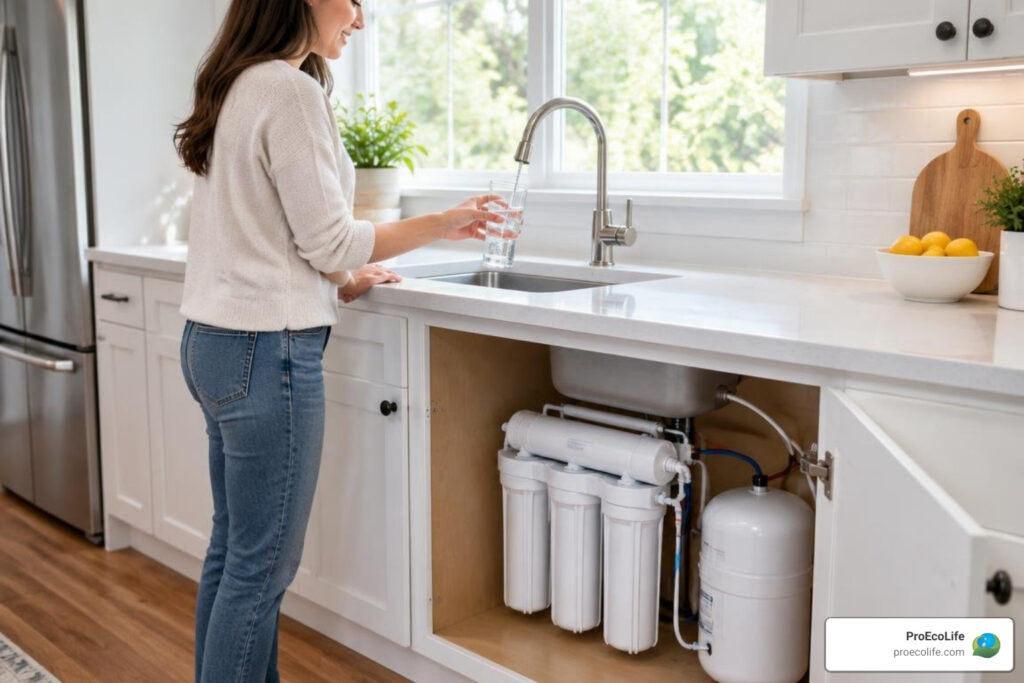
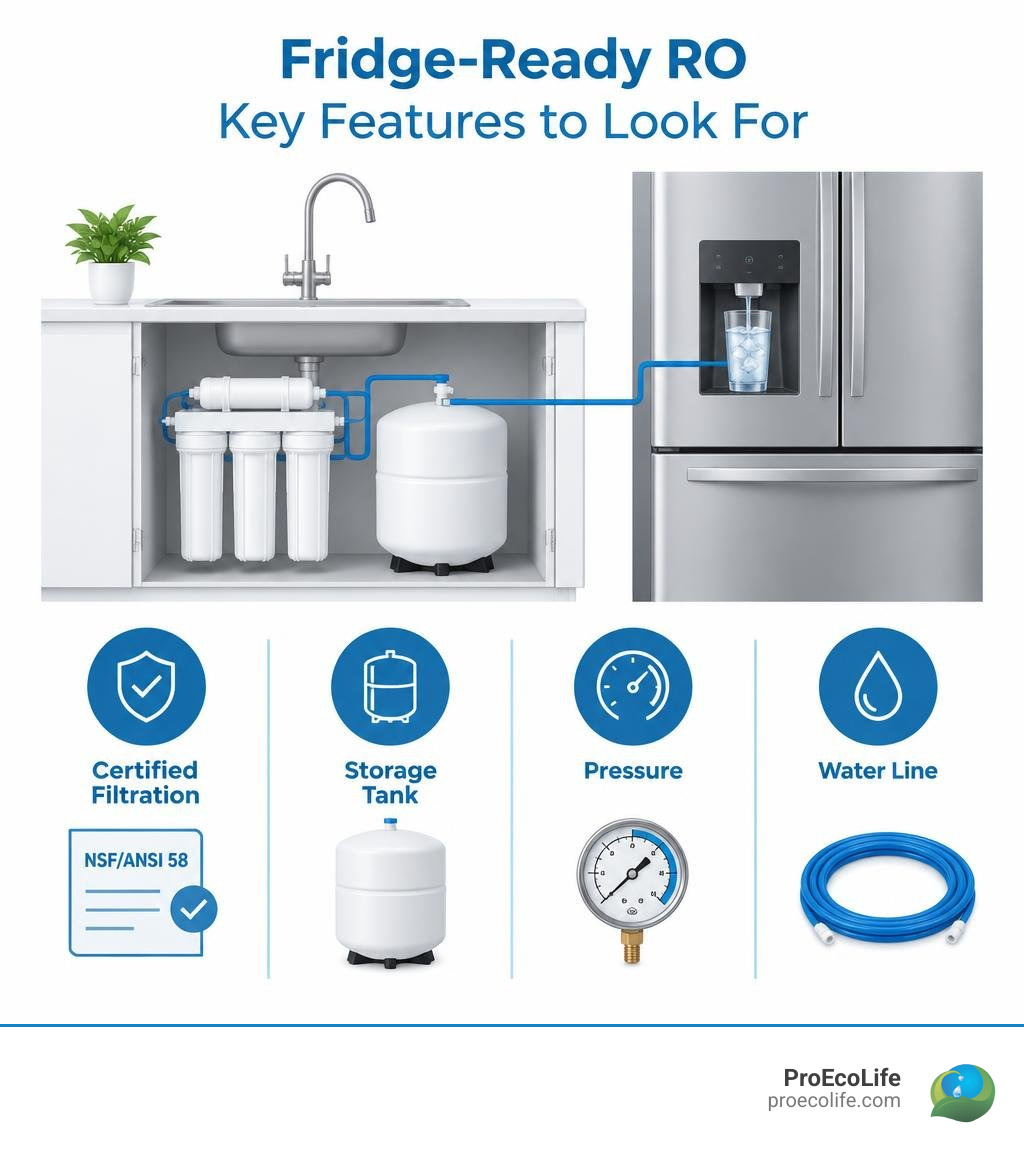
For most Chicago homes, the best choice is an under-sink reverse osmosis (RO) system with a storage tank and a line to the fridge. Look for a system certified to NSF/ANSI 58 for the contaminants you want to reduce. Before buying, check that it can meet your refrigerator’s water-pressure requirements and connect to its supply line.
That matters in older Chicago homes, where aging pipes can add lead to Lake Michigan source water before it reaches the dispenser. In the Northwest suburbs, harder water may also affect taste and leave mineral buildup. We’ll compare fridge-ready RO options with those needs in mind.
Simple best reverse osmosis system for refrigerator glossary:
Why Reverse Osmosis for Refrigerator Water
Most built-in refrigerator filters rely on simple carbon blocks designed to catch large sediment and reduce chlorine taste. While that helps with odor, a standard 5-micron factory filter does not reliably reduce total dissolved solids, nitrates, microplastics, or dissolved heavy metals. In older Chicago neighborhoods like Norwood Park, Edison Park, and Jefferson Park, aging service lines can introduce lead into municipal tap water, something standard fridge filters often struggle to address thoroughly.
Understanding how reverse osmosis turns wastewater back into pure H2O reveals why membrane filtration is superior. Reverse osmosis pushes pressurized water through a semi-permeable membrane with pores as tiny as 0.0001 microns. This tight physical barrier separates pure water molecules from dissolved impurities, washing contaminants away to leave clean, crisp drinking water.
Since 2014, when our founder Karol Dolega established ProEcoLife in the Chicago area, our mission has been tackling these local water challenges head-on. Whether you are dealing with lead pipes in classic Chicago bungalows or hard well-water minerals out in nearby communities like Des Plaines, Park Ridge, Niles, and Arlington Heights, dedicated multi-stage filtration offers a level of purity that factory appliance cartridges cannot match.
| Filtration System Type | Stages of Filtration | Contaminant & Lead Reduction | Membrane Lifespan | Typical Water Taste Profile |
|---|---|---|---|---|
| Standard Factory Fridge Filter | 1 Stage (Carbon Block) | Basic chlorine & sediment reduction; limited heavy metal capture | 6 months | Mildly filtered tap profile |
| Basic 3-Stage RO | 3 Stages (Sediment, Carbon, RO) | High reduction of dissolved solids and common impurities | 1 to 2 years | Clean, flat profile |
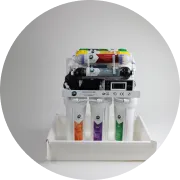
| ProEcoLife PEL75 9-Stage RO System | 9 Comprehensive Stages | Advanced dissolved solids, heavy metal, and lead reduction + remineralization | 2 to 3 years | Crisp, mineral-balanced, refreshing |
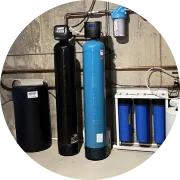
| Whole House Filtration + RO | Multi-Unit Comprehensive | Complete home sediment/chlorine reduction plus point-of-use purity | 2 to 3 years (RO membrane) | Pristine drinking water with softened utility flow |
Need Clean, Safe Water at Home?
Get a free water test at your home or business. We install and service whole-house filtration and PEL75 reverse osmosis systems across Chicagoland. We also take select projects in Wisconsin and Indiana.
Book a Free Water TestCall (312) 889-8888How to Choose the Best Reverse Osmosis System for Refrigerator Units
Pairing a high-performance filtration unit with your refrigerator requires careful attention to plumbing dynamics. A standard fridge water dispenser and automated ice maker require consistent flow rates and adequate line pressure to function smoothly. If line pressure drops too low, ice makers may produce hollow, fragile cubes, or the front dispenser stream might slow down to a trickle.
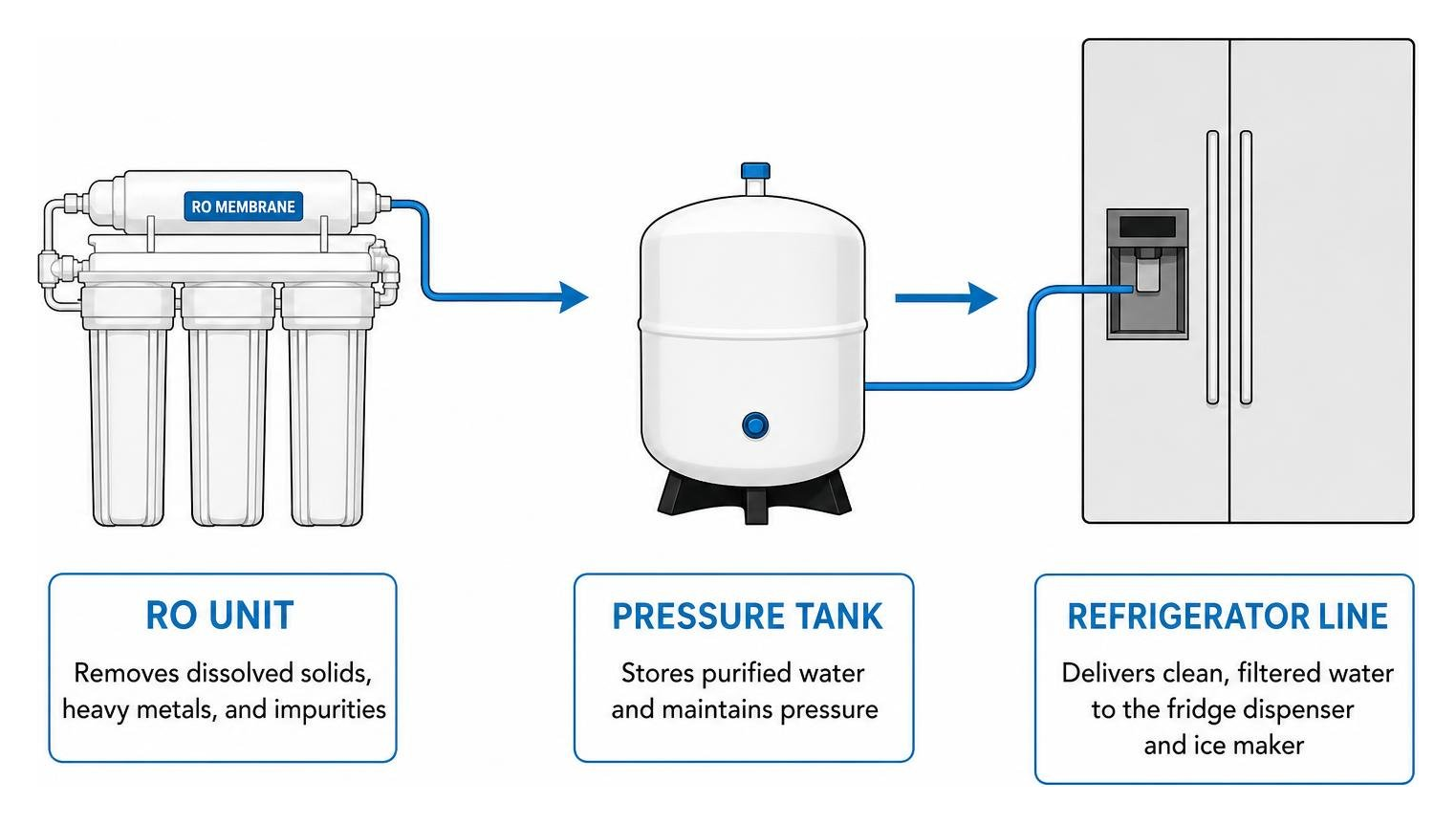
When setting up top reverse osmosis for fridge systems to upgrade your ice and water, premium appliances like the KitchenAid 48 in. W 30 cu. ft. Built-In Side by Side Refrigerator in Stainless Steel with PrintShield benefit greatly from a pressurized storage tank. Most refrigerator water inlet valves expect incoming pressure between 30 and 120 PSI. Tankless RO models can sometimes struggle with cycling pressure switches, whereas an under-sink system with a dedicated pressure tank ensures an uninterrupted flow through standard 1/4-inch food-grade tubing.
Key Features to Look For in the Best Reverse Osmosis System for Refrigerator Models
Selecting the right system involves several technical checkpoints to make sure your water is both clean and refreshing:
- NSF/ANSI Standards: Look for units tested against standards like NSF/ANSI 58 for total dissolved solids and heavy metal reduction.
- Multi-Stage Filtration & Remineralization: Pure RO water can be slightly acidic. Our PEL75 9-Stage RO System includes a remineralization and alkalizing stage that reintroduces beneficial calcium and magnesium minerals, balancing pH for exceptional taste.
- Balanced Storage Tanks: A dedicated storage tank maintains constant line pressure, preventing slow dispensing at the fridge door.
- Compact Footprint: High-capacity systems should still fit neatly beneath standard kitchen cabinetry next to your garbage disposal and plumbing lines.
Understanding demystifying reverse osmosis: how this tech purifies your drinking water helps clarify why these combined stages produce such noticeably superior ice and drinking water.
Integrating with Modern Smart Refrigerators and Ice Makers

Modern high-tech refrigerators feature advanced components like craft ice makers, auto-filling internal pitchers, and smart connectivity. For instance, high-end models like the Samsung Bespoke AI Sphere Ice 27.4-cu ft Standard-Depth 36-in Wide Side-by-Side Refrigerator Smart Compatible with Dual Ice Maker ,Water and Ice Dispenser ( Fingerprint Resistant Stainless Steel ) utilize specialized internal freezing cycles to produce crystal-clear spherical ice.
Dissolved gases and mineral salts in untreated tap water create cloudiness and internal fractures in ice. When you supply your appliance with mineral-balanced RO water, many customers notice clearer ice and better beverage presentation. Furthermore, smart refrigerators equipped with AI energy optimization can run their cooling and ice-making cycles with clean, scaled-free internal solenoids, preserving the appliance’s lifespan.
Need Clean, Safe Water at Home?
Get a free water test at your home or business. We install and service whole-house filtration and PEL75 reverse osmosis systems across Chicagoland. We also take select projects in Wisconsin and Indiana.
Book a Free Water TestCall (312) 889-8888Installation Guide: Connecting an RO System to Your Fridge
Proper integration requires professional plumbing to ensure leak-free performance and protect manufacturer warranties. Whether you have a built-in luxury unit or a versatile model like the Bespoke 29 cu. ft. 4-Door Flex French Door Smart Refrigerator with Beverage Zone, White Glass, our certified technicians handle every step of the setup.
During a professional setup of dedicated under sink water filters, our certified team performs the following key steps:
- Water Supply & Pressure Assessment: We test incoming cold-water line pressure and shut-off valve proximity (ideally within 6 feet of the appliance).
- Mounting & Tubing Routing: The PEL75 system is securely installed under the sink, running dedicated high-pressure 1/4-inch polyethylene lines directly to the refrigerator water inlet.
- Appliance Filter Bypass Integration: We insert an official factory bypass plug into the refrigerator’s internal filter housing. This prevents double filtration, which could unnecessarily restrict water flow and reduce pressure.
- Pressure Regulation & Leak Testing: Technicians calibrate the storage tank pressure, confirm optimal ice maker cycling, and perform high-pressure leak inspections across all fittings.
Cost, Lifespan, and Maintenance Considerations
While high-end refrigerator replacement cartridges need swapping every 6 months, a multi-stage RO system offers a more durable and economical schedule:
- Pre-Filters (Sediment & Carbon Blocks): Protect the core membrane and are typically replaced every 6 to 12 months.
- RO Semi-Permeable Membrane: Operates at peak efficiency for 2 to 3 years depending on local municipal water quality.
- Post-Carbon & Remineralization Cartridges: Serviced annually to maintain balanced alkalinity and fresh taste.
If you ever experience reduced dispenser flow rates, exploring our guide on don’t let it drip: troubleshooting low pressure in your RO system covers common causes, such as pressure tank bladder depletion or sediment-loaded pre-filters in areas with hard water, such as Skokie, Glenview, Morton Grove, or Northbrook.
In addition to point-of-use units, ProEcoLife provides comprehensive solutions including Whole House Filtration, Shower Filter Systems, Well Water Conditioning, and Commercial Water Filtration Systems across the greater Chicago area.
Frequently Asked Questions About RO Fridge Systems

Why is water pressure important when installing an RO system for refrigerator dispensers?
Refrigerator ice makers and water solenoids rely on mechanical valves calibrated for specific pressure ranges (typically 30 to 120 PSI). If the supply pressure drops too low, the valve may not actuate cleanly, resulting in slow dispenser output, undersized ice cubes, or incomplete ice-mold fills. Using a pressurized storage tank paired with our PEL75 system ensures reliable flow.
Can an RO system supply both the refrigerator dispenser and ice maker?
Yes. A single under-sink RO system can simultaneously feed a dedicated countertop drinking faucet, the refrigerator water dispenser, and the automatic ice maker. Our professional installers use specialized tee fittings and check valves to split the output line without losing water volume.
How often should I replace filters when my fridge is hooked up to an RO unit?
For homes in Chicago and surrounding suburbs like Niles, Park Ridge, and Des Plaines, pre-filters should generally be serviced annually, while the advanced RO membrane is replaced every 2 to 3 years. Results vary based on incoming water hardness and household usage.
Conclusion
Upgrading your refrigerator’s water supply with a high-performance reverse osmosis unit transforms everyday hydration, elevating your ice, water, and cooking. Learn more about the technology by exploring how does reverse osmosis work? and discover how our advanced filtration methods solve local Chicago water concerns.
Ready to improve your home’s water quality? Contact ProEcoLife today to schedule a water test by calling (312) 889-8888 or visiting proecolife.com.