

How to Remove Chlorine from Water at Every Tap
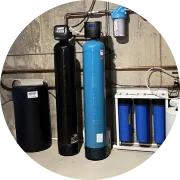
A house chlorine filter is installed where water enters your home. It typically uses activated carbon to reduce chlorine before water reaches your kitchen, showers, and laundry. If you only want better-tasting drinking water, an under-sink filter may be enough.
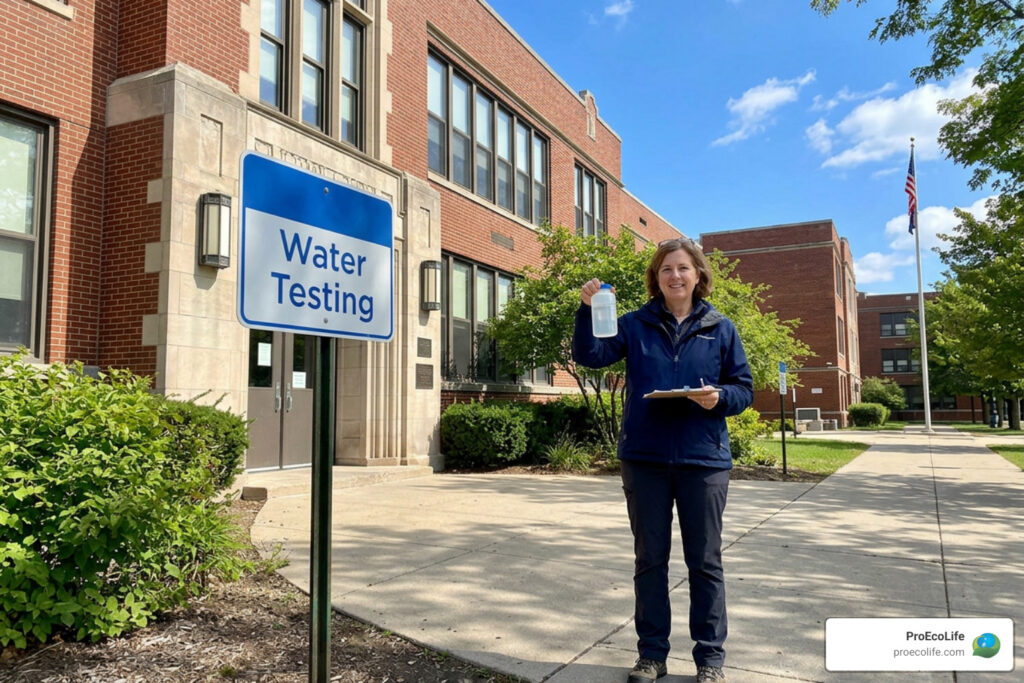
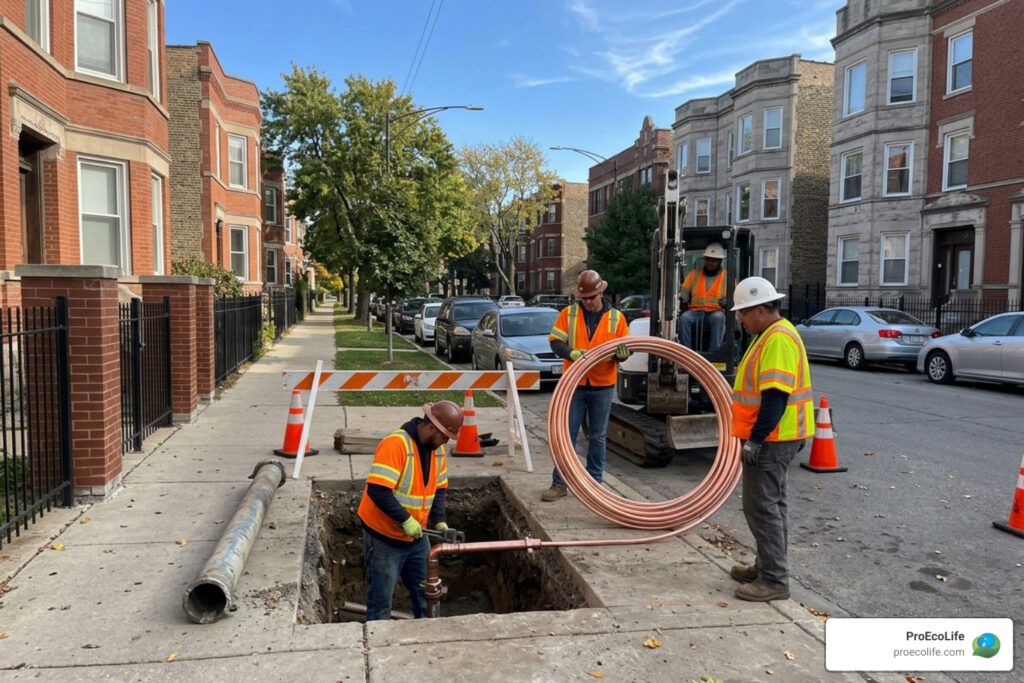
In Chicago, Lake Michigan water is disinfected before it reaches your tap. That protects the water supply, but some homeowners notice a chlorine taste or smell. Removing chlorine does not remove lead that may enter water through aging pipes in older homes. And if you live in a Northwest suburb with hard water, a chlorine filter will not soften it. Test your water first so you know which problems your system needs to address.
I’m Maciej Spadlo, writing with ProEcoLife’s experience providing home water filtration since 2014. This guide will help you decide whether a house chlorine filter fits your water and your home.
Basic house chlorine filter terms:
- best whole house water treatment
- carbon water filtration systems for home
- all house water filtration systems
How a House Chlorine Filter Protects Your Home and Health
When municipal treatment facilities draw water from Lake Michigan to serve Chicago and surrounding communities, chemical disinfectants like chlorine are added to neutralize dangerous waterborne pathogens. While this sanitation process is vital for public health during transit through miles of municipal water mains, having that residual disinfectant pour out of your faucets is less than ideal.

Disinfectants can alter the taste and odor of cooking water, dry out delicate skin tissues, and create volatile compounds in steam. Many local homeowners notice a sharp chemical smell reminiscent of a public swimming pool when running a hot bath or filling a glass at the sink. Adding a point-of-entry treatment solution reduces these harsh chemicals before the water splits into your water heater and plumbing lines.
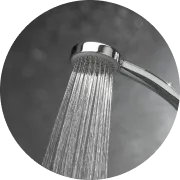
If your primary concern is dry skin and brittle hair during morning routines, targeted units like our dedicated shower filter system can bring immediate relief to specific bathrooms. However, treating incoming water at the source protects the entire home environment.
Health and Aesthetic Benefits of Whole-Home Dechlorination
When you take a hot shower, warm water opens your pores and generates steam. Chlorine vaporizes easily at shower temperatures, which means you may inhale volatile chlorine gas and absorb residual compounds directly through the skin.
For residents across Northwest Side neighborhoods like Norwood Park, Edison Park, and Jefferson Park, installing comprehensive dechlorination may help with several day-to-day comfort issues:
- Skin and Scalp Hydration: Chlorine strips natural protective oils from the skin and scalp. Reducing exposure often eases persistent flaking, itchy winter skin, and hair color fading.
- Respiratory Comfort: Eliminating vaporized chemical fumes in enclosed shower stalls can make breathing significantly more comfortable for individuals with sensitive airways or asthma.
- Reduced Disinfection Byproducts (DBPs): When chlorine reacts with tiny traces of naturally occurring organic matter in source water, it forms byproducts like trihalomethanes (THMs). Point-of-entry carbon filtration actively captures these compounds.
- Eczema and Irritation Management: Many families managing chronic skin sensitivities report noticeable improvements in everyday comfort once chlorinated bathwater is addressed.
Bacterial Growth Risks in Dechlorinated Plumbing
While stripping chlorine from your home’s water supply provides noticeable aesthetic and comfort perks, it introduces an important biological trade-off that every homeowner must understand.
Chlorine serves as a protective barrier inside distribution plumbing. When a whole-home system removes this disinfectant at the point of entry, your internal copper or PEX pipes are no longer sanitized against microbial growth. In homes with low water usage, expansive plumbing footprints, or long dead-end pipe runs, stagnant dechlorinated water can foster biofilms and opportunistic bacteria over time.
To maintain water quality throughout your home after installing a filtration system:
- Maintain regular water turnover by running unused guest taps and basement fixtures weekly.
- Ensure your water heater maintains a safe storage temperature (typically 120°F to 140°F) to prevent microbial colonization in the tank.
- Replace your filtration media and cartridges according to schedule so the media bed itself does not become a breeding ground for heterotrophic bacteria.
Need Clean, Safe Water at Home?
Get a free water test at your home or business. We install and service whole-house filtration and PEL75 reverse osmosis systems across Chicagoland. We also take select projects in Wisconsin and Indiana.
Book a Free Water TestCall (312) 889-8888Core Technologies Used to Remove Chlorine from Tap Water
Different filtration technologies target specific chemical and physical characteristics of tap water. Choosing the right setup depends on your household’s incoming water chemistry, flow requirements, and long-term goals. If you are exploring how to evaluate your home’s needs, learning how to choose a water filter can clarify the technical parameters.
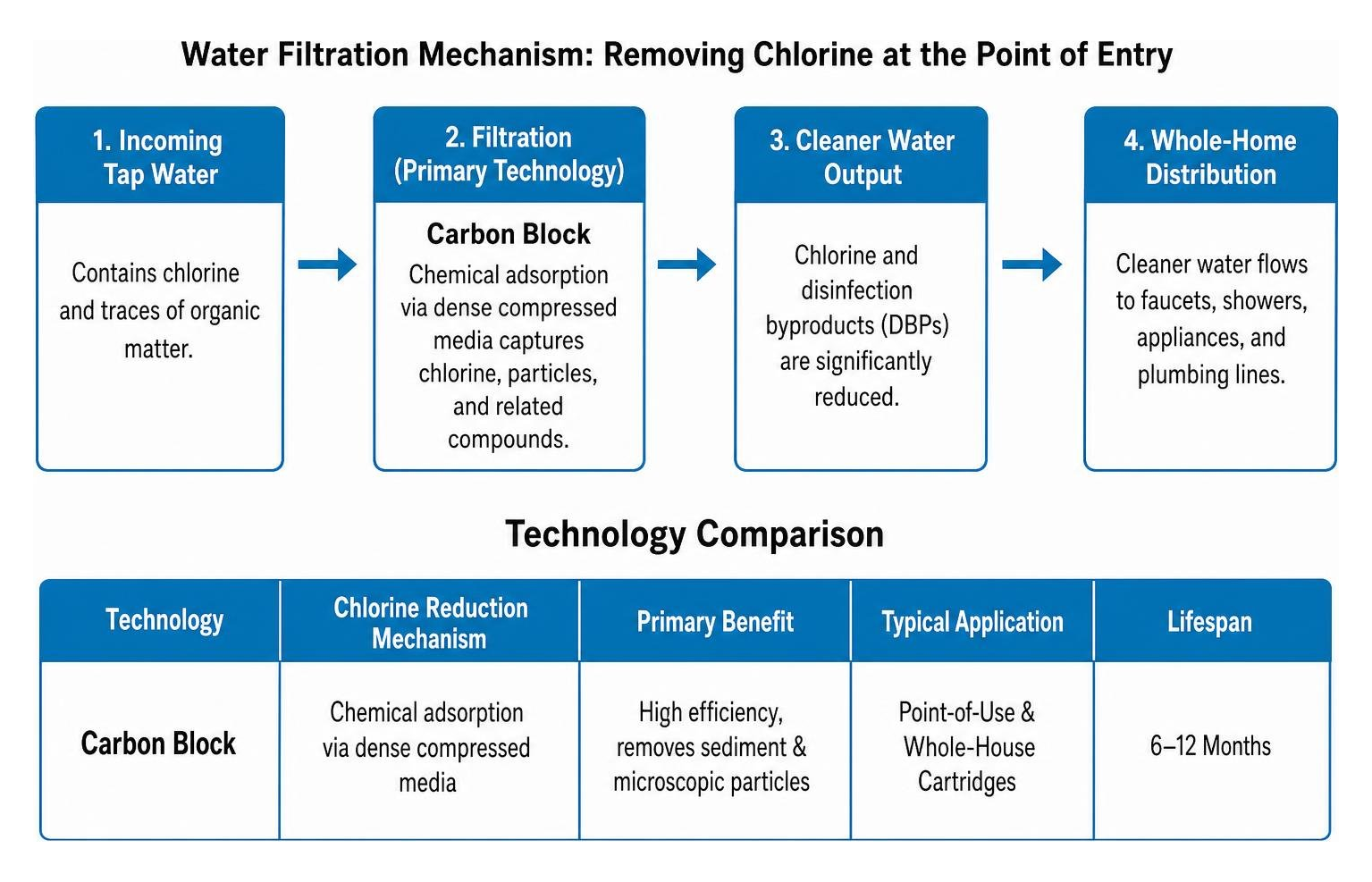
The primary technologies used to manage chlorine and related compounds include:
| Technology | Chlorine Reduction Mechanism | Primary Benefit | Typical Application | Lifespan |
|---|---|---|---|---|
| Carbon Block | Chemical adsorption via dense compressed media | High efficiency, removes sediment & microscopic particles | Point-of-Use & Whole-House Cartridges | 6–12 Months |
| Granular Activated Carbon (GAC) | Chemical adsorption via loose porous granules | High flow rates, low initial pressure drop | Backwashing Whole-House Tanks | 3–5 Years |
| KDF Media | Redox (oxidation-reduction) chemical conversion | Handles high temperatures; extends carbon bed life | Shower Filters & Hybrid Whole-House Beds | 1–3 Years |
| Reverse Osmosis (RO) | Semi-permeable membrane separation (preceded by carbon) | Ultra-pure drinking water; strips heavy metals & TDS | Under-Sink Drinking Water Systems | 2–3 Years (Membrane) |
For further technical context on municipal water filtration standards, consult the Home Drinking Water Filtration Fact Sheet | US EPA.
Carbon Block vs. Granular Activated Carbon (GAC)
Activated carbon is the gold standard media for chlorine removal, manufactured primarily from high-grade coconut shells or coal that have been treated with heat and gas to create millions of microscopic pores. When water passes through the media bed, chlorine molecules are captured through a chemical process called adsorption.
Understanding whether carbon water filtration systems for home should utilize solid carbon block or loose granular activated carbon (GAC) comes down to flow rate and contact time:
- Carbon Block Filters: These are composed of finely powdered activated carbon bound into a solid, highly dense cylinder. Water must force its way through tight micron-rated pores. This provides extensive contact surface area and eliminates “channeling” (water carving easy paths through the media). Carbon blocks excel at removing chlorine, fine sediments, and volatile organic compounds (VOCs), though they can restrict flow if sized improperly.
- Granular Activated Carbon (GAC): GAC consists of loose carbon granules packed inside a cartridge or fiberglass mineral tank. Because the granules are loose, water flows with minimal resistance, making GAC popular for large whole-house applications that require high gallons-per-minute (GPM) delivery. However, water can occasionally bypass portions of the bed through loose channels, slightly reducing contact efficiency compared to dense blocks.
Why Reverse Osmosis and Ion Exchange Differ from a House Chlorine Filter
It is common to confuse whole-house chlorine systems with water softeners (ion exchange) and reverse osmosis (RO) systems, but each serves an entirely distinct purpose:
- Reverse Osmosis Systems: RO forces water under pressure through a semi-permeable membrane to strip dissolved solids, heavy metals, and microscopic minerals like calcium and magnesium. However, RO membranes are damaged by direct exposure to chlorine, so they require integrated carbon pre-filters to remove chlorine first. RO also produces concentrated reject water (typically discharging 3 to 5 gallons down the drain for every gallon purified), making whole-house RO impractical and inefficient for general utility water like toilet flushing. RO is best utilized in dedicated under sink water filters for drinking and cooking.
- Ion Exchange Softeners: Softeners are designed specifically to swap hardness minerals (calcium and magnesium) for sodium or potassium ions. Softener resin does not remove chlorine. In fact, prolonged exposure to raw chlorinated municipal water degrades standard softening resins over time, breaking down the polymer beads and shortening the unit’s operating life.
Need Clean, Safe Water at Home?
Get a free water test at your home or business. We install and service whole-house filtration and PEL75 reverse osmosis systems across Chicagoland. We also take select projects in Wisconsin and Indiana.
Book a Free Water TestCall (312) 889-8888Whole-House Systems vs. Point-of-Use Filters
Deciding between a point-of-entry (POE) whole-house filter and a point-of-use (POU) filter depends on your budget, plumbing layout, and household objectives.

A point-of-use unit sits right at the fixture—such as an under-sink system beneath the kitchen counter or an inline filter attached to a single shower arm. These are targeted, cost-effective solutions that improve drinking or bathing water in a specific room.
In contrast, a POE whole-house installation connects directly to your main supply line right after the municipal meter. Every fixture, shower, garden hose, and household appliance receives treated water.
| Feature | Whole-House Filter (POE) | Point-of-Use Filter (POU) |
|---|---|---|
| Water Coverage | Entire home (all sinks, showers, laundry) | Single tap or dedicated fixture |
| Vapor Inhalation Protection | Yes (eliminates shower steam chlorine) | Limited to specific treated shower heads |
| Appliance Protection | Protects water heaters and rubber plumbing seals | None for main appliances |
| Space Required | Mechanical room or basement utility area | Under cabinet or on fixture |
| Installation Scope | Plumbed into main service inlet | Localized connection under sink/fixture |
Choosing the Right House Chlorine Filter for Your Household
Selecting the proper whole-house platform requires balancing your home’s peak flow rate with the physical layout of your plumbing. Installing an undersized cartridge unit on a large home can cause an unwelcome drop in water pressure whenever multiple fixtures run simultaneously.
When outfitting older properties or larger homes across suburbs like Park Ridge, Niles, Des Plaines, Skokie, and Glenview, multi-stage filtration assemblies are often the preferred approach. For a breakdown of multi-stage configurations, check out the complete guide to 3 stage water filter housings and systems.
A reliable whole-house chlorine setup generally incorporates:
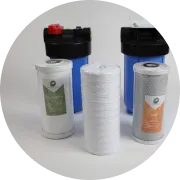
- A Sediment Pre-Filter: A 5-micron or 20-micron pleated or spun-polypropylene cartridge that traps rust flakes, silt, and pipe scale before they reach the carbon bed. This preserves the surface area of your carbon media.
- Catalytic or Activated Carbon Media: Sized properly to accommodate the home’s bathroom count (typically requiring 10 to 15 GPM service flow rates).
- Proper Plumbing Bypass Valving: A dedicated three-valve bypass manifold allowing continuous water access during routine maintenance cycles.
Cost and Long-Term Maintenance Comparison
Operating a whole-house filtration platform involves both the initial setup and periodic upkeep. Cartridge-based whole-house systems rely on replaceable 10-inch or 20-inch Big Blue filter cartridges that require replacement every 6 to 12 months, depending on your family’s water consumption and sediment load.
Large tank-based backwashing systems feature a central control valve and a media bed that automatically rinses itself to prevent compaction and channeling. These media beds last roughly 3 to 5 years before requiring media re-bedding, though the initial equipment investment is higher.
Neglecting routine cartridge changes can cause pressure drops across your plumbing lines and eventually allow trapped contaminants to bleed through the exhausted media bed.
Frequently Asked Questions About Chlorine Water Filters
Does a house chlorine filter remove chloramines?
Standard activated carbon filters are optimized for free chlorine, but they work more slowly against chloramines (a blend of chlorine and ammonia used by some municipal water authorities). If your municipality uses chloramines for disinfection, a standard carbon bed will exhaust its capacity rapidly. You must select a system loaded with specialized catalytic carbon, which features an altered electronic surface structure designed to break down the resilient chemical bond between chlorine and ammonia.
How often should whole-house carbon filter cartridges be replaced?
Most residential whole-house carbon cartridges are rated for roughly 50,000 to 100,000 gallons, which translates to a service lifespan of 6 to 12 months for an average family of four. Factors that accelerate replacement schedules include heavy incoming sediment, unusually high municipal chlorine dosing, and elevated water usage. If you notice a drop in dynamic water pressure or a return of chemical odors at the tap, it is time for a filter change.
Will removing chlorine lower my home’s water pressure?
A properly sized filtration system will not cause a noticeable reduction in household water pressure. Minor pressure drops (typically 1 to 3 PSI) are normal as water flows through dense media. However, noticeable pressure loss occurs when an undersized filter is installed on a high-flow plumbing line or when sediment builds up in an overdue pre-filter. Ensuring your system’s flow rate matches or exceeds your peak household demand prevents fixture starvation.
Conclusion
Installing a dedicated point-of-entry treatment system ensures that every faucet, showerhead, and appliance in your home runs clean, fresh-tasting water free from chemical disinfection odors. In addition to eliminating harsh bath vapors and soothing dry skin, whole-home filtration helps protect internal plumbing seals and water-using equipment from premature oxidative wear.
Since 2014, ProEcoLife founder Karol Dolega and our local team have helped homeowners throughout Chicago’s Northwest Side neighborhoods—including Norwood Park, Edison Park, and Jefferson Park—as well as nearby communities like Park Ridge, Niles, Des Plaines, Skokie, Glenview, Arlington Heights, and Morton Grove choose the right equipment for their unique plumbing systems. Whether your property needs our advanced PEL75 9-Stage RO System for pure drinking water, targeted Well Water Conditioning, Commercial Water Filtration Systems, or our whole-home whole house filtration system, we customize solutions to match your home’s exact water chemistry.
To find out what is in your tap water and explore the best filtration setup for your home, call ProEcoLife today at (312) 889-8888 or visit proecolife.com to schedule your comprehensive water test.