
How to Choose a Lead Water Filter Pitcher in Chicago
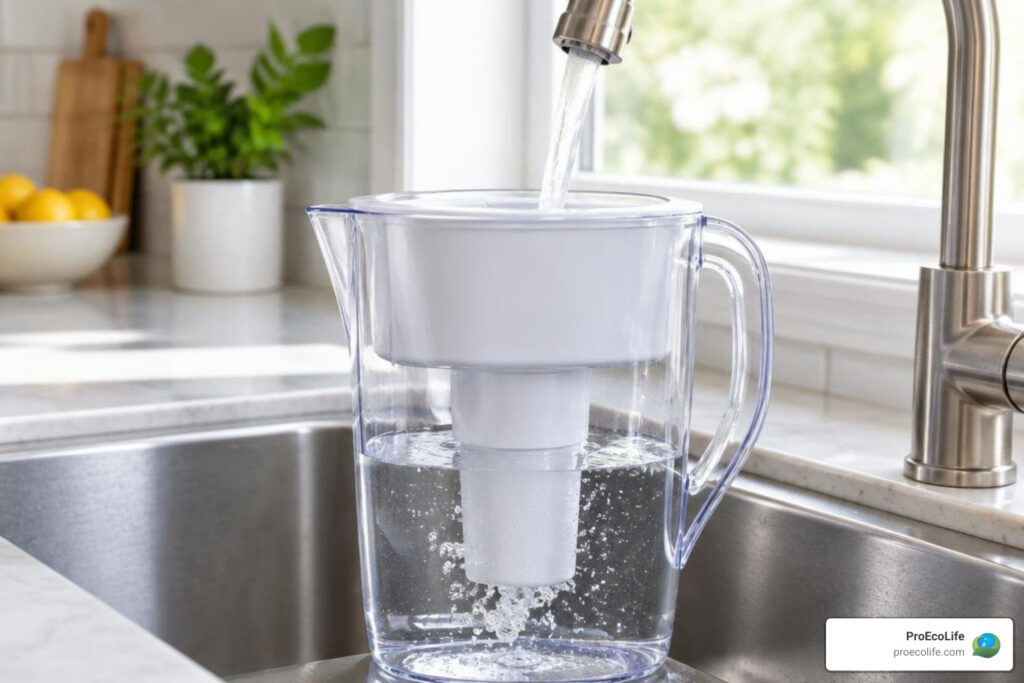
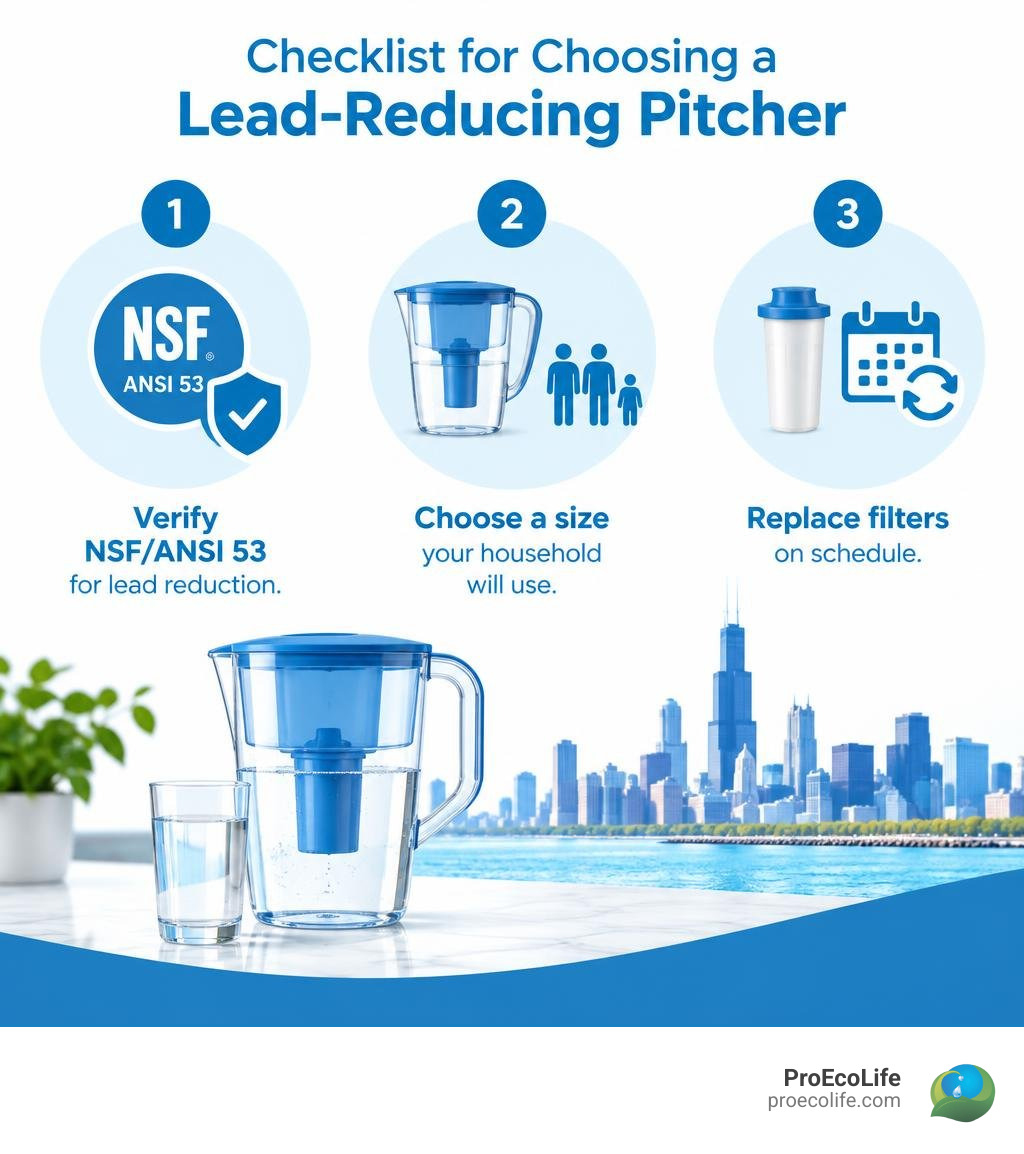
Choose a pitcher with independently verified NSF/ANSI 53 certification for lead reduction. Check the exact pitcher and filter model, then pick a size your household will use and replace the filter on schedule. A glass body or a higher price alone does not tell you how well it reduces lead.
Chicago’s drinking water starts in Lake Michigan, but lead can enter through aging service lines and plumbing in older homes. Hard water in some Northwest suburbs can also make filter upkeep more important. The best choice is one whose lead claim you can verify and whose replacement schedule you can keep.
Key lead water filter pitcher vocabulary:
- pitcher filters that remove lead
- best water filter pitcher to remove lead
- best water filter for lead
Why You Need a Certified Lead Water Filter Pitcher
When it comes to municipal tap water across the Chicagoland area, the initial treatment from Lake Michigan is among the most closely monitored in the nation. However, the path between the municipal treatment plant and your kitchen faucet tells a different story. In older Chicago neighborhoods such as Norwood Park, Edison Park, and Jefferson Park, thousands of historic brick bungalows and two-flats still receive their water via legacy lead service lines. Until full municipal replacements are complete, heavy metals can leach directly into residential tap water.
To protect your family, you need a system verified under stringent performance benchmarks. The benchmark for heavy metal reduction in gravity systems is the NSF/ANSI 53 standard, which certifies that a filtration unit reduces health-related contaminants, specifically dissolved and particulate lead. For advanced pressurized under-sink systems, the equivalent benchmark is NSF/ANSI 58. Compliance with local guidelines, including Illinois environmental protection standards, provides baseline regulatory oversight, but residential point-of-use protection ensures that trace metals leached from aging interior plumbing never reach your glass.
Many homeowners start their search by researching effective pitcher filters that remove lead to get immediate countertop protection.
Lead exists in tap water in two primary chemical forms:
- Particulate Lead: Tiny physical flakes and insoluble fragments of corroded lead pipes, solder, or brass fixtures that break off and travel suspended in the water stream.
- Dissolved Lead: Microscopic, ionic-level lead molecules that have fully dissolved into the water, remaining completely invisible, odorless, and tasteless.
Standard entry-level aesthetic pitchers (often certified only under NSF/ANSI 42 for taste and odor) rely solely on basic granular activated carbon. While they may improve the taste of chlorine, they allow dissolved ionic lead to pass directly through into your drinking cup. A certified unit engineered for heavy metal reduction uses specialized media specifically tailored to bind and trap dissolved chemical ions.
Filtration Technology in a Modern Lead Water Filter Pitcher
Modern gravity pitchers designed for heavy metal defense utilize a composite multi-stage core. Gravity pulls the water through distinct media beds, each targeting specific classes of pollutants:
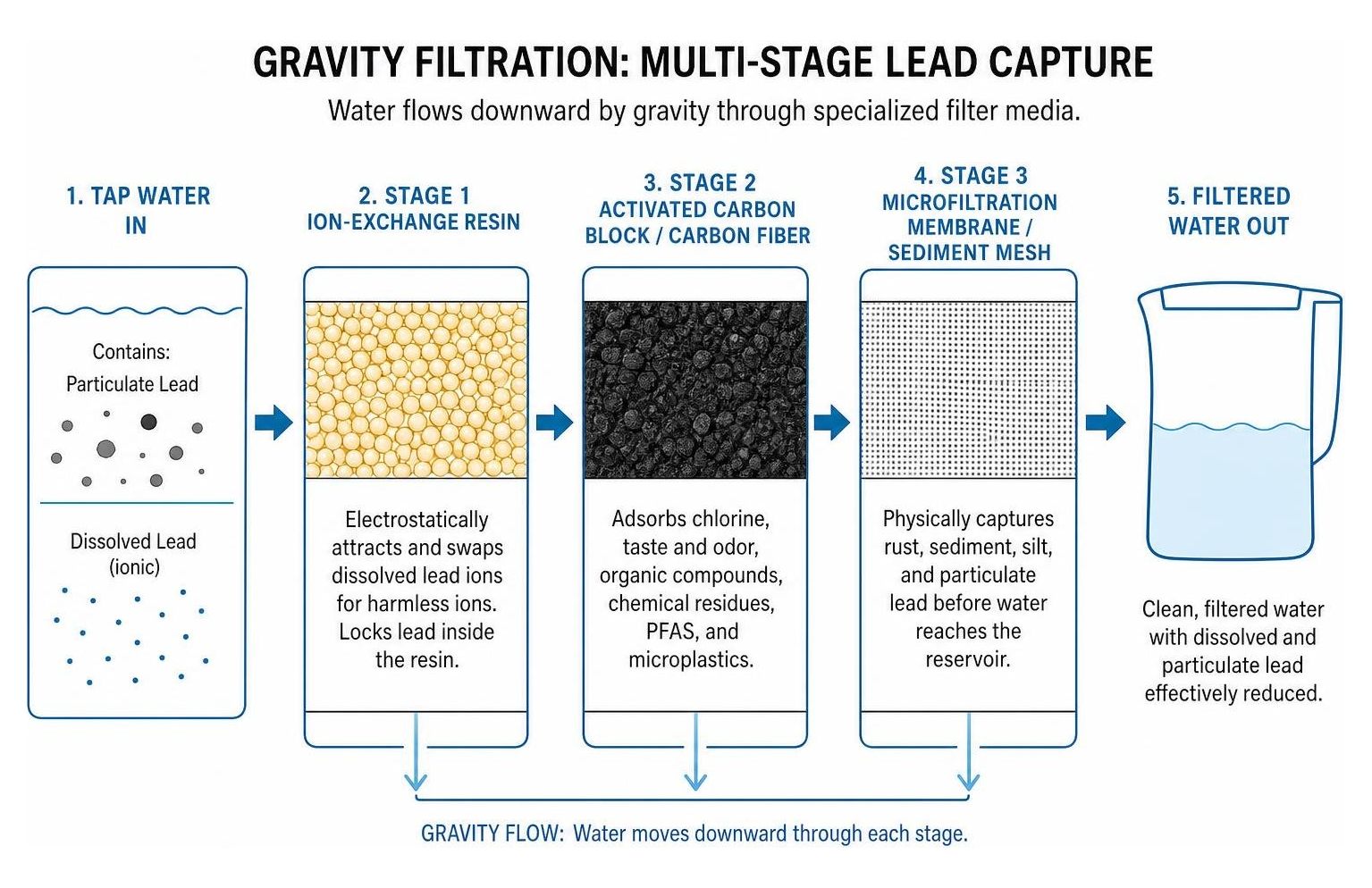
- Ion-Exchange Resin: This specialized polymer matrix targets dissolved heavy metals. Using electrostatic attraction, the resin swaps harmless ions (such as sodium, potassium, or hydrogen) for positively charged heavy metal ions like lead ($Pb^{2+}$), copper, and cadmium, locking the toxic metals inside the matrix.
- Activated Carbon Block / Advanced Carbon Fiber: High-density carbon blocks provide microscopic surface areas that trap organic compounds, chlorine, trihalomethanes, and chemical residues via chemical adsorption. High-performance blocks may also reduce emerging persistent chemicals such as PFAS and microplastics.
- Microfiltration Membrane / Sediment Mesh: A dense microporous physical barrier that captures rust, sediment, silt, and suspended particulate lead before it enters the lower reservoir.
Understanding how these media operate together helps homeowners follow a structured guide on removing lead from drinking water for their households.
Maintenance Costs and Lifespan of a Lead Water Filter Pitcher
A gravity pitcher’s performance is strictly tied to the condition of its internal cartridge. Over time, the microscopic binding sites within the ion-exchange resin become completely saturated, and the micro-pores in the carbon block clog with trapped particulates. Once exhausted, the filter can no longer extract heavy metals, allowing lead to pass through undetected.
Typical pitcher cartridges engineered for heavy metals have a service lifespan ranging between 40 and 120 gallons, which translates to roughly 2 to 3 months of typical household use. However, local water conditions play a huge role in cartridge longevity. While Lake Michigan water has moderate mineral levels, communities in the Northwest suburbs such as Arlington Heights, Des Plaines, Mount Prospect, Palatine, and Wheeling often encounter mineral-heavy, hard water or localized sediment spikes. These dissolved calcium and magnesium minerals compete for space in the ion-exchange resin, causing cartridges to exhaust faster than expected.
To avoid performance drops:
- Monitor your household daily gallon consumption rather than just relying on calendar estimates.
- Replace cartridges immediately if you notice a significant decrease in gravity flow rate or an unexpected change in water taste.
- Follow our comprehensive lead-free drinking water protection guide to maintain optimal water hygiene.
Need Clean, Safe Water at Home?
Get a free water test at your home or business. We install and service whole-house filtration and PEL75 reverse osmosis systems across Chicagoland. We also take select projects in Wisconsin and Indiana.
Book a Free Water TestCall (312) 889-8888Comparing Pitcher Materials, Capacities, and Countertop Dispensers
Countertop filtration vessels come in a wide variety of configurations, from compact glass pitchers to large-capacity refrigerator dispensers. When selecting the right unit, homeowners balance aesthetic preferences, physical durability, daily drinking volume, and filter replacement logistics.
The table below outlines common vessel configurations, materials, and functional performance factors to help you identify the right setup before choosing a certified filter for lead in water.
| Vessel Type | Material Options | Typical Capacity | Target Household Size | Key Advantages | Maintenance Considerations |
|---|---|---|---|---|---|
| Compact 7-Cup Pitcher | Borosilicate Glass or BPA-Free Plastic | 7 Cups (approx. 0.44 Gallons) | 1–2 People | Slim profile fits standard refrigerator doors; glass prevents plastic contact | Requires frequent refilling throughout the day; glass models require careful handling |
| Standard 10-Cup Pitcher | Food-Grade, BPA-Free Plastic | 10 Cups (approx. 0.62 Gallons) | 2–3 People | Lightweight; balanced capacity for daily cooking and drinking | Takes up more refrigerator shelf space; plastic can scuff over extended use |
| Large Countertop Dispenser | BPA-Free Plastic with Spigot | 18–35 Cups (1.1–2.2 Gallons) | 4+ People or Busy Kitchens | High reservoir volume; integrated spigot allows dispensing without lifting | Heavy footprint on kitchen countertops; slower single-batch filtration fill time |
Material Considerations: Glass vs. BPA-Free Plastic
Homeowners often choose between borosilicate glass and BPA-free plastic. Both material designs have clear advantages:
- Borosilicate Glass: Valued for chemical inertness and aesthetic appeal, high-grade glass eliminates concerns about organic compound leaching. Premium models feature protective silicone non-slip bases to cushion the vessel on granite or quartz countertops.
- BPA-Free Plastics: These vessels are lightweight, shatter-resistant, and ideal for busy households with young children.
Regardless of whether you choose glass or plastic, the housing material does not dictate filtration efficiency. The internal composite cartridge, its media volume, and third-party certifications dictate heavy metal reduction.
Need Clean, Safe Water at Home?
Get a free water test at your home or business. We install and service whole-house filtration and PEL75 reverse osmosis systems across Chicagoland. We also take select projects in Wisconsin and Indiana.
Book a Free Water TestCall (312) 889-8888Pitcher Filters vs. Point-of-Entry and Point-of-Use Filtration Systems
While gravity pitchers serve as an accessible entry point for clean drinking water, they have inherent physical limitations:
- Capacity Constraints: Gravity pitchers produce small batches of water slowly, making them impractical for large-scale cooking, rinsing produce, filling pet bowls, or making baby formula.
- Point-of-Use Restriction: A pitcher protects only one drinking vessel at a time. It provides zero protection for bathroom faucets, shower steam, or general household plumbing.
- Ongoing Replacement Demands: Frequent filter swaps add up over months of continuous use.
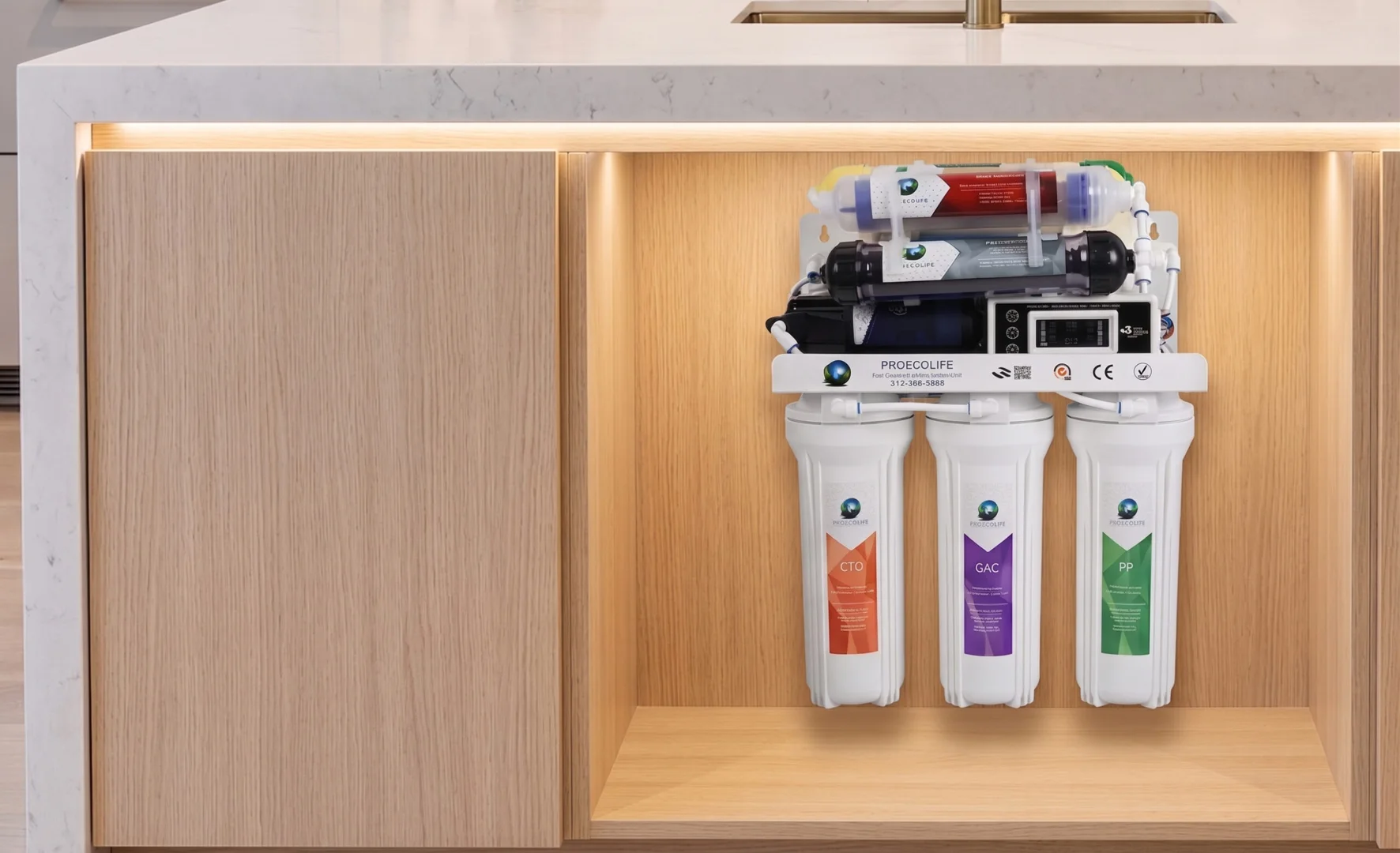
For homeowners seeking reliable, continuous water purity, advanced plumbed systems offer comprehensive protection. Since 2014, ProEcoLife founder Karol Dolega has helped Chicagoland families upgrade from basic countertop vessels to comprehensive home purification.
Our proprietary PEL75 9-Stage Reverse Osmosis System installs discreetly under your kitchen sink, utilizing multi-stage sediment barriers, dual activated carbon blocks, advanced RO membranes, and remineralization stages. Unlike passive gravity pitchers, the PEL75 uses household water line pressure to drive water through a semi-permeable membrane that rejects dissolved lead, arsenic, PFAS, nitrates, and microscopic contaminants down to 0.0001 microns. Many customers notice a dramatic improvement in water clarity and taste across all their cooking and drinking needs.
Beyond the kitchen sink, aging water infrastructure affects the entire home. Our Whole House Filtration systems and Well Water Conditioning units treat incoming city or well water at the point of entry, safeguarding your plumbing infrastructure and appliances against sediment, chlorine, and heavy minerals across suburbs like Park Ridge, Niles, Skokie, Lincolnwood, Evanston, Glenview, Morton Grove, Norridge, and Harwood Heights. For dedicated bathroom protection, our specialized Shower Filter System reduces chlorine and heavy metal exposure in hot shower mist, while our Commercial Water Filtration Systems support local restaurants and businesses across the Chicago area.
To explore whole-home strategies, review our breakdown of top residential filters for lead defense.
Frequently Asked Questions About Lead Water Filtration
Do standard gravity filter pitchers remove dissolved lead?
Standard, entry-level gravity filter pitchers do not automatically remove dissolved lead. Basic pitchers typically utilize simple granular activated carbon designed strictly for aesthetic chlorine taste and odor reduction (NSF/ANSI 42). To capture dissolved ionic lead, a pitcher must feature specialized ion-exchange resin or dense carbon block media specifically tested and verified under NSF/ANSI 53 standards. Always verify third-party certifications before purchasing.
How often should lead-reducing filter cartridges be replaced?
Most lead-reducing filter cartridges should be replaced every 40 to 120 gallons, which typically equates to every 2 to 3 months for an average household. However, local water quality directly affects cartridge lifespan. If you live in areas with elevated water hardness—such as Rosemont, Schiller Park, River Grove, Elmwood Park, Melrose Park, Franklin Park, or Bensenville—mineral buildup may saturate the filtration media sooner. Always follow the manufacturer’s suggested replacement timeline and replace cartridges promptly if the flow rate noticeably drops.
Can a lead filter pitcher also remove PFAS and microplastics?
Some advanced lead filter pitchers can reduce PFAS (“forever chemicals”) and microplastics, but only if they are engineered with ultra-dense carbon block cores or specialized microfiltration membranes. Standard gravity filters cannot capture these microscopic chemical compounds. Look for documented performance data or NSF/ANSI certifications (such as NSF 53 or NSF P473) confirming chemical pollutant reduction.
Conclusion
Guarding your home against lead contamination requires verified filtration technology tailored to your household’s daily water demands. While a certified gravity filter pitcher can offer a basic first line of defense for individual cups of water, busy families throughout Chicago and the surrounding suburbs often outgrow batch-by-batch gravity filtration.
To explore advanced, uninterrupted purification for your entire household, consult our comprehensive 2026 guide to choosing the best lead water filter.
Take the guesswork out of your tap water quality today. Contact the local Chicagoland water experts at ProEcoLife to schedule a water test by calling (312) 889-8888 or visiting proecolife.com.