Reverse Osmosis for Fridge: Upgrading Your Water and Ice
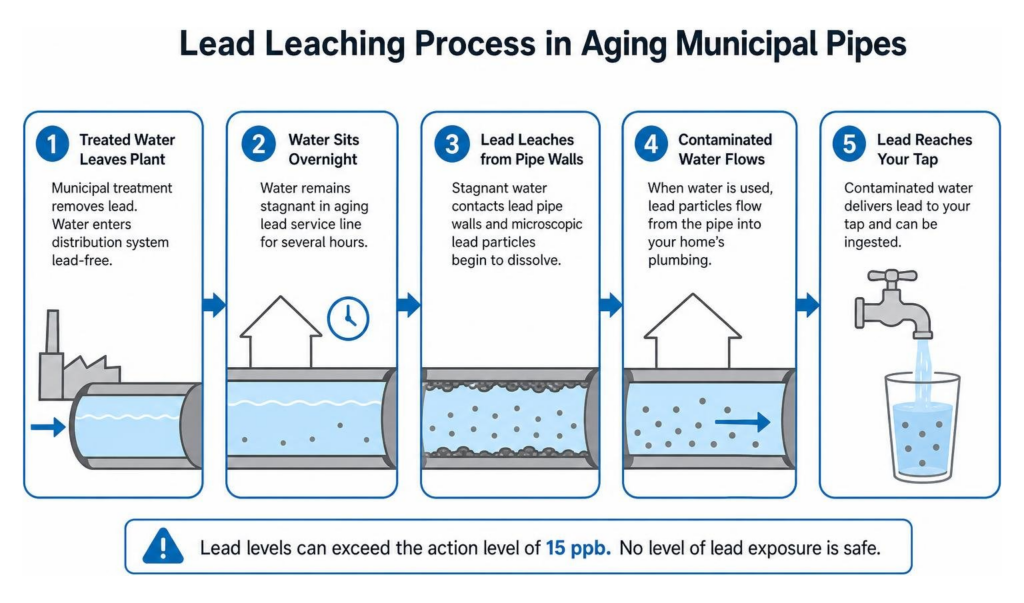
Connecting a reverse osmosis for fridge system to your ice maker and water dispenser changes how you experience water at home. While Lake Michigan provides a solid source of municipal water for our city, aging infrastructure, old lead service lines, and mineral variations across the Chicagoland area can impact what comes out of your tap.
Reverse osmosis systems use a semi-permeable membrane to remove dissolved solids, heavy metals, and microscopic impurities. In fact, advanced multi-stage reverse osmosis systems can remove up to 99% of dissolved solids, including lead, chlorine, fluoride, and other contaminants. For residents on low-sodium diets or those concerned about mineral build-up, household RO systems can reduce sodium content by up to 94%.
Many customers notice that running purified water into the ice maker produces significantly clearer ice cubes. Cloudy ice is typically caused by trapped air bubbles and dissolved minerals freezing at different temperatures. When you feed RO water to your ice maker, those dissolved solids are removed beforehand, which may help produce dense, crystalline ice that melts slowly without leaving cloudy flakes or strange residual tastes in your glass. Understanding how reverse osmosis turns wastewater back into pure H2O helps explain why this multi-stage membrane filtration performs so much better than basic household pitcher filters.
Superior Water Quality Compared to Standard Fridge Filters
Most modern refrigerators come equipped with a factory-installed water filter. However, these are almost universally single-stage activated carbon filters. Carbon blocks excel at removing chlorine odor and improving basic taste, but they are limited in what they can trap. They do not lower Total Dissolved Solids (TDS), nor can they effectively filter out dissolved heavy metals, nitrates, or tiny inorganic salts.
In older homes throughout Chicago neighborhoods like Portage Park or Logan Square, lead lines and municipal iron can leach into tap water long after water leaves the municipal treatment plant. Multi-stage filtration—such as our PEL75 9-Stage RO System—combines sediment pre-filters, carbon blocks, fine RO membranes, and re-mineralization stages. This deep level of purification ensures your drinking water is pure and refreshing. Choosing high-performance filtration encourages your family to stay eco and drink clear tap water rather than relying on wasteful single-use plastic water bottles.
Choosing the Right Reverse Osmosis for Fridge Setup
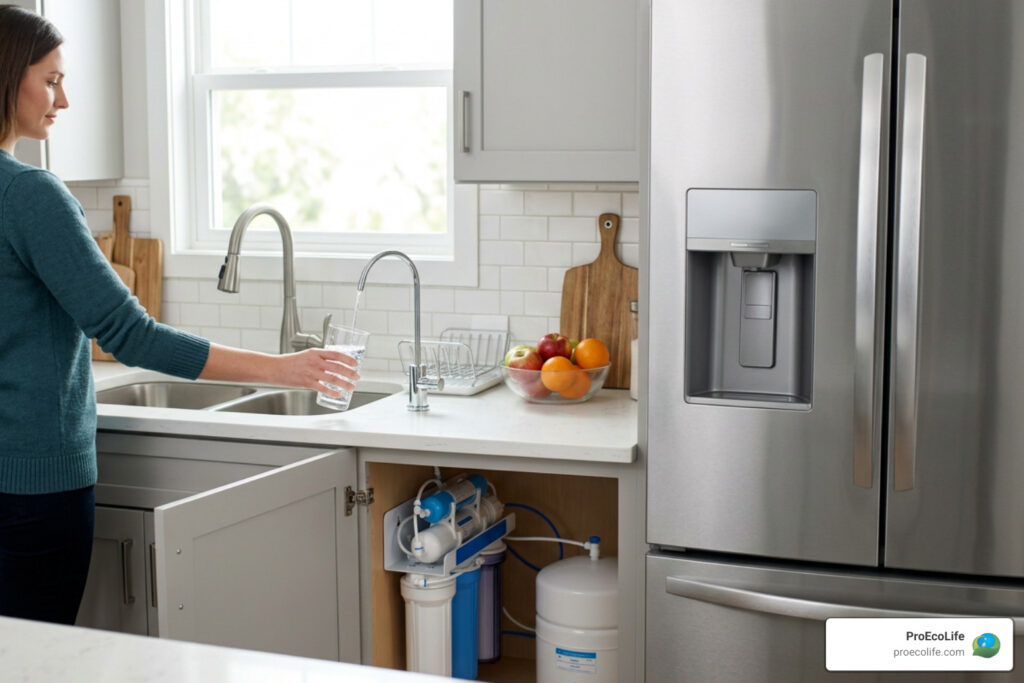
When choosing a reverse osmosis for fridge integration, selecting a system built for household demands is vital. Because reverse osmosis membranes produce purified water drop by drop, the system relies on a pressurized storage tank to deliver water on demand to your faucet, ice maker, and door dispenser.
To ensure your refrigerator receives an uninterrupted supply of water, your setup should consider three main factors:
- Storage Tank Pressure and Volume: A standard 3 to 4-gallon pressurized tank maintains necessary line pressure to push water to both the sink faucet and the fridge dispenser simultaneously.
- Remineralization Stages: Pure RO water can be slightly acidic. A post-filtration remineralization stage adds beneficial minerals back into the water, balancing pH and producing a smooth taste.
- Dedicated Hookup Line Kits: High-grade 1/4-inch or 3/8-inch food-grade tubing and check valves prevent pressure drops and backflow between the system and the appliance.
How to Bypass Internal Refrigerator Filters and Connect RO Lines
A common question homeowners ask is whether you can feed RO water directly into a refrigerator without using the internal fridge filter. The short answer is yes. In fact, bypassing the built-in fridge filter is often recommended once you have a multi-stage under-sink system installed.
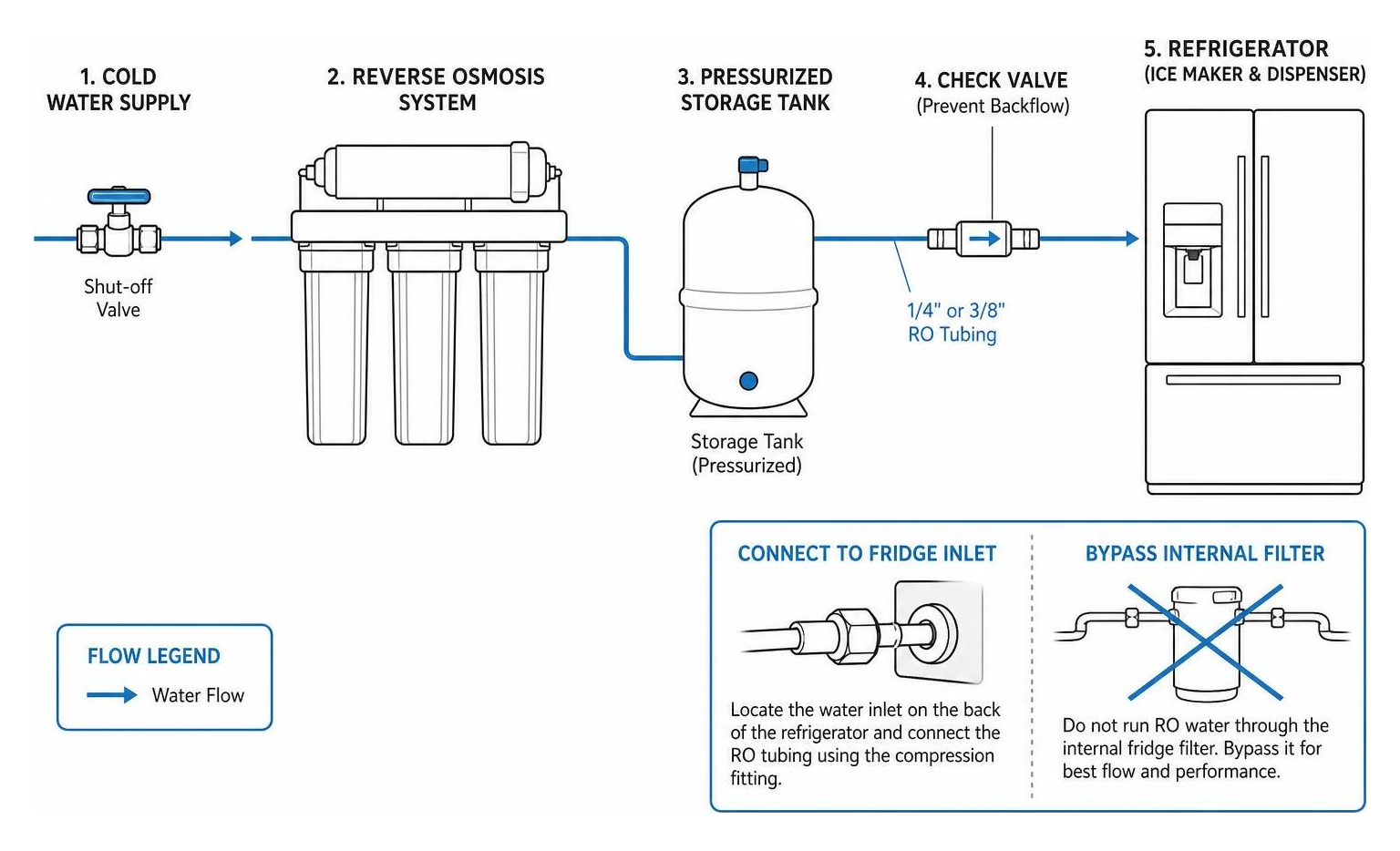
Running purified water through a standard single-stage fridge filter is largely redundant and creates unnecessary flow restrictions. Because reverse osmosis water is already thoroughly purified, sending it through an old carbon fridge cartridge only slows down delivery speed at the dispenser and forces you to keep purchasing expensive annual filter replacements.
| Feature | Single-Stage Fridge Filter | Multi-Stage Reverse Osmosis (e.g., PEL75) |
|---|---|---|
| Filtration Method | Activated Carbon Block | Sediment + Carbon + RO Membrane + Post-Filter |
| TDS / Mineral Reduction | Minimal to none | Up to 99% removal |
| Lead & Heavy Metal Removal | Varies / Limited | High efficiency removal |
| Sodium Reduction | 0% | Up to 94% reduction |
| Impact on Water Flow | Direct line flow | Requires storage tank or delivery pump |
| Annual Maintenance | Replace 1–2 times per year | Periodic membrane & cartridge service |
Steps to Safely Bypass Internal Refrigerator Filters
Every major refrigerator manufacturer designs appliances with filter bypass mechanisms. When our professional technicians integrate a reverse osmosis for fridge system in your home, we verify the correct bypass method for your specific appliance model:
- Automatic Bypass Valves: Many modern refrigerators feature an internal mechanical bypass valve. When you remove the internal carbon filter cartridge, a valve inside the filter housing automatically opens, allowing water to flow directly through the dispenser and ice maker line without obstruction.
- Dedicated Filter Bypass Plugs: Some brands require a dummy plug or bypass cap inserted into the filter housing to maintain line pressure after removing the cartridge. Keep this plug handy if your fridge came with one in the original owner’s kit.
- Line Integration: Our technicians connect high-pressure line adapters from the RO output manifold directly to your home’s standard 1/4-inch copper or PEX refrigerator water line.
Because proper line routing and leak-free fittings require precision, professional installation ensures that water pressure remains steady and your kitchen cabinets stay safe from hidden water leaks.
Optimizing Reverse Osmosis for Fridge Flow Rates and Pressure
To operate properly, refrigerator ice makers and door dispensers require a specific water supply pressure—typically between 30 and 60 PSI (pounds per square inch). Refrigerator ice maker inlet valves use timed solenoid valves. If water line pressure drops too low, the solenoid valve won’t allow enough water into the ice tray during its brief filling cycle, resulting in tiny, hollow, or misshapen ice cubes.
Standard under-sink reverse osmosis tanks produce water pressure equal to roughly two-thirds of the incoming household water pressure. In areas like the Northwest suburbs—including Park Ridge, Des Plaines, and Mount Prospect—where baseline water pressure fluctuates, an auxiliary booster pump or dedicated delivery pump may help maintain maximum flow rates at the fridge dispenser.
Key Setup Considerations: Technical Pressure and Redundancy
When setting up a reverse osmosis for fridge system, understanding how water recovery and delivery pressure interact is critical for long-term performance.
Reverse osmosis systems typically produce 1 gallon of purified water for every 3 to 4 gallons of feed water, resulting in a system recovery rate of roughly 25% to 33%. The remaining water rinses trapped contaminants down the drain line. Because the system works continuously in the background to fill its storage tank, keeping water lines pressurized and protected is crucial.

Here are the key technical considerations our team evaluates during household setup:
- Avoiding Dual Filtering Risks: Leaving an active, old carbon filter inside your fridge while feeding it RO water creates double resistance. This double restriction restricts water flow to a trickle and can place unnecessary strain on the ice maker’s electronic solenoid valves.
- Managing Hard Water Pre-treatment: In suburban areas like Arlington Heights, Skokie, and Glenview, hard water minerals (calcium and magnesium) can clog sediment pre-filters quickly. Pairing an RO system with a Whole House Filtration setup or Well Water Conditioning system extends membrane life and protects kitchen appliances.
- Service Line Distance: If your under-sink system is located across the kitchen or on a lower floor, specialized high-durability line tubing prevents line sagging and pressure drops over distance.
At ProEcoLife, our founder Karol Dolega established our Chicago operations back in 2014 with a clear mission: to provide local families with reliable, effective, and clean drinking water tailored to the region’s unique water challenges. Whether you are dealing with aging city mains on Chicago’s Northwest Side in Jefferson Park, Edison Park, or Norwood Park, or hard municipal well blends in surrounding suburbs, our custom engineering ensures your home gets pure water directly from your fridge dispenser. You can explore our comprehensive range of water purification systems in Chicago to find the right configuration for your household.
Frequently Asked Questions
Can you run RO water directly into a fridge without the built-in filter?
Yes, you can run reverse osmosis purified water directly into your refrigerator water line without using the built-in internal filter. Most modern refrigerators feature an automatic internal bypass mechanism that engages when the factory filter cartridge is removed, or they allow you to install a manufacturer-supplied bypass plug. Bypassing the fridge filter prevents unnecessary line restriction and saves you from buying redundant filter replacements.
Does an RO system provide enough pressure for fridge ice makers?
A properly installed RO system with a fully charged storage tank provides sufficient water pressure (typically 30 to 50 PSI) to run most refrigerator ice makers and water dispensers. If your home has lower incoming water pressure or if the water line must travel a long distance, our technicians may install a demand booster pump to ensure crisp dispenser flow and fully formed ice cubes.
Should you use both the RO system and the internal fridge filter?
It is generally better not to use both filters simultaneously. While using both is not harmful to your health, it is redundant. Running purified RO water through a single-stage fridge filter introduces unnecessary flow restriction, reduces water pressure at the door dispenser, and forces you to replace carbon cartridges that aren’t adding any meaningful purification benefit.
Conclusion

Upgrading your home with a reverse osmosis for fridge system is one of the most effective ways to ensure your family enjoys pure, clean drinking water and crystal-clear ice directly from your appliance. By bypassing weak single-stage carbon filters and tapping into multi-stage reverse osmosis, you protect your household against local contaminants like lead, heavy metals, excess sodium, and chlorine residues.
Since 2014, ProEcoLife has been Chicago’s trusted local water treatment expert. From Northwest Side neighborhoods like Dunning, Harwood Heights, and Norridge to nearby suburban communities like Niles, Morton Grove, and Lincolnwood, we deliver customized water solutions built for local water conditions. To see how our advanced systems can transform your kitchen’s drinking water, discover how reverse osmosis works or speak directly with our team.
Ready to upgrade your home’s water quality? Contact ProEcoLife today to schedule a comprehensive water test at proecolife.com.