
Understanding Chicago Tap Water Quality and Infrastructure
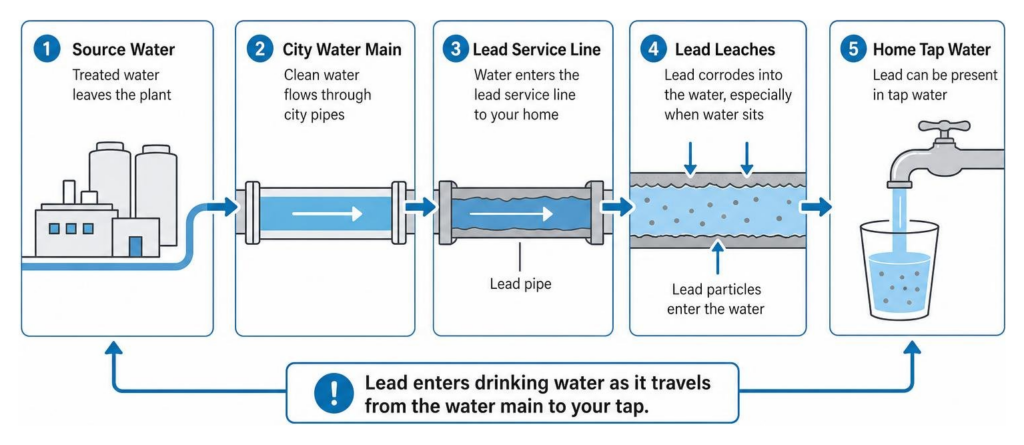
To understand why household chicago water filtration is so crucial, we need to trace the journey water takes before reaching your glass. Our municipal supply begins far out in Lake Michigan. Intake cribs located about two miles offshore draw raw lake water into massive tunnels carved roughly 200 feet beneath the lake bed. From there, the water flows to two major municipal facilities: the James W. Jardine Water Purification Plant (the largest water treatment plant in the world, capable of processing 1.4 billion gallons per day) on the North Side and the Eugene Sawyer Water Purification Plant on the South Side.
At these purification plants, operators perform extensive physical and chemical treatments. Raw water undergoes coagulation, sediment settling, physical sand and gravel filtration, and chemical dosing with fluoride, chlorine, and phosphate corrosion inhibitors. The City of Chicago Department of Water Management performs hundreds of thousands of laboratory quality tests annually across this network. According to official public records detailed in the state Water System Details, our municipal distribution infrastructure delivers roughly 750 million to one billion gallons of water per day across over 526,000 active service connections, serving more than 2.7 million residents.
When water exits the Jardine and Sawyer facilities, tests consistently show zero detectable lead. The issue arises during transit. Purified water travels through primary mains into 12 municipal pumping stations before entering thousands of miles of secondary water mains. From those mains, service line pipes branch off to bring water into individual homes, classic greystones, pre-war two-flats, and commercial buildings.
Tap Contaminants: Lead, Chloramines, and PFAS
The primary challenge in older homes throughout Chicago—from historic South Side communities to Northwest Side neighborhoods like Norwood Park, Edison Park, and Jefferson Park—is what happens inside the service pipes and interior plumbing.
Here is what we frequently monitor in local water supplies:
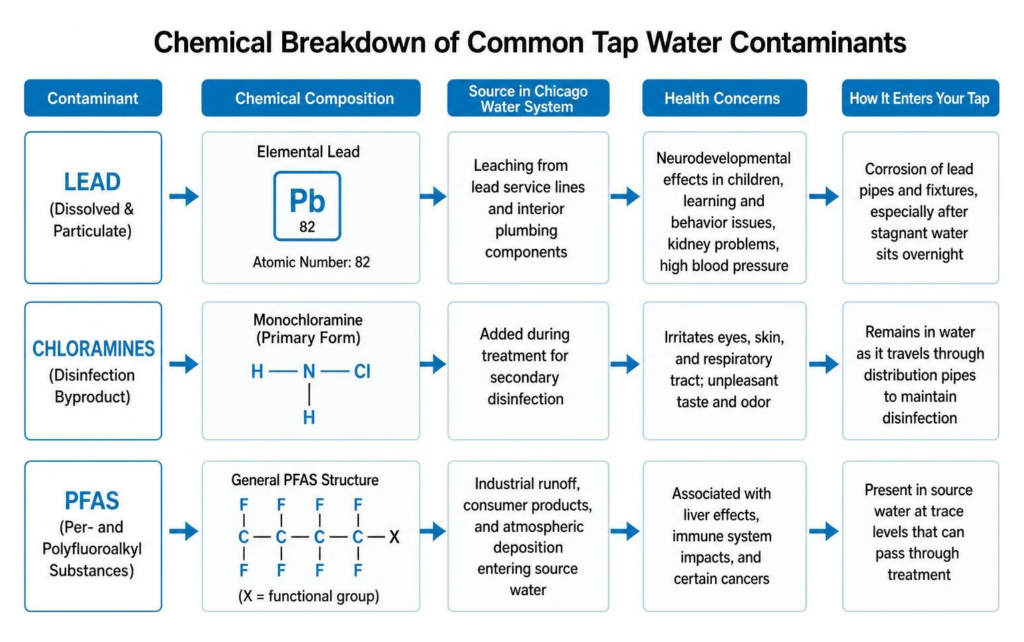
- Dissolved and Particulate Lead: Chicago has over 400,000 lead service lines connecting main lines to private property—more than any other American city. Historic building codes required lead pipes for small-diameter service lines until the late 1980s. When water sits stagnant in these lines overnight, lead can leach into the water column. A comprehensive USGS tap water lead study revealed lead in 39 out of 45 residential tap samples tested, even though pre-distribution water at the treatment plants was lead-free.
- Chloramines Disinfection: Unlike communities that rely exclusively on standard chlorine, Chicago uses chloramines (a compound of chlorine and ammonia) for secondary disinfection. Chloramines last longer as water travels through vast distribution grids, but they impart a distinct chemical odor and taste that standard charcoal pitchers struggle to eliminate.
- PFAS and Emerging Contaminants: Per- and polyfluoroalkyl substances (PFAS), often referred to as “forever chemicals,” can enter regional watersheds through industrial runoff and atmospheric deposition. While primary treatment facilities filter broad lake water, localized trace exposure remains a modern concern.
Exposure to lead carries documented neurological and systemic health risks, particularly for developing children and pregnant women. Meanwhile, chloramines can irritate sensitive skin during showers, which is why many homeowners evaluate localized purification strategies.
Comparing City Water to Suburban Distribution
Suburban communities surrounding the city center experience a variety of water dynamics. Near-north and western suburbs like Park Ridge, Niles, Des Plaines, Skokie, Glenview, Arlington Heights, and Morton Grove purchase water sourced from Lake Michigan, often distributed through municipal hubs like Glenview or Wilmette.
In these suburban networks, published findings such as the Suburban Annual Water Report show low 90th-percentile tap lead levels across modern distribution systems. However, water hardness becomes a major factor as you move farther into the Northwest suburbs. While central Chicago city water has moderate mineral hardness, suburban groundwater blending and distribution lines in surrounding areas can result in heavy calcium and magnesium deposits. This hard water leads to severe limescale buildup on faucets, glass, and domestic appliances.
Identifying Lead Service Lines and Accessing City Resources
If you live in a Chicago residence constructed before 1986, there is a strong possibility that your service line contains lead. Identifying your pipe material is an important step in taking control of your household water quality.

To check your main service line pipe:
- Locate where the water service pipe enters your home through the basement wall or concrete floor, typically near your indoor shut-off valve and water meter.
- Inspect the pipe material. Lead pipes are dull grey, soft, and bend easily.
- Perform a simple scratch test: carefully scratch the outer surface of the pipe with a key or coin. If it turns shiny silver, it is likely lead.
- Test with a magnet: magnets will not stick to lead pipes (nor will they stick to copper, but copper has a distinct penny-bronze color).
- Check the city’s online lead service line inventory to see recorded municipal material data for your address.
Municipal Testing Programs and Filter Eligibility
The City of Chicago offers water quality testing kits upon request to help residents evaluate lead concentrations at the kitchen faucet. Under current city guidelines detailed by the Lead Safe Chicago water initiative, municipal programs offer basic pitcher filters to residents whose official tap test yields lead levels above the federal action threshold of 15 parts per billion (ppb), as well as to homeowners participating in active water meter installations or street-level main replacement work on their block.
While municipal testing provides valuable baseline data, pitcher filters only treat small batches of drinking water at a time and do not address chloramines, sediment, or hard water throughout the rest of your plumbing system.
Flushing and Everyday Mitigation Steps
While arranging for complete lead line replacement or long-term filtration equipment, everyday flushing habits may help reduce acute lead exposure:
- Morning Cold Flush: If water has been sitting unused in your pipes for over six hours, run your kitchen tap on cold for 3 to 5 minutes before filling a glass or coffee pot.
- Always Cook Cold: Never use warm or hot tap water for cooking, infant formula, or warm beverages, as hot water leaches lead and plumbing metals much faster than cold water.
- Clean Aerators Monthly: Unscrew the tiny mesh screen aerators on your kitchen and bathroom faucets to clean out trapped brass solder particles, sediment, and micro-debris.
Selecting the Right Chicago Water Filtration System
Choosing the ideal filtration setup depends on your property layout, your building’s plumbing, and your household’s daily water usage.
| Filtration Technology | Target Contaminants | Ideal Use Case | Consideration for Chicago Homes |
|---|---|---|---|
| Point-of-Use Pitchers / Faucet Mounts | Basic sediment, chlorine taste | Small apartments, minimal budget | Limited lead capacity; slow flow rate; does not clean shower or appliance water. |
| Point-of-Use Reverse Osmosis (RO) | Lead (up to 98%), PFAS, chloramines, dissolved solids, heavy metals | Under-sink kitchen drinking & cooking water | Excellent purification for local lead service lines; requires professional drain & supply connection. |
| Catalytic Carbon Blocks | Chloramines, volatile organic chemicals, chlorine odor | Under-sink or point-of-entry | Far superior to standard carbon for chloramines used in Chicago water. |
| Whole-House Filtration Systems | Sediment, rust, chloramines, micro-particles | Single-family homes, multi-story residences | Protects pipes, water heaters, and appliances across the entire house. |
| Well Water & Conditioning Systems | Hardness minerals, iron, scale deposits | Northwest suburbs & regional well supplies | Prevents limescale buildup; protects fixtures and tankless water heaters. |
For deep insights into local system specs, review our detailed resource: A Comprehensive Guide to Chicago Water Filters.
Carbon vs Catalytic Media for Chicago Water Filtration
A common misconception among homeowners is that a standard activated carbon filter is all you need for clean tap water. Standard carbon filters work well for standard municipal chlorine. However, because Chicago uses chloramines for disinfection, standard carbon filters quickly become saturated and leave chloramine compounds intact.
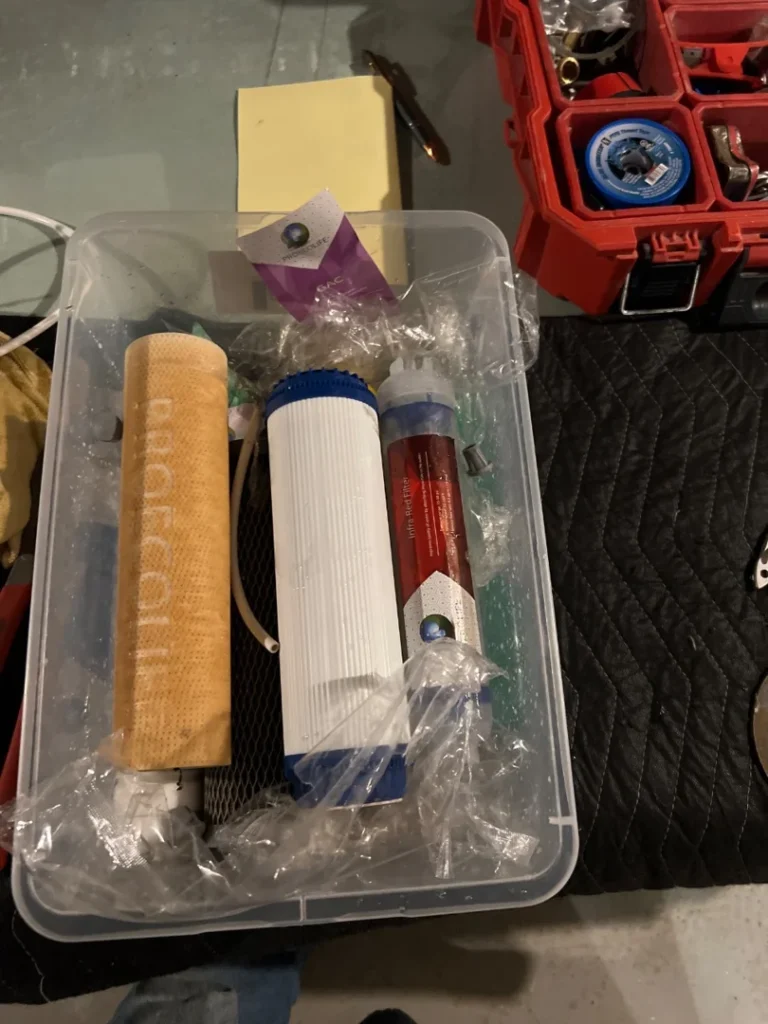
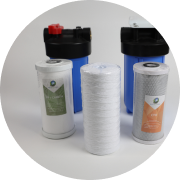
Catalytic carbon media undergoes specialized processing to dramatically increase its electron-exchange capacity. This allows it to break the tough chemical bond between chlorine and ammonia. When choosing a system like our specialized Chicago Water Filter System, catalytic carbon stages ensure that chloramine tastes and chemical odors are thoroughly neutralized.
Why Reverse Osmosis Leads Chicago Water Filtration Performance
For total peace of mind at the kitchen sink, Reverse Osmosis (RO) remains the industry gold standard. RO systems work by forcing water under pressure through a semi-permeable membrane with microscopic pores down to 0.0001 microns.
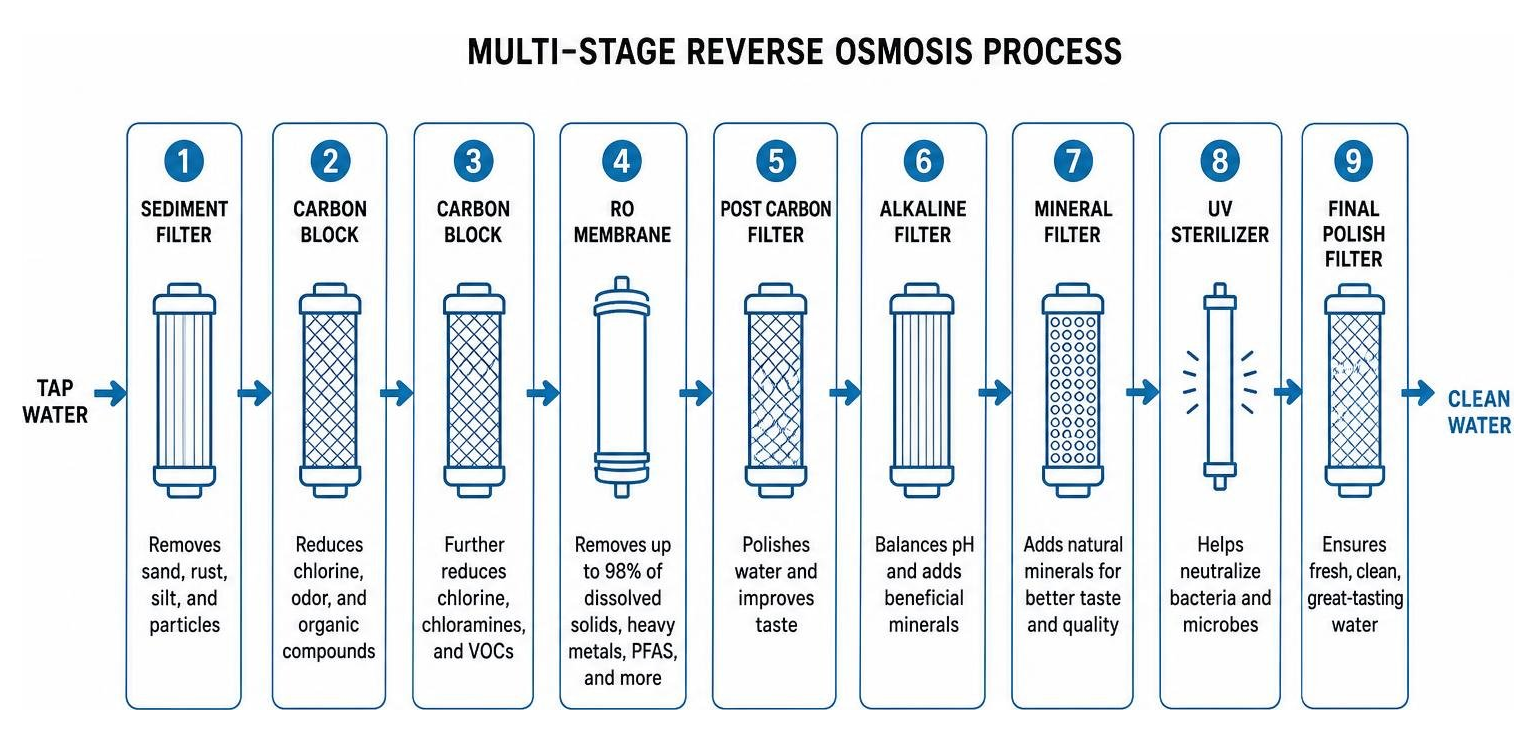
Our heavy-duty proprietary PEL75 9-Stage RO System is tailored specifically for Midwestern water conditions. It removes up to 98% of dissolved lead, heavy metals, microplastics, and industrial PFAS compounds. The multi-stage process includes sediment pre-filtration, dual catalytic carbon blocks, high-rejection membrane separation, and an essential post-remineralization stage that restores healthy natural minerals like calcium and magnesium to ensure crisp, clean-tasting water.
Many customers notice a dramatic improvement in clarity, ice clarity, and beverage flavor once an under-sink RO system is installed. Discover why local homeowners rely on multi-barrier filtration in our guide on Why Chicagoans Are Obsessed with 9-Stage Water Filtration.
Whole-House Point-of-Entry Options
While point-of-use under-sink systems protect your drinking water, point-of-entry equipment treats every gallon entering your home.
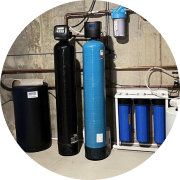
Installing a robust Whole House Filtration setup directly where your main service line enters your basement provides comprehensive benefits:
- Traps heavy sediment, pipe scale, and rust before it reaches internal plumbing.
- Removes chloramines city-wide so bath and shower water won’t dry out skin or hair (many families also opt for a dedicated Shower Filter System for extra bathing protection).
- Extends the life of washing machines, dishwashers, and modern tankless water heaters.
- Can be paired with Well Water Conditioning in areas around Park Ridge, Niles, Des Plaines, Skokie, or Glenview that encounter aggressive hard water scale.
Explore whole-home configurations in our breakdown of The Best Whole House Water Filtration Systems in Chicago for Crystal Clear Water.
Guide to Installing Home Water Purification
At ProEcoLife, founded by Karol Dolega, we have been serving the Greater Chicago area since 2014. As local Chicago water experts, we strongly advise against attempting self-installation or unverified plumbing modifications. Chicago’s vintage greystones, historic bungalows, and modern high-rises often feature fragile copper solder, aging galvanizing, or tight spatial tolerances beneath kitchen sinks. Improper connections can cause severe water pressure drops, localized leaks, or catastrophic pipe damage.

When our certified technicians handle your setup, our professional installation follows a meticulous protocol:
- On-Site Water & Pressure Testing: We test line pressure, Total Dissolved Solids (TDS), pH, and chloramine levels right at your tap.
- Dedicated Supply Feed Line Integration: We install code-compliant shut-off adapters directly onto your cold supply line without disrupting building plumbing.
- Under-Sink Equipment Mounting & Fitting: We securely mount filter housings, pre-filters, and the reverse osmosis membrane inside your cabinet space.
- Dedicated Faucet or Refrigerator Line Hookup: We install an elegant, lead-free designer tap on your countertop or route filtered supply lines to your refrigerator’s ice maker.
- Sanitization and Pressure Testing: We sanitize the entire fluid pathway, check all quick-connect fittings under full street pressure, and verify zero leaks.
- Membrane Flushing & Quality Verification: We flush the system to prime the filters and conduct post-installation testing to confirm high rejection performance.
Learn more about our seamless professional services by reading about our Expert Water Filter Installation Services in Chicago and see why we are considered a Top Water Purification Company in Chicago. We also provide heavy-duty commercial configurations through our Commercial Water Filtration Systems line for regional restaurants, coffee shops, and commercial offices.
Frequently Asked Questions About Chicago Tap Water
Does boiling Chicago tap water remove lead and chloramines?
No. Boiling water will not remove lead or chloramines. In fact, boiling lead-contaminated water causes pure steam to evaporate while leaving heavy metals behind, which actually concentrates the lead levels in your pot! Chloramines are also thermally stable chemical disinfectants that do not dissipate quickly when boiled. To eliminate lead and chloramines, you need physical separation technologies like reverse osmosis membranes and catalytic carbon block filters.
How do I qualify for a filter from the city?
The Chicago Department of Water Management provides basic pitcher filters to residents who participate in city-sponsored tap testing programs and receive results showing lead concentrations exceeding 15 ppb. Qualifications also apply to homes undergoing active water meter installations under municipal programs or properties located on blocks with active water main construction projects.
What filtration standard is required for lead reduction?
When selecting point-of-use filters for lead reduction, look for systems tested and certified to NSF/ANSI Standard 53 (for lead reduction) or NSF/ANSI Standard 58 (specifically for Reverse Osmosis systems). These independent standards verify that the filtration media successfully reduces both soluble dissolved lead and insoluble particulate lead across its rated lifespan.
Conclusion
Navigating chicago water filtration choices doesn’t have to be complicated. While Lake Michigan provides a great natural source and municipal plants process it thoroughly, aging city mains, service lines, and vintage indoor plumbing mean that what comes out of your tap requires careful consideration. Whether you are living in Norwood Park, Jefferson Park, or neighboring suburbs like Park Ridge, Skokie, or Glenview, taking control of your indoor water quality protects both your family’s health and your home’s infrastructure.
At ProEcoLife, our local experts are dedicated to delivering customized solutions—from our high-performance PEL75 9-Stage RO System to comprehensive Whole House Filtration configurations.
To learn more about how modern purification works, explore how reverse osmosis works. Contact ProEcoLife today to schedule your comprehensive home water test by visiting us online at proecolife.com.