Chicago Water Filter Replacement: Start With City Eligibility
Chicago water filter replacement sets may be provided if your home qualifies through the Chicago Department of Water Management. Residents can check eligibility with their address or a city-issued filter code, then register for a water test kit. A city filter set may be available when:
- A Department of Water Management test finds lead above 15 parts per billion.
- A water meter was installed through the MeterSave program.
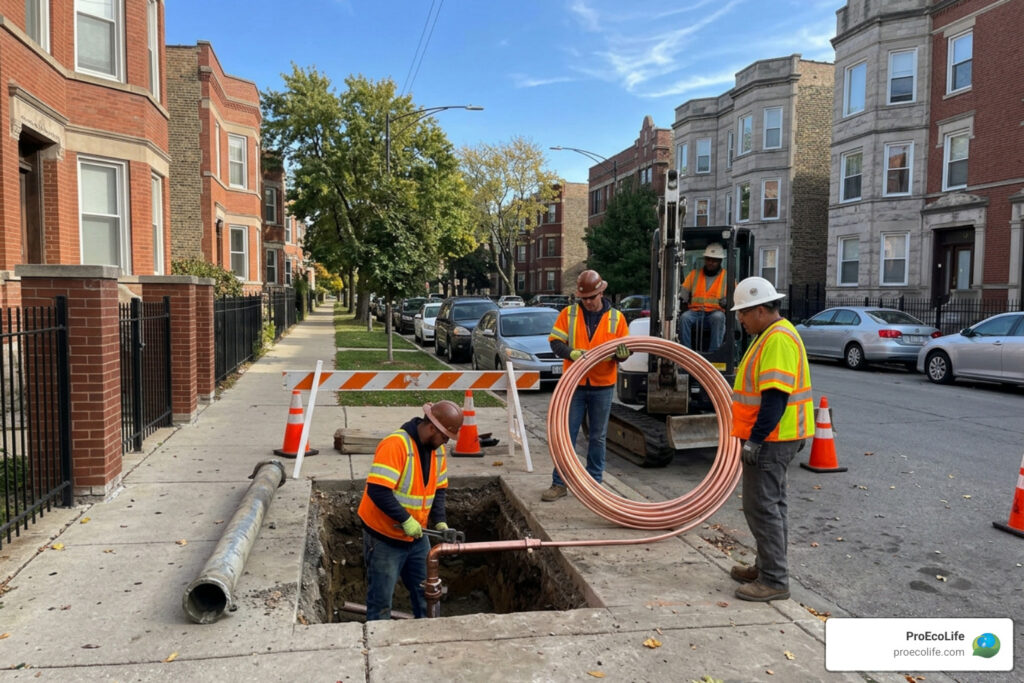
- Water or sewer main work is active on your block.
- Your address is listed as eligible in the city’s portal. In a two-flat, each apartment can qualify separately.
Chicago water leaves the treatment plants with no detectable lead, but lead can enter later through older service lines, home plumbing, faucets, and trapped sediment. That is why the city offers testing and filters for qualifying households – and why replacing a used cartridge on time matters.
This guide explains how to request city support, understand when replacement cartridges are due, and spot warning signs such as slow flow, a chlorine taste, or a filter-monitor alert.
Chicago water filter replacement word list:
Who Qualifies for City Water Filters in Chicago?
Navigating municipal water programs in Chicago can feel a bit like reading street parking signs on a snow route — confusing at first, but straightforward once you know the rules. At ProEcoLife, we have been helping local homeowners understand their water quality since 2014, when our founder, Karol Dolega, set out to solve the unique drinking water challenges of our city.
The Chicago Department of Water Management (DWM) provides pitcher filters and initial replacement cartridges to specific residents under strict eligibility criteria designed to protect public health.
To qualify for a municipal filter set, your residence generally needs to meet at least one of these specific conditions:
- Lead Test Threshold: Your tap water was tested by the city and yielded lead levels exceeding 15 parts per billion (ppb), which is the federal action level established by the EPA.
- MeterSave Participation: You had a residential water meter installed in your home through the city’s MeterSave initiative.
- Infrastructure Work on Your Block: The city is actively replacing or repairing water mains or sewer lines on your street. Disturbed underground pipes can temporarily break loose microscopic lead scale and particulate debris into service lines.
- Address Eligibility on the Portal: Your home is registered as eligible in the DWM portal database.
One common question we hear from residents in classic Chicago two-flats across neighborhoods like Portage Park and Logan Square is whether multi-unit buildings qualify. Fortunately, the city evaluates address eligibility on a per-unit basis. In a standard two-flat, both upper and lower units can qualify individually to receive their own filtration equipment.
To maintain reliable safe water at home, knowing where your water comes from — and what it travels through — is essential. While municipal treatment renders water clean at the lake intake, the final leg of the journey through private plumbing lines is where lead, sediment, and fine particulates often enter the equation.
Step-by-Step Guide to Municipal Chicago Water Filter Replacement Sets
If you believe your home meets the city criteria, requesting a water testing kit and securing your replacement set involves a simple online process.

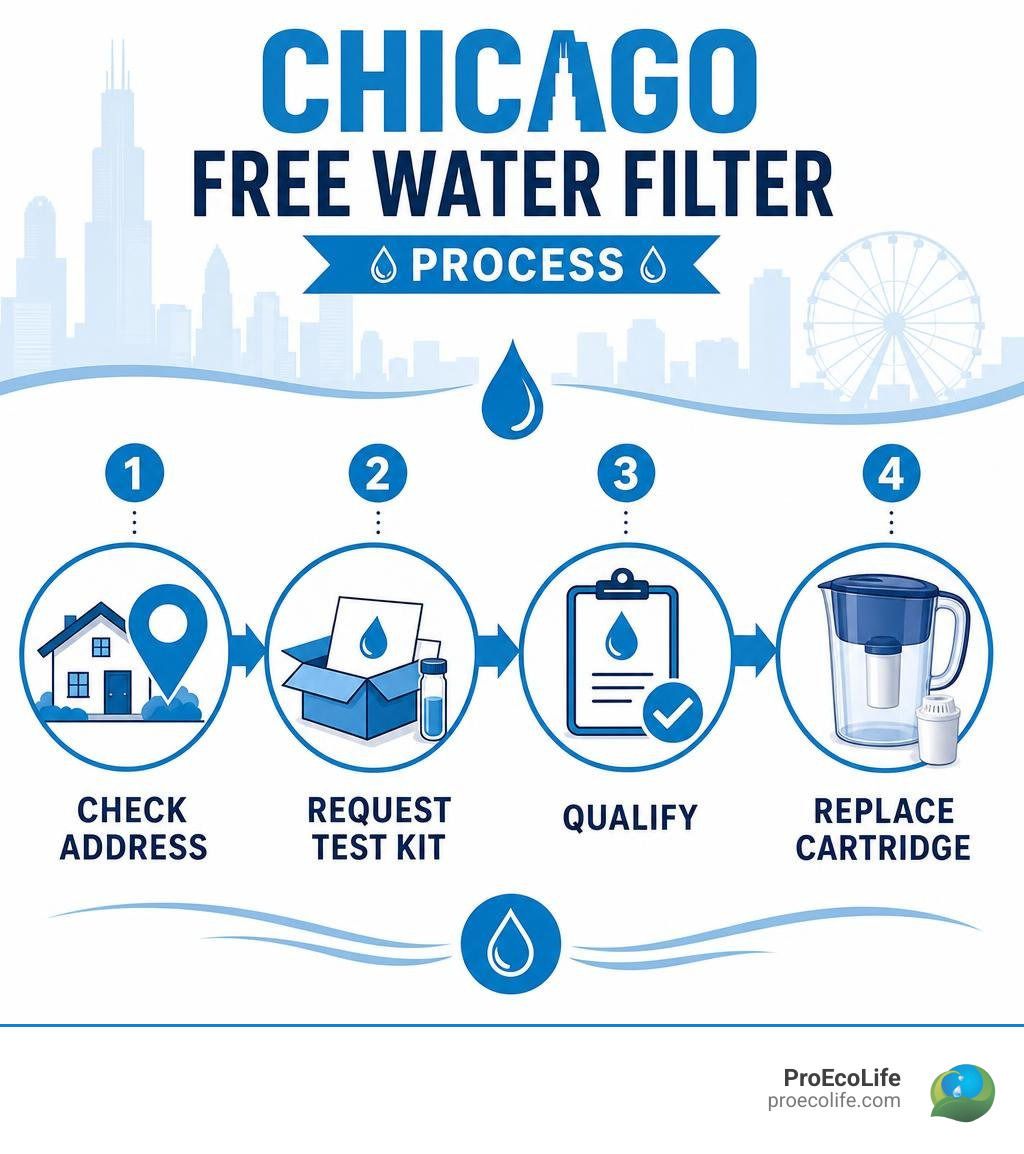
Here is how local residents can navigate the municipal program step-by-step:
- Check Address Qualification: Visit the official Chicago Department of Water Management portal. Type in your complete street address or enter the unique filter code provided on municipal postcard mailings.
- Order Your Testing Kit: If your property has not been tested recently, register on the portal to have a water test kit delivered directly to your home.
- Collect and Return Samples: Follow the precise instructions included with the testing kit. Sample collection requires capturing first-draw water after the tap has sat idle for several hours. Mail or submit the sample back to the city laboratory for analysis.
- Receive Results and Filter Set: If test results confirm lead levels above 15 ppb, or if ongoing street work triggers mandatory coverage, the city will ship an approved filter set and initial replacement cartridges to your address.
While waiting for test results or filter shipments, practical daily measures can help manage household exposure:
- Flush Cold Water Taps: Always run cold tap water for 1 to 3 minutes before filling drinking glasses or cooking pots, particularly if water has sat unused overnight.
- Never Use Hot Tap Water for Cooking: Warm or hot tap water dissolves heavy metals much faster than cold water. Always boil cold tap water when preparing food or hot beverages.
- Clean Aerators Regularly: Unscrew the small mesh screens at the tip of your kitchen and bathroom faucets every few weeks. Rinse out trapped sand, fine grit, and metal flecks under running water before screwing them back on.
Understanding how municipal programs work is only the first step. For a complete look at municipal water management, check out A Comprehensive Guide to Chicago Water Filters.
Understanding Chicago Water Filter Replacement Schedules and Lifespans
No drinking water filter lasts forever. As water passes through media beds, filtration material traps rust, lead particles, chloramines, and chemical residues. Over time, these captured substances fill the tiny pores inside the cartridge, reducing flow rate and eventually diminishing media effectiveness.
In Chicago, local water characteristics dictate how quickly cartridges wear out. Unlike cities that rely solely on standard chlorine, Chicago uses chloramines (a combination of chlorine and ammonia) for municipal disinfection. Chloramines are exceptionally stable and lingering, requiring specialized, high-density carbon media to break down effectively. Standard pitch-style carbon filters wear out rapidly under high chloramine loads.
To keep your drinking water clean, here is an overview of standard filter lifespans under typical local water conditions:
| Filter System Type | Standard Cartridge Lifespan | Primary Contaminants Targeted in Chicago | Common Failure Indicators |
|---|---|---|---|
| Pitcher Filters | 1 to 2 months | Chlorine taste, coarse sediment, temporary lead reduction | Slower pour speed, returning chlorine odor |
| Faucet-Mounted Units | 2 to 3 months | Sediment, chlorine taste, fine particles | Trickling stream, automatic LED light indicator change |
| Countertop Gravity Filters | 6 months | Heavy sediment, chlorine, taste/odor issues | Reduced hourly yield, visual discoloration of ceramic or carbon elements |
| Under-Sink Carbon Blocks | 6 to 12 months | Chloramines, lead, volatile organic compounds (VOCs), sediment | Pressure drop at dedicated faucet, chemical taste breakthrough |
| Under-Sink RO (PEL75 Pre/Post Filters) | 6 to 12 months | Chloramines, fine particulate sediment, volatile organic chemicals | Flow rate slowdown, TDS display shift |
| RO Membranes (PEL75 System) | 2 to 3 years | Dissolved solids, lead, PFAS, heavy metals, micro-contaminants | High TDS monitor reading, poor rejection efficiency |
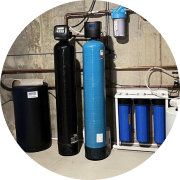
| Whole House Systems | 6 to 12 months | Sediment, rust, pipe scale, municipal disinfectant residuals | Noticeable house-wide drop in tap or shower pressure |
Signs Your System Needs a Chicago Water Filter Replacement
Relying strictly on calendar months to replace filter elements can be misleading. Water consumption varies greatly between a single resident living in a Lincolnwood condo and a family of five in Edison Park. Tracking physical performance indicators ensures your cartridges are serviced before water quality declines.

Key physical signs that signal an urgent need for Chicago water filter replacement include:
- Significant Water Pressure Drop: When microscopic silt, iron rust, and heavy metal particles choke the outer layers of a sediment or carbon block filter, water flow drops to a thin trickling stream.
- Return of Chemical Taste or Off-Odors: Chloramines impart a distinct chemical or medicinal odor. If your filtered drinking water begins to taste like tap water again, the carbon block media has saturated and lost its chemical absorption capacity.
- Metallic or Bitter Notes: A sharp metallic taste often indicates that active lead or dissolved mineral reduction media has reached total saturation.
- TDS Monitor Warnings: High-end reverse osmosis setups, such as our PEL75 9-Stage RO System, feature built-in dual Total Dissolved Solids (TDS) monitors. When the digital display shows a rising TDS level in your output water relative to raw tap water, your system needs professional cartridge or membrane service.
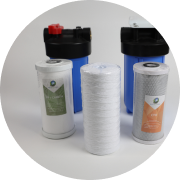
- Visual Discoloration: Saturated carbon cartridges often change color from bright white to dark grey, orange, or deep brown as iron scale and heavy sediment collect inside the housing.
How Chicago’s Aging Lead Infrastructure Affects Filter Lifespan
Chicago boasts one of the most sophisticated municipal water treatment networks in the world. The Department of Water Management performs over 600,000 rigorous quality tests annually to verify that water drawn from Lake Michigan meets every state and federal standard before leaving municipal plants.
However, once treated water enters the vast distribution system, it travels through thousands of miles of legacy piping. Historically, local building codes mandated lead service lines connecting main lines beneath the street to private home plumbing.
In older residential pockets across Chicago’s Northwest Side — such as Norwood Park, Jefferson Park, Forest Glen, and Dunning — as well as nearby suburbs like Park Ridge, Skokie, and Niles, aging infrastructure and hard water in the Northwest suburbs significantly impact filter lifespan.
To limit lead leaching, the city adds blended phosphates to drinking water, creating a protective coating inside metal pipes. However, physical disturbances — such as road repairs, main replacements, or freezing soil during harsh winter months — can cause microscopic bits of scale and rust to shed into the water flow.
When these heavy particles reach your home, your water filter acts as the ultimate barrier. This high particulate load explains why under-sink pre-filters in older homes often fill up faster than expected. Homeowners living near active municipal construction zones frequently notice pressure drops sooner, requiring regular maintenance to protect downstream filtration media.
For additional regional details on municipal distribution standards, review local guidelines on Water Quality.
Upgrading Beyond Pitchers: Advanced Filtration Options for Chicago Homes
While municipal pitcher programs offer an initial layer of protection, many households find their daily output limited. Refillable pitchers require frequent manual topping, occupy valuable refrigerator shelf space, and process water slowly.
For long-term reliability and comprehensive protection, under-sink filtration and whole-home equipment offer superior daily performance.

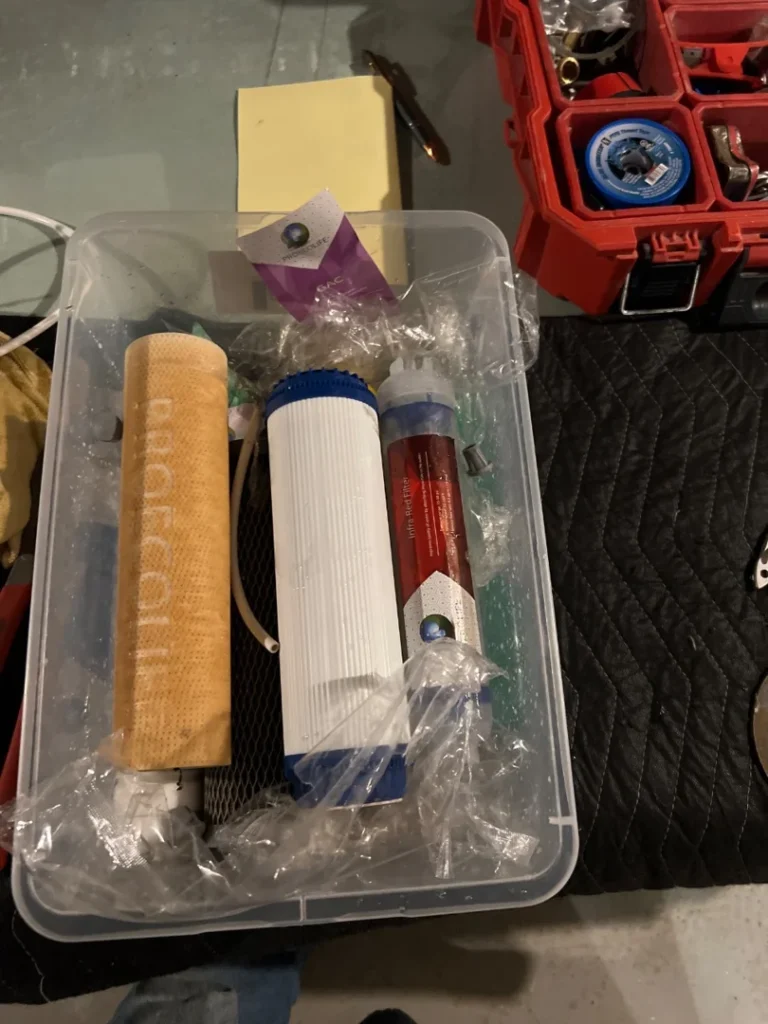
At ProEcoLife, our proprietary PEL75 9-Stage RO System provides robust multi-stage protection engineered specifically for local water profiles:
- Stage 1 – Sediment Pre-Filter: Traps coarse sand, pipe scale, silt, and macro-particles.
- Stage 2 – Granular Activated Carbon (GAC): Absorbs residual chlorine, organic compounds, and unpleasant chemical odors.
- Stage 3 – Carbon Block Filter: High-density carbon filtration targeting chloramines, synthetic chemicals, and fine particulates.
- Stage 4 – Specialized RO Pre-Filter: Protects delicate internal membrane surfaces from abrasion.
- Stage 5 – High-Rejection RO Membrane: The primary barrier, designed to reduce lead by up to 98%, while targeting PFAS, heavy metals, dissolved solids, and microscopic contaminants.
- Stage 6 – Post-Carbon Mineral Filter: Polishes water clarity and balance.
- Stage 7 – Essential Remineralization: Restores beneficial calcium, magnesium, and potassium ions lost during high-purity reverse osmosis, balancing pH and improving taste.
- Stage 8 – Shungite Antioxidant Treatment: Harnesses natural mineral carbon properties for natural water conditioning.
- Stage 9 – Far-Infrared Energization: Fine-tunes water structure for superior hydration and taste.
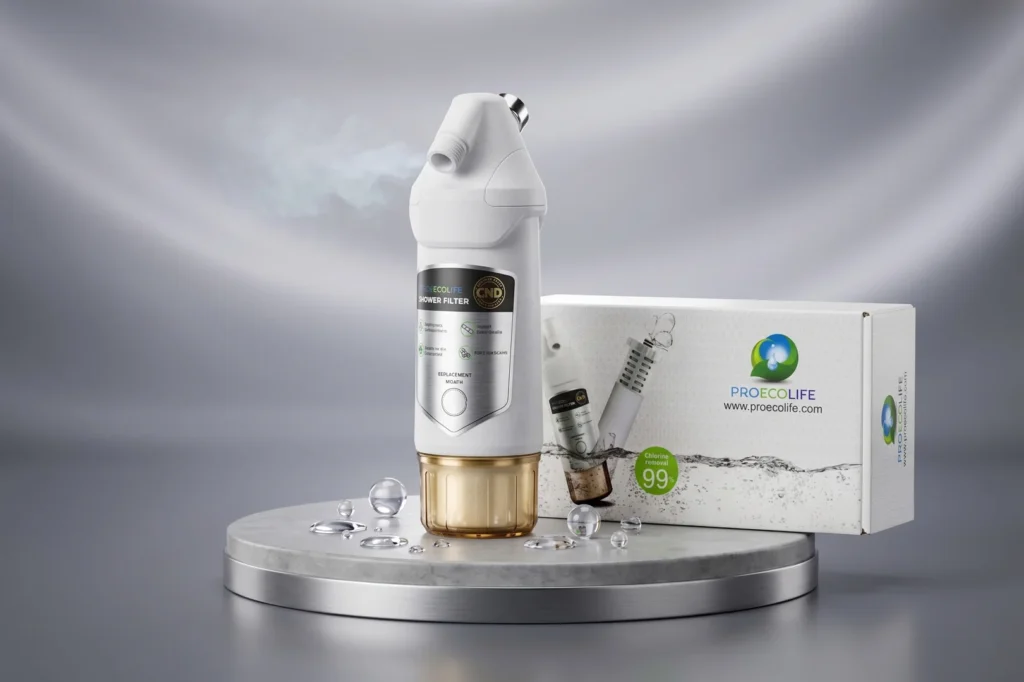
Beyond kitchen drinking water, comprehensive home protection can include Whole House Filtration to safeguard household fixtures and showers, Shower Filter Systems to eliminate chlorine vapors, Well Water Conditioning for regional rural properties, and high-capacity Commercial Water Filtration Systems for local businesses.
Many homeowners who switch from purchasing single-use bottled water to using a ProEcoLife under-sink setup notice that their investment pays for itself within the very first year of use.
When it comes to servicing advanced systems, relying on professional maintenance is crucial. Attempting self-installation or unguided DIY filter changes on multi-stage under-sink systems can risk plumbing leaks, damage internal quick-connect fittings, or breach delicate membrane seals. Our team of certified Chicago technicians handles every aspect of installation and servicing to ensure optimal performance.
To explore options for maintaining uninterrupted pure water throughout your property, learn more about Keep the Clean Water Flowing with These 20 Inch Replacement Cartridges and read our thorough breakdown in Best Under Sink Water Filter Chicago Reviews and Buying Guide. If you need immediate assistance scheduling service, book expert support through Expert Water Filter Installation Services in Chicago.
Frequently Asked Questions About Chicago Water Filtration
How often should under-sink reverse osmosis filters be changed in Chicago?
In typical Chicago conditions, standard carbon and sediment pre-filters should be replaced every 6 to 12 months to prevent chloramines and pipe scale from clogging the system. The core reverse osmosis membrane itself is far more durable, requiring professional replacement every 2 to 3 years based on annual rejection rate testing and real-time TDS readings.
What should I do if my filtered water pressure drops suddenly?
A sudden drop in filtered water pressure usually indicates that your initial sediment pre-filter has successfully caught a surge of pipe scale or rust from recent local main work. Start by verifying that all under-sink shutoff valves are fully open. If the valves are clear, contact a qualified service technician to inspect and replace the clogged filter cartridges.
Does every apartment in a Chicago two-flat qualify for a municipal filter set?
Yes, under municipal program guidelines, each residential unit in a multi-family building or two-flat is evaluated independently. Provided the specific address unit meets lead testing thresholds or active street construction criteria, each household can submit its own address details to receive dedicated municipal testing kits and filter sets.
Conclusion
Keeping your household water clean requires ongoing care. Whether you are using a city-provided filter pitcher or an advanced under-sink reverse osmosis system, timely filter cartridge maintenance ensures your water remains safe, clear, and great-tasting year after year. From Northwest Side neighborhoods like Harwood Heights, Norridge, and Portage Park to surrounding communities like Des Plaines, Mount Prospect, Arlington Heights, Glenview, and Evanston, keeping track of your maintenance schedule makes all the difference.
If you want complete peace of mind regarding your home’s drinking water, our local team is here to help. Explore our complete range of custom filtration solutions at Chicago Water Filter System.
To schedule an in-home water test or arrange professional service, contact ProEcoLife today at proecolife.com.