

Why Your Chicago Home May Need a 5 Micron Whole House Filter
A 5 micron whole house filter is one of the most practical first steps you can take to protect your family’s water supply — especially if you live in Chicago or the Northwest suburbs.
Quick answer for Chicago homeowners:
- A 5 micron whole house filter removes particles 5 microns or larger from every tap in your home — including sand, silt, rust, and sediment
- It installs at your main water line, so all water entering your home gets filtered
- It works for both Lake Michigan municipal water and private well water
- It is commonly used as a pre-filter to protect more advanced systems like reverse osmosis or whole house carbon filters
- Replacement intervals typically range from 3 to 12 months depending on your water quality and usage
Chicago’s water comes from Lake Michigan and goes through city treatment — but it still travels through miles of aging pipes before it reaches your tap. In older neighborhoods like Norwood Park, Edison Park, and Jefferson Park, those pipes may be decades old. That means rust, sediment, and particulates are a real concern, not just a theoretical one.
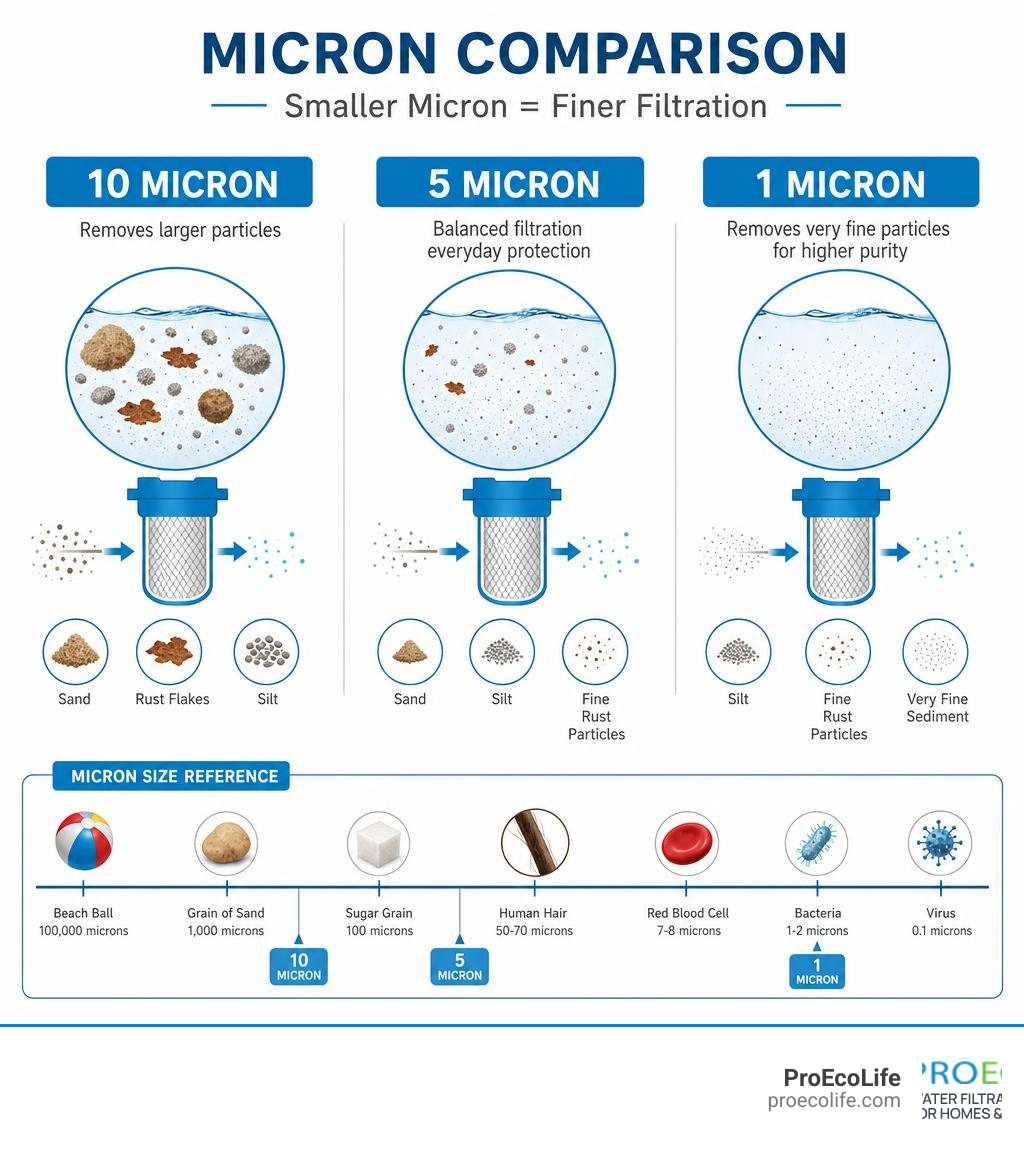
One micron equals one millionth of a meter. To put that in perspective, you could line up 5,000 microns across the width of a pencil eraser. A 5 micron filter catches particles that are completely invisible to the naked eye — yet still capable of damaging your appliances, clogging your plumbing, and affecting your water quality.
Choosing the right micron rating matters. Go too fine and you may lose water pressure. Go too coarse and you miss particles that cause real damage. This guide breaks down everything you need to know.
Understanding the 5 Micron Whole House Filter and How It Works
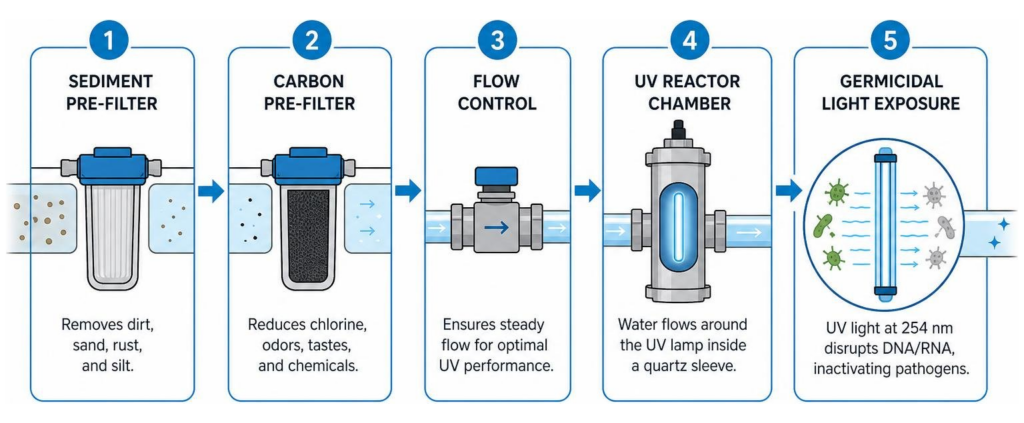
To understand how a 5 micron whole house filter protects your property, we first have to look at how mechanical filtration operates. When water enters your home from the municipal main or a private well, it brings along tiny pieces of physical debris.
A whole-house sediment filter acts like a highly sophisticated microscopic screen. As water is pushed through the filtration medium, any physical particle larger than 5 microns gets physically trapped inside the filter’s layers, while clean water passes through to your household plumbing.
This process is what we call mechanical filtration. Understanding jak dzialaja filtry mechaniczne i dlaczego sa podstawa w systemach filtracyjnych w domu helps explain why this is the foundational layer of any robust home water setup. Without a mechanical barrier, fine grit would quickly travel to your faucets, showerheads, and expensive appliances.
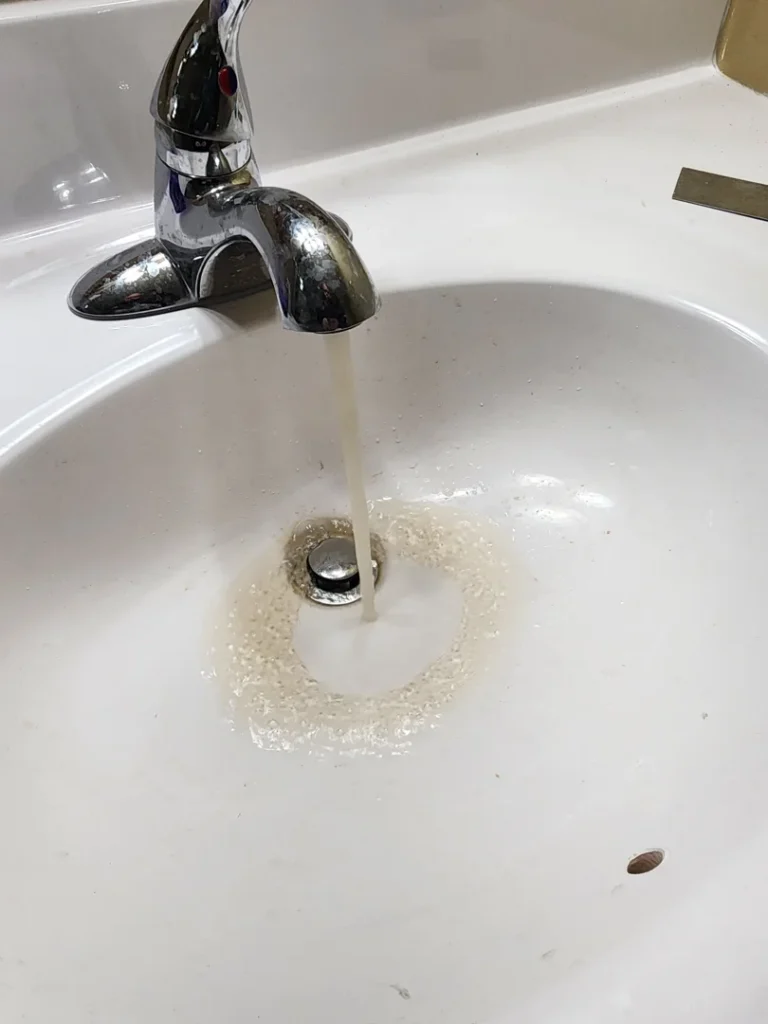
In Chicago, our municipal water infrastructure is constantly undergoing repairs and upgrades. When water mains are serviced or replaced on the Northwest Side, the physical disruption can dislodge decades of accumulated rust and sediment inside the cast-iron water mains. Having a dedicated whole house filtration system ensures that these sudden bursts of turbidity never make it past your basement.
What Contaminants Does a 5 Micron Filter Remove?
A 5 micron filter is primarily designed to tackle physical particulates, also known as sediment. It excels at removing:
- Rust and Iron Flakes: Extremely common in older Chicago homes with galvanized plumbing or aging municipal service lines.
- Sand and Grit: Often found in private wells in suburban areas.
- Silt and Clay: Fine earth particles that cause water to look cloudy or turbid.
- Microscopic Debris: Tiny fragments of pipe material dislodged during city water main construction.
By trapping these larger physical elements, the filter prevents “turbidity”—the scientific term for cloudiness in water. However, it is important to note that a standard sediment filter does not remove dissolved chemicals, heavy metals like lead, or biological pathogens. For those, we pair sediment filtration with more advanced technologies.
Comparing Micron Ratings: 1 Micron vs. 5 Micron and Beyond
When shopping for a system filtracji wody w domu, you will encounter various micron ratings. Choosing the right one requires balancing filtration precision with water flow.
The general rule of filtration is simple: the smaller the micron rating, the tighter the filter. However, a tighter filter also creates more resistance, which can lead to a noticeable pressure drop in your showers and faucets.
If you install a 1 micron filter as your primary whole-house barrier, it will clog incredibly fast because it is catching every single tiny speck of dust and sediment. This rapid clogging starves your plumbing of water pressure. This is why a 5 micron whole house filter is widely considered the “sweet spot” for residential point-of-entry systems. It is fine enough to catch visible and semi-visible sediment, yet open enough to maintain an excellent flow rate.
To help you visualize these differences, we have outlined how different micron ratings compare:
| Micron Rating | Common Applications | Pros | Cons |
|---|---|---|---|
| 1 Micron | Point-of-use (under-sink), pre-RO systems, fine polishing | Captures extremely fine silt, some cysts, and lead dust | Clogs very quickly; can severely drop whole-house water pressure |
| 5 Micron | Whole-house sediment filtration, pre-carbon filtration | Excellent balance of sediment removal and high flow rate | Does not capture dissolved chemicals or microscopic bacteria |
| 10 – 20 Micron | Coarse pre-filtering, high-flow industrial, heavy well sand | High dirt-holding capacity; virtually zero impact on water pressure | Allows finer sediment and rust flakes to pass through to your home |
Exploring the different types of water filters at home will help you see how these ratings fit into a complete multi-stage filtration strategy.
When to Choose a 1 Micron Filter Over a 5 Micron Filter
While a 5 micron filter is ideal for general whole-house sediment protection, there are specific scenarios where a 1 micron filter is necessary.
If your water test reveals extremely fine clay or colloidal sediment that passes right through a 5 micron cartridge, a 1 micron filter may be required to clear up the cloudiness. Additionally, if you are targeting specific parasites like Cryptosporidium or Giardia cysts, an absolute-rated 1 micron filter is required to physically block them.
In the Northwest suburbs, where hard water and mineral scaling are prevalent, fine sediment can sometimes bind with calcium deposits, making a finer filtration stage beneficial. However, rather than running a 1 micron filter alone, we always recommend placing it after a 5 micron pre-filter to prevent it from clogging prematurely.
Types of 5 Micron Filters: Sediment vs. Carbon Block
Not all 5 micron filters are built the same way. The two most common varieties you will encounter are sediment filters and carbon block filters.

Sediment Filters
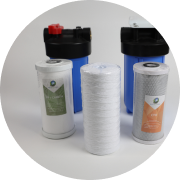
These are strictly designed for physical filtration. They are usually made of spun polypropylene, pleated polyester, or string-wound fibers.
- Pleated sediment filters offer a massive surface area, making them highly reusable and excellent for well water with heavy sediment loads.
- Spun or depth filters trap particles throughout the entire thickness of the material, which is ideal for graded density filtration.
Standard replacement cartridges like the ICEPURE 5 Micron 10″ x 2.5″ Whole House Sediment PP Cotton Filter or the BLUERISE 5 Micron 10″ x 2.5″ Water Filter Replacement Whole … are classic examples of highly efficient, budget-friendly depth filters used to stop physical grit.
Carbon Block Filters
These filters perform double duty. While they are compressed to a 5 micron rating—meaning they physically block sediment just like a spun filter—they are made of activated carbon (often derived from high-density coconut shells).
As water passes through the carbon block, a process called adsorption takes place. Dissolved chemicals, chlorine, chloramines, pesticides, and volatile organic compounds (VOCs) chemically bind to the carbon pores. This removes unpleasant tastes and chemical odors from your Lake Michigan tap water.
Understanding how to choose a water filter often comes down to identifying whether your primary issue is physical dirt (requiring a sediment filter) or chemical taste and odor (requiring a carbon block).
Key Benefits of Installing a 5 Micron Whole House Filter
By choosing to install a 5 micron filtration system, you protect your entire household infrastructure in several ways:
- Protects Household Appliances: Modern washing machines, dishwashers, and tankless water heaters have delicate internal valves. Even tiny rust flakes or sand grains can clog these components, leading to expensive repair bills.
- Extends Water Heater Longevity: Sediment settles at the bottom of water heaters, creating an insulating layer that forces the system to work harder, spike your energy bills, and burn out prematurely.
- Preserves Plumbing and Fixtures: Fine grit acts like sandpaper inside your pipes, slowly wearing down brass fittings and ruining the finish on luxury faucets in suburbs like Park Ridge, Niles, and Des Plaines.
- Improves Secondary Filtration: By acting as a shield, a whole house filtration sediment stage prevents your main carbon filters or water softeners from becoming fouled with mud and rust.
Lifespan, Water Pressure, and Maintenance of 5 Micron Filters
A common concern among homeowners is how long a filter cartridge will last and whether it will ruin their shower pressure.

The lifespan of a 5 micron whole house filter depends heavily on your household water consumption and the level of sediment in your incoming water.
- Standard 10″ x 2.5″ cartridges typically treat between 13,000 and 30,000 gallons, meaning they require replacement every 3 to 6 months.
- Large “Big Blue” style cartridges (such as 20″ x 4.5″ sizes) can handle up to 100,000 gallons or last between 6 to 12 months before needing a swap. Products like the CBS 5 Micron Sediment Whole House Filter – RKIN utilize these larger dimensions to provide high flow rates and extended longevity.
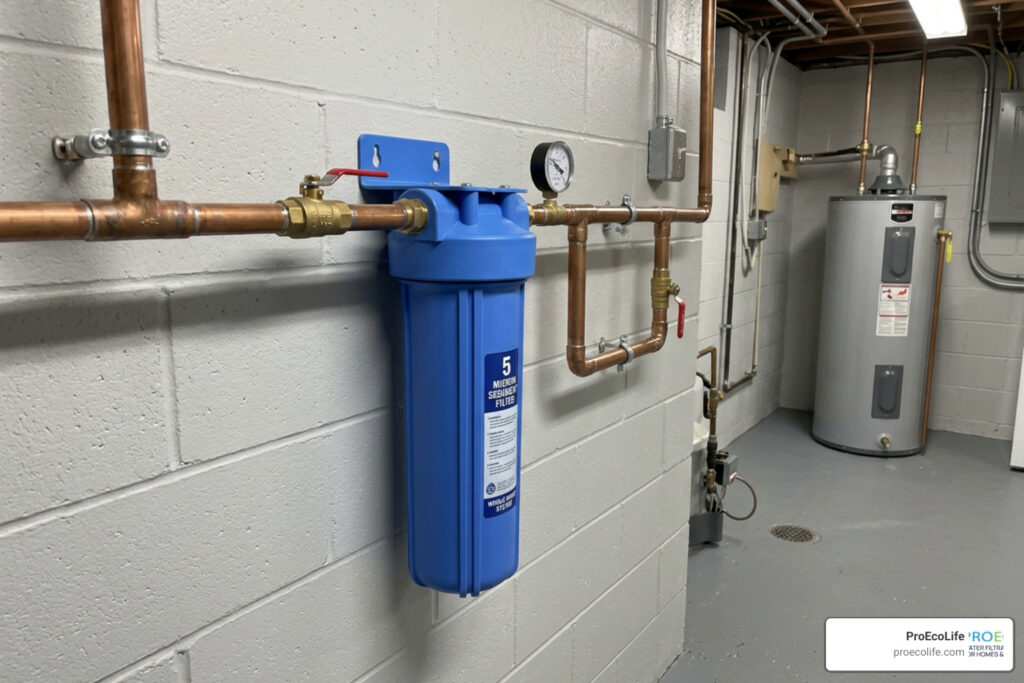
The most reliable indicator that your filter is reaching the end of its life is a gradual drop in household water pressure. Many professional filter housings feature built-in pressure gauges at both the inlet and outlet ports. When the pressure difference between the two gauges increases, it tells us that the filter is saturated and needs to be replaced.
Does a 5 Micron Filter Affect Water Pressure or Flow Rate?
When sized and installed correctly, a 5 micron filter will have a negligible impact on your home’s water pressure.
Flow rate is measured in Gallons Per Minute (GPM). To prevent pressure drops, the filtration system must be sized according to the number of bathrooms in your home. For example, a home with 1 to 3 bathrooms typically requires a system rated for at least 9 GPM. Larger homes with 4 to 6 bathrooms need a flow rate of 12 GPM, while grander properties with 7 or more bathrooms require up to 20 GPM to ensure that running a shower and a washing machine simultaneously doesn’t result in a sudden trickle.
In suburban communities like Skokie, Glenview, and Arlington Heights, maintaining strong water pressure is a priority for busy families. Opting for a professional system with high-flow bypass valves ensures that clean water is delivered to every fixture without any noticeable drop in performance.
Selecting and Installing Your Whole House Filtration System
Choosing the right filtration setup is not a one-size-fits-all process. It requires evaluating your specific water source, plumbing layout, and household size.
To achieve the best results, a professional water analysis is the perfect starting point. This test identifies exactly what is in your water, allowing us to build a custom system tailored to your home. If you want to explore what goes into selecting these setups, read our comprehensive guide on the best whole house water filtration systems in chicago for crystal clear water.
For safety, reliability, and to preserve your home’s warranty, whole-house systems should always be professionally installed. The system must be integrated directly into your main copper or PEX water line, typically right after your water meter or pressure tank, but before your water heater or water softener. This placement ensures that every drop of water entering your home is treated before it branches off.
How to Choose the Right 5 Micron Whole House Filter for Your Chicago Home
Your water source is the single biggest factor in choosing a system.
If your home relies on municipal Lake Michigan water (common in Morton Grove, Lincolnwood, and Evanston), your main concerns are likely chlorine taste, chemical odors, and plumbing rust. A multi-stage system combining a 5 micron sediment pre-filter with a high-capacity carbon block is highly effective here.
If you are on a private well in the outer Northwest suburbs, you may deal with high levels of iron, sulfur, or fine sand. In this scenario, we often recommend a specialized Well Water Conditioning setup paired with a heavy-duty, pleated 5 micron sediment filter to handle the physical grit.
Evaluating your specific water profile ensures you invest in a system filtracji wody w domu that actually solves your water issues without unnecessary maintenance.
Frequently Asked Questions about Micron Filters
Can a 5 micron filter remove lead and bacteria from Chicago water?
No, a standard 5 micron filter cannot remove dissolved lead or biological pathogens like bacteria and viruses.
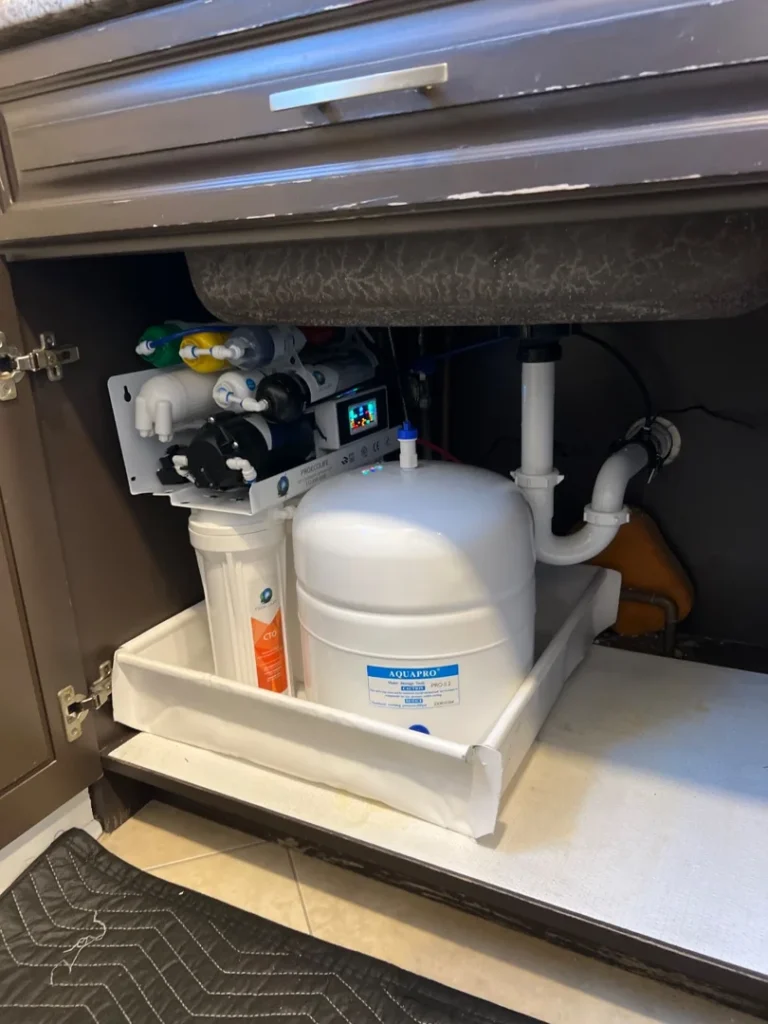
Lead in Chicago water is typically dissolved, meaning it exists at a molecular level that passes right through a physical 5 micron barrier. To address lead, chemicals, and biological contaminants, we recommend installing our advanced PEL75 9-Stage RO System at your kitchen tap. For biological safety on well water, we pair our sediment systems with a certified UV disinfection stage to neutralize 99.9% of pathogens.
How often should I replace a 5 micron filter cartridge?
As a general rule, sediment filters should be replaced every 3 to 6 months, while larger carbon block filters can last 6 to 12 months. However, if you notice a sudden drop in water pressure, cloudy water at your taps, or a dark brown color on your filter cartridge, it is time for a replacement.
Should I use a 5 micron filter as a pre-filter for other systems?
Absolutely. In fact, this is one of its most important roles. Placing a 5 micron sediment filter at your home’s point of entry acts as a shield for downstream systems. It protects the delicate membranes in our PEL75 9-Stage RO System, keeps your Shower Filter System running smoothly, and prevents sediment from fouling the media inside commercial-grade setups or larger Whole House Filtration systems.
Conclusion
At ProEcoLife, we have been proud of our deep Chicago roots since 2014. Founded by Karol Dolega, our mission has always been to provide families across the Chicago area and the Northwest suburbs with water they can trust.
Whether you are dealing with aging municipal water mains on the Northwest Side or hard well water in the outer suburbs, we are here to help. We don’t believe in generic, one-size-fits-all solutions. Instead, we use professional water testing to understand your unique water profile and recommend the exact setup your home needs.
If you want to explore our complete range of advanced home systems, check out our dedicated whole house filtration system page or locate our team via Proecolife Water Corp – Chicago, IL – MapQuest . Let us help you protect your home, your appliances, and your family’s peace of mind.
Ready to ensure your home’s water is clean, clear, and safe? Contact ProEcoLife today to schedule a professional water test at proecolife.com.