
How a Reverse Osmosis Machine Works to Protect Your Home Tap Water
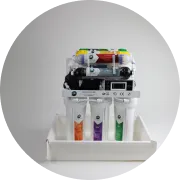
A reverse osmosis machine purifies drinking water by using household pressure to push tap water through a semipermeable membrane with tiny 0.0001-micron pores. This process separates pure water molecules from up to 99% of total dissolved solids (TDS), filtering out dissolved lead, chlorine, heavy metals, and microscopic contaminants before the water reaches your glass.
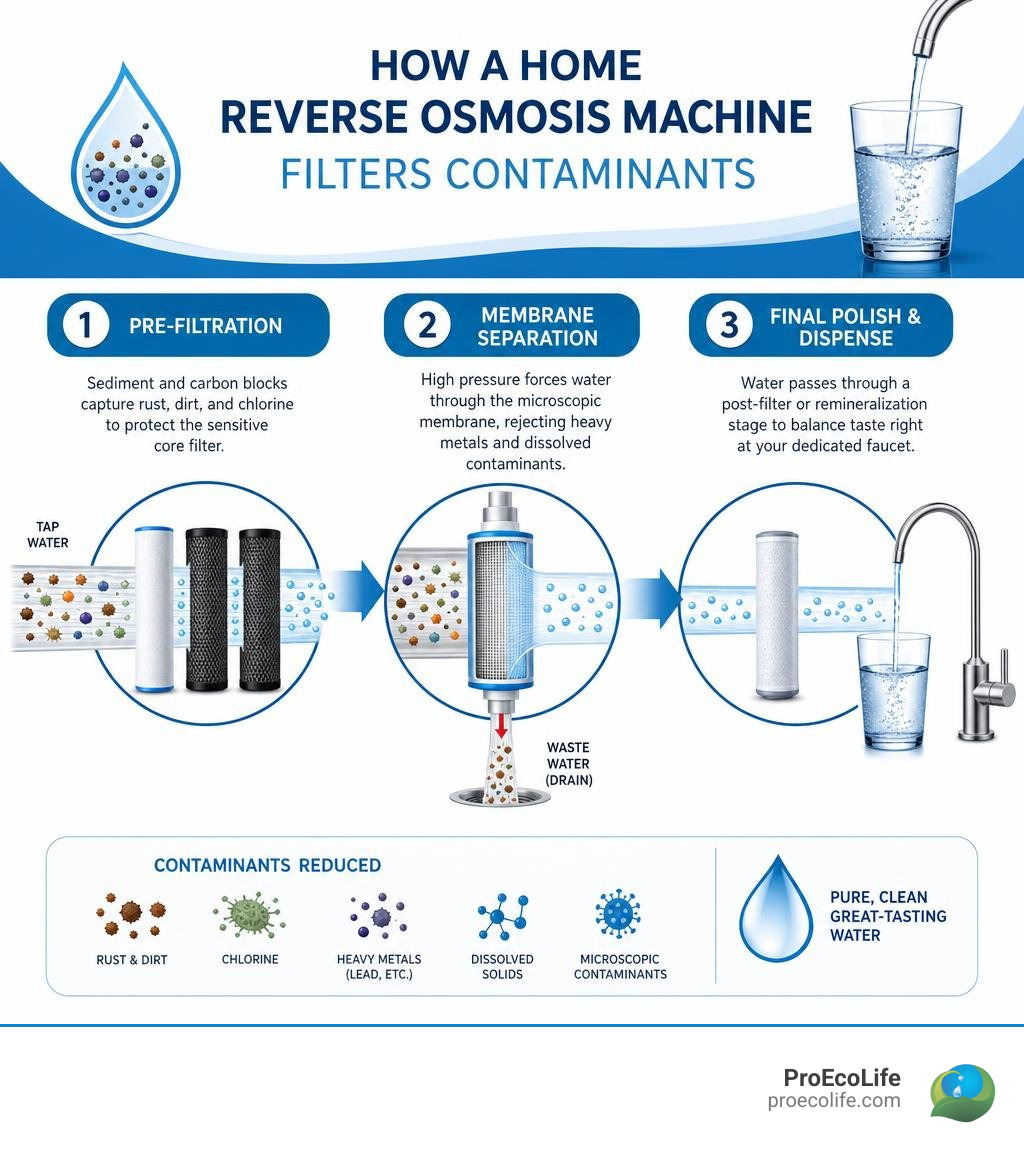
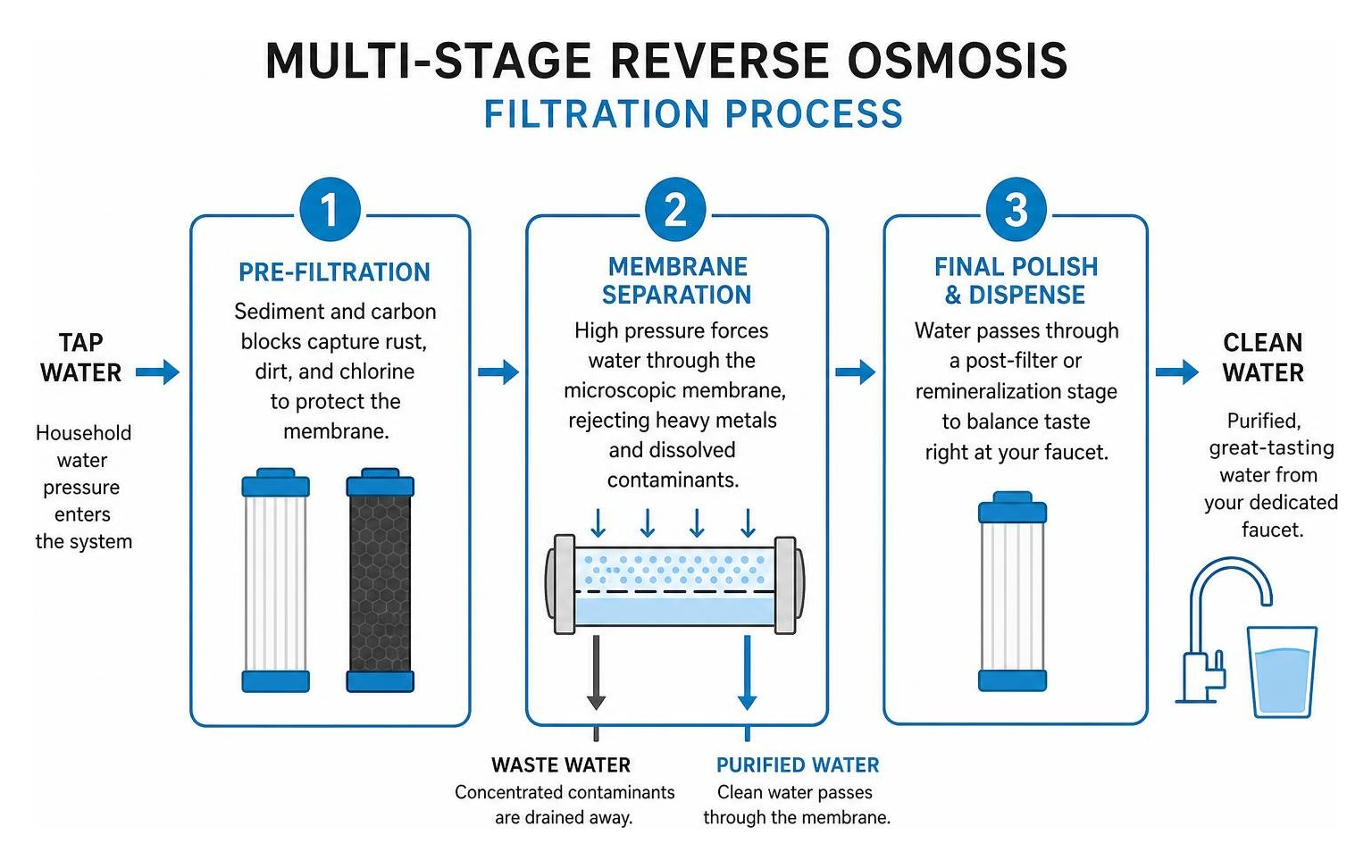
Here is how a standard home system handles your tap water:
- Pre-filtration: Sediment and carbon blocks capture rust, dirt, and chlorine to protect the sensitive core filter.
- Membrane separation: High pressure forces water through the microscopic membrane, rejecting heavy metals and dissolved contaminants.
- Final polish & dispense: Water passes through a post-filter or remineralization stage to balance taste right at your dedicated faucet.
For Chicago homeowners dealing with aging service lines and older residential plumbing, municipal treatment provides a safe baseline, but pipe corrosion can still impact what comes out of your faucet. While individual water quality and results vary by neighborhood, many local homeowners notice that adding a multi-stage system under the sink provides reliable, lead-free peace of mind for daily drinking and cooking.
Quick reverse osmosis machine terms:
How a Reverse Osmosis Machine Purifies Drinking Water
At ProEcoLife, we have worked with Chicago water every day since 2014, when our founder Karol Dolega set out to help homeowners tackle local water quality challenges. Understanding the mechanics of home purification begins with demystifying reverse osmosis: how this tech purifies your drinking water.
Natural osmosis occurs when water spontaneously moves through a semipermeable membrane from a dilute solution toward a more concentrated one to balance mineral levels. In a reverse osmosis unit, we apply incoming household water pressure to reverse that natural flow. The water is forced backward through a dense barrier, leaving dissolved minerals, microplastics, and heavy metals behind while clean water passes through.
Because Lake Michigan supplies water with fluctuating particulate loads and local suburbs frequently deal with high mineral counts, relying on line pressure alone drives water across these specialized layers to achieve up to a 99% reduction in total dissolved solids.
Key Stages Inside a Reverse Osmosis Machine
A standalone membrane cannot do all the heavy lifting alone. Without proper preparation, chlorine and large particles would clog or degrade the delicate polymer layer within weeks. A comprehensive system uses sequential stages to protect the membrane and refine the finished product.
- Sediment Filtration: Captures sand, silt, pipe scale, and loose rust common in vintage distribution pipes across Northwest Side Chicago bungalows.
- Activated Carbon Block: Absorbs chlorine, chloramines, bad odors, and volatile organic compounds (VOCs) that could chemically degrade the membrane.
- High-Rejection RO Membrane: The core element where true molecular separation happens, filtering out microscopic heavy metals and dissolved salts.
- Post-Carbon Polishing Filter: Refines the taste of water stored inside the pressurized holding tank before it dispenses.
- Remineralization Stage: Reintroduces beneficial alkaline minerals like calcium and magnesium to restore a smooth, balanced flavor profile.
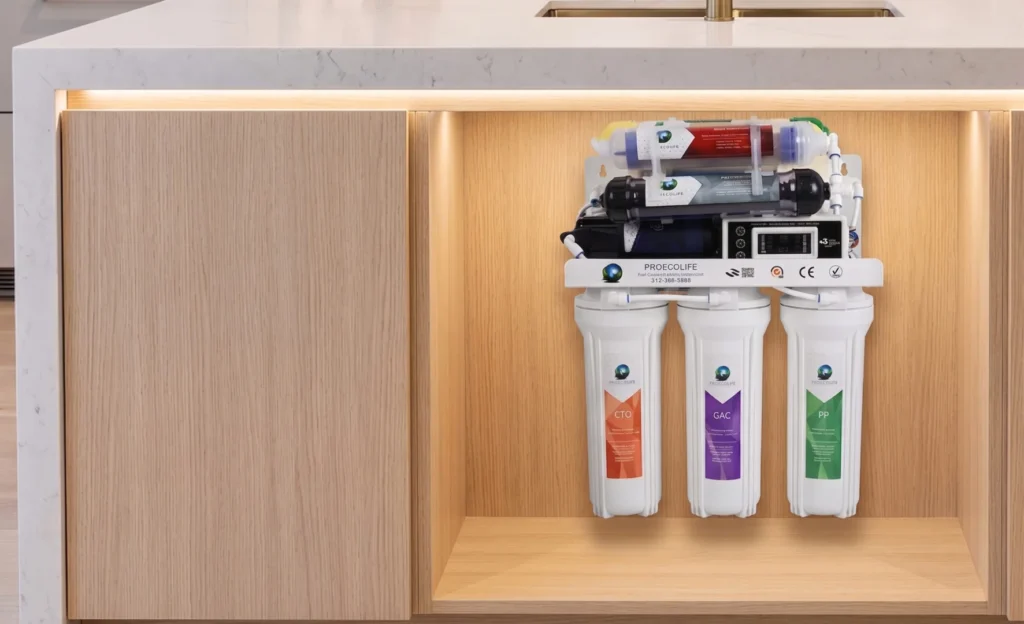
For homeowners wanting a deeper look into how each layer functions, exploring Proecolife filters filtration stages shows how our proprietary PEL75 9-Stage RO System structures these phases for peak efficiency.
Membrane Separation and Contaminant Rejection
The true workhorse of the unit is its semipermeable membrane, built with pore sizes around 0.0001 microns. To put that into perspective, a single strand of human hair is roughly 70 microns wide, and typical bacteria measure between 0.5 and 3 microns.
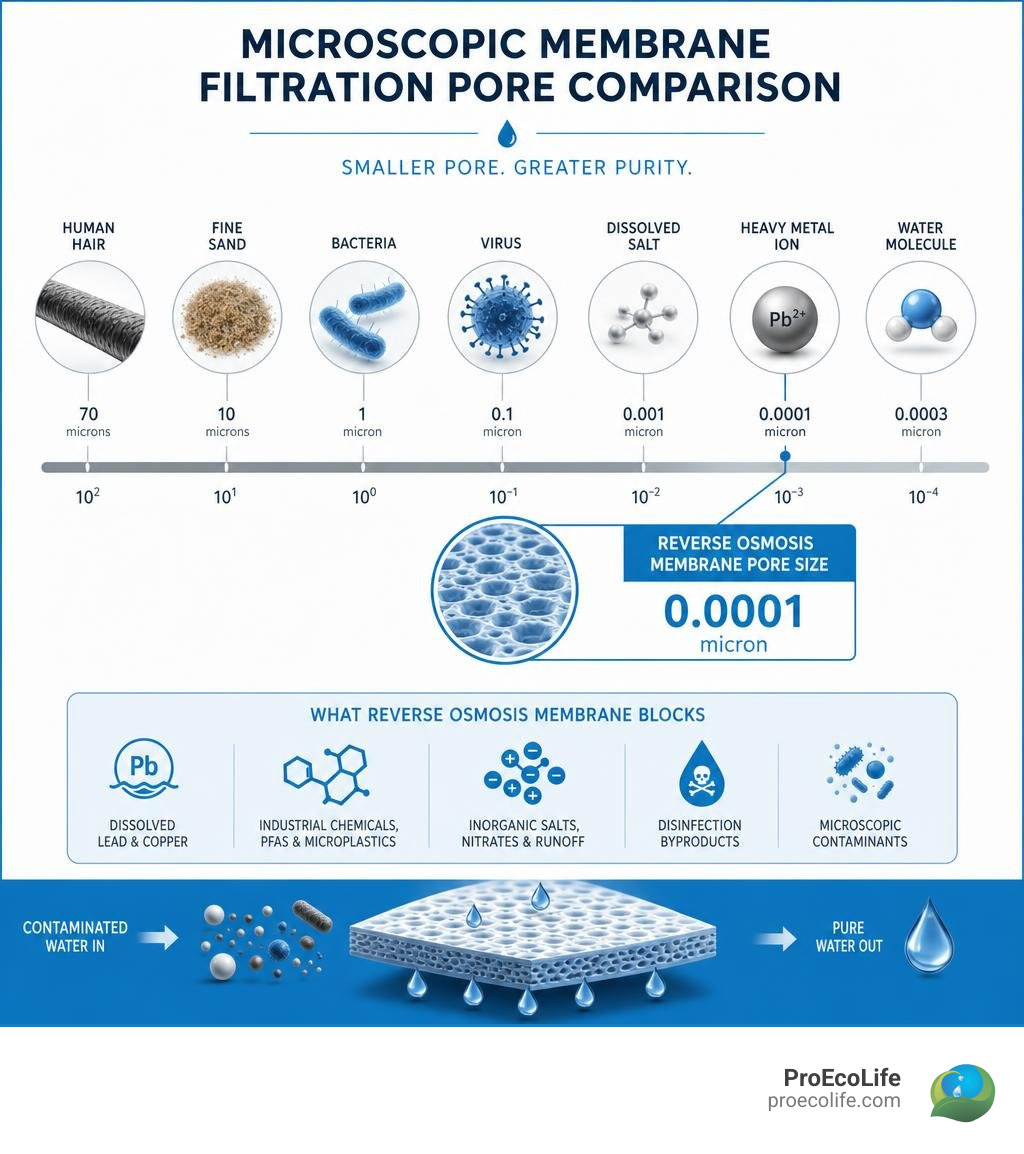
At 0.0001 microns, the barrier rejects:
- Dissolved lead and copper leached from aging municipal utility grids
- Industrial synthetic compounds, PFAS, and microplastics
- Inorganic salts, nitrates, and agricultural runoff
- Disinfection byproducts formed during municipal chlorination
Checking local data through the EWG Tap Water Database | Park Ridge helps illustrate why point-of-use filtration has become so common for families in surrounding communities. While utility suppliers meet mandatory legal parameters, municipal pipes can still allow trace contaminants to enter your home plumbing.
Key Benefits of Installing an RO Filtration System
Deciding whether a system suits your household often comes down to everyday health, convenience, and culinary improvement. If you are debating if is reverse osmosis for you?, evaluating how pure water alters daily routines can clarify the investment.

From our home base on West Higgins Avenue serving neighborhoods from Norwood Park to Edison Park, our team sees how filtered water transforms cooking, coffee brewing, and routine hydration. Removing excess salts and harsh disinfectants lets the natural flavor of recipes shine while protecting kitchen appliances from scale buildup.
Drinking Water Safety and Lead Removal
Lead remains a primary water quality concern throughout older Chicago housing stock. Decades ago, service connections were routinely built using lead lines. Even if city mains deliver clean water, corrosive interactions inside service lines and interior fixtures can allow lead to leach directly into tap water.
Because lead dissolves at a molecular scale, standard pitcher filters or basic faucet attachments can struggle to maintain long-term protection. Investing in top rated reverse osmosis systems to remove lead from your home gives homeowners a multi-barrier defense that consistently reduces lead concentrations alongside copper and sediment.
Enhanced Plant Cultivation and Hydroponics
Beyond family drinking water, pure water is an invaluable asset for indoor gardening, greenhouse hobbyists, and professional growers. Tap water often arrives loaded with varying TDS levels, bicarbonate buffers, and unpredictable pH swings that complicate delicate plant feeding schedules.
- Clean Slate Formulation: A zero-TDS baseline allows growers to mix nutrient solutions without balancing mysterious baseline minerals.
- Precise pH Management: Removing heavy mineral buffers prevents stubborn nutrient lockouts at the root zone.
- Sensitive Crop Protection: High-value botanical crops and delicate seedlings avoid toxicity caused by chlorine or excessive sodium.
- Root Health & Yields: Consistent, contaminant-free irrigation promotes vigorous root respiration and nutrient uptake.
In indoor cultivation, consistency drives yield. Starting with clean, pure water eliminates unpredictable water chemistry variables entirely.
Evaluating the Long-Term Costs and Efficiency of RO Technology
Older membrane designs earned a reputation for being water-intensive, often sending 4 or 5 gallons down the drain for every single gallon of drinking water produced. Fortunately, modern membrane engineering has transformed this footprint.
As the global reverse osmosis membrane market expands toward an estimated $12.5 billion by 2027, modern high-efficiency systems now achieve low wastewater ratios of 1:1 under proper line pressure. Combining point-of-use systems with Whole House Filtration, Shower Filter System units, or Well Water Conditioning can protect every fixture throughout the home while keeping utility consumption manageable.
| Filtration Feature | Standard Pitcher / Faucet Filter | Multi-Stage Reverse Osmosis System |
|---|---|---|
| Pore Size Rating | 1.0 – 5.0 Microns | 0.0001 Microns |
| Lead & Heavy Metal Removal | Basic / Inconsistent over time | Up to 99% Rejection |
| TDS & Dissolved Solids Reduction | Minimal | High (Comprehensive reduction) |
| Remineralization Capability | Rare | Yes (Integrated 9-stage options) |
| Average Daily Output | 2 – 5 Gallons | 50 – 100 Gallons |
| Typical Service Lifespan | 1 – 2 Months per cartridge | 12 Months (Filters) / 2-3 Years (Membrane) |
Operating and Maintenance Expenses of a Reverse Osmosis Machine
Keeping your system running smoothly requires predictable, routine care rather than intensive ongoing labor:
- Pre-Filter Cartridges (Sediment & Carbon): Replaced every 6 to 12 months depending on local sediment load.
- RO Membrane: Typically serviced or replaced every 2 to 3 years.
- Post-Carbon & Mineral Polishers: Changed annually to maintain crisp water taste.
- System Sanitization: A simple internal rinse during scheduled filter changes prevents biological film inside holding tanks.
Homes in Northwest suburbs like Des Plaines, Niles, and Arlington Heights with harder incoming municipal supplies may experience slightly faster pre-filter loading, while homes in Jefferson Park or Forest Glen may focus more on catching pipe scale.
Frequently Asked Questions About Home RO Systems
How much wastewater does a modern reverse osmosis unit produce?
Modern residential units equipped with efficient membranes typically operate near a 1:1 ratio under normal household water pressure (50 to 70 PSI). Older designs previously ran at 4:1 ratios, but modernized flow restrictors and advanced membrane polymers reduce water waste by up to 75% compared to legacy equipment.
Does reverse osmosis remove essential minerals from drinking water?
Yes, the dense membrane removes naturally occurring dissolved minerals along with harmful heavy metals. However, premium systems—such as our PEL75 9-Stage RO System—feature an integrated alkaline remineralization stage. This step re-balances the pH and reintroduces ideal ratios of pure calcium and magnesium for balanced, refreshing drinking water.
How often do the filter cartridges need to be replaced?
Under typical household usage, sediment and carbon pre-filters require replacement every 6 to 12 months to protect the system from chlorine damage and fine debris. The central reverse osmosis membrane generally lasts between 24 and 36 months, provided the pre-filtration stages are properly serviced on schedule.
Conclusion: Deciding If RO Is Right for Your Home
Investing in a dedicated purification system under your sink is one of the most dependable ways to help protect your family from aging plumbing, lead pipes, and fluctuating municipal chemistry. From the tree-lined streets of Park Ridge, Skokie, Glenview, and Morton Grove to historic Chicago bungalows across Portage Park and Dunning, clean water brings lasting peace of mind.
To discover how pure your tap water can truly be, explore our comprehensive guide on how does reverse osmosis work? to learn more about the science behind home purification.
Ready to see what is in your household tap? Contact ProEcoLife today to schedule a water test at proecolife.com.