

Iron in Your Water: Why Chicago-Area Homeowners Are Turning to 20-Inch Filters
A 20 inch iron filter is one of the most effective tools for removing dissolved iron, manganese, and hydrogen sulfide from a whole-house water supply — and if you’re on well water in the Chicago suburbs, you may need one more than you think.
Quick Answer: What Does a 20-Inch Iron Filter Do?
| What It Removes | Typical Reduction |
|---|---|
| Dissolved iron | Up to 3–10 ppm (depending on media type) |
| Manganese | Up to 5 ppm |
| Hydrogen sulfide (rotten egg odor) | Up to 3 ppm |
| Sediment/rust particles | Yes (as part of multi-stage setup) |
How it works, in plain terms:
- Water passes through a large-format (20″ x 4.5″) Big Blue filter housing
- Specialized iron-oxidizing or catalytic media converts dissolved iron into solid particles
- Those particles are trapped and removed before water reaches your taps
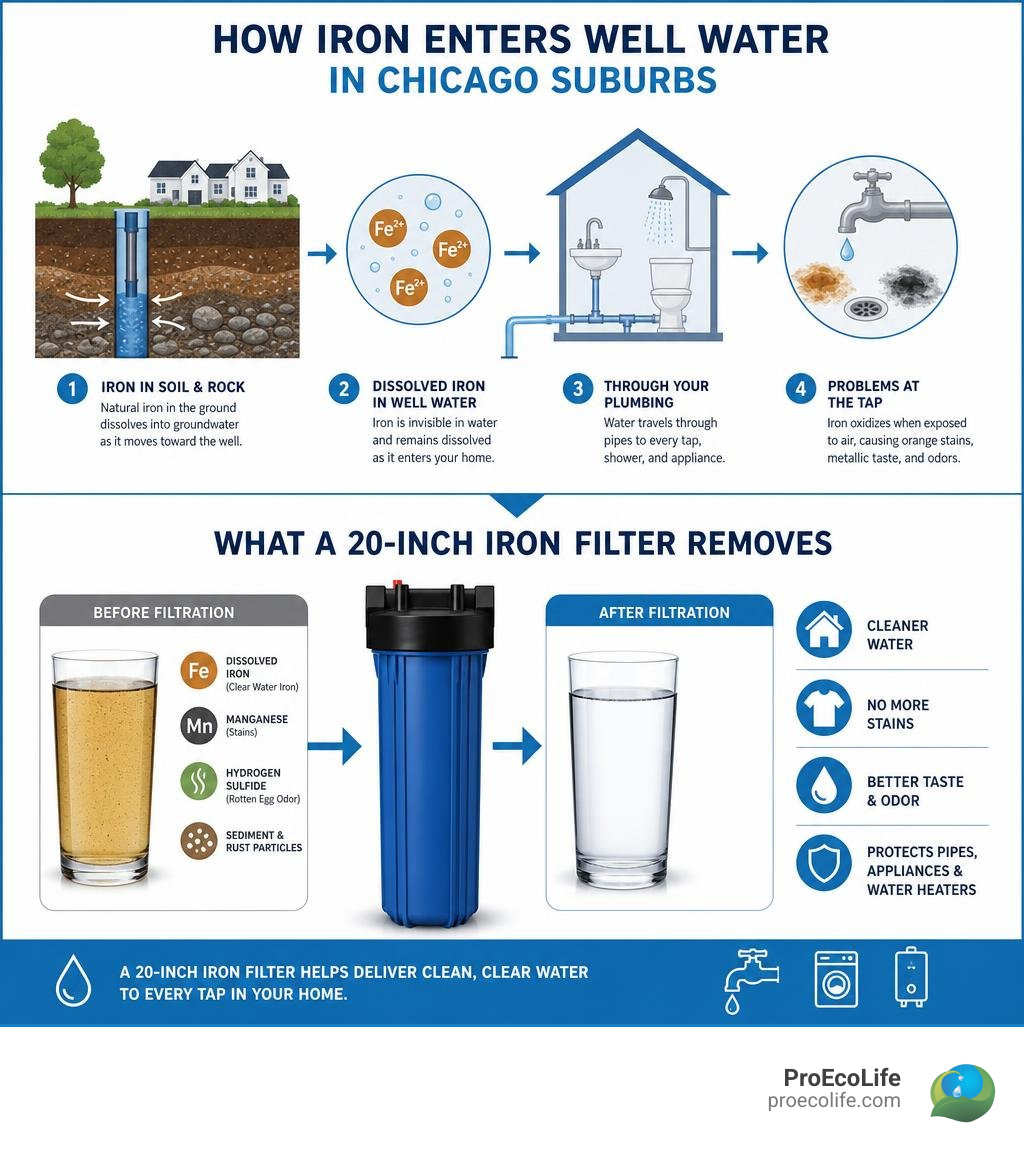
Communities like Park Ridge, Niles, Des Plaines, and Skokie sit in areas where private wells can pull water through iron-rich soil and rock. The result? Orange stains on sinks and toilets, a metallic taste in drinking water, and slow damage to pipes, water heaters, and appliances.
Even on Chicago’s Northwest Side — in neighborhoods like Norwood Park, Edison Park, and Jefferson Park — aging infrastructure means iron from corroding pipes can show up in the water long before it reaches your glass.
ProEcoLife has been helping Chicago-area homeowners address exactly these problems since 2014. Founder Karol Dolega built the company on the principle that local water problems need local expertise — not generic, one-size-fits-all solutions.
This guide explains everything you need to know about 20-inch iron filters: how they work, what they can and can’t do, and how to choose the right approach for your home.
What is a 20-Inch Iron Filter and How Does It Work?
To understand how a 20 inch iron filter works, we first have to look at the enemy. Iron doesn’t just show up in one form. It usually sneaks into your home as “clear water iron” (ferrous iron). This dissolved form of iron is completely invisible when it first comes out of the tap, but as soon as it hits the air in your toilet bowl or bathtub, it oxidizes and turns into those dreaded orange-brown stains.
Manganese often travels alongside iron, leaving behind dark black or purple stains. Meanwhile, hydrogen sulfide gas is the culprit behind that unmistakable, highly unpleasant “rotten egg” odor that can make taking a shower feel like a chore.
A 20 inch iron filter targets these dissolved contaminants through a process called catalytic oxidation. Inside the heavy-duty 20-inch cartridge or tank, the water meets a specialized filter media. This media acts as a catalyst, forcing the dissolved iron, manganese, and hydrogen sulfide to instantly oxidize and precipitate. In simple terms, it turns the invisible, dissolved metals into solid, microscopic rust particles.
Once these contaminants are solid, the filter physical-trapping mechanism takes over. Many advanced cartridges utilize a radial flow design. Instead of forcing water from top to bottom, water flows from the outside of the cartridge inward. This design maximizes exposure to the media while maintaining an exceptionally low pressure drop (often less than 1 psi), ensuring your showers don’t turn into a weak trickle.
To explore how these systems target dissolved impurities in greater detail, you can read our guide on Jak usunąć metale ciężkie z wody.
The Science Behind a 20 inch iron filter
The magic behind chemical-free oxidation lies in the media itself. High-performance systems often rely on manganese dioxide media. Unlike older treatment methods that required continuous chemical injection (such as feeding chlorine or potassium permanganate into your water line), modern catalytic media oxidizes contaminants naturally on contact.
For heavy-duty applications where iron levels are exceptionally high, we often integrate these advanced principles into our professional Well Water Conditioning systems. By utilizing a specialized oxygen chamber within the system, the media is naturally regenerated with air, keeping the system operating at peak performance without the need for harsh chemical additives.
Key Benefits of Installing a 20 inch iron filter in Chicago Homes
If you live in the Northwest suburbs—such as Glenview, Arlington Heights, or Morton Grove—you are likely familiar with the unique hard water challenges of our region. While municipal Lake Michigan water is treated for safety, suburban groundwater wells are highly vulnerable to heavy iron and manganese concentrations.
Installing a 20 inch iron filter provides several immediate improvements to your home’s water quality:
- Elimination of Orange and Black Staining: No more scrubbing stubborn rust rings out of your toilets, sinks, and showers.
- Improved Taste and Odor: Removing metallic iron and sulfur gas restores the clean, crisp taste of your water and eliminates foul odors.
- Brighter Laundry: Iron in water acts like a weak dye, turning white fabrics dingy and yellow. A dedicated filter keeps your laundry looking bright.

Protecting Appliances with a 20 inch iron filter
Beyond the cosmetic benefits, protecting your home’s infrastructure is where a 20 inch iron filter truly pays for itself. When dissolved iron passes through your water heater, the high temperatures accelerate oxidation. This causes thick layers of iron scale to settle at the bottom of the tank, forcing your heater to work twice as hard and significantly shortening its lifespan.
The same damage occurs inside washing machines, dishwashers, and plumbing valves. By trapping iron at your home’s point of entry, you prevent scale buildup, preserve water pressure, and protect your plumbing investments. For a deeper look into selecting the right filtration setup for your household needs, check out our article on Filtr do uzdatniania wody – na co zwrócić uwagę przed zakupem.
Operating Conditions and Limitations for Iron Reduction
While a 20 inch iron filter is incredibly powerful, it is not a magic wand that works under any conditions. These systems rely on specific water chemistry to function properly.
The most critical factor is pH. For catalytic iron media to successfully oxidize metals, the incoming water pH must typically be greater than 7.0. If your well water is acidic (below 6.5), the iron will remain dissolved and slip right through the filter. Additionally, high silica levels (above 100 ppm) can coat the media and prevent it from working, while the presence of iron bacteria can clog the system entirely.
| Operating Parameter | Cartridge-Based 20″ Filter | Backwashing Iron System |
|---|---|---|
| Max Iron Level | Up to 3.0 ppm | Up to 10.0 ppm |
| Max Manganese | Up to 1.0 ppm | Up to 5.0 ppm |
| Max Hydrogen Sulfide | Limited (reduces filter life rapidly) | Up to 3.0 ppm |
| Required pH Range | 7.0 to 8.5 | 5.0 to 9.0 (depending on media) |
| Iron Bacteria | Must be absent | Must be treated/absent |
Water Quality Requirements
Before selecting a system, a professional water analysis is highly recommended. Along with pH, we look at the Oxidation-Reduction Potential (ORP) and dissolved oxygen levels of your water. If the ORP is too low, the media cannot oxidize the iron without an upstream oxidation booster. Additionally, maintaining a feed water temperature between 40°F and 100°F and a water pressure between 20 and 100 PSI is essential for safe, reliable operation.
Integrating Iron Filtration with Whole-House Systems
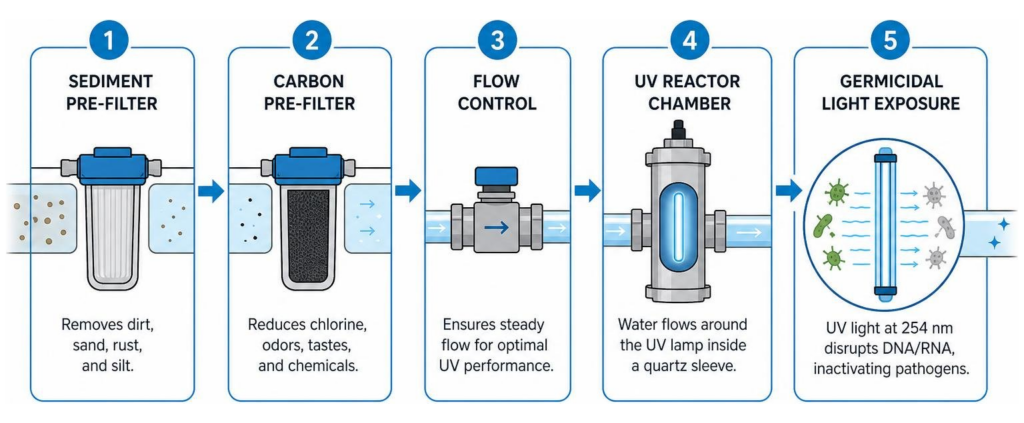
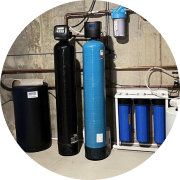
An iron filter works best when it is part of a team. In a typical whole-house setup, we install a multi-stage system to target different types of contaminants in the correct order.
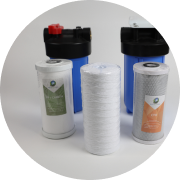
First, water passes through a sediment pre-filter. This stage removes dirt, sand, and large rust flecks, preventing them from clogging the delicate catalytic media of your iron filter.
Next comes the 20 inch iron filter, which oxidizes and traps the dissolved metals. Finally, water flows through a carbon post-filter to remove remaining chlorine, taste, and odor compounds.
To learn more about how these stages work together, read our detailed guides on Jak działają filtry mechaniczne i dlaczego są podstawą w systemach filtracyjnych w domu and Filtry węglowe do wody – co dokładnie usuwają i dla kogo są najlepsze.

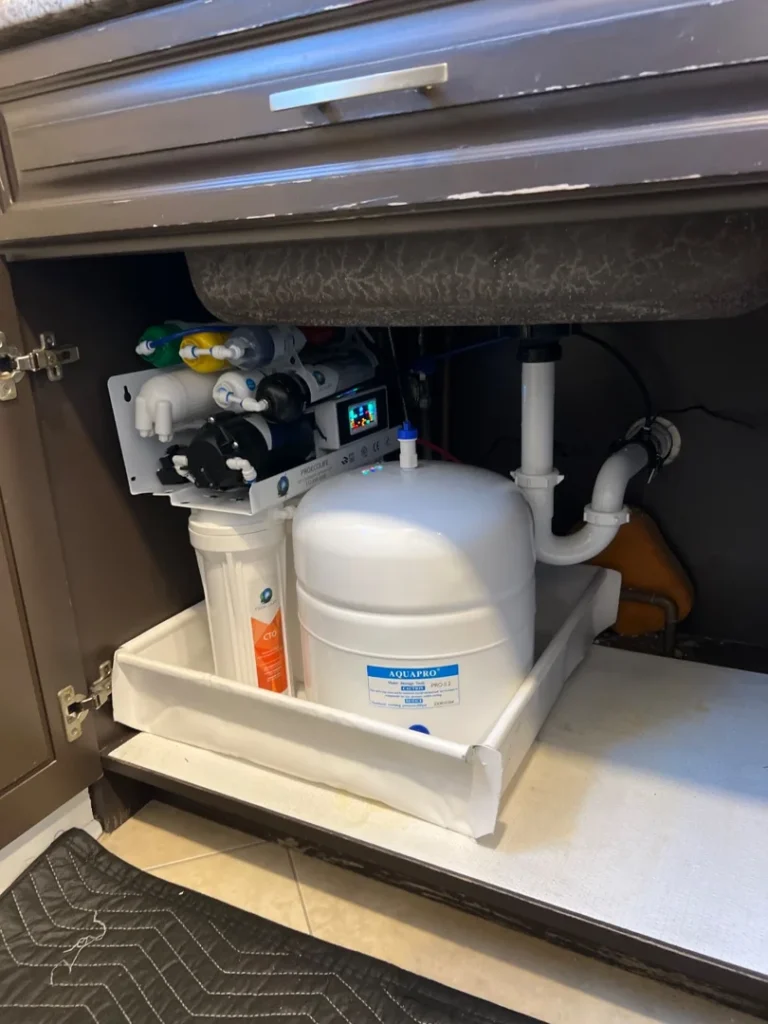
For complete household protection, we often pair our heavy-duty Whole House Filtration systems with our proprietary PEL75 9-Stage RO System under the kitchen sink. While the whole-house system protects your plumbing and appliances, the PEL75 provides ultra-pure, premium drinking water by removing heavy metals, lead, and microscopic impurities.
Maintenance, Lifespan, and Professional Installation
To keep your filtration system working efficiently, regular professional maintenance is absolutely essential. For cartridge-based systems, the filter element must be replaced on a strict schedule. If left in place too long, the saturated media will begin releasing trapped iron back into your home’s plumbing.
Some specialized resin cartridges can be temporarily regenerated by soaking them in a concentrated sodium chloride (salt) solution to restore their capacity, but eventually, all cartridges reach the end of their useful life. For larger, backwashing systems, the media can last 5+ years, but it requires regular backwash cycles to flush out trapped particulates.
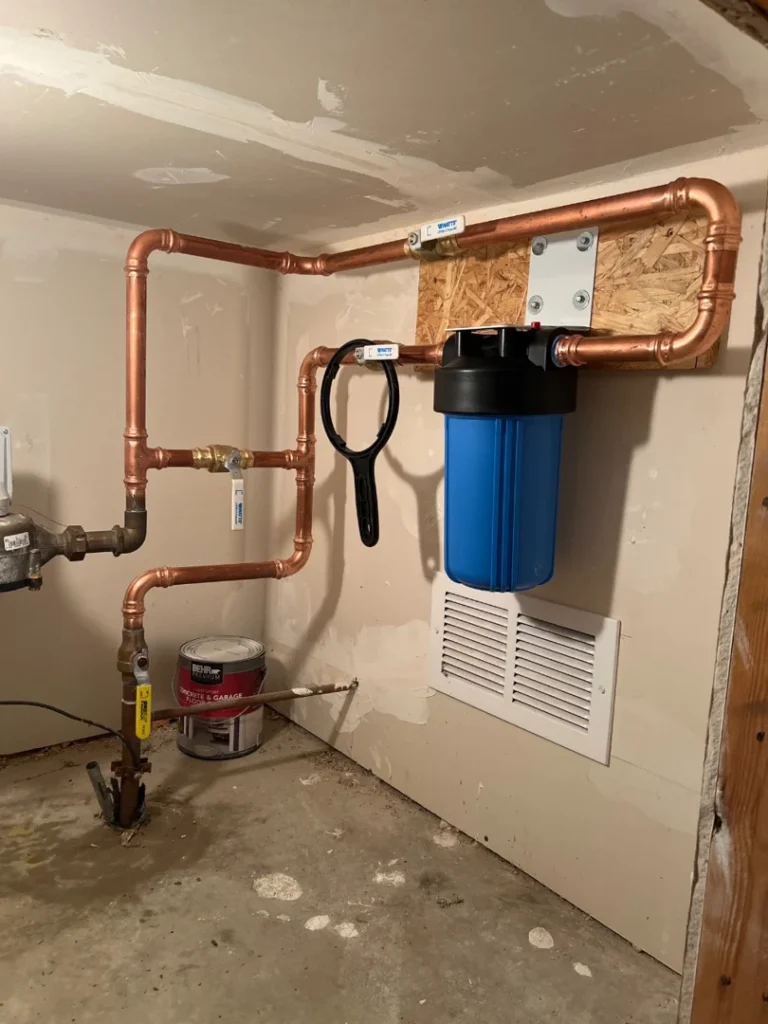
Because plumbing systems are complex and water pressure must be carefully balanced, DIY installation of these systems is highly discouraged. A faulty installation can lead to severe water pressure drops, plumbing leaks, or even damage to your home’s foundation if a backwash line is routed incorrectly. Having a professional technician handle the installation and calibration ensures your system operates safely and effectively.
If you are looking for trusted local experts in the Chicago area, you can locate our physical office via Proecolife Water Corp – Chicago, IL – MapQuest .
Frequently Asked Questions About Iron Filtration
How long does a 20-inch iron filter cartridge last?
The lifespan of a cartridge depends entirely on your water usage and the concentration of iron in your supply. For perspective, a high-quality cartridge like the High Flow Iron Reduction Specialty Filter 4.5″x 20 Inch can treat up to 160,000 gallons of water if your iron level is very low (around 0.5 ppm).
However, if your water has a higher concentration—such as 3.0 ppm—a standard cartridge might only treat around 4,000 to 50,000 gallons before needing replacement. For a typical family, this means cartridge replacements are usually scheduled every 6 to 12 months.
Can an iron filter remove hydrogen sulfide (rotten egg odor)?
Yes, many catalytic iron filters are highly effective at reducing mild levels of hydrogen sulfide. The media oxidizes the gas into solid sulfur particles, which are then trapped in the filter.
However, there is a catch: removing hydrogen sulfide consumes the filter’s active media much faster than iron removal alone—often shortening the cartridge’s lifespan by 2 to 3 times. If your well water has a severe sulfur odor, we typically recommend a dedicated backwashing system designed specifically for high-capacity gas reduction.
Does an iron filter affect water pressure in my home?
When properly designed and professionally installed, a 20 inch iron filter will have a negligible impact on your water pressure. Because these cartridges utilize a high-flow radial design, they allow water to pass through with a pressure drop of less than 1 psi.
However, if the filter is not maintained and becomes clogged with sediment or heavy iron paste, you will notice a significant drop in pressure. This is why keeping up with your professional service schedule is so important.
Conclusion
Dealing with iron, manganese, and sulfur in your water can be incredibly frustrating, but you don’t have to live with stained fixtures and metallic-tasting water. A professionally configured 20 inch iron filter is an outstanding, chemical-free way to restore the quality of your home’s water supply.
Since 2014, Karol Dolega and the team at ProEcoLife have been dedicated to solving the unique water challenges faced by families across Chicago’s Northwest Side and surrounding suburbs. Whether you need a robust Well Water Conditioning system to handle heavy iron or a comprehensive Whole House Filtration system to protect your family, we have the local expertise to get the job done right.
Ready to take the first step toward cleaner, safer water? Schedule a professional consultation for a Whole House Filtration system with ProEcoLife today.
Contact ProEcoLife today to schedule a professional water test for your home at (312) 889-8888 or visit proecolife.com.