
Lead in Your Water Is a Real Risk — Here Are the Best Filters to Reduce It
Finding the best water filter for lead reduction is one of the most important decisions a Chicago homeowner can make — especially if your home was built before 1986 and still has original plumbing.
Quick Answer: Best Water Filters for Lead in 2026
| Filter Type | Best For | Lead Reduction | Certification |
|---|---|---|---|
| Reverse Osmosis (Under-Sink) | Most households | Very high reduction when properly certified and maintained | NSF/ANSI 58 |
| Whole-House Carbon Block | All taps + fixtures | High reduction at the point of entry, depending on plumbing conditions | NSF/ANSI 53 |
| Countertop RO | Renters, no permanent plumbing changes | Very high reduction when properly certified and maintained | NSF/ANSI 58 |
| Pitcher Filter | Low budget, low volume | Varies by model and cartridge condition | NSF/ANSI 53 |
| Faucet-Mount Filter | Single tap, non-permanent option | Varies by model and cartridge condition | NSF/ANSI 53 |
Bottom line: Reverse osmosis systems — particularly certified under-sink units — may offer the most reliable lead reduction for Chicago families when properly selected and maintained. Look for NSF/ANSI 53 or 58 certification. “Tested to” a standard is not the same as certified, and results vary based on water chemistry, plumbing, and maintenance.
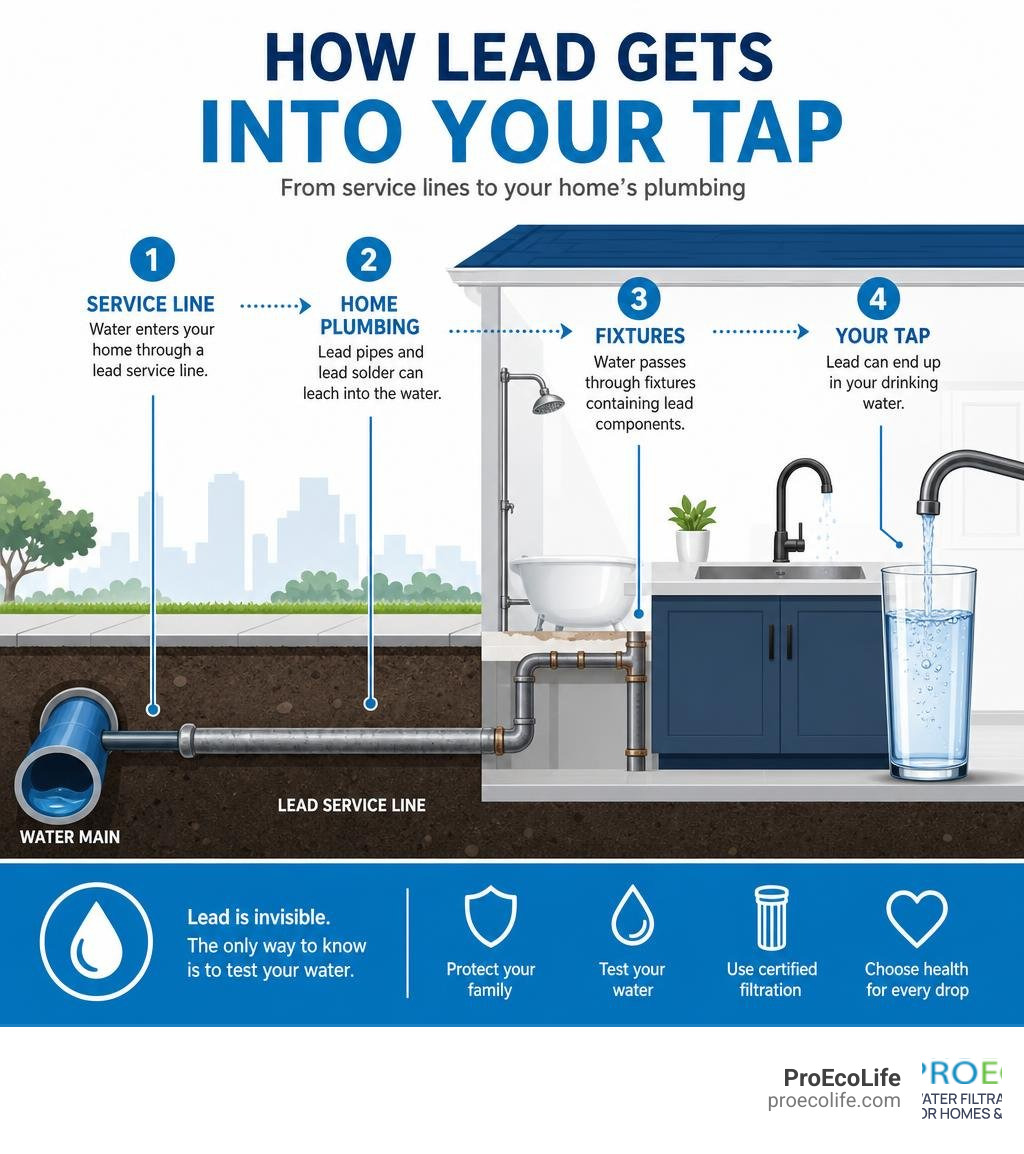
Lead is invisible. It has no smell and no taste. The only way to know it’s in your water is to test for it.
For Chicago homeowners, this isn’t a hypothetical concern. Chicago has one of the largest concentrations of lead service lines in the country. Lake Michigan source water may be clean when it leaves the treatment plant — but it travels through aging infrastructure and, in many older homes, through lead pipes and lead solder joints before it reaches your tap.
The EPA’s action level for lead is 15 parts per billion (ppb). But health experts are clear: there is no safe level of lead exposure, especially for children. That’s what makes choosing the right filter so critical.
ProEcoLife has been helping Chicago families — from Norwood Park and Jefferson Park to Park Ridge, Niles, and Arlington Heights — protect their water since 2014. Founder Karol Dolega built the company specifically to address the real water challenges in this region, not generic problems that could apply anywhere.
This guide breaks down which filters actually work, what certifications matter, and how to choose the right system for your home.
Why Chicago and Suburbs Face a Persistent Lead Water Crisis
While Lake Michigan provides a vast and generally high-quality source of drinking water, the journey from the water treatment plant to your kitchen faucet is where things get complicated. The primary culprit behind local contamination is aging infrastructure. For decades, municipal building codes in Chicago actually mandated the use of lead service lines, a practice that only ended in 1986.
As a result, hundreds of thousands of homes in the city and surrounding suburbs still receive water through these outdated pipes. When water sits in or flows through lead service lines, the metal can leach into the stream, especially if the water chemistry changes or if the pipes shake due to nearby construction.
The scale of this issue is widespread across our service areas:
- Chicago Neighborhoods: Historic homes in Norwood Park, Edison Park, and Jefferson Park are highly likely to have original lead service lines connecting them to the city mains. These local dynamics create localized risks where lead can leach directly into household water before it reaches your tap.
- Park Ridge: Data from the Park Ridge EWG Tap Water Database indicates that while municipal water meets baseline federal guidelines, utility-wide averages don’t account for the localized spikes that occur when water enters individual households with older plumbing.
- Niles & Skokie: Both suburbs have active programs to address this legacy issue. Homeowners can find local updates via the Niles Lead Line Replacement portal and track municipal progress through the Skokie Lead Water Service Lines resource page.
- Evanston & Lincolnwood: Similar infrastructure challenges exist northward. Evanston residents can monitor progress via the Evanston Lead Service Line Replacement page, while those in Lincolnwood can review municipal water quality reports to understand their specific contaminant profiles.
- Suburban Outliers: Even farther out, localized testing occasionally reveals unexpected risks, such as the issues outlined in the reports on how Lead Found in Bartlett Drinking Water (detailed further in our Polish-language guide, Wysoki poziom ołowiu w wodzie pitnej w Bartlett).
Because municipal water treatment plants cannot control the plumbing inside your walls or the service line buried under your front lawn, point-of-use and point-of-entry filtration systems are the most reliable way to secure your tap.
Need Clean, Safe Water at Home?
Get a free water test at your home or business. We install and service whole-house filtration and PEL75 reverse osmosis systems across Chicagoland. We also take select projects in Wisconsin and Indiana.
Book a Free Water TestCall (312) 889-8888Understanding NSF/ANSI Certifications for Lead Reduction
When searching for the best water filter for lead, you will encounter various marketing claims like “purifies water” or “reduces heavy metals.” To protect your family, you must look past the marketing and verify independent certifications.
The American National Standards Institute (ANSI) and NSF International have established strict protocols to test and certify filtration performance:
- NSF/ANSI Standard 53: This is the primary standard for point-of-use systems (like carbon filters and under-sink systems) designed to reduce contaminants with established health effects. To earn this certification for lead, a filter must be rigorously tested at influent lead concentrations of 150 ppb (ten times the EPA action level) and successfully reduce it to below 5 ppb.
- NSF/ANSI Standard 58: This standard applies specifically to point-of-use Reverse Osmosis (RO) systems. It verifies that the RO membrane and system design can mechanically reject lead and other heavy metals under pressure.
- NSF/ANSI Standard 372: Warning! This standard only certifies that the materials and components used to construct the filtration system itself are “lead-free” (containing less than 0.25% lead). It does not mean the system actually filters lead out of your drinking water. Always ensure the system carries Standard 53 or 58 specifically for lead reduction.
To make an informed decision, avoid products that only claim they are “tested to meet” NSF standards. Actual certification by accredited third-party organizations like NSF, IAPMO, or the Water Quality Association (WQA) ensures the product undergoes regular audits and performance verifications. For a deeper dive into these standards, you can verify certified products directly on the NSF Certified Products Database.
Need Clean, Safe Water at Home?
Get a free water test at your home or business. We install and service whole-house filtration and PEL75 reverse osmosis systems across Chicagoland. We also take select projects in Wisconsin and Indiana.
Book a Free Water TestCall (312) 889-8888How to Choose the Best Water Filter for Lead in Your Home
Selecting the right filtration system depends on your specific household needs, the age of your plumbing, and your daily water usage.

To help narrow down your options, consider the following key factors:
- Water Test Results: A professional water test is the first step. It tells you if you are dealing with soluble lead (dissolved in the water) or particulate lead (tiny physical flakes of metal), which helps determine the best technology.
- Household Size and Water Demand: A large family living in an older home in Skokie or Park Ridge will quickly overwhelm a simple pitcher filter, making a high-capacity under-sink or whole-house system more practical.
- Installation Constraints: Renters who cannot make permanent plumbing modifications may need countertop or faucet-mounted options, while homeowners generally prefer integrated, low-maintenance systems.
| Filtration Method | Pros | Cons | Best Suited For |
|---|---|---|---|
| Reverse Osmosis (RO) | May reduce lead, fluoride, and microplastics at high levels when properly certified and maintained; many customers notice improved taste. | Produces wastewater; requires dedicated faucet. | Homes wanting high-level purification at the kitchen tap. |
| Solid Carbon Block | Retains healthy minerals; high flow rates; no wastewater. | Less effective against dissolved nitrates or TDS. | Homes with moderate lead concerns looking for mineral-rich water. |
| Ion Exchange | Highly effective at targeting specific heavy metal ions. | Cartridges can saturate quickly if water is very hard. | Targeted heavy metal removal in dual-technology systems. |
Comparing Filtration Technologies for the Best Water Filter for Lead Removal
Understanding how these technologies work helps clarify why some systems outperform others:
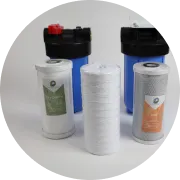
- Activated Carbon Block vs. GAC: Granular Activated Carbon (GAC) filters contain loose carbon particles, which can allow water to bypass the media through small channels. Solid carbon block filters compress the carbon into a dense, solid form. This forces water through microscopic pores, providing a much larger surface area and longer contact time to adsorb lead. If you are choosing a carbon system, always opt for a solid carbon block.
- Reverse Osmosis (RO): RO systems force water through a semi-permeable membrane that filters on a molecular level. It is highly effective and may reduce lead, chromium, and emerging contaminants like PFAS when properly designed, certified, and maintained. However, standard RO systems typically waste 3 to 5 times more water than they produce. High-efficiency systems mitigate this waste through advanced engineering.
- Ion Exchange: This technology chemically replaces lead ions with harmless ions (like sodium or potassium). It is often combined with carbon block filters to create multi-stage systems that target both organic chemicals and dissolved metals.
For a detailed evaluation of local options, you can read our Best Under Sink Water Filter Chicago Reviews and Buying Guide or learn more about targeting specific contaminants in our guide on how to remove heavy metals from water.
Point-of-Use vs. Whole-House Systems: Finding the Best Water Filter for Lead
A common dilemma for homeowners in the Northwest suburbs is choosing between a Point-of-Use (POU) system and a Point-of-Entry (POE/Whole-House) system:
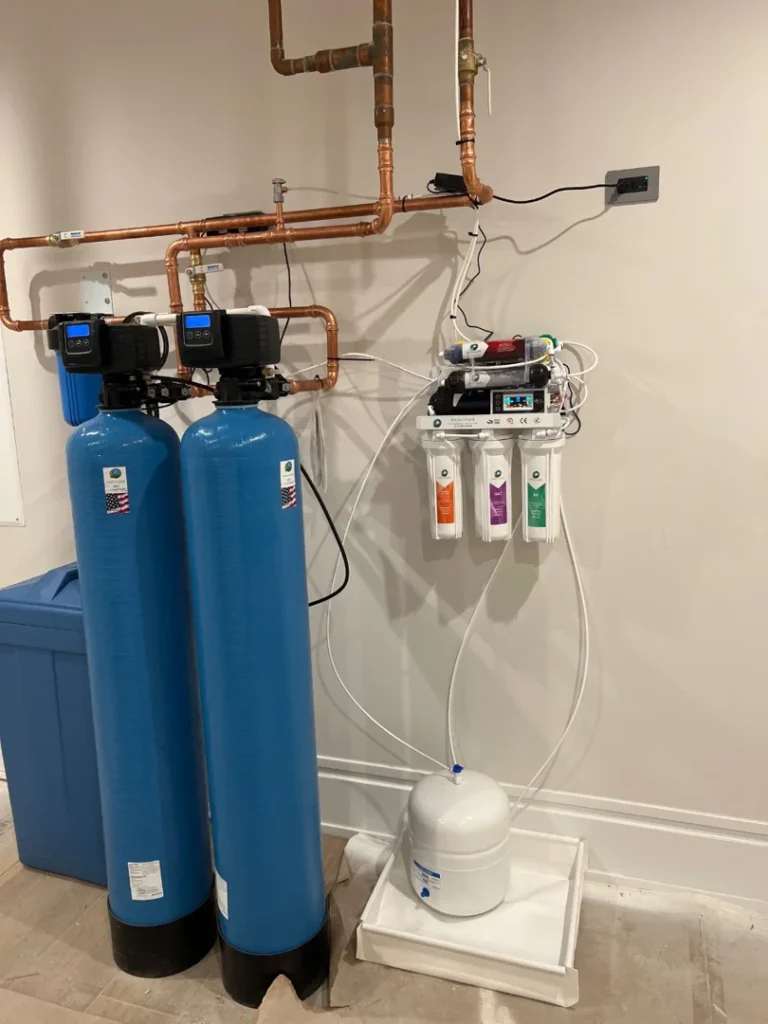
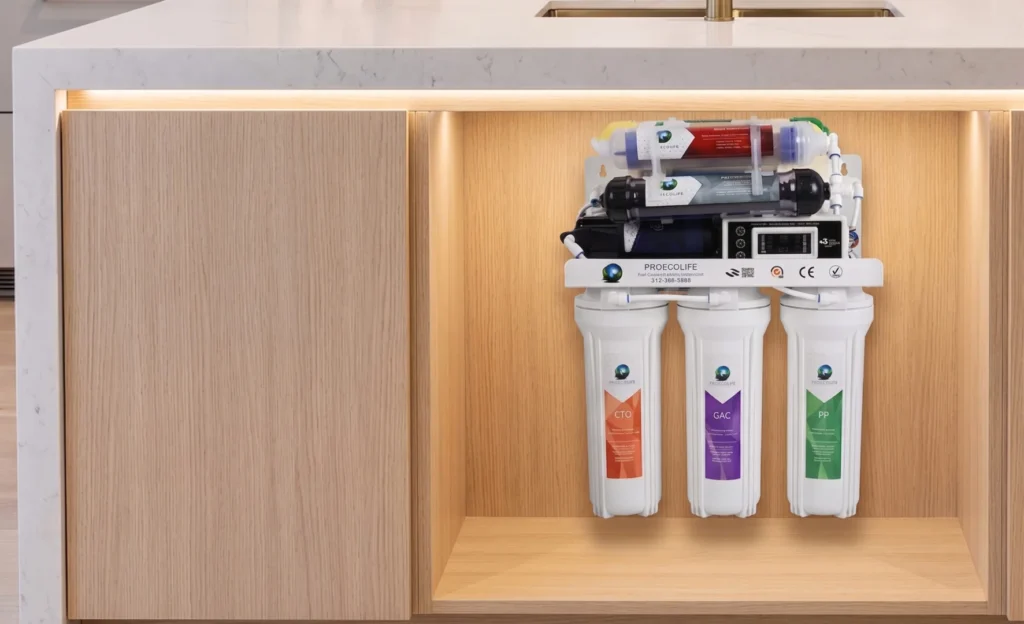
- Point-of-Use (Under-Sink RO): Systems like our PEL75 9-Stage RO System are installed directly under the kitchen sink. This is often considered the gold standard for drinking water because it purifies the water immediately before it exits the faucet. If lead is leaching from the brass fixtures or copper pipe solder inside your kitchen walls, an under-sink system can help capture it.
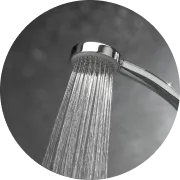
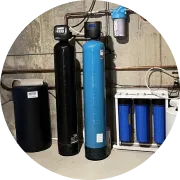
- Whole-House Filtration: A whole-house system is installed where the main water line enters your home. This protects every tap, shower, and appliance. It is excellent for removing chlorine, chloramines, and sediment, and it may help reduce inhalation of vaporized chemicals in the shower. However, if your home has lead solder or old brass pipes downstream of the filter, a whole-house system cannot protect you from lead leaching inside your household plumbing.
Many local families opt for a hybrid approach: a Whole House Filtration system to protect the entire home’s plumbing and skin health, paired with a PEL75 9-Stage RO System at the kitchen sink for high-quality drinking and cooking water with added lead reduction. To learn more about tailoring these systems to your property, read our comprehensive How to Choose the Best Lead Water Filter in Chicago: A 2026 Guide.
Hidden Costs, Maintenance, and Common Filtration Mistakes
When choosing the best water filter for lead, the initial purchase is only part of the equation. To keep your system working safely, you must plan for ongoing maintenance and avoid common usage mistakes:
- Filter Saturation and Breakthrough: Carbon filters have a finite capacity. Once the carbon pores are completely filled with contaminants, the filter can no longer adsorb lead. If you continue to use an expired filter, it can experience “breakthrough,” releasing concentrated amounts of trapped lead back into your drinking water.
- The Hot Water Mistake: Never run hot water through a carbon filter designed for drinking water. Hot water can cause the carbon to expand, releasing adsorbed lead back into the stream. Always use cold, filtered water for drinking and cooking.
- Bacterial Growth: Removing chlorine from water is great for taste, but it also removes the disinfectant that prevents bacterial growth. If a carbon filter sits unused for too long, bacteria can colonize the wet media. Regular filter replacements are essential to prevent this.
- Suburban Hard Water Challenges: If you live in the Northwest suburbs like Des Plaines, Glenview, or Morton Grove, your water likely contains high levels of hardness minerals (calcium and magnesium). These minerals can scale up RO membranes and saturate ion-exchange filters prematurely. Combining your lead filter with our Well Water Conditioning or a salt-free conditioner can extend the life of your drinking water system.
Frequently Asked Questions About Lead Water Filters
How do I test my Chicago home’s water for lead?
Because lead is tasteless and odorless, laboratory testing is the only definitive way to confirm its presence. Basic store-bought screening strips are widely available, but they often lack the sensitivity required to detect low, toxic levels of lead. Homeowners should utilize professional laboratory water testing or coordinate with local municipal programs to analyze water samples collected after the tap has sat unused for several hours.
Can a whole-house filter address lead from every tap?
A whole-house (point-of-entry) system will remove lead coming from the city’s main service line before it enters your home. However, if your home has copper pipes with lead solder or older brass fixtures, lead can still leach into the water after the whole-house filter. For stronger drinking-water protection, a point-of-use filter at the kitchen tap is highly recommended.
How often do reverse osmosis membranes and carbon filters need replacement?
Carbon pre-filters and post-filters typically require replacement every 6 to 12 months, depending on your water usage and local water quality. The reverse osmosis membrane itself is highly durable and generally lasts between 2 to 3 years before it needs to be replaced. Neglecting this schedule can reduce water flow and compromise filtration efficiency.
Conclusion
Protecting your household from lead requires a clear understanding of your water chemistry, local infrastructure, and the technology inside your filtration system.
Since 2014, ProEcoLife has been dedicated to helping families across Chicago and the surrounding suburbs address the real water challenges of Lake Michigan source water, older service lines, and hard water in communities like Park Ridge, Niles, Des Plaines, Skokie, Glenview, Arlington Heights, and Morton Grove. Founded by Karol Dolega, we focus specifically on the unique hard water and aging infrastructure challenges of our region. From our advanced PEL75 9-Stage RO System to comprehensive Whole House Filtration, Shower Filter System, Well Water Conditioning, and Commercial Water Filtration Systems, we help you find the right setup for your home or business.
Don’t guess when it comes to your family’s health. Let our local experts help you verify your water quality and confirm whether your filtration system is operating as intended. For more guidance on selecting the right setup, explore our How to Choose the Best Lead Water Filter in Chicago: A 2026 Guide.
Contact ProEcoLife today to schedule a water test at proecolife.com.