
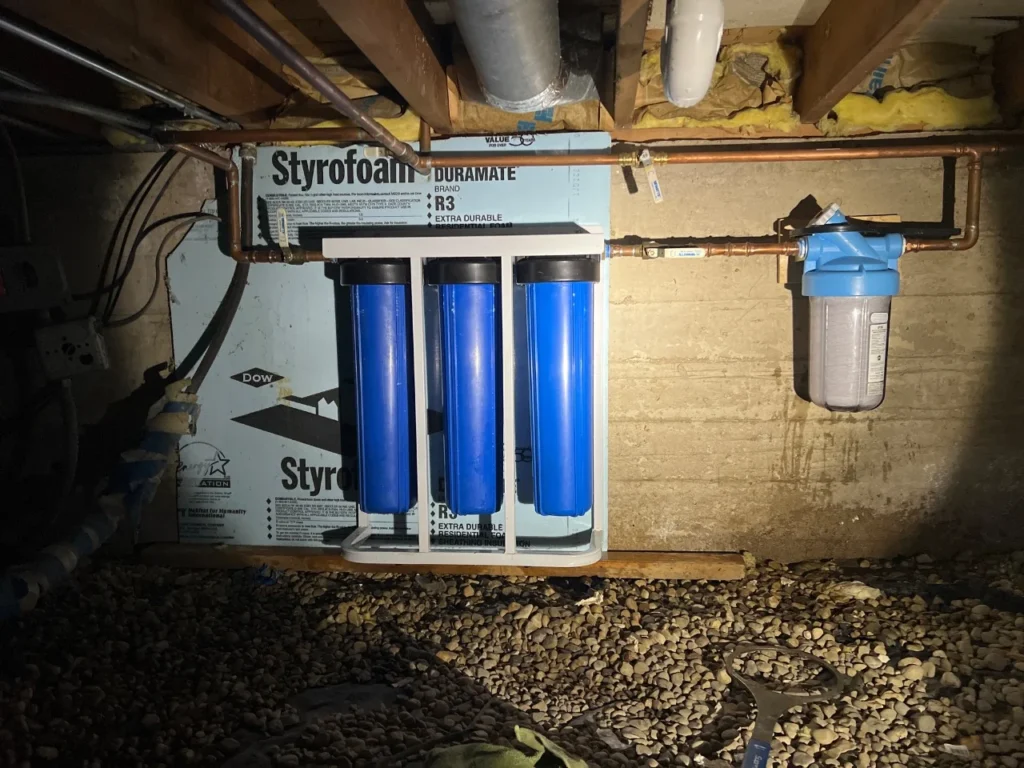
Why Chicago Homeowners Are Turning to 3-Stage Whole House Filtration
A 3-stage whole house filter is one of the most effective ways to protect your family from the contaminants hiding in Chicago’s water supply — from chlorine added at treatment plants to lead leaching from aging pipes in older neighborhoods like Norwood Park, Edison Park, and Jefferson Park.
Here’s what a 3-stage whole house filter does, at a glance:
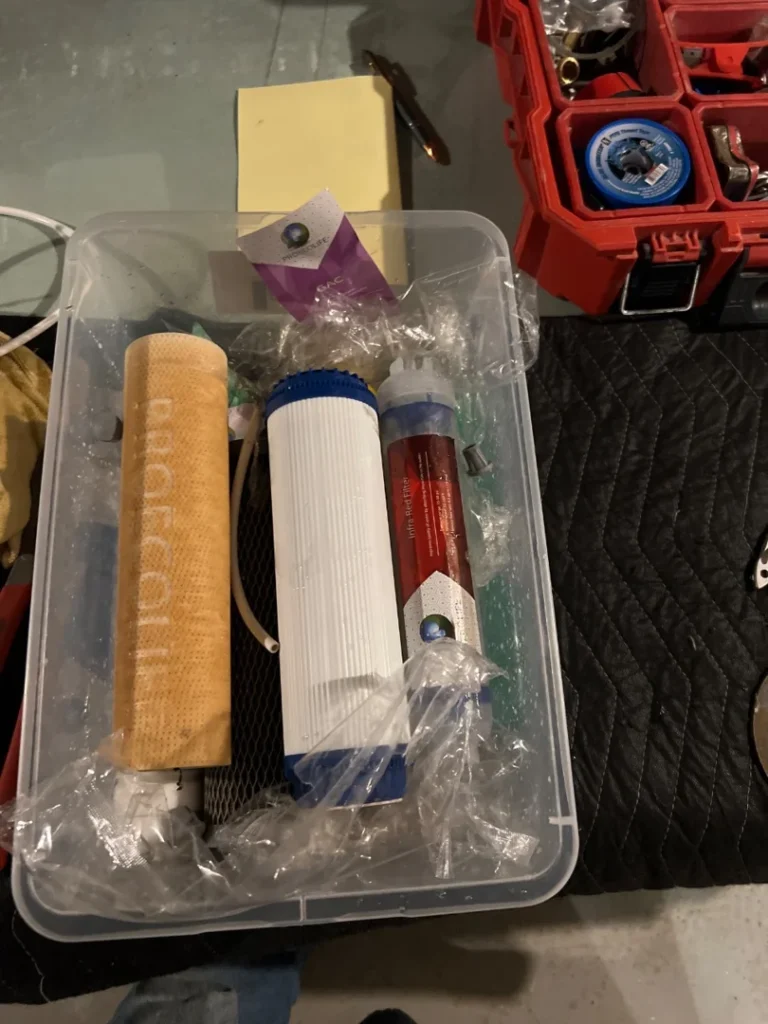
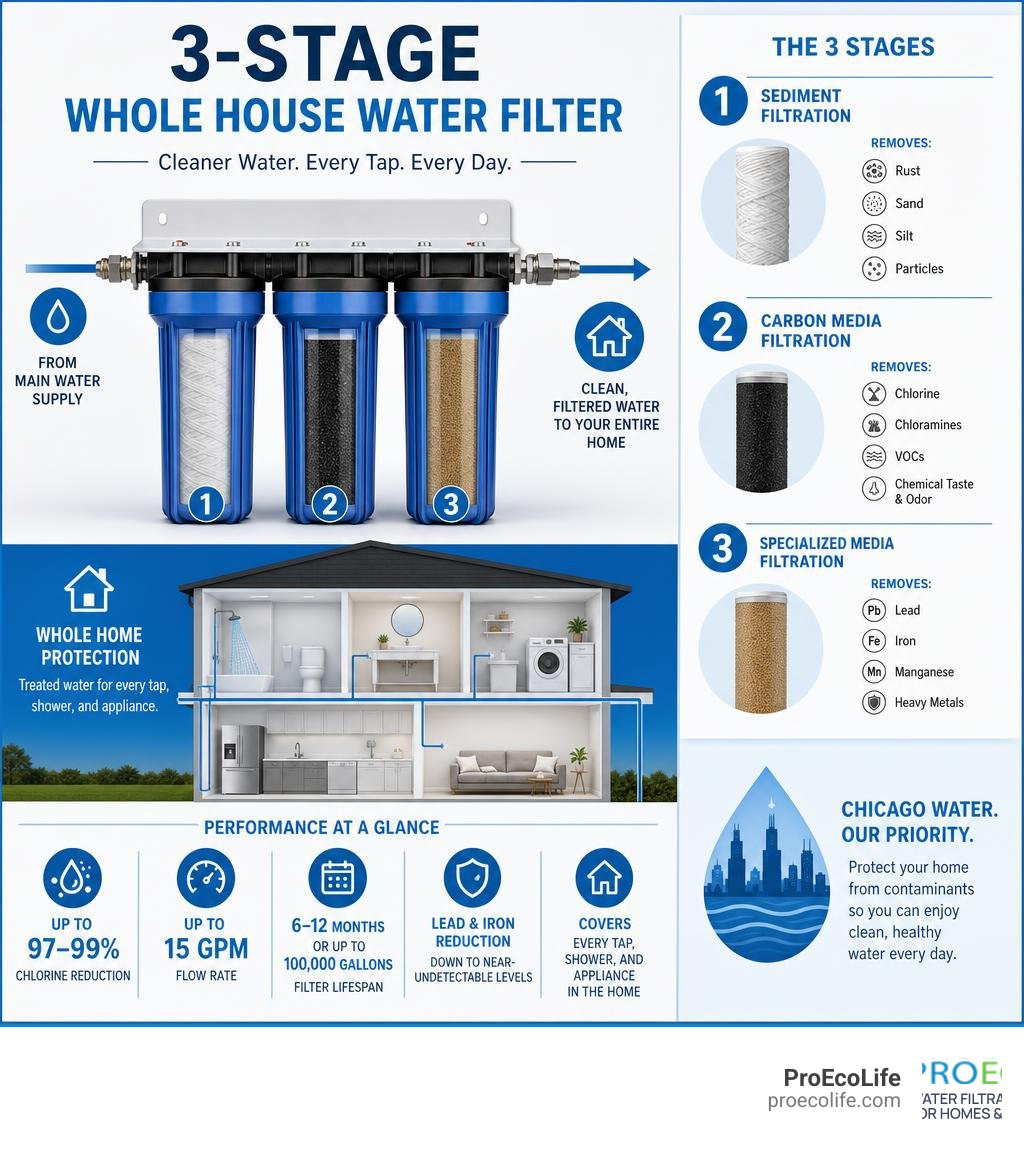
- Stage 1 – Sediment filtration: Removes rust, sand, silt, and particles from aging pipes
- Stage 2 – Carbon media filtration: Reduces chlorine, chloramines, VOCs, and chemical taste/odor
- Stage 3 – Specialized media filtration: Targets heavy metals like lead, plus iron and manganese
Key facts:
| Feature | Typical Performance |
|---|---|
| Chlorine reduction | Up to 97–99% |
| Flow rate | Up to 15 GPM |
| Filter lifespan | 6–12 months or up to 100,000 gallons |
| Lead/iron reduction | Down to near-undetectable levels |
| Coverage | Every tap, shower, and appliance in the home |
Chicago draws its water from Lake Michigan — one of the largest freshwater sources in the world. But that water travels through miles of municipal infrastructure and, in many older homes, through lead service lines before it ever reaches your tap. In the Northwest suburbs like Park Ridge, Niles, and Arlington Heights, hard water adds another layer of concern, accelerating scale buildup in pipes and appliances.
A single faucet filter or pitcher just isn’t built to handle all of that.
That’s why many Chicago families are looking at whole-home solutions — systems that treat every drop of water entering the house, not just what comes out of one tap.
This guide walks you through everything you need to know: how 3-stage systems work, what each stage actually does, and how to choose the right configuration for your home and your water.
What is a 3 Stage Whole House Filter and How Does It Work?
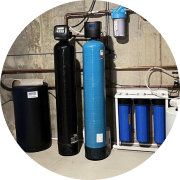
A 3 stage whole house filter is a Point-of-Entry (POE) filtration system installed directly on your home’s main water supply line. Unlike point-of-use filters that only treat water at a single faucet, a POE system ensures that every tap, showerhead, dishwasher, and washing machine in your home receives treated water.
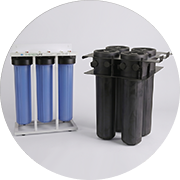
The system operates using three distinct heavy-duty filter housings connected in a series. As water enters your home, it is forced through these three sequential barriers under pressure. Because there is no water waste and no storage tank required, the system provides continuous, high-volume filtration.
In the Chicago area, municipal water from Lake Michigan is treated at massive facilities where chlorine or chloramines are added to disinfect the water. While this is necessary for public health, these disinfectants leave behind a strong chemical taste and odor. Furthermore, as the water travels through miles of city mains and residential service lines, it can pick up physical debris, rust, and heavy metals.
By installing a customized Whole House Filtration system, you create a robust physical and chemical barrier. At ProEcoLife, we specialize in configuring these stages to match the unique chemical profile of your local water supply, ensuring maximum contact time between the water and the filtration media for optimal contaminant reduction.
The Three Stages of Whole-Home Water Purification
To achieve comprehensive purification, a high-quality system relies on a multi-layered treatment approach. Each of the three stages plays a distinct, complementary role. Together, they transition raw tap water into clean, refreshing water for the entire household.
To understand the engineering behind these systems, it helps to look at Jak Dziala Filtracja Wody I Czym Sie Roznia Dostepne Na Rynku Technologie, which details how modern physical and chemical adsorption processes differ from basic mechanical strainers.

Stage 1: Sediment Pre-Filtration for Chicago’s Aging Pipes
The first line of defense in a 3 stage whole house filter is the sediment pre-filter. This stage is designed to capture larger, physical impurities suspended in the water before they can reach the more sensitive downstream filters or enter your home’s plumbing.
In older Chicago neighborhoods, municipal water mains are frequently undergoing repairs or experiencing pressure fluctuations. These disruptions stir up sediment, rust flakes from corroding iron pipes, sand, silt, and clay. If left unfiltered, these abrasive particles can clog faucet aerators, damage internal valves in high-end appliances, and wear down plumbing fixtures.
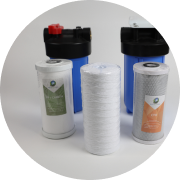
Typically, this stage utilizes a high-capacity, grooved polypropylene (PP) filter cartridge with a 5-micron rating. This means it traps any particulate matter larger than a speck of red blood cell. By capturing these physical impurities first, the sediment pre-filter prevents the subsequent carbon and specialized media filters from becoming prematurely clogged, maintaining a stable water pressure throughout your home.
Stage 2: Carbon Media for Chlorine and Chemical Reduction
Once the water is cleared of physical debris, it enters the second stage: chemical adsorption. This stage almost always utilizes a high-density carbon media, such as Granular Activated Carbon (GAC) or a premium catalytic carbon block.
Activated carbon is incredibly porous, providing a massive surface area where chemical contaminants are pulled out of the water and bound to the carbon molecules. This process is highly effective at reducing:
- Chlorine and chloramines (the primary source of “pool-like” smells in Chicago tap water)
- Volatile Organic Compounds (VOCs)
- Industrial solvents, pesticides, and herbicides
- Agricultural runoff that may find its way into regional water basins
Removing chlorine at this stage not only improves the taste and smell of your drinking water, but it also protects your health in the shower. When chlorinated water is heated, the chemical evaporates into the steam, leading to poor indoor air quality and dry, irritated skin and hair.
Stage 3: Specialized Heavy Metal and Iron Filtration
The third and final stage provides the “final polish” and is highly customizable depending on your specific water source. In a premium Whole House Filtration System, this stage is tailored to address the most challenging dissolved contaminants.
For homes connected to city water, this stage often features a specialized lead-reduction carbon block or a Kinetic Degradation Fluxion (KDF) composite filter. KDF media utilizes a high-purity copper-zinc formulation to set off an electrochemical reaction (redox). This process reduces water-soluble heavy metals like lead, mercury, nickel, and chromium, while also inhibiting the growth of bacteria and algae within the filter housing.
For homes utilizing well water in the outer suburbs, this third stage can be configured with specialized iron and manganese reduction media. This setup can reduce dissolved iron (from a maximum of 3.0 ppm down to a negligible 0.01 ppm) and manganese (from 1.0 ppm down to 0.01 ppm), preventing the stubborn orange, brown, or black stains that ruin porcelain sinks, toilets, and laundry.
Benefits and Selection Criteria for Chicago Homes
Choosing the right filtration system requires a clear understanding of your local water conditions. A system that works perfectly for a home in the city may need a completely different configuration than one installed in the Northwest suburbs.
To see how these choices translate to real-world performance, read our guide on Filtry Do Wody W Domu Jakie Rozwiazanie Naprawde Dziala.

Protecting Appliances from Hard Water in the Northwest Suburbs
If you live in the Northwest suburbs – such as Park Ridge, Niles, Des Plaines, Glenview, Morton Grove, Skokie, or Arlington Heights – you are likely familiar with the challenges of hard water. Whether your water comes from local deep wells or blended municipal sources, high concentrations of calcium and magnesium ions lead to rapid scale buildup.
This limescale acts as an insulator inside your water heater, forcing it to use more energy to heat water and significantly shortening its lifespan. It also leaves unsightly white spots on glassware and clogs the spray arms of your dishwasher.
While a standard 3 stage whole house filter is not a water softener, it can be paired with scale-inhibiting polyphosphate media in the third stage, or installed directly in-line with our professional Well Water Conditioning systems. This combined approach keeps calcium and magnesium in suspension, preventing them from binding to metal surfaces and protecting your plumbing infrastructure.
Addressing Lead and Contaminants in Older Chicago Homes
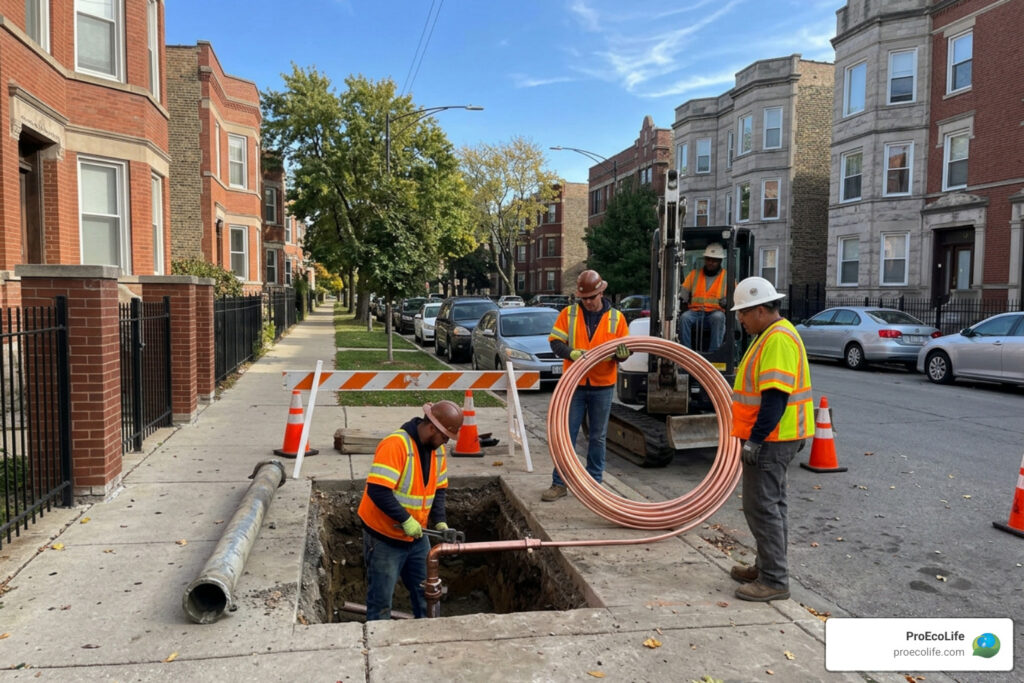
In older Chicago neighborhoods like Norwood Park, Edison Park, and Jefferson Park, the primary water quality concern is often lead. Chicago has more lead service lines than any other city in the United States, a legacy of historical plumbing codes that mandated lead pipes until 1986.
When corrosive water sits in these lead pipes, the heavy metal can leach into the water supply. Lead is a cumulative neurotoxin that poses severe health risks, particularly to pregnant women and young children. The U.S. Environmental Protection Agency explains that lead in drinking water can affect health even at low exposure levels, which is why many Chicago homeowners take this issue seriously.
A point-of-use filter at the kitchen sink only solves part of the problem. Lead exposure from household water is mainly an ingestion concern, including drinking, cooking, brushing teeth, or accidentally swallowing water during bathing. Implementing a heavy-duty, certified 3-stage system at the main water line provides a critical layer of defense for the entire home. For more localized insights on local water quality, see The Best Whole House Water Filtration Systems In Chicago For Crystal Clear Water.
Flow Rate and Capacity Requirements for Local Households
To ensure your home never suffers from a drop in water pressure, you must select a system with a flow rate that matches your household’s peak water demand.
Flow rate is measured in Gallons Per Minute (GPM). A standard single-family home with 2 to 3 bathrooms typically requires a system that can deliver at least 10 to 12 GPM. Larger homes or commercial properties may need a system rated up to 15 GPM (which translates to roughly 0.25 gallons of filtered water per second).
| Household Size | Bathrooms | Recommended Flow Rate | Recommended Filter Capacity |
|---|---|---|---|
| 1-2 People | 1-1.5 | 8-10 GPM | 30,000-50,000 Gallons |
| 3-4 People | 2-2.5 | 10-12 GPM | 100,000 Gallons |
| 5+ People | 3+ | 12-15 GPM | 100,000+ Gallons |
Choosing a system with high-capacity, 20-inch filter cartridges ensures that your water pressure remains steady, experiencing a minimal pressure drop of only 2 to 3 PSI after installation.
Frequently Asked Questions about 3-Stage Filtration
Navigating home water treatment can be overwhelming. To help you make an informed decision, we have compiled answers to the most common questions we receive from local homeowners. For a deeper dive into choosing the right setup for your home’s layout, refer to Jak Wybrac Idealne Systemy Filtracyjne Do Twojego Domu.
Does a 3 stage whole house filter reduce TDS or water hardness?
A common misconception is that physical whole-house filters will lower Total Dissolved Solids (TDS) or soften hard water.
A standard 3 stage whole house filter is designed to target sediment, chemicals, chlorine, and heavy metals. It does not remove dissolved inorganic minerals like calcium, magnesium, or sodium, which make up the bulk of TDS. In fact, preserving these naturally occurring minerals is often considered a benefit, as they contribute to the water’s crisp taste and alkaline balance.
If your goal is to completely strip TDS for ultra-pure drinking water, or to fully soften extremely hard water (TDS > 700 PPM), you will need to pair your whole-house system with a dedicated water softener or a point-of-use Reverse Osmosis (RO) system, such as our advanced PEL75 9-Stage RO System.
Lifespan and Professional Maintenance of a 3 Stage Whole House Filter
The physical cartridges inside a 3-stage system are consumables that must be replaced periodically to maintain water quality and prevent pressure drops.
On average, high-quality sediment and carbon filters last between 6 to 12 months, or up to 100,000 gallons of water usage. However, the exact lifespan of your filters is heavily dependent on the quality of your incoming water. If your home is connected to an older municipal line with high sediment levels, the pre-filter may need to be replaced more frequently.
We strongly advise against attempting DIY filter replacements. Whole-house systems operate under high pressure, and improper installation can lead to catastrophic leaks, water damage, or mold growth. Professional maintenance ensures that:
- Filter housings are properly sanitized during changes
- Heavy-duty O-rings are lubricated and replaced every 3 years to prevent seal failure
- Filter housings are inspected and replaced every 5 years to prevent structural cracking
- System pressure gauges are calibrated to monitor performance
How does a whole-home system compare to point-of-use filters?
A whole-house system and a point-of-use filter serve entirely different purposes, and the best water treatment strategy often utilizes both.
A whole-home system acts as your shield, intercepting contaminants at the entry point to protect your plumbing, appliances, showers, and laundry. It ensures that you aren’t bathing in chlorine or washing your clothes in rust-tinted water.
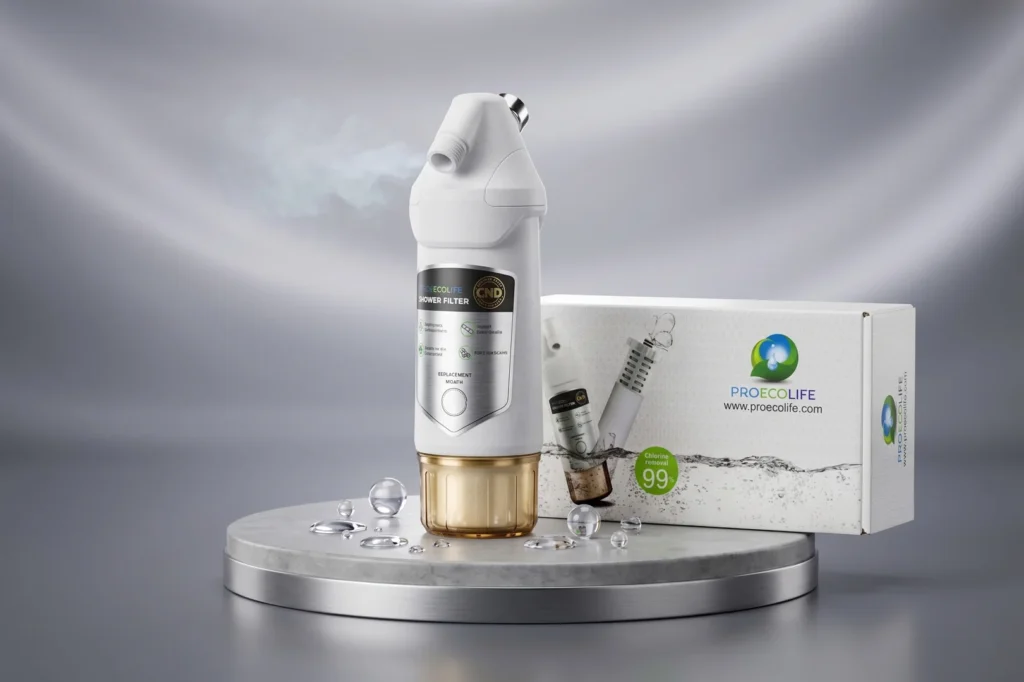
However, for the ultimate in purified drinking water, many Chicago families combine their whole-house system with point-of-use solutions. For example, installing our PEL75 9-Stage RO System under the kitchen sink provides bottled-water-quality drinking water, while a Shower Filter System in the bathroom offers extra protection for sensitive skin. To explore the full range of home integration options, view our Residential Solutions.
Conclusion
Since 2014, ProEcoLife, founded by Karol Dolega, has been dedicated to providing the Chicago area with advanced, reliable water filtration solutions. Our deep roots in the local community give us a unique understanding of the water challenges faced by families in Chicago’s Northwest Side neighborhoods and neighboring suburbs like Niles, Des Plaines, Morton Grove, and beyond.
Whether you are dealing with the aging infrastructure of older city homes or the hard well water of the outer suburbs, a professionally installed 3 stage whole house filter is a highly effective, long-term investment in your home’s health, plumbing, and appliance efficiency.
By choosing a system tailored to your specific water chemistry and relying on professional installation and maintenance, you can enjoy peace of mind knowing that clean, filtered water is flowing from every single tap in your home. To find the perfect system for your household, explore our dedicated Whole House Filtration System options designed for unique suburban and city water profiles.
To ensure your home has the cleanest, safest water possible, contact ProEcoLife to schedule a water test today.