

Why Reverse Osmosis Wastewater Treatment Matters for Chicago Homeowners
Reverse osmosis wastewater treatment is a pressure-driven purification process that forces contaminated water through a semi-permeable membrane, removing up to 99% of dissolved salts, heavy metals, bacteria, and other contaminants — producing clean water safe for reuse or discharge.
Here’s what you need to know at a glance:
- What it removes: Dissolved salts, lead, heavy metals, bacteria, PFAS, nitrates, organics — 95–99% of most contaminants
- How it works: High pressure pushes feed water through a membrane; clean water (permeate) passes through, contaminants are flushed out as concentrate
- Recovery rates: Industrial systems typically recover 50–85% of feed water as usable, purified water
- Where it’s used: Municipal reuse, industrial facilities, food processing, metal finishing, and residential drinking water
- Key benefit: No chemicals required — the membrane does the work using pressure alone
Chicago’s water story is complicated. The city draws its source water from Lake Michigan, which is relatively clean by national standards. But by the time that water travels through aging infrastructure — including lead service lines still common in older homes on the Northwest Side and in suburbs like Park Ridge, Niles, and Des Plaines — it can pick up a very different set of problems.
Hard water is another reality in the Northwest suburbs. High mineral content accelerates scale buildup in pipes, appliances, and any water treatment equipment in your home.
That’s exactly why understanding how reverse osmosis works — and what it can actually remove — matters for anyone trying to protect their family’s health in the Chicago area.
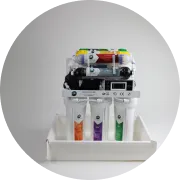
RO isn’t just an industrial technology. It’s the same core process used in systems like the ProEcoLife PEL75 9-Stage RO System, scaled and refined for home use. And as water quality concerns grow across the region, more Chicago homeowners are turning to it as a serious, chemical-free solution.
The Science of Reverse Osmosis Wastewater Treatment
To understand how reverse osmosis wastewater treatment works, we first have to look at how nature behaves. In natural osmosis, water flows spontaneously from a diluted solution (low solute concentration) to a concentrated solution (high solute concentration) across a semi-permeable membrane. This natural flow continues until the osmotic pressure on both sides reaches equilibrium.
Reverse osmosis, as the name suggests, flips this process on its head.
By applying external mechanical pressure that exceeds the natural osmotic pressure of the solution, we force water molecules to travel in the opposite direction. Instead of moving toward the contaminants, water is forced out of the contaminated solution, leaving the unwanted salts, heavy metals, and organic compounds behind.
Unlike traditional filters that trap contaminants within the filtration media (dead-end filtration), RO systems utilize cross-flow filtration. In this configuration, the feed stream flows parallel to the membrane surface. A portion of the water passes through the membrane as purified water, while the rest sweeps across the membrane, washing the rejected contaminants away in a concentrated stream. This continuous sweeping action is critical because it prevents rapid clogging and extends the operational life of the membrane.
For a deeper dive into the foundational science of this process, you can read more about Why The Reverse Osmosis is such a highly regarded technology in modern water treatment.
How Reverse Osmosis Works in Wastewater Applications
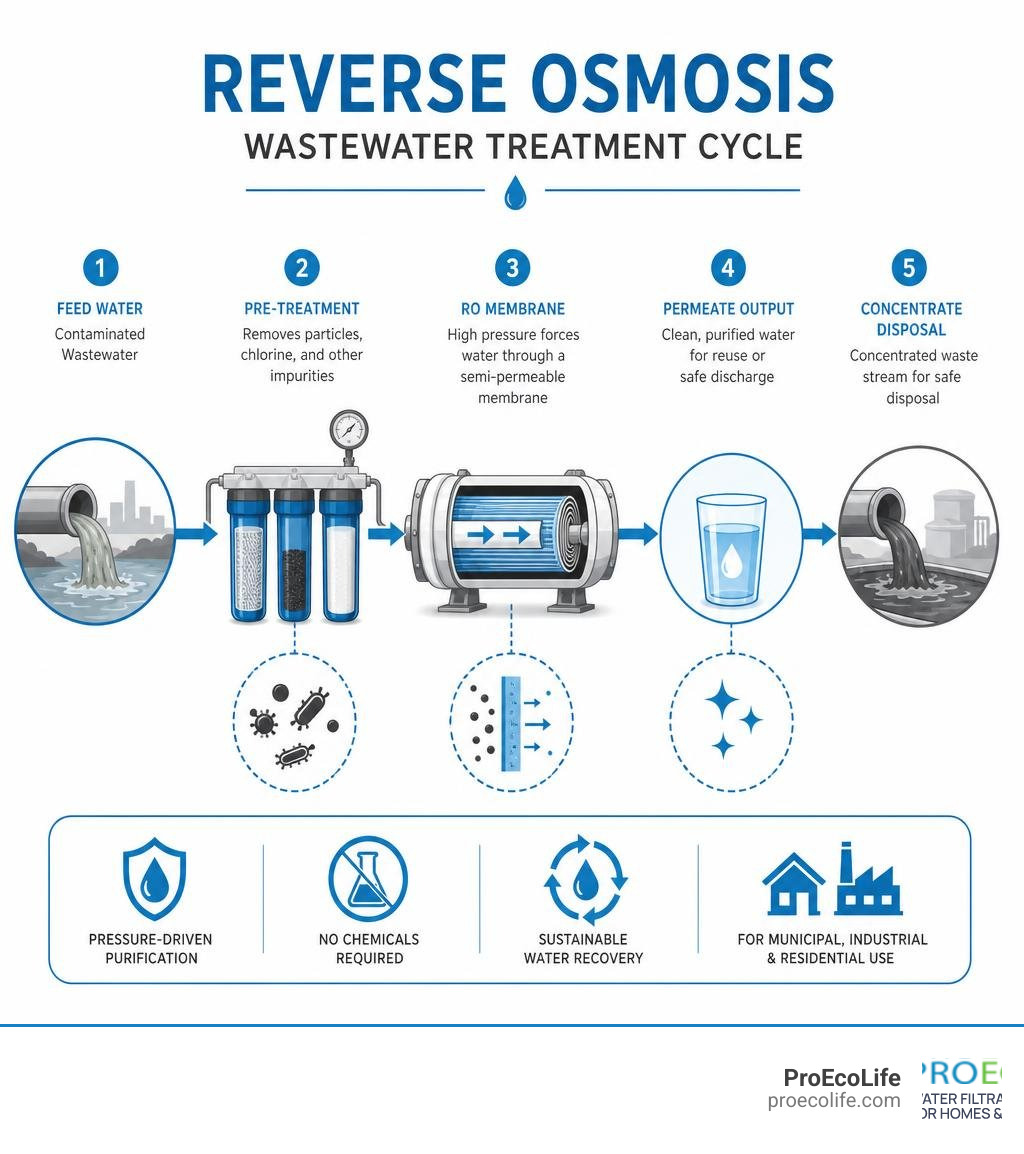
In a practical wastewater treatment setup, the incoming water is referred to as the feed water. As this water is pumped under high pressure into the RO vessel, it is split into two distinct streams:
- Permeate: This is the purified water that successfully passes through the semi-permeable membrane. It is highly pure, typically stripped of 95% to 99% of its original dissolved solids.
- Concentrate (or Brine): This is the remaining portion of the feed water that carries away the rejected contaminants.
The efficiency of a system is measured by its salt rejection percentage and its recovery rate. The salt rejection rate indicates what percentage of dissolved solids are successfully blocked by the membrane. Modern thin-film composite membranes routinely achieve salt rejection rates between 95% and 99%.
The recovery rate, on the other hand, is the percentage of feed water that is converted into clean permeate. In municipal and industrial wastewater applications, RO systems typically run between a 50% to 85% recovery rate, depending heavily on the characteristics of the feed water. Achieving higher recovery rates is always a priority, as it minimizes the volume of waste concentrate that must be managed or discharged. To explore the mechanics of this process further, take a look at our detailed breakdown of How Does Reverse Osmosis Work.
Contaminants Removed by Reverse Osmosis Wastewater Treatment
One of the reasons reverse osmosis wastewater treatment is considered the gold standard of water purification is its sheer versatility. Because RO membranes feature microscopic pores (typically around 0.0001 microns), they act as an incredibly tight physical barrier.
RO systems are highly effective at removing:
- Dissolved Salts and Ions: Sodium, chloride, calcium, magnesium, and sulfates.
- Heavy Metals: Lead, copper, chromium, and arsenic. This is highly relevant in Chicago’s older neighborhoods, such as Norwood Park, Edison Park, and Jefferson Park, where historic lead service lines can leach harmful metals directly into household tap water.
- Microorganisms: RO membranes can reject up to 99.9% of bacteria and viruses from wastewater streams.
- Emerging Contaminants (PFAS): Often referred to as “forever chemicals,” PFAS compounds are highly resistant to degradation, but high-pressure RO membranes can remove 90% to 99% of many PFAS compounds from water.
To put this filtration power into perspective, let’s compare reverse osmosis with ultrafiltration (UF), another common membrane technology:
| Contaminant Type | Ultrafiltration (UF) Removal Rate | Reverse Osmosis (RO) Removal Rate |
|---|---|---|
| Suspended Solids & Turbidity | >99% | >99.9% |
| Bacteria & Pathogens | >99.9% | >99.99% |
| Dissolved Salts (TDS) | 0% (Allows ions to pass) | 95% – 99% |
| Heavy Metals (Lead, Copper) | <10% (Unless bound to organics) | 95% – 99% |
| PFAS (Forever Chemicals) | <10% | 90% – 99% |
| Viruses | >95% | >99.9% |
While ultrafiltration is an excellent tool for removing suspended solids and large organic molecules, it cannot remove dissolved salts or heavy metals. This makes RO the clear choice when true chemical and mineral purification is required.
Need Clean, Safe Water at Home?
Get a free water test at your home or business. We install and service whole-house filtration and PEL75 reverse osmosis systems across Chicagoland. We also take select projects in Wisconsin and Indiana.
Book a Free Water TestCall (312) 889-8888Key Components and Design of Industrial RO Systems
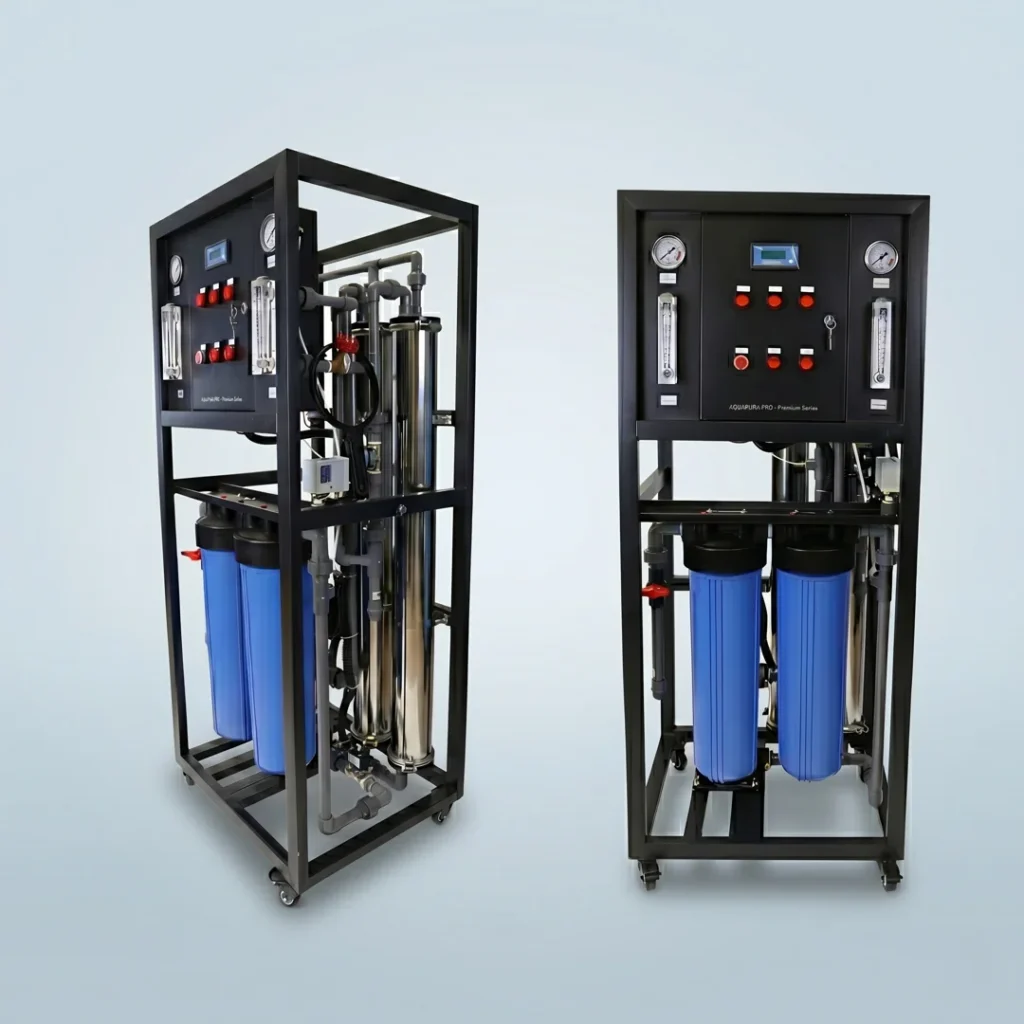
Industrial-scale RO systems are complex, highly engineered setups designed to handle large volumes of water continuously.
A standard system consists of several crucial components:
- High-Pressure Pumps: Because osmotic pressure must be overcome, industrial systems require robust pumps capable of generating pressures ranging from 100 to over 800 psi, depending on the salinity of the feed water.
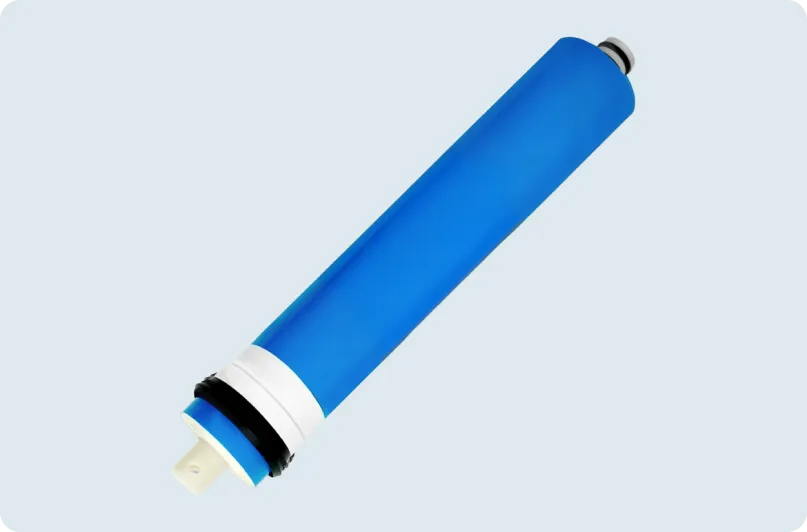
- Membrane Elements: Most commercial and industrial RO systems utilize spiral-wound membrane modules. These modules consist of flat membrane sheets wrapped around a central permeate collection tube, maximizing the surface area within a compact cylindrical footprint.
- Pressure Vessels: These are the heavy-duty housings that hold the spiral-wound membrane elements.
- System Array: The arrangement of the pressure vessels. In multi-stage systems, the concentrate from the first stage becomes the feed water for the second stage, which helps maximize the overall recovery rate.
Depending on the required purity level, a system may be designed as a single-pass or double-pass system. A single-pass system sends the water through one set of RO membranes. A double-pass system takes the clean permeate from the first pass and runs it through a second, independent RO system. This produces ultrapure water, which is highly valued in pharmaceutical manufacturing and semiconductor fabrication.
The Critical Role of Pre-Treatment in Reverse Osmosis Wastewater Treatment
You cannot simply feed raw wastewater directly into a reverse osmosis membrane and expect it to work for long. Because RO membranes are incredibly fine, they are highly sensitive to suspended solids, mineral scaling, and chemical damage. Proper pre-treatment is absolutely essential to protect the membranes and ensure stable, long-term operation.
Common pre-treatment steps include:
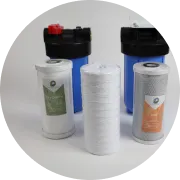
- Multimedia Filtration: Removes larger suspended particles and reduces turbidity.
- Water Softening (or Antiscalant Injection): In regions with hard water—such as Niles, Skokie, and Glenview—calcium and magnesium ions can easily precipitate out of solution and form a hard crust (scale) on the membrane. Softening or adding antiscalant chemicals keeps these minerals in solution.
- Dechlorination: Most municipal water contains chlorine to kill bacteria. However, chlorine will chemically attack and degrade thin-film composite polyamide membranes. Granular activated carbon (GAC) filters or sodium bisulfite (SBS) injection are used to neutralize chlorine before it reaches the RO unit.
- Microfiltration or Cartridge Filtration: A final 5-micron safety barrier is typically placed immediately before the high-pressure pump to catch any remaining fine particulates.
A practical example of this in action is documented in a Case study on wastewater reuse, where researchers demonstrated that integrating precoat filtration and neutralization prior to RO successfully protected the membranes, allowing an industrial facility to safely reuse its highly contaminated wash-water streams.
Industrial Applications and Water Reuse Case Studies
Industrial operations generate massive amounts of wastewater that can be incredibly difficult to treat. However, with the right combination of pre-treatment and RO technology, many facilities are achieving up to 85% water reuse, significantly reducing their environmental footprint and lowering water consumption costs.
Some of the most common applications include:
- Metal Finishing and Plating: These facilities generate wastewater loaded with toxic heavy metals and acids. RO allows them to concentrate and recover these metals while recycling the purified water back into their rinsing processes.
- Food and Beverage Processing: Large volumes of wash water can be treated to potable standards, reducing the facility’s reliance on municipal water lines.
- Landfill Leachate Treatment: Landfill leachate is an incredibly complex, high-strength wastewater that contains organic toxins, heavy metals, and high concentrations of ammonia. RO is one of the few technologies capable of purifying leachate to meet strict environmental discharge standards.
In a detailed Research on industrial effluent treatment, scientists analyzed a hybrid system combining catalyzed ozonation with reverse osmosis. The study showed that treating highly colored, saline effluent from a food-additive plant achieved 98% COD and color removal, proving that even the most stubborn industrial wastewater can be reclaimed economically.
Need Clean, Safe Water at Home?
Get a free water test at your home or business. We install and service whole-house filtration and PEL75 reverse osmosis systems across Chicagoland. We also take select projects in Wisconsin and Indiana.
Book a Free Water TestCall (312) 889-8888Membrane Fouling, Scaling, and Mitigation Strategies
Even with excellent pre-treatment, RO membranes in wastewater applications will eventually experience performance decline due to fouling and scaling.
Understanding the distinction between these two phenomena is key to keeping a system running efficiently:
- Membrane Fouling: Occurs when suspended solids, organic matter, or biological organisms (like bacteria) attach to the membrane surface. In wastewater treatment, biofouling is a major headache, as bacteria can quickly multiply and form a slimy biofilm that restricts water flow.
- Mineral Scaling: Occurs when dissolved salts exceed their solubility limits and precipitate onto the membrane surface as solid crystals. This is particularly common in areas with hard well water, such as the outer Northwest suburbs like Arlington Heights and Palatine.
As fouling and scaling progress, they cause a noticeable flux decline (the rate of water passing through the membrane decreases) and an increase in transmembrane pressure (the pump has to work harder to force water through). If left unaddressed, this leads to higher energy bills, reduced water output, and eventually, permanent physical damage to the membranes.
Monitoring and Maintenance Protocols
To prevent catastrophic membrane failure, operators must establish rigorous monitoring protocols. The most effective way to track performance is through data normalization. Because water temperature and feed salinity naturally fluctuate—affecting water flow and salt passage—normalization math converts daily operating data into a standardized baseline. This allows operators to see if a drop in water production is due to cold winter water or actual membrane fouling.
Key parameters to monitor include:
- Silt Density Index (SDI): A measure of the particulate fouling potential of the feed water.
- Pressure Drop (Delta P): The difference between the feed pressure and the concentrate pressure. A 15% increase in pressure drop is a clear indicator that the system needs cleaning.
- Salt Passage: An increase in the salinity of the permeate water indicates that the membrane polyamide layer may be degrading.
In commercial and municipal facilities, membranes typically require thorough chemical cleaning between 1 to 4 times per year. For a practical look at how these maintenance routines are handled in real-world scenarios, check out our guide on Odwrocona Osmoza W Praktyce.
Chemical Cleaning and Flux Restoration
When a system’s normalized permeate flow drops by 15%, or the feed pressure requirements increase significantly, it is time for a Clean-In-Place (CIP) cycle. This process involves circulating specialized chemical solutions through the RO vessels to dissolve and wash away the accumulated contaminants.
The cleaning protocol typically involves two main stages:
- High-pH Cleaners (Alkaline): Typically formulated with sodium hydroxide (NaOH) or detergents like sodium dodecyl sulfate (SDS). These are highly effective at breaking down organic matter, grease, and biological biofilms.
- Low-pH Cleaners (Acidic): Typically formulated with hydrochloric acid (HCl) or citric acid. These are designed to dissolve inorganic mineral scale, such as calcium carbonate and metal oxides (like iron scale, which is common in Northwest suburban well systems).
By carefully executing these cleaning steps, operators can restore membrane flux close to its original baseline, extending the overall lifespan of the membranes to anywhere from 3 to 5 years.
Environmental Considerations and Concentrate Management
While reverse osmosis wastewater treatment is an incredibly clean, chemical-free technology, it does produce a concentrated waste stream that must be managed responsibly.
The concentration factor of an RO system means that whatever contaminants were present in the feed water are now packed into a much smaller volume of brine. Discharging this highly saline brine directly into the environment can pose serious ecotoxicity risks to local aquatic life, particularly in inland regions where surface waters cannot easily dilute the salt load.
Managing RO Concentrate and Brine Disposal
Finding sustainable ways to manage and dispose of RO concentrate is one of the biggest challenges facing the water treatment industry today. Several innovative disposal and minimization methods are currently being utilized:
- Constructed Wetlands: In municipal settings, nature-based systems are gaining traction. A Study on constructed wetlands for concentrate highlights how engineered wetlands can naturally filter out nitrates, trace organic contaminants, and heavy metals from RO concentrate, offering a low-cost, eco-friendly alternative to deep-well injection.
- Pervaporation: This emerging membrane process uses heat and vacuum pressure to evaporate water through a dense membrane, leaving dry salts behind. It is highly effective for concentrating challenging waste streams like landfill leachate RO concentrate.
- Zero Liquid Discharge (ZLD): The ultimate goal for many industrial facilities. ZLD systems combine RO with thermal evaporators and crystallizers to convert all wastewater into solid salt cake and pure distilled water, leaving absolutely no liquid waste to discharge.
Energy Requirements and Operational Costs
Historically, reverse osmosis was criticized for being highly energy-intensive. While it does require significant electrical power to run high-pressure pumps, modern technological advancements have dramatically improved efficiency.
- Energy Recovery Devices (ERDs): In large-scale systems, ERDs capture the hydraulic energy from the high-pressure concentrate stream and transfer it directly to the incoming feed water, reducing energy consumption by up to 60%.
- Ultra-Low-Pressure Membranes: These advanced membranes are designed to operate at significantly lower pressures while maintaining high salt rejection, reducing power consumption by 30% or more.
For industrial facilities, on-site wastewater recycling with RO can reduce water consumption and discharge fees so dramatically that the payback period for the equipment is often less than one year.
Frequently Asked Questions about Wastewater RO
What is the typical recovery rate for industrial RO systems?
Most industrial and municipal wastewater RO systems operate at recovery rates between 50% and 85%. The exact percentage depends on the feed water’s chemical characteristics. High concentrations of silica, barium, or calcium will limit the recovery rate, as pushing the concentration factor too high will cause these minerals to precipitate and scale the membranes.
How does RO compare to other wastewater treatment methods?
Traditional wastewater treatment relies heavily on biological processes and chemical clarifiers. While these methods are great for removing bulk organic waste, they cannot remove dissolved salts, heavy metals, or microscopic chemical compounds like PFAS. Reverse osmosis provides a much higher level of purification without requiring heavy chemical handling. To see if this technology aligns with your specific water goals, read our article: Is Reverse Osmosis For You.
Can RO membranes be recycled or reused?
Yes! In the spirit of a circular economy, there is growing interest in reusing “end-of-life” membranes. For example, membranes that have lost some of their high-pressure efficiency for seawater desalination can be chemically regenerated and directly reused in less demanding applications, such as landfill leachate treatment. This fascinating process is detailed in a Research on second-hand membranes, which showed that second-hand membranes could successfully treat complex wastewater streams for over two years while lowering operating pressures.
Conclusion
Whether we are talking about municipal water recycling, complex industrial waste streams, or the tap water entering your home on Chicago’s Northwest Side, the power of reverse osmosis is undeniable. It is a highly reliable, chemical-free technology that literally squeezes pure water out of the most challenging environments.
At ProEcoLife, we have been helping Chicago families and businesses secure clean, dependable water since 2014. Founded by Karol Dolega, our roots are firmly planted in the local community. We understand the unique challenges of our region—from the aging lead pipes in older Chicago neighborhoods like Norwood Park, Edison Park, and Jefferson Park, to the heavy municipal hard water scaling in suburbs like Park Ridge, Niles, Des Plaines, Skokie, Glenview, Arlington Heights, and Morton Grove.
We offer a complete range of water treatment solutions tailored to these exact local conditions, including:
- PEL75 9-Stage RO System: Our premier drinking water system designed to tackle lead, heavy metals, and microscopic impurities.
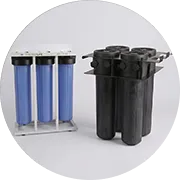
- Whole House Filtration: Comprehensive protection for your entire home’s plumbing and appliances.
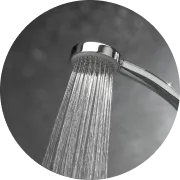
- Shower Filter Systems: Designed to protect your skin and hair from harsh chlorine.
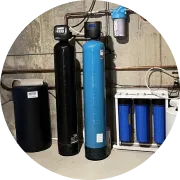
- Well Water Conditioning: Heavy-duty systems built to handle the unique iron and hardness issues of suburban well water.
- Commercial Water Filtration Systems: High-capacity solutions designed for local businesses requiring consistent, high-purity process water.
If you are concerned about what might be lingering in your water, let us help you find the right path forward.
Contact ProEcoLife today to schedule a comprehensive water test at (312) 889-8888 or visit us online at proecolife.com.