
Lead in Chicago’s Tap Water: What Every Homeowner Needs to Know First
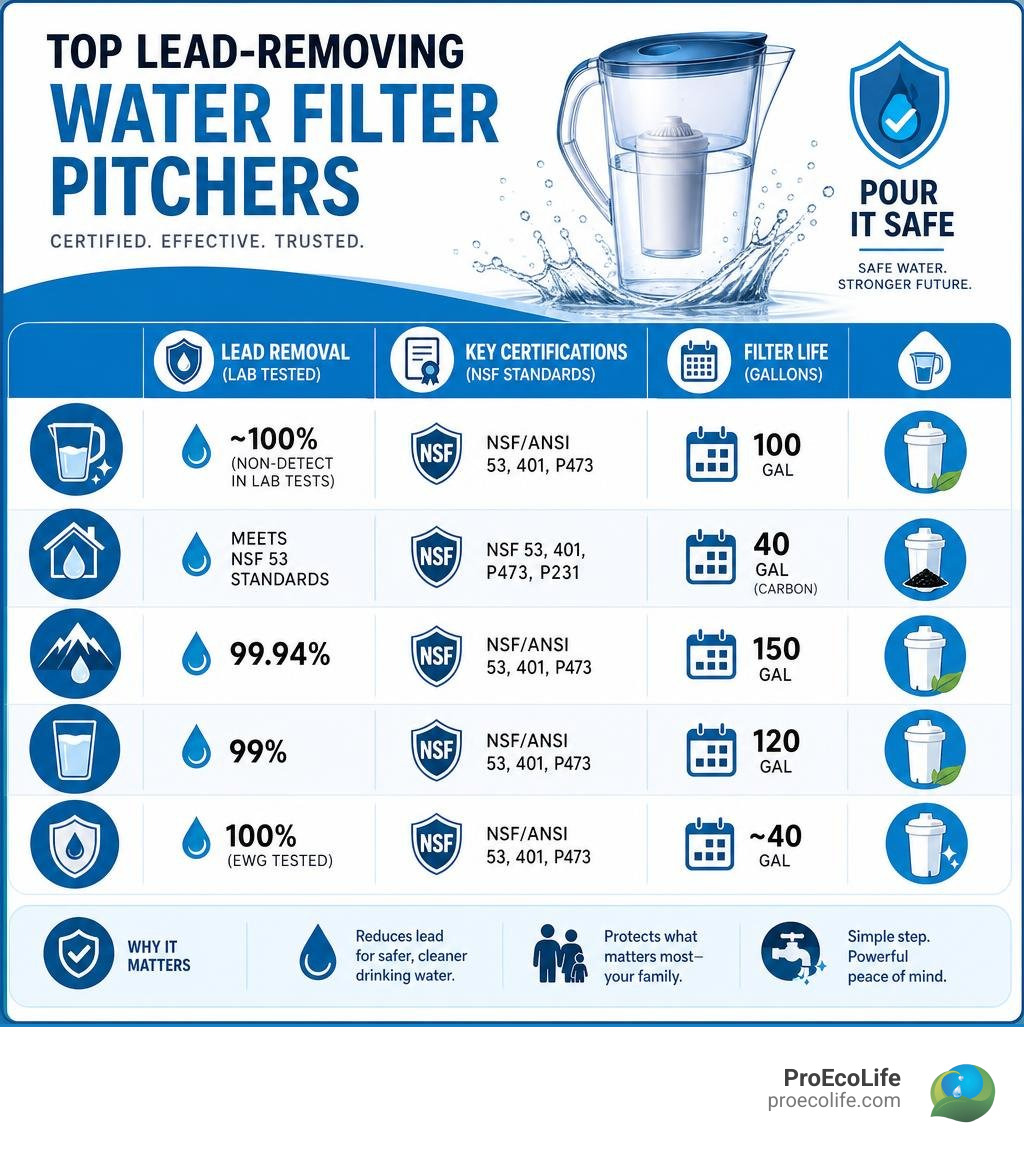
If you’re searching for the best water filter pitcher to remove lead, here are the top options backed by third-party certifications:
| Pitcher | Lead Removal | Key Certification | Filter Life |
|---|---|---|---|
| Clearly Filtered | ~100% (non-detect in lab tests) | NSF/ANSI 53, 401, P473 | 100 gal |
| LifeStraw Home | Meets NSF 53 standards | NSF 53, 401, P473, P231 | 40 gal (carbon) |
| Epic Pure | 99.94% | NSF/ANSI 53, 401, P473 | 150 gal |
| Brita Elite | 99% | NSF/ANSI 53 | 120 gal |
| ZeroWater | 100% (EWG tested) | NSF/ANSI 53 | ~40 gal |
If you live in Chicago — especially in older neighborhoods like Norwood Park, Edison Park, or Jefferson Park — lead in your tap water is not a hypothetical risk. It’s a documented reality tied directly to aging infrastructure.
Chicago has more lead service lines than any other city in the United States. Homes built before 1986 are especially likely to have lead pipes connecting the city main to the kitchen faucet. Even though Lake Michigan is a relatively clean source water, that water picks up lead after it leaves the treatment plant, traveling through corroded pipes before it reaches your glass.
A simple pitcher filter is one of the most affordable first steps a homeowner can take. But not all pitchers are equal — and in a city with Chicago’s specific water challenges, choosing the wrong one could give you a false sense of security.
This guide cuts through the marketing claims and focuses on what the certifications and independent lab tests actually show.
Understanding Chicago’s Lead Water Crisis and Aging Infrastructure

To truly understand why you need the best water filter pitcher to remove lead, we have to look at what is happening beneath our streets. Chicago’s water system is a marvel of engineering, but it carries a heavy historical burden.
For decades, city building codes actually mandated the use of lead service lines for single-family homes and small multi-unit buildings. This mandate was kept in place right up until the federal ban in 1986. As a result, hundreds of thousands of homes across the Northwest Side, including those in Norwood Park, Edison Park, and Jefferson Park, still receive their drinking water through pipes made entirely of lead.
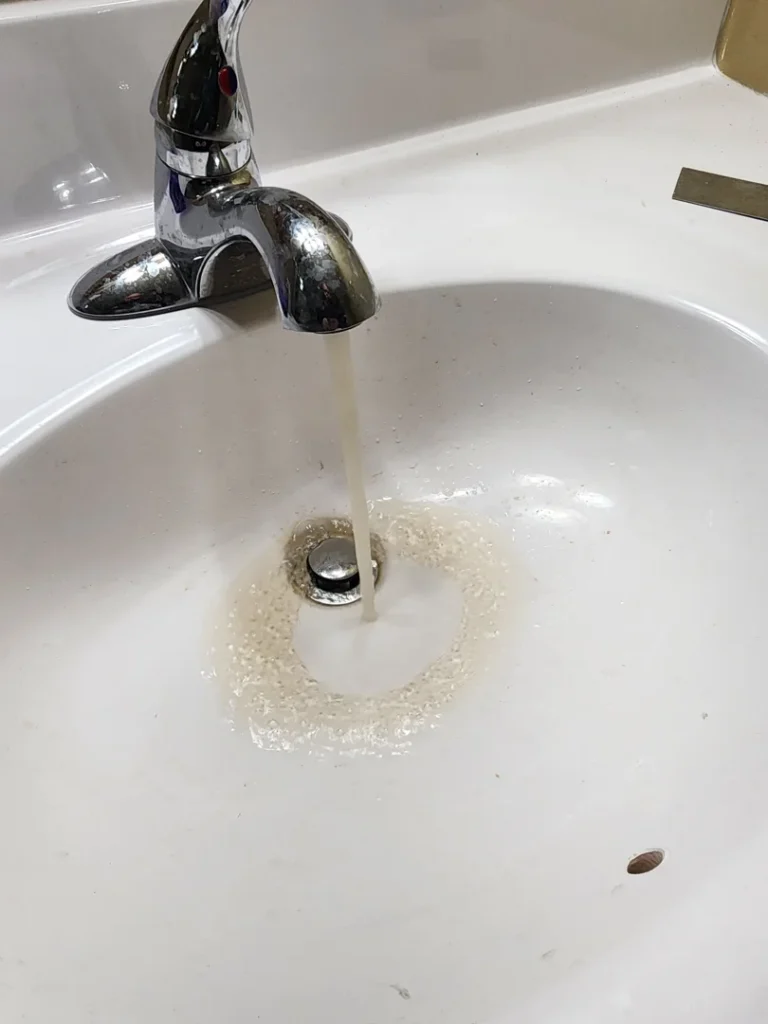
When these pipes age and corrode, microscopic particles of lead flake off directly into the water stream. Because lead is completely invisible, odorless, and tasteless, you could be drinking highly contaminated water daily without ever realizing it.
New EPA regulations have shed light on the true extent of this potential exposure, requiring municipalities to inventory these lines and plan for their eventual replacement. However, replacing every lead service line in the city is a monumental task that will take decades. In the meantime, the responsibility of protecting your family falls squarely on point-of-use filtration. To learn more about how heavy metals behave in our municipal supply, check out our deep dive on Heavy metal meltdown the best way to remove lead from drinking water.
How Lead Enters Chicago Homes via Service Lines
The journey of tap water into an older Chicago home is where the contamination occurs. Water treated at the massive Jardine Water Purification Plant is virtually lead-free when it begins its journey. However, as it is pushed through the municipal water mains and enters the private service line—the pipe connecting the street main to your home water meter—it comes into direct contact with lead.
Chemical changes in the water, fluctuations in water pressure, or physical vibrations from nearby construction can disturb the protective mineral scale inside these pipes. When this scale breaks down, lead dissolves into the water or hitches a ride as tiny, highly toxic particulates. For a detailed breakdown of how to navigate these plumbing risks, you can read the guide on How to Choose a Water Filter to Protect Against Lead – City Bureau .
Why Lake Michigan Water Needs Point-of-Use Filtration
While Lake Michigan provides an abundant source of fresh water, municipal treatment plants primarily focus on biological pathogens and basic sediment. They do not—and cannot—prevent the contamination that occurs inside the distribution network or within your home’s private plumbing.
This issue isn’t confined strictly to the city limits, either. The water mains that supply near-north suburbs like Park Ridge, Niles, and Des Plaines are connected to the same aging infrastructure network. Even municipal systems further out have faced challenges; for example, look at the historical alerts regarding Lead found in Bartlett drinking water.
Because municipal treatment cannot protect the water once it leaves the main, point-of-use filtration is your last line of defense.
Evaluating the Best Water Filter Pitcher to Remove Lead
When shopping for a water filter pitcher, it is easy to get lost in bold marketing claims. Many retail brands advertise “clean, great-tasting water,” but they are actually only certified to reduce chlorine taste and odor. If you are trying to protect your family from heavy metals, you must look for specific, verified performance data.
Key Certifications for the Best Water Filter Pitcher to Remove Lead
The gold standard for lead reduction in water filters is the NSF/ANSI Standard 53 certification. If a pitcher does not explicitly state that it is certified to NSF/ANSI 53 for lead reduction by an accredited third-party laboratory (such as the NSF, WQA, or UL), you should assume it does not remove lead.
Additionally, modern households must look for certifications that address emerging contaminants:
- NSF/ANSI 53: Verifies the reduction of contaminants with established health effects, including lead, mercury, and cadmium.
- NSF/ANSI 401: Covers “incidental contaminants” or emerging compounds, such as microplastics, trace pharmaceuticals, and pesticides.
- NSF P473 / NSF 53 (for PFAS): Verifies that the filter reduces PFOA and PFOS (the notorious “forever chemicals”) by 99% or more.
For example, the LifeStraw Home pitcher is certified to meet NSF 53 standards for the reduction of lead, mercury, chromium III, cadmium, and copper. It also meets the NSF P473 standard for reducing PFOA and PFOS, and is independently tested to remove 99.999% of microplastics. Similarly, the Brita Elite filter is certified to remove 99% of lead and reduce up to 30 different contaminants.
When evaluating these options, independent consumer tests are incredibly valuable. You can review the Best Water Filter Pitchers of 2026 – Consumer Reports or read hands-on evaluations like The 4 Best Water Filter Pitchers of 2026, Tested & Reviewed to see how these models hold up under daily use. If you are specifically interested in the Brita system, you can view the product details directly at Brita® Tahoe Water Pitcher with Elite Filter | Brita™ .
Lifespan and Cost Trade-offs of the Best Water Filter Pitcher to Remove Lead
While a pitcher may have a lower upfront cost than an under-sink system, the long-term cost of ownership can quickly add up. Filter cartridges have a limited capacity, and failing to replace them on schedule means you are no longer filtering out lead.
| Filter Brand | Rated Lifespan (Gallons) | Estimated Replacement Frequency | Key Contaminants Removed |
|---|---|---|---|
| Clearly Filtered | 100 | 2–3 Months | Lead, PFAS, Fluoride, VOCs |
| Epic Pure | 150 | 3–5 Months | Lead, PFAS, Fluoride, Microplastics |
| Brita Elite | 120 | 6 Months | Lead, Chlorine, Particulates Class I |
| LifeStraw Home | 40 (Carbon) / 264 (Membrane) | 2 Months (Carbon) / 1 Year (Membrane) | Lead, PFAS, Bacteria, Microplastics |
| ZeroWater | ~20–40 (varies by TDS) | 1–2 Months | Lead, Total Dissolved Solids (TDS) |
There is a direct trade-off between filtration speed, lifespan, and cost. For instance, the Epic Pure pitcher uses a solid carbon block filter that slows down the flow rate intentionally to maximize contact time with the water, achieving a 99.94% lead removal rate and lasting for up to 150 gallons. On the other hand, standard pitchers with faster flow rates often use loose, granular carbon which can allow contaminants to bypass the media more easily.
Pitchers vs. Under-Sink Systems: Why a Pitcher Might Not Be Enough
Water filter pitchers are highly convenient for rental apartments or single-person households. However, if you run a busy household in the Northwest suburbs—such as Skokie, Glenview, Arlington Heights, or Morton Grove—relying solely on a pitcher to supply all your drinking, cooking, and ice-making water can quickly become a chore.
The Limitations of Gravity-Based Pitcher Filters
Gravity-based pitchers suffer from several inherent limitations:
- Extremely Slow Flow Rates: Because they rely entirely on gravity to pull water through a dense filter block, high-performance lead filters can take up to 15 minutes to process a single pitcher.
- Frequent and Costly Replacements: In areas with high sediment or hard water, filters clog much faster than their rated lifespan, driving up your annual cost of ownership.
- Risk of Bacterial Growth: Pitchers sit at room temperature or inside a fridge. Once the chlorine is removed from the water, there is no disinfectant left to prevent bacteria from colonizing the damp filter cartridge.
- Limited Capacity: A standard 7-cup or 10-cup pitcher requires constant refilling, making it impractical for washing vegetables, filling large pots for boiling pasta, or keeping up with a large family’s daily hydration needs.
- Flat Tasting Water: Some intensive systems, like ZeroWater, strip out every single dissolved solid to achieve a zero TDS reading, which often leaves the water tasting flat and acidic.
Multi-Stage Reverse Osmosis as the Ultimate Lead Solution
If you want complete peace of mind without the constant hassle of refilling plastic pitchers, a dedicated under-sink system is the gold standard.
At ProEcoLife, founded by Karol Dolega, we have been serving the Chicago area since 2014. We understand the specific plumbing challenges of local homes. Our PEL75 9-Stage RO System is designed to handle both the lead risks of older city lines and the heavy mineral content (hard water) common in the surrounding suburbs.
Unlike a simple gravity filter, our 9-stage reverse osmosis system uses water pressure to force water through a semipermeable membrane, rejecting up to 99% of lead, heavy metals, PFAS, and microscopic impurities. It then passes the water through remineralization stages to restore beneficial minerals like calcium and magnesium, giving you clean, delicious, and perfectly balanced alkaline water straight from a dedicated tap.
For households looking for comprehensive protection, we also design and install Whole House Filtration systems, Shower Filter System units, and robust Well Water Conditioning systems. To compare under-sink options, read our guide on Filtry do wody pod zlew jak wybrać najlepszy model or learn more about heavy metal extraction at Jak usunąć metale ciężkie z wody.
Frequently Asked Questions About Lead Water Filters
Do standard carbon pitchers remove 99% of lead?
No. Standard, inexpensive water pitchers typically use loose, Granular Activated Carbon (GAC) filters. While these are excellent at reducing chlorine taste and odor, they do not have the density or the specialized ion-exchange media required to bind and trap dissolved lead.
To remove lead effectively, a pitcher must use a solid carbon block or a specialized multi-stage filter certified to NSF/ANSI Standard 53. To learn more about what different carbon filters can and cannot do, read our article on Filtry węglowe do wody co dokładnie usuwają i dla kogo są najlepsze.
How often do you need to change lead-reducing filters?
Most manufacturers recommend changing lead-reducing filters every 2 to 6 months, or after a specific number of gallons (typically 40 to 150 gallons). However, in Chicago and suburbs like Niles or Park Ridge, our water contains high levels of hardness minerals. These minerals can precipitate out and clog the fine pores of a lead filter prematurely, significantly reducing its flow rate and lifespan.
Using a filter past its rated capacity can result in “dumping,” where the trapped contaminants begin to leach back into your drinking water. For a breakdown of common filtration misconceptions, check out Filtry do wody obalamy sześć mitów na ten temat.
Can water filters remove PFAS and microplastics alongside lead?
Yes, but only if they use advanced multi-stage filtration or membrane technologies. PFAS (“forever chemicals”) and microplastics are incredibly resilient. While a standard carbon filter might only achieve a minor reduction, high-performance pitchers like Clearly Filtered, Epic Pure, and LifeStraw Home use specialized electrostatic or membrane microfiltration to achieve 99%+ reduction of these compounds.
For the ultimate protection against these modern synthetic chemicals, a reverse osmosis system remains the most reliable and thoroughly tested technology available.
Conclusion
Finding the best water filter pitcher to remove lead is an excellent first step toward protecting your household from the realities of Chicago’s aging plumbing infrastructure. If you choose to go the pitcher route, make absolutely sure the model you buy carries a verified NSF/ANSI Standard 53 certification for lead reduction.
However, if you find yourself tired of the slow filtration speeds, the constant refilling, and the ongoing expense of replacing small filter cartridges, it might be time to upgrade to a more permanent, worry-free solution. For a comprehensive look at choosing the right filter for your home, read our How to choose the best lead water filter in Chicago a 2026 guide.
We invite you to take the guesswork out of your home’s water quality. Contact us today at ProEcoLife to schedule a professional water test and let our local experts help you find the perfect filtration system for your family.
Ready to secure your home’s water? Contact ProEcoLife today to schedule a water test at (312) 889-8888 or visit us at proecolife.com.