





Water – not enough to live but impossible to live without it
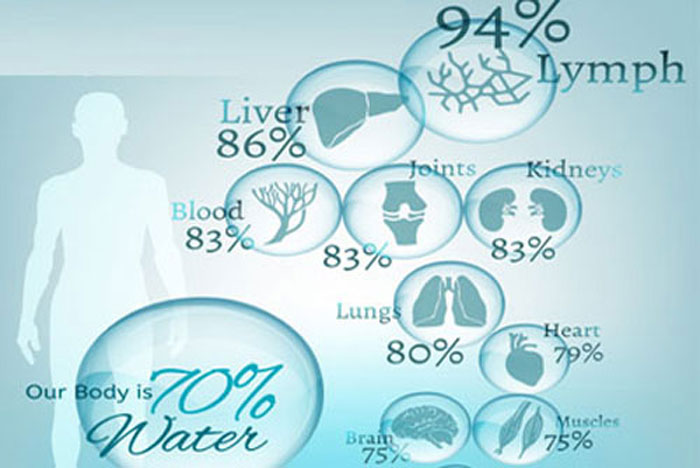
Why is it so? This is supported by the fact that its content in the human body ranges from 65% in an adult to 80% in an infant. Water is essential to allow all the processes and organs to function properly in the human organism.
What does water do in the human body:
Dissolves and transports food.
Absorbs food from the intestines and nourishes the cells.
Removes harmful waste products.
Participates in biochemical reactions.
Controls temperature.
Moistens the mucous membrane, joints, and eyeball.
Functions as a protection for the brain, spinal cord, and eyeball.
Water is present in all tissues of our body, although its distribution in it is uneven. It is essential to sustain all biological processes. Therefore, it is recommended by doctors to drink 0.66 gallons of water a day because such is the need of the human body. The water we drink also has an impact on our health because, according to the WHO (World Health Organization), 80% of modern diseases are related to the quality of drinking water.
Frequently Asked Questions
How much of the human body is made of water?
Water makes up from 65% of the body in an adult to 80% in an infant. It is present in all tissues of the body, although its distribution is uneven.
What does water do in the human body?
Water dissolves and transports food, nourishes cells, removes harmful waste, participates in biochemical reactions, controls temperature, moistens mucous membranes, joints and eyes, and protects the brain, spinal cord and eyeball.
How much water should I drink per day?
Doctors recommend drinking 0.66 gallons of water a day to meet the body's needs. Water quality matters too, since according to the WHO, 80% of modern diseases are related to the quality of drinking water.